
Is Chinese Invasion of Taiwan Likely?
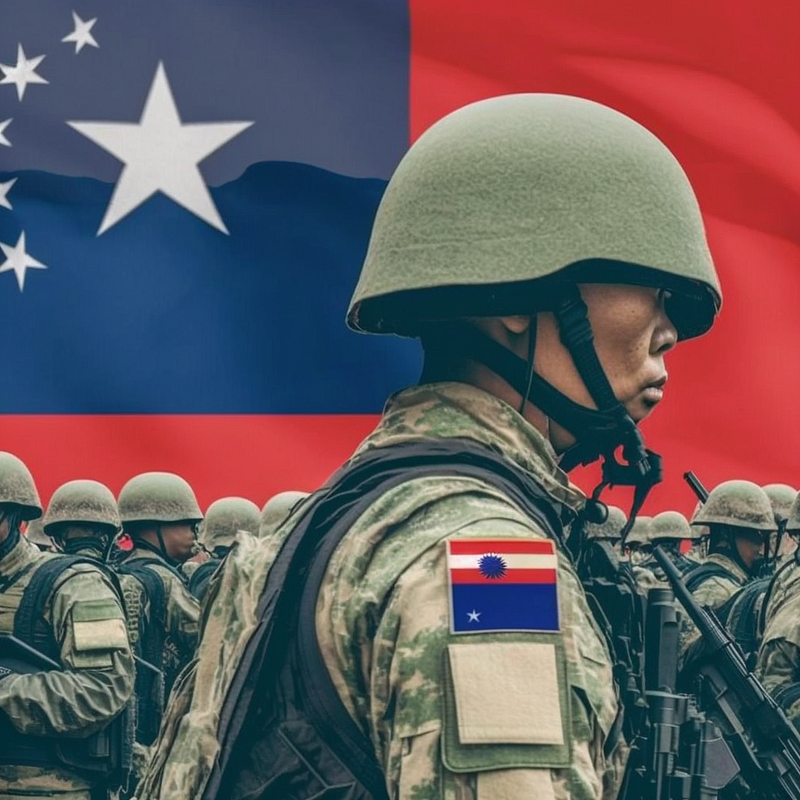
Taiwan, a self-ruled island of 23 million people, has been at the center of rising tensions between China and the United States. China claims Taiwan as part of its territory and has never renounced the use of force to bring it under its control. The United States, meanwhile, has a longstanding commitment to help Taiwan defend itself, but has not clarified whether it would intervene militarily in case of a Chinese attack.
So, how likely is a Chinese invasion of Taiwan? And what would be the consequences for both sides and the region?
The answer is not straightforward. There are many factors that could influence China’s decision to launch a military operation against Taiwan, such as its domestic politics, its international reputation, its strategic objectives, and its assessment of the risks and benefits. Likewise, there are many uncertainties that could affect the outcome of a potential conflict, such as the level of preparedness and resilience of Taiwan’s forces, the degree of involvement and support from the United States and other allies, and the possibility of escalation and miscalculation.
However, based on the current situation and some recent analyses, we can draw some tentative conclusions.
First, China has the power to take Taiwan, but it would cost an extremely bloody price. China has more troops, more missiles and more ships than Taiwan or its possible supporters could bring to a fight. It also has advantages in geography, logistics and cyber capabilities. According to some estimates, China could mobilize up to 2 million troops for an invasion of Taiwan.
However, taking Taiwan by force would not be easy or quick. Taiwan has about 150,000 troops and 2.5 million reservists — and its entire national defense strategy is based on countering a Chinese invasion. It has invested heavily in asymmetric warfare capabilities, such as anti-ship missiles, sea mines, submarines and mobile artillery. It also has a robust air defense system that could pose a serious challenge to China’s air superiority.
Moreover, Taiwan’s geography is unfavorable for an amphibious assault. The island is surrounded by rough seas that limit the landing sites and expose the invading forces to attacks from the air and sea. The terrain is mountainous and densely populated, making it difficult for the attackers to advance and consolidate their gains. The defenders could exploit their familiarity with the environment and their strong sense of identity to wage a protracted guerrilla war.
Therefore, a Chinese invasion of Taiwan would likely result in high casualties and material losses for both sides. It would also have severe political and economic repercussions for China, such as international isolation, sanctions, boycotts and instability.
Second, China is unlikely to invade Taiwan unless it feels compelled to do so by a perceived existential threat or an irresistible opportunity. China’s leader Xi Jinping has repeatedly stated that reunification with Taiwan is his “historic mission” and that he will not tolerate any form of separatism or foreign interference. However, he has also said that he prefers peaceful means to achieve this goal and that he is willing to wait for the right conditions.
China’s main motivation for invading Taiwan would be to prevent it from declaring formal independence or establishing closer ties with the United States that could undermine China’s sovereignty claims. China would also seek to assert its regional dominance and deter other countries from challenging its interests.
However, China also faces significant constraints that make it reluctant to resort to military force. China knows that an invasion of Taiwan would provoke a strong reaction from the United States and its allies, who have vital strategic interests in maintaining peace and stability in the Indo-Pacific region. China also knows that a war with Taiwan would damage its economic development and social stability at home, as well as its global image and influence abroad.
Therefore, China is likely to continue its current strategy of increasing pressure on Taiwan through diplomatic isolation, economic coercion, military intimidation and information warfare. China hopes that these measures will weaken Taiwan’s resolve and confidence, erode its international support and legitimacy, and create favorable conditions for peaceful reunification or forced submission.
Third, the likelihood of a Chinese invasion of Taiwan depends largely on how the United States and other actors respond to the situation. The United States is the most important factor in deterring China from attacking Taiwan. The United States has maintained a policy of “strategic ambiguity” on Taiwan since 1979, when it switched diplomatic recognition from Taipei to Beijing. This policy means that the United States does not explicitly state whether it would defend Taiwan militarily in case of a Chinese attack.
This policy is intended to balance two objectives: on one hand, to reassure Taiwan that it is not abandoned by its most powerful ally; on the other hand, to discourage Taiwan from provoking China by declaring independence or taking other unilateral actions that could alter the status quo. The policy also aims to avoid provoking China by implying that the United States recognizes Taiwan as a sovereign state.
This policy is intended to balance two objectives: on one hand, to reassure Taiwan that it is not abandoned by its most powerful ally; on the other hand, to discourage Taiwan from provoking China by declaring independence or taking other unilateral actions that could alter the status quo. The policy also aims to avoid provoking China by implying that the United States recognizes Taiwan as a sovereign state.
However, this policy has been increasingly challenged by the changing dynamics in the Taiwan Strait. On one side, China has become more assertive and aggressive in its pursuit of reunification, conducting frequent military exercises and incursions near Taiwan, passing an anti-secession law that authorizes the use of force against Taiwan, and imposing diplomatic and economic pressure on Taiwan and its international partners. On the other side, Taiwan has become more confident and resilient in its defense of its autonomy and democracy, strengthening its military capabilities and readiness, diversifying its economic and diplomatic relations, and electing leaders who reject Beijing’s “one China” principle.
These developments have raised doubts about the effectiveness and credibility of the U.S. policy of strategic ambiguity. Some argue that this policy is too vague and weak to deter China from attacking Taiwan, especially as China’s military and economic power grows relative to the United States. They contend that the United States should adopt a policy of strategic clarity, explicitly stating that it would defend Taiwan militarily in case of a Chinese attack. They believe that this would send a clear signal to China that any attempt to coerce or invade Taiwan would be met with a decisive U.S. response, thus reducing the risk of war.
Others argue that this policy is too risky and provocative to maintain peace and stability in the region, especially as China’s nationalism and sensitivity over Taiwan increases. They warn that the United States should not abandon its policy of strategic ambiguity, implicitly leaving open the possibility that it might not defend Taiwan militarily in case of a Chinese attack. They believe that this would create uncertainty and caution in China’s calculations, thus increasing the cost of war.
The debate over strategic ambiguity versus strategic clarity is not new, but it has gained new urgency and relevance in light of President Biden’s recent remarks. While Biden’s aides have clarified that his comments did not represent a change in U.S. policy, they have also reaffirmed his commitment to help Taiwan defend itself. This suggests that the United States is trying to strike a balance between reassuring Taiwan and deterring China, without provoking or alienating either side.
However, this balance may not be easy or sustainable to maintain, as tensions and uncertainties in the Taiwan Strait continue to rise. The United States may face increasing pressure from both sides to clarify its position and intentions on Taiwan’s defense. How it responds to this pressure will have significant implications for the future of cross-Strait relations and regional security.