

Is ChatGPT an AI Visionary or Just a Clever Chatbot? Evaluating the Conversational Capabilities and Limitations
ChatGPT thrills users with its human-like chat skills, but lacks true comprehension. We dive into its strengths and flaws.
ChatGPT’s human-like conversation skills have captivated audiences, but does this AI represent true progress or a clever illusion? We explore its language capabilities and constraints.
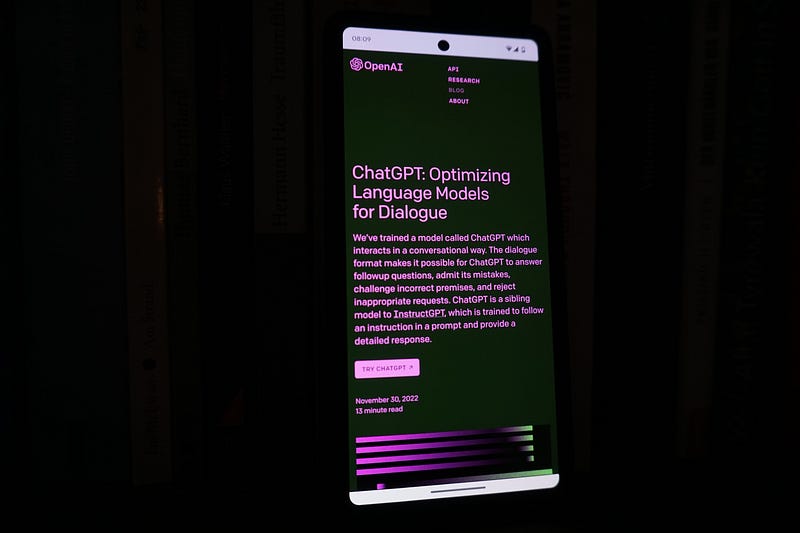
The innovative ChatGPT chatbot developed by OpenAI has taken the world by storm since its launch in November 2022.
With its human-like conversation capabilities and creative responses, many are hailing ChatGPT as a transformative AI innovation.
But is ChatGPT truly an AI visionary, or just a very clever conversational AI chatbot?
This article dives into ChatGPT’s capabilities to determine if this AI chatbot is a crystal ball envisioning the future or a clever simulation of human conversation.
Diving into ChatGPT’s Capabilities
ChatGPT has demonstrated some incredibly human-like conversation abilities that have captured the interest of technologists and the general public alike.
At first glance, it appears capable of thoughtful, nuanced responses on a wide range of topics while avoiding many traditional chatbot pitfalls like repetitive responses.
So what makes ChatGPT so adept at natural language processing and human-like conversation? The key lies in its underlying AI architecture.
ChatGPT was created by OpenAI and is powered by a version of their GPT (Generative Pretrained Transformer) model, specifically GPT-3.5.
This allows it to leverage OpenAI’s massive training datasets to have conversational abilities rivaling those of a human.
ChatGPT’s training encompassed vast troves of text data from books, online writings, and conversations.
With this huge body of text, ChatGPT developed a strong ability to predict appropriate responses based on context and previous statements.
Its advanced natural language processing allows it to parse sentences for meaning, analyze tone, and respond in kilter.
Technologists note that ChatGPT exhibits capabilities like:
- Maintaining context across long conversations
- Providing nuanced, unpredictable responses outside canned scripts
- Refusing absurd or unethical requests
- Admitting gaps in its knowledge
These traits depart notably from previous generations of chatbots prone to repetitive, irrelevant responses. So in many ways, ChatGPT demonstrates a big leap forward in conversational AI.
Evaluating ChatGPT’s Current Capabilities
In assessing ChatGPT’s current state, there are some key capabilities that stand out when it comes to human-like conversation:
Creative Responses
Unlike some AI assistants focused on simplistic Q&A, ChatGPT flexes creative muscles like few chatbots before it.
When posed with open-ended prompts, it can generate unique stories, songs, poems, code and more.
Conversational Context
ChatGPT retains context about previous statements made during a conversation.
This allows it to respond appropriately instead of exhibiting the short-term memory issues that plague many chatbots.
Adaptability
Based on user feedback and new information presented, ChatGPT can adapt its responses accordingly, again showcasing response prowess compared to rigid chatbots of yore.
Varied Tone and Style
From formal to casual or anything in between, ChatGPT can adjust reply tones and language styles based on the prompt and direction provided.
Information Synthesis
ChatGPT exhibits decent skills at synthesizing information from various sources when asked questions, showcasing integration capabilities.
Refusal of Unethical Requests
Unlike some AI assistants, ChatGPT will refuse to provide harmful, dangerous, or unethical information to users. This adherence to safety helps ensure responsible AI development.
Limitations of ChatGPT’s Current State
While ChatGPT shows immense progress in conversational abilities, the chatbot does have some noticeable limitations in its current iteration. These limitations provide insight into it being an ingenious AI creation rather than a fully realized AI.
Factual Inaccuracies
Since ChatGPT is trained on massive data sets, it can occasionally generate responses with factual errors or make up information appearing real.
Limited Knowledge
Given its training timeline, ChatGPT lacks a comprehensive grasp of current events, modern culture, and some specialized fields. It performs inconsistently on detailed, technical questions.
Lack of External Context
ChatGPT cannot look up external information online to check facts or better inform its responses. It relies solely on pre-trained info.
Spoon-Fed Conversations
Though capable of fluid responses, ChatGPT still requires specific prompting from users to drive conversations forward. It cannot yet fully guide open-ended dialogue.
Repetition in Longer Conversations
In extended conversations, ChatGPT is more prone to repeating phrasing multiple times as its capabilities become strained.
These limitations make evident that ChatGPT is an AI-powered chatbot rather than a conscious AI entity.
It excels in constrained conversational contexts, but still has obvious areas for improvement when compared to human cognition.
Is ChatGPT a Crystal Ball to the Future?
Considering its current capabilities and limitations, does ChatGPT truly represent an AI visionary, the crystal ball offering a glimpse into the future of artificial intelligence?
Or is it simply a very clever, well-designed chatbot pushing existing technologies forward incrementally?
There are good arguments on both sides of this debate:
The Visionary AI Argument
- ChatGPT represents pivotal progress in key areas like context, creativity, and information synthesis that have long challenged AI. Its conversational fluidity far exceeds predecessors.
- ChatGPT’s architecture and training methodology demonstrate that robust self-learning through deep neural networks is viable for conversation.
- Given rapid progress in just a few years, more advanced iterations of ChatGPT could become almost indistinguishable from human in the near future.
The Clever Chatbot Argument
- While impressive, most experts agree that ChatGPT does not actually “understand” conversation or have self-awareness characteristic of human cognition.
- ChatGPT’s skills are narrowly constrained to text conversations. It lacks human capacities for transferring knowledge across disciplines.
- ChatGPT is prone to factual errors and misunderstandings that would not fool most humans through sustained conversations.
- OpenAI will face greatly increased training costs and dataset needs as conversational abilities are expanded into new domains.
Looking at both perspectives, ChatGPT likely falls somewhere in the middle currently — an ingeniously designed chatbot pushing the boundaries of what AI can achieve conversationally, yet constrained by technological limitations to narrow conversational prowess.
The Road Ahead for ChatGPT
Whatever one’s view on its current capabilities, ChatGPT will undoubtedly continue advancing rapid-fire given the level of investment and interest pouring into OpenAI.
The company aims to continually enhance ChatGPT’s conversational abilities through improvements like:
- Expanding training datasets for more current, factual knowledge
- Increasing contextual learning capabilities for more sustained, coherent dialogues
- Adding external data integration for fact checking and information enhancement
- Expanding domain knowledge into specialized fields like medicine, law, etc.
- Moving beyond exclusively text-based conversations
- Developing surface-level common sense to flag absurd responses
And most notably, ChatGPT was created using GPT-3.5 architecture. OpenAI is already hard at work on the next major iteration — GPT-4 — which promises to expand capabilities even further.
The Impact of GPT-4 Integration
GPT-4 integration promises to be the next major leap forward in ChatGPT’s evolution.
This new architecture is expected to build rapidly upon the conversational abilities and text generation already enabled by GPT-3.5.
Key improvements expected from GPT-4 include:
- More robust memory and context retention for consistent, coherent dialogues
- Improved reasoning and logic for detecting contradictory or nonsensical statements
- Vastly larger training dataset for contemporary knowledge and diversified responses
- Enhanced task-learning skills, allowing guided training by users
- Greater personalization based on chat history and user preferences
- Expanded creativity and idea synthesis abilities for unique content generation
- Increased multi-lingual capabilities for global use cases
Together, these GPT-4 upgrades could elevate ChatGPT from an impressive novelty to a versatile AI assistant suitable for real utility.
It brings ChatGPT closer to passing a true Turing test — the ability to be mistaken for human during casual conversation.
Rolling out GPT-4 level capabilities to all ChatGPT users could still be years away given required training times.
But OpenAI will likely provide early access to upgraded versions for subscribers willing to help further train the system.
This hands-on involvement will be crucial for ChatGPT reaching its full potential.
ChatGPT’s Vision for the Future
Given ChatGPT’s rapid evolution and the continued progress expected in coming years, what could the future look like with more advanced conversational AI integrated into our lives?
Here are some potential areas ripe for transformation:
Business Communications
Customer service, market research, PR — AI chatbots promise to revolutionize many business communication realms by providing 24/7 availability and quality conversation.
Creative Work and Entertainment
Advanced creative AI could help generate unique stories, characters, poetry, music and much more to augment human creativity.
Education and Learning
AI conversation partners could make personalized, interactive education available to all — from tutoring students to helping adults learn new job skills.
Information and Expert Access
Having instant access to human-level conversational help for tasks like research, planning, problem-solving could greatly enhance productivity.
Mental Health Support
Therapeutic chatbots could assist with conditions like anxiety, depression, addiction by providing an empathetic ear 24/7.
Human/AI Collaboration
Rather than replacing jobs, collaborative human-AI teams amplify strengths of both, leading to new innovations and discoveries.
Daily Life Assistance
Seamless AI assistance integrated into our homes, cars, and devices could help with day-to-day tasks, planning, and problem solving.
The possibilities are endless as conversational AI like ChatGPT becomes more sophisticated and widely implemented.
While an impartial assistant today, ChatGPT could evolve into an invaluable resource enhancing every facet of our lives — the ultimate vision for AI’s beneficial potential.
Conversational AI Continues Evolving
The launch of ChatGPT kicked off a new era in conversational AI capabilities. But this is just the beginning rather than the final destination.
For now, imperfections like factual inaccuracies and limited conversational breadth make ChatGPT more clever chatbot than crystal ball.
Yet already, it demonstrates the tremendous progress underway in natural language processing and creative AI systems.
Ongoing enhancements to deep learning architectures like GPT-4 show that more human-like conversational abilities are on the horizon.
In time, integrated AI could transform how we work, access information, express creativity, and connect with others.
But navigating this evolution requires asking difficult ethical questions as capabilities escalate.
Overall, ChatGPT provides a glimpse into the art of the possible with conversational AI, while retaining obvious constraints.
Moving forward, transparent development and equitable access will be key to ensuring sophisticated chatbots benefit humanity broadly rather than further concentrating power.
The path ahead will require collaboration between researchers, governments, companies and citizens to guide these emerging technologies towards shared goals.
So while ChatGPT does not yet peer into the future all-knowingly, this clever chatbot marks an AI milestone nonetheless.
And the rapid pace of progress ensures conversations with the likes of ChatGPT will only become more natural, nuanced and useful in the years ahead as conversational AI continues evolving.
Frequently Asked Questions About ChatGPT
Q. What is ChatGPT and how does it work?
A. ChatGPT is a conversational AI chatbot developed by OpenAI. It uses a machine learning technique called transfer learning to train on massive text datasets. This allows ChatGPT to have more human-like conversations than previous chatbots. The bot can answer questions, admit knowledge gaps, refuse unethical requests, and exhibit creativity.
Q. What does GPT stand for in ChatGPT?
A. GPT stands for Generative Pretrained Transformer. GPT-3.5 is the specific AI architecture used to create ChatGPT. GPT uses deep learning and neural networks to generate surprisingly human-like text.
Q. What is Generative AI?
A. Generative AI refers to AI systems capable of generating new content like text, images, video, and more. Unlike most AI focused on analysis, generative AI can create unique, original artifacts. ChatGPT showcases the power of generative AI for text and conversation.
Q. How was ChatGPT trained by OpenAI?
A. ChatGPT was trained on a huge dataset including books, websites, articles, conversations, and more. This allows it to converse on a wide range of general topics. Specialized knowledge is limited given its short training time so far.
Q. What is transfer learning in AI?
A. Transfer learning enables AI models like ChatGPT to take knowledge gained from one domain and transfer it to a different domain. So ChatGPT leverages OpenAI’s GPT-3.5 model trained on text to excel at text conversations.
Q. Does ChatGPT really understand conversations?
A. Most experts agree that ChatGPT does not actually comprehend dialogues and lacks human consciousness. But its training does enable surprisingly fluid conversations within certain constraints around accuracy, creativity and reasoning.
Q. Can ChatGPT pass the Turing test?
A. The Turing test challenges an AI to converse indistinguishably from a human. In short conversations ChatGPT comes close. But sustained conversations still reveal its lack of deeper logic and reasoning.
Q. Will ChatGPT take people’s jobs?
A. Current generative AIs like ChatGPT are too limited to fully replace human skills and judgment. But over time, they may transform roles by automating tasks and augmenting human capabilities via collaboration.
Q. What are the ethics concerns around ChatGPT?
A. As conversational AI advances, ethical development is crucial. Key issues include mitigating bias, ensuring transparency, providing access equitably, and avoiding over-reliance on AI over human judgment.
Love reading? Enjoy writing? Join the vibrant community of writers and readers on Medium.com!
Affiliate links was used in article. claudeai help with this article.
Purchases via my affiliate link support further informative content.