
The Most Important Anti-Aging Hack You Can Learn Today
How to play harder for longer
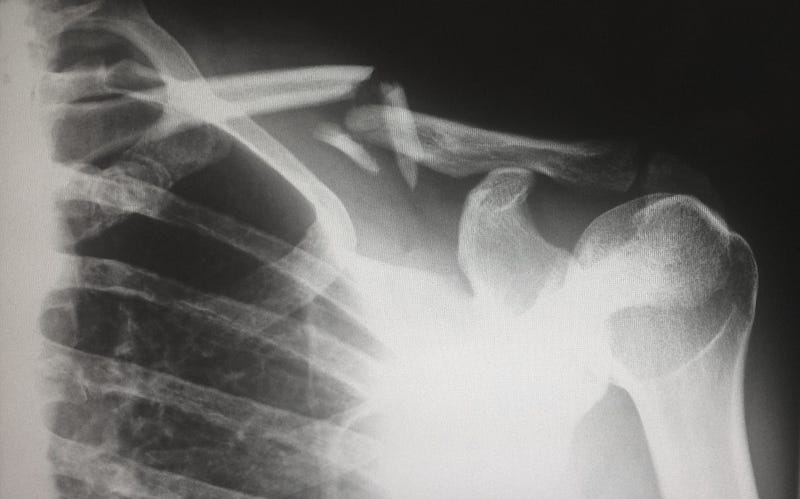
According to the Mayo clinic:
Your bones are continuously changing — new bone is made and old bone is broken down. When you’re young, your body makes new bone faster than it breaks down old bone, and your bone mass increases. Most people reach their peak bone mass around age 30. After that, bone remodelling continues, but you lose slightly more bone mass than you gain.
I don’t have to tell you the implications this has on your ability to live well for longer.
Just the thought of shattering my hip in a fall — and suffering in pain whilst I fearfully wait for a replacement — is enough to get me interested in how I can look after my bones and keep them strong in old age.
If you are anything like me, then you refuse to let age define what you can and cannot do. Whilst many aging-related issues are outside of our control, you can be dammed sure that I will do whatever I can to take care of the things that are within it. Like my behaviours and strategies for optimal living.
I will always aim to do the best I can with what I have
We live in the best of times when it comes to living well for longer. I intend to hike with my grandkids on high mountain passes well into my 80s.
As part of this promise to myself, I have to look at what I can do today as a 40-year-old man and one of those things is to strategise for optimal long term bone density.
Our bones get weaker with age, which is unavoidable. But how weak is up to us.
Osteoporosis is a condition that creeps upon us, over years. Some things are avoidable, or at least we stand a far better chance of avoiding them. Nothing is guaranteed but we can stack the odds in our favour.
Here are the key tactics to avoid severe weakening as you get older.
- Calcium intake is crucial — health experts recommend we take up to 1000 milligrams per day for men up to 70 and beyond that 1200 milligrams. For women, it is 1000 milligrams to 50 and 1200 milligrams beyond. You can meet your calcium needs through supplementation, dairy products and canned, boney salmon. Almonds and broccoli are also good sources.
- Vitamin D — It is recommended to get 600 international units per day (IUs) increasing up to 800 IUs for adults aged 70 plus.The best source of vitamin D is sunlight, and it is abundant in oily fish such as tuna and salmon. Milk and eggs are also good sources. I supplement with it as well, just to be on the safe side. There are plenty of good brands to choose from.
- Don't smoke and limit drinking — This one is self-explanatory. Smoking and drinking too much pump our body full of toxicity and strip us of vital nutrients and speed up the aging process on all fronts. Moderate drinking is fine, but overdoing it starts to add weight to the other side of the scales.
- Exercise. Especially weight training. Bench pressing, squats, deadlifts and running all help keep your bone density on point and slow the process of bone loss. It is crucial you consistently challenge your body into old age. Again without overdoing it.
Final thoughts
Nothing is guaranteed, we can do all the right things and still get sick, frail and lose bone density. There are no magic bullets that assure your success.
All you can do is stack the odds in your favour and hope that you get lucky. I believe that the right strategy today will increase my luck later on down the line.
As Ray Dalio aptly put in his excellent book ‘Principles’ — we must think about the second and third-order consequences of our actions.
Going to the gym, and getting our calcium and vitamin D daily may be annoying, time-consuming and expensive but we will look and feel better in the short term (second-order consequence) and we will hopefully be able to throw shapes without fearing a fall into old age (third-order consequence)
If that is not worth doing then I don’t know what is.


