avatarJennifer Mittler-Lee

Free AI web copilot to create summaries, insights and extended knowledge, download it at here

2471

Abstract

lter, a renowned biochemist, told <a href="https://www.statnews.com/2020/08/11/scientists-create-potent-anti-coronavirus-nanobody-inspired-by-llamas/">Stat News.</a></p><p id="3661">UCSF tweaked its nanobody to reduce the chance of an allergic reaction from the human immune system. Then they sent samples off to the Institut Pasteur in Paris for testing.</p><figure id="dbf9"><img src="https://cdn-images-1.readmedium.com/v2/resize:fit:800/0*GfXvzDmJkVY282Vt.jpg"><figcaption>A teaching laboratory at the Institut Pasteur. Credit: <a href="https://wellcomecollection.org/works/c2jsdt3f">Wellcome Collection</a>. <a href="https://creativecommons.org/licenses/by/4.0/">Attribution 4.0 International (CC BY 4.0)</a></figcaption></figure><h2 id="64c3">To Paris and beyond</h2><p id="2c7f">To test the effectiveness, Parisian researchers mixed the nanobodies with samples of monkey cells.</p><p id="7b53">Then they added coronavirus.</p><p id="cd79">To everyone’s surprise, UCSF’s nanobodies successfully prevented the SARS-CoV-2 virus from infecting the monkey cells.</p><p id="4cde">“Within four days from the day the package from the U.S. arrived, we knew we had a very potent nanobody,” said Veronica Rezelj, a researcher at the institute. “Very little nanobody was needed to completely abolish virus infectivity.”</p><p id="dc8a">Of course, success in the lab doesn’t always translate to success in the real world. The team at UCSF acknowledges that they have many hurdles to overcome.</p><p id="a583">The first step is conducting more animal studies. Once the safety and efficacy of the nanobody are better known, then humans trials may start. The team is actively searching for an investor to help fund those studies. However, the preliminary data looks promising, and the most exciting part is the nanobody’s potential use.</p><figure id="4b86"><img src="https://cdn-images-1.readmedium.com/v2/resize:fit:800/0*-x4Ird82jIbZXfo4.jpg"><figcaption>Bag of intravenous saline for infusion. Credit: <a href="https://wellcomecollection.org/works/x3r97xeb">Paul Griggs</a>. <a href="https://creativecommons.org/licenses/by/4.0/">Attribution 4.0 International (CC BY 4.0)</a></figcaption></figure><h2 id="3ced">Target the nasal passages</h2><p id="ba5c">Most human monoclonal antibodies in development require delivery by an intravenous infusion. This means administration in a hospital setting and monitoring by trained medical personnel. Intravenous administration also need

Options

s larger doses to ensure the concentration in the lungs remains high enough to be effective. All this increases the cost and decreases availability.</p><p id="b248">The beauty of UCSF’s nanobody is that it is extremely stable. The team envisions a dry powder formulation administered via a nasal spray or inhaler. In fact, the scientists have named the nanobody AeroNabs.</p><p id="282f">AeroNabs can go straight to the source — the nasal passages. Preventing the virus from taking hold there could decrease the chance of the infection invading the lungs.</p><p id="1218">This form would be portable, inexpensive, and the best part — could be self-administered. Healthcare workers, first responders, and others in high-risk environments could all see a major benefit from using AeroNabs.</p><p id="f1f2">“If AeroNabs prove as effective as we anticipate, they may help reshape the course of the pandemic worldwide,” said team biologist Aashish Manglik.</p><figure id="bccf"><img src="https://cdn-images-1.readmedium.com/v2/resize:fit:800/0*8EXl2GSaTRy6U9Og.jpg"><figcaption>Photo/PROPOLI87 / CC BY-SA (<a href="https://creativecommons.org/licenses/by-sa/4.0">https://creativecommons.org/licenses/by-sa/4.0</a>)</figcaption></figure><h2 id="558f">Guidelines for now</h2><p id="54df">Along with social distancing, wearing masks remains part of current guidelines for COVID-19 protection. For now, the best evidence supports wearing fabric masks with at least two layers; plastic face shields and neck gaiters are still being evaluated. Masks with valves (typically worn by athletes to improve endurance) are also not recommended because they may release the virus on exhalation. The general public should reserve medical-grade N-95s for healthcare workers.</p><p id="d7ef">The following are a few dos and don’ts from the <a href="https://www.who.int/emergencies/diseases/novel-coronavirus-2019/advice-for-public/when-and-how-to-use-masks">World Health Organization</a> (WHO) and the <a href="https://www.cdc.gov/coronavirus/2019-ncov/prevent-getting-sick/diy-cloth-face-coverings.html">CDC</a>:</p><ul><li>Clean hands before putting on the mask and after taking it off</li><li>A proper fitting mask should cover the mouth, nose, and chin</li><li>Mask should be snug on the face with no gaps</li><li>Handle masks by the ear loops, don’t touch the fabric portion</li><li>Never reuse worn masks, launder before wearing again</li><li>Do not share masks</li></ul></article></body>

Is Biological Personal Protective Equipment Possible?

Researchers may have found the next best thing in coronavirus protection.

Drawing by Virginia Powell, ca. 1995. Credit: Wellcome Collection. Attribution 4.0 International (CC BY 4.0)

Fighting the spike

We have made a lot of progress in the fight against COVID-19. We know the structure of the SARS-CoV-2 virus and therefore, how it makes us sick.

The group of viruses known as coronavirus display a unique structure. The virus uses protein spikes to attach to a specific site on our cells’ surface. The spikes give the virus the appearance of a crown, hence the name corona.

Researchers have long recognized that the spike formed a great target. Preventing attachment meant the virus could not enter the cell and replicate. Scientists have attempted to create human monoclonal antibodies for this purpose, but the challenges, including high cost and difficult delivery system, have proven difficult to overcome.

Like a mousetrap that never lets go

Researchers at the University of San Francisco California’s (USCF) research facility at Mission Bay have thought about this problem since March. They were already pros at studying protein structure. Now they turned their attention to how various antibodies could fight COVID-19.

The researchers had a head start — a huge catalog of antibody fragments, or nanobodies, at their disposal. Like Paul Ehrlich in 1909 searching through 606 compounds for a syphilis cure, the team combed through the billions of nanobodies in their database.

They found their magic bullet from an unusual source — llamas. These animals harbor an antibody that naturally fights infection, and it seemed to attack the coronavirus. Not only did it completely block the virus from attaching to the cell, but it also kept the spikes locked down. The llama nanobody switched them to a permanent off position.

“It’s almost like a mousetrap that never lets go,” said Peter Walter, a renowned biochemist, told Stat News.

UCSF tweaked its nanobody to reduce the chance of an allergic reaction from the human immune system. Then they sent samples off to the Institut Pasteur in Paris for testing.
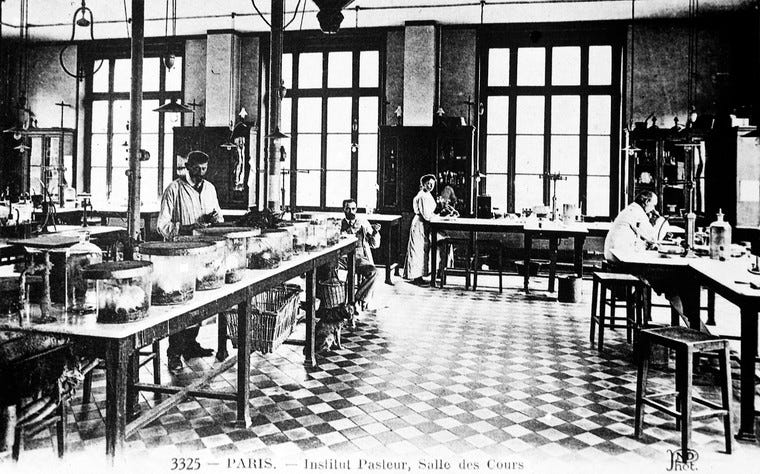
A teaching laboratory at the Institut Pasteur. Credit: Wellcome Collection. Attribution 4.0 International (CC BY 4.0)

To Paris and beyond

To test the effectiveness, Parisian researchers mixed the nanobodies with samples of monkey cells.

Then they added coronavirus.

To everyone’s surprise, UCSF’s nanobodies successfully prevented the SARS-CoV-2 virus from infecting the monkey cells.

“Within four days from the day the package from the U.S. arrived, we knew we had a very potent nanobody,” said Veronica Rezelj, a researcher at the institute. “Very little nanobody was needed to completely abolish virus infectivity.”

Of course, success in the lab doesn’t always translate to success in the real world. The team at UCSF acknowledges that they have many hurdles to overcome.

The first step is conducting more animal studies. Once the safety and efficacy of the nanobody are better known, then humans trials may start. The team is actively searching for an investor to help fund those studies. However, the preliminary data looks promising, and the most exciting part is the nanobody’s potential use.
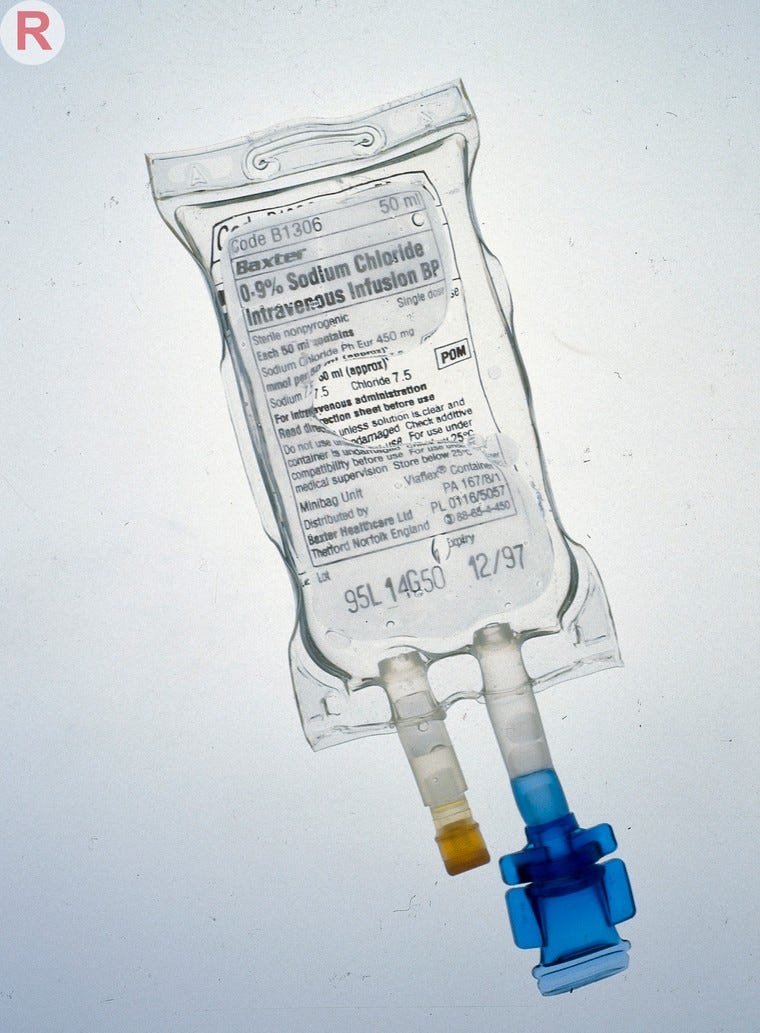
Bag of intravenous saline for infusion. Credit: Paul Griggs. Attribution 4.0 International (CC BY 4.0)

Target the nasal passages

Most human monoclonal antibodies in development require delivery by an intravenous infusion. This means administration in a hospital setting and monitoring by trained medical personnel. Intravenous administration also needs larger doses to ensure the concentration in the lungs remains high enough to be effective. All this increases the cost and decreases availability.

The beauty of UCSF’s nanobody is that it is extremely stable. The team envisions a dry powder formulation administered via a nasal spray or inhaler. In fact, the scientists have named the nanobody AeroNabs.

AeroNabs can go straight to the source — the nasal passages. Preventing the virus from taking hold there could decrease the chance of the infection invading the lungs.

This form would be portable, inexpensive, and the best part — could be self-administered. Healthcare workers, first responders, and others in high-risk environments could all see a major benefit from using AeroNabs.

“If AeroNabs prove as effective as we anticipate, they may help reshape the course of the pandemic worldwide,” said team biologist Aashish Manglik.
Photo/PROPOLI87 / CC BY-SA (https://creativecommons.org/licenses/by-sa/4.0)

Guidelines for now

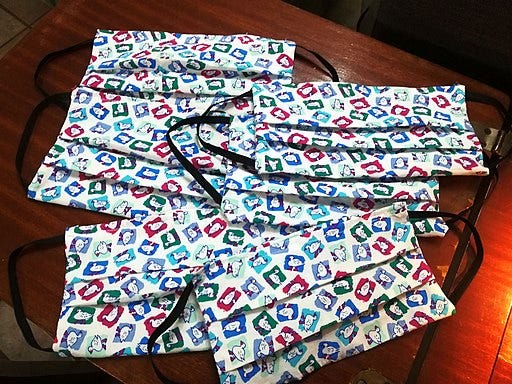
Along with social distancing, wearing masks remains part of current guidelines for COVID-19 protection. For now, the best evidence supports wearing fabric masks with at least two layers; plastic face shields and neck gaiters are still being evaluated. Masks with valves (typically worn by athletes to improve endurance) are also not recommended because they may release the virus on exhalation. The general public should reserve medical-grade N-95s for healthcare workers.

The following are a few dos and don’ts from the World Health Organization (WHO) and the CDC:

  • Clean hands before putting on the mask and after taking it off
  • A proper fitting mask should cover the mouth, nose, and chin
  • Mask should be snug on the face with no gaps
  • Handle masks by the ear loops, don’t touch the fabric portion
  • Never reuse worn masks, launder before wearing again
  • Do not share masks
Innovation
Ideas
Science
Health
Lifestyle
Recommended from ReadMedium