
Artificial intelligence intelligently
Is AI the Devil’s Spawn? Not if HI and Common Sense Prevail
AI-generated creative material needs oversight, but plenty of AI applications may be our salvation
Artificial intelligence is not new. 1950: Alan Turing published Computer Machinery and Intelligence about Machine Intelligence, called The Imitation Game. Two years later, Arthur Samuel wrote a checkers program for an IBM 701 prototype. Once known as the defense calculator, the 701 was IBM’s first commercial computer offering.
AI has a long and complicated history, which spawned AI-generated content platforms just about a year ago. In late 2022, large language model companies unleashed AI-generated writing and illustration platforms on the world. Humans, delighted by a glittering new toy, jumped on the technology and began hurling obscene amounts of money at companies like ChatGPT and MidJourney.
Humans, intelligent or not, went ape-shit for the technology without much investigation, evaluation, or prudent thought. Everyone was “writing” and “illustrating” via a proliferation of platforms that coughed up hairballs from the get-go. In under 60 days, you couldn’t find anyone who hadn’t heard of or tried artificial intelligence toys allegedly built on the backs of hard-working human writers and artists.
As a trained, experienced human writer and artist of an advanced age, I am not a fan of “creative” work performed by zeros and ones. But I do not think of artificial intelligence as the spawn of the devil, nor do I think for now that it will be the ruination of mankind. So long as we take a beat and take a close look at how chatbots need to be constrained to not violate the rights of human intelligence.
Tech experts say the more we automate, the more we need human workers to supervise, provide authentic scrutiny, and interpret the insights. That makes it more essential to keep human intelligence (HI) in AI.
Artificial intelligence economics
Marketsandmarkets.com says the global artificial intelligence software market (other than generative AI platforms, which will add $55 billion) was valued at $64 billion USD in 2022, $150.2 billion in 2023, and is projected to grow to more than $300 billion in five years. Revenue forecast? Conservatively, $1,345.2 billion. The largest market in 2023 was the US.
This technology provides a large number of jobs at all levels, from entry to top jobs, and there is a high demand for applicants. Entry-level AI engineers make around $118,166 annually, with steady increases. Engineers with three to five years of experience command salaries in the neighborhood of $150K.
College degrees are not always required. Technical schools abound, apprentice-type jobs are possible, high schools are adding AI training programs all the time, and experience in other tech fields translates to AI pretty well. This is not a terribly bleak picture. AI technology in various industries also expands the need for certain support workers.
Moravec’s paradox says that contrary to traditional assumptions, reasoning requires very little computation, but sensorimotor and perception skills require enormous computational resources.
AI — the good, the bad, and the miraculous
If we apply AI to nothing else, adding it to our healthcare toolbox was, is, and will be nothing short of miraculous. Artificial intelligence is behind machines that can detect diseases and identify cancer cells. AI makes early diagnosis more accurate, so dangerous conditions and diseases may become a problem of the past. AI identifies new drug possibilities.
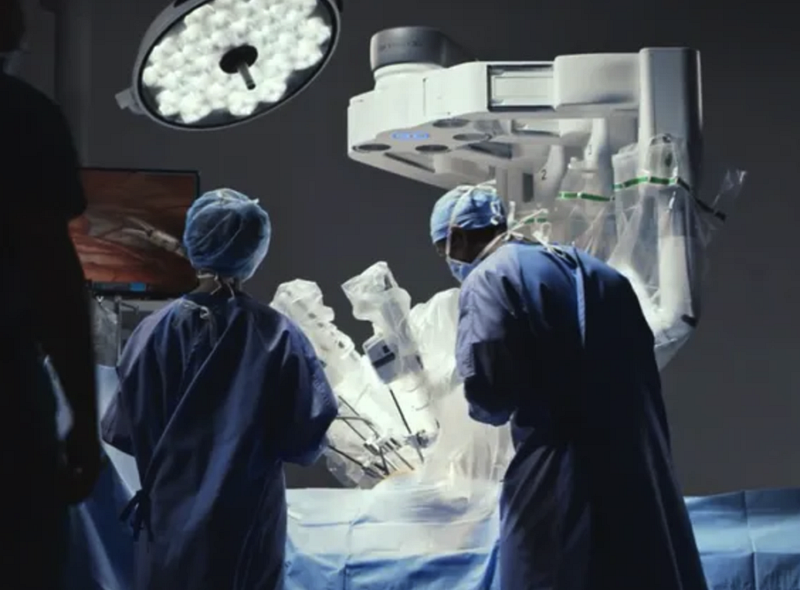
Recently, I was diagnosed with cancer, and an AI-powered robot removed every trace of the tumor from my internal organ in about 40 minutes through four one-inch incisions. I had no post-surgical pain and recovered in remarkable time. An AI scan scoped all of my organs to rule out the possibility of any other growth.
You can read here about how AI is identifying the structure of every protein in every substance. Once, it took a decade to explore fewer than a dozen protein compositions. AI has catalogued more than two million, paving the way for incredible discoveries and solutions.
Artificial intelligence, governed by careful and prudent human intelligence oversight, is making an impact in nearly every industry.
- Navigation and transportation
- Gaming and entertainment
- Education
- Security and threat prevention
- Finance
- Agriculture
- Astronomy
- Archaeology
- Manufacturing
- Homelife
For now, the ugly part is the AI-generated content segment, which is about as organized, understood, and rational as the Wild West. I’d be hard-pressed to think of another new product that was as blindly accepted and exploited as these platforms have been over the past year. Everyone seems to have lost their minds and maybe their sense of ethical behavior because chatbots are fun, shiny, and accessible.
We see students at almost every level, from primary grades to universities, churning out assignments as if the learning component has no merit. Content developers have dumped tons of half-assed “writing” and imagery on the web. People argue that it’s perfectly okay to use material that was, in all likelihood, cobbled together from material created by humans who have had no say in how it’s used.
Until the tsunami slows, it might be prudent to proceed with caution if you choose to avail yourself of chatbots and text-to-image platforms. No matter how you frame a prompt to secure an image or a story, work created by uncompensated humans and used without permission plays into the response your prompt receives. Even if you don’t specify “in the style of” a certain artist in your prompt, know that HI contributed to the database that churns out every image. You did not create it. You can’t copyright it. You may wish to consider the big picture.
In any case, the question of responsibly and ethically using AI to the advantage of HI is vast and complicated. It will be a while before we refine the technology, if we ever do. Each of us needs to be aware of the ramifications of our own actions, and it’s in our own best interests to keep abreast of developments on all fronts.
Sources:


