
Is AI Changing Football?
Data science has arrived in football. How teams and companies are using it?
Artificial intelligence is emerging in all industries. As the World Cup approaches, one may wonder if AI also has a role in soccer. Where there is data, machine learning models can be used: football produces huge amounts of data, and there are a hundred years of statistics, audio, video, news, and social network posts. Companies dedicated to AI to soccer have sprung up in recent years, and soccer teams hire analysts and data scientists. why? for what applications? this article discusses this.
The sphere that predicts the future
For as long as there have been sports there has been betting. The ancient Romans used to bet on chariot courses (Emperor Augustus is said to have lost 30,000 sesterces at the game). The ancient Romans to win the game invoked the favor of the gods or relied on magicians to write magic formulas on lead tablets.
“I call upon you, deity, and ask that you torture and kill the horses of the Green faction, and that you crush the drivers Felix and Diocles.” — Romans lead tablet to demand winning in the game
Today we no longer rely on magicians, although in 2010 we relied on an octopus to predict the outcome of the World Cup (here is one of my favorite videos in which the octopus guesses the outcome of the final). In any case, sports betting generated 2021 alone revenue of 4.33 billion (and growing, too). For betting sites to estimate the odds is crucial, so as to avoid losses with users’ winnings. Betting agencies use sophisticated algorithms to set the odds.

Predicting wins, not only interests bettors but also agencies. The problem of predicting a team’s victory or defeat has intrigued mathematicians and statisticians. An article published in Plos One used the double Poisson model to correctly predicted six of the eight participants in the quarterfinals and Italy’s victory over England:
First developed in 1982, the double Poisson model, where goals scored by each team are assumed to be Poisson distributed with a mean depending on attacking and defensive strengths, remains a popular choice for predicting football scores, despite the multitude of newer methods that have been developed. […] These predictions won the Royal Statistical Society’s prediction competition, demonstrating that even this simple model can produce high-quality results. — source
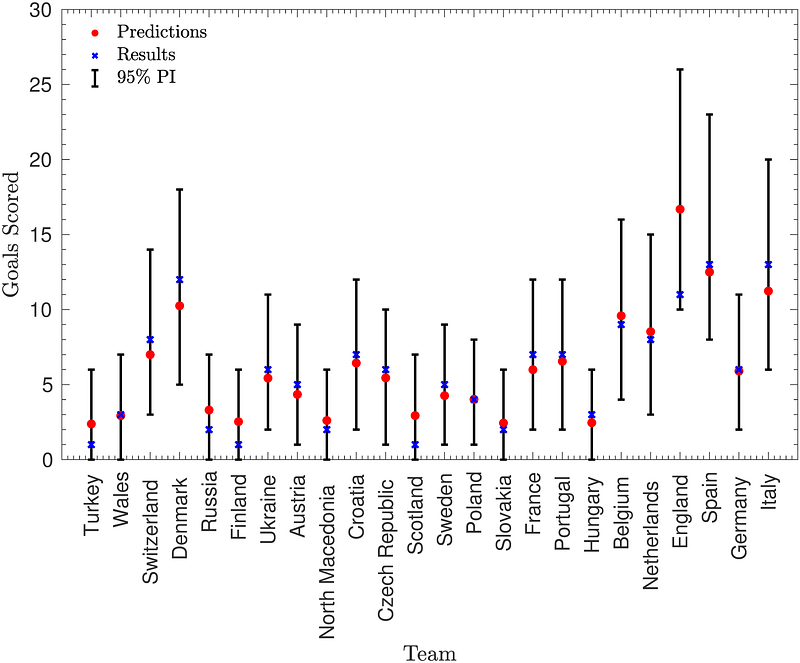
In any case, this was a retrospective study. The same authors predict Belgium’s victory in the 2022 cup. There are also other predictions and each of them discord: Lloyd predicted on the insurable value of each player (cumulative value) that England will win the cup (the method worked in 2014 and 2018). Opta Analyst using AI predicted that Brazil would win (16.3 % odds, 13 % for Argentina). Electronic Arts also simulated with algorithms who will win the cup and bet on Argentina.
The robot scout who does not miss talent
In 2003, the book Moneyball had a hit telling how Billy Beane (manager of the Oakland Athletics baseball team) used statistics to assemble the team. Beane was able to prove that the skillful use of statistics could enable him to identify players better than scouts.
It’s about getting things down to one number. Using the stats the way we read them, we’ll find value in players that no one else can see. People are overlooked for a variety of biased reasons and perceived flaws. — quote from the movie Moneyball (source)
Being able to identify talent is no small feat: in the summer of 2022 alone, 4.4 billion was spent in Europe on transferring players (this year the most expensive was Antony at Manchester Unity, 85 million, but not in the top 10 most expensive ever). In addition, there are many players who cost tens of millions and turned out to be flops.
If it is the norm in basketball today, it is not as easy to do so in soccer. In baseball, statistics have been collected and used for years, plus there are fewer factors to analyze (for example, only one team tries to score points at a time). In soccer, many models have focused only on the number of goals or goal actions, but players who do not touch the ball at that time also play an important role.

Despite the difficulties, many teams today rely not only on observers but also on companies that specialize in algorithms. In addition, many have hired analysts and data scientists. One of the most interesting examples is Brentford, which has developed its own algorithm to select players who are less valued but have high potential (buying them on a low budget and selling them at a large gain margin). On the other hand, owner Bentham had made millions with his company Smartodds, where with a team of statisticians he calculated the outcome of matches better than bookmakers.
“If David wants to beat Goliath, you can’t do that by using the same weapons,” Brentford’s co-director — source
However, it is not a matter of being able to find the most underrated player. It is also about finding the best player for the team among thousands of potential candidates. As Brentford’s owner says, the models must also pay attention to the player’s development.
There are companies that have specialized in all parts of the process. Companies that collect data on players, others that analyze them and suggest potential purchases, and others that suggest an appropriate salary. For example, SciSports tracks more than half a million players through its algorithm to potential acquisition teams.
It’s all about strategy
As several teams have discovered spending billions to get the best players does not ensure victory. Soccer is a team game, where players must cooperate. Today, several researchers and companies have focused on how to improve a team’s strategies and tactics.
In fact, the idea is not new. As early as 1950 Charles Reep analyzed games and concluded that most goals were scored from fewer than three passes, suggesting passing the ball as far forward as possible. More sophisticated approaches have been developed over the years, such as the one developed by the University of Lisboa in collaboration with Barcelona. The authors used positional data from players to establish the hypothetical threat to the opposing defense.
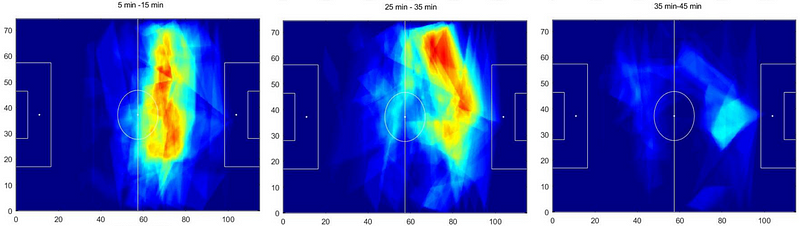
Of course, there are hundreds of passes during a game. A team that would like to analyze strategy to prepare against another team would have to analyze videos and calculate statistics. Today there are specialized companies that analyze recorded footage using computer vision algorithms and then sell the results.
However, these images are sold at a high price. To remedy this, researchers have focused on predicting how players move when not in the frame. Recently DeepMind and Liverpool FC collaborated on a similar approach, and a paper was recently published (well, David Hassabis, the DeepMind founder, is a lifelong Liverpool supporter). The authors used a combination of statistical learning, video understanding, and game theory:
We illustrate football, in particular, is a useful microcosm for studying AI research, offering benefits in the longer-term to decision-makers in sports in the form of an automated video-assistant coach (AVAC) system — source
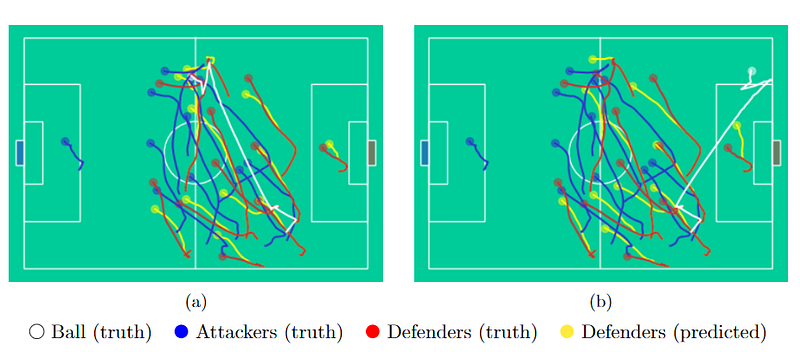
A game like football is super interesting because there are a lot of agents present, there’s competition and collaborative aspects,” — Karl Tuyls, DeepMind researcher (source)
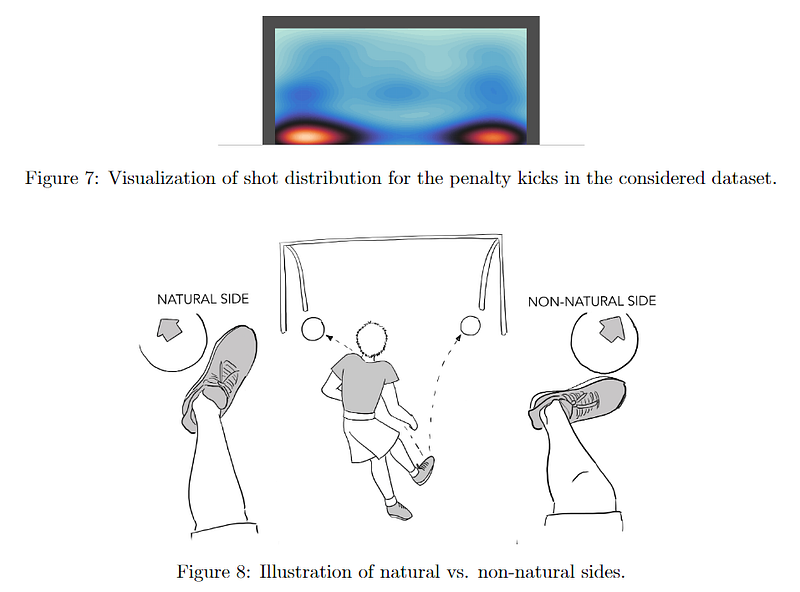
The researchers analyzed more than 12,000 penalty kicks taken by players in Europe, clustering them according to how they would have shot and whether they had scored. The analysis showed that midfielders used a more balanced approach: they were more likely to shoot on the left corner and use their strongest side.
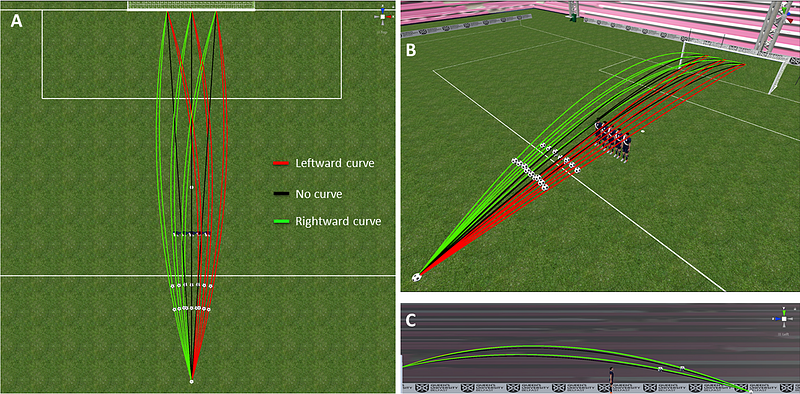
In addition, parrying a penalty is many difficult for a goalkeeper; he has only a split second to decide whether and where to throw. Therefore, goalkeepers now get statistics on where players usually shoot penalties. There are also studies devoted to free kicks, on how to set up the barrier to allow the best view for the goalkeeper.
Other studies are focusing on analyzing when the player should have a shot, when to pass it or keep it, start running toward the goal, and so on. Some of these studies use approaches that are derived from the same simulation algorithms for autonomous machines. An example, StatsDNA which was acquired by Arsenal follows this approach (relying for example on telemetry and Markov chain-based algorithm).
“I don’t think you will see big impacts in the next six months or a year, but in the next five years some of the tools will be more developed, and you could see something like an ‘Automated Video Assistant Coach’ that can help with pre and post-match analysis, or can look at the first half of a game and give you advice on what could be changed in the second half.” — Karl Tuyls, DeepMind researcher (source)
It may seem that these studies have not had an impact so far and are only still at the research level. Instead, in recent years the distance from which a player tries to shoot has been reduced. Data analytics has clearly calculated the probabilities, the more the distance increases the more the probability of scoring decreases. Supported by data and analytics, teams push players to shoot from closer range and avoid long crosses to the opponent’s area.
Also, deciding whether to replace players during the game is not an easy choice (note all the controversy over Cristiano Ronaldo’s substitution). “There is no favoritism as AI removes the emotion from decision-making,” says Martin McCarthy, who collaborates with IBM Watson on pre- and post-match analysis, change selection, and other strategies.
Only the ball remains the same
In fact, artificial intelligence is expected to revolutionize everything around soccer. There are many start-ups working on studying the best diet for players, and training so as to avoid muscle injuries. In case a player gets injured, there are studies on how to predict recovery time or the best strategy for recovery.
There are also other uses, deciding the cost of the ticket is determined using the algorithm (depending on the game, the most valuable times and dates, and so on). Not to mention, that during major events entering the stadium creates queues and errors, which is why there are companies studying the use of facial recognition for the ticketing system. Or the Bundesliga has partnered with AWS, so it can better select insights during broadcasts, produce highlights and do automatic tagging of players.
Robotic cameras that autonomously track ball movements (especially during COVID-19) have already been experimented with. Although this has not always been successful, in one game the algorithm mistook a linesman’s bald head for the ball. Fans complained that they missed their team’s goal because of this.
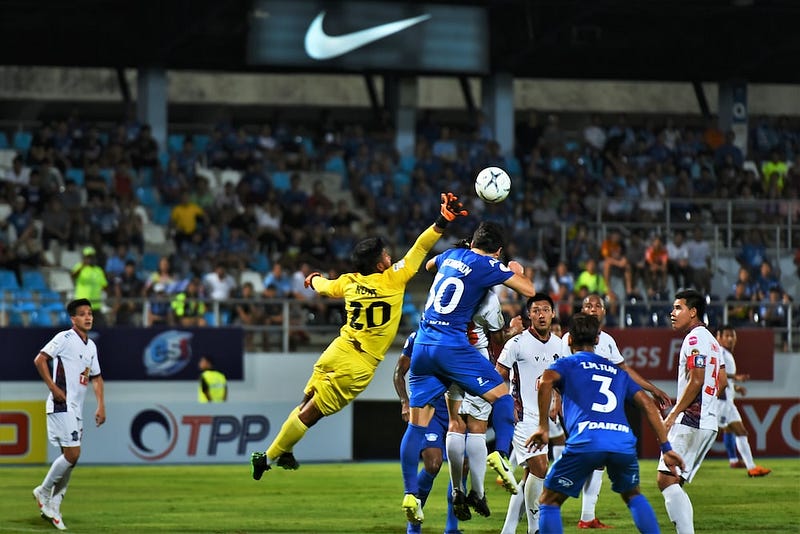
A study by the NBA showed that officials make mistakes in 8.2% of cases, and 1.49 % of decisions in the final minutes of the game are wrong (and could change the outcome of the game). Soccer does not fare any better, there has been endless controversy leading to the introduction of VAR and Goal-line technology. There are AI referees being studied, with the idea of thus avoiding controversial cases (such as Maradona’s famous 1986 World cup hand goal, “la mano de Dios”).
In addition, sports journalism is also likely to undergo changes. New language modeling is increasingly capable of generating coherent texts. Probably minor leagues that are not often covered could benefit. The Dutch local media NDC has already used algorithms to write the match report of 60,000 matches in one year.
Parting thoughts
Soccer leagues produce enormous amounts of data, from videos to thousands of posts, newspaper articles, and endless discussions. Today, many teams use sensors during practice that allow them to collect other large amounts of data. With the development of artificial intelligence, it was only a matter of time before sports would also be affected.
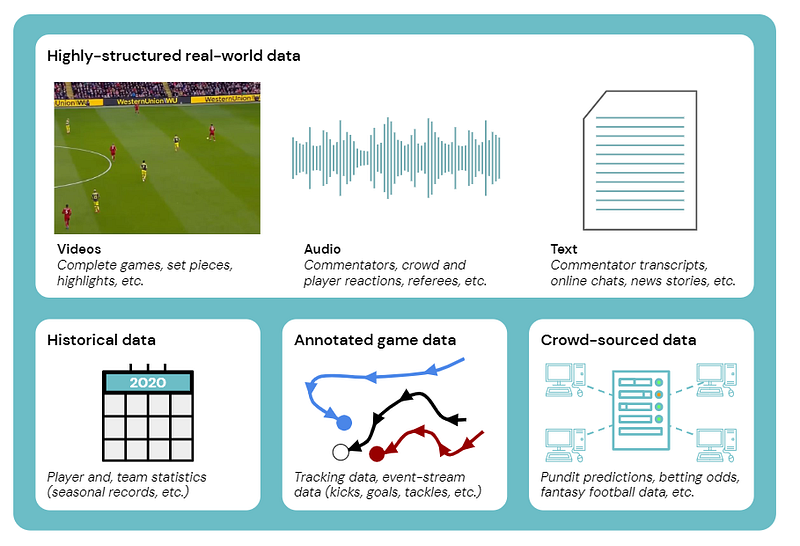
However, sports are often reluctant to change rules and introduce technologies, especially in official matches (the introduction of VAR and line technology required huge discussions). At the same time, soccer is a billion-dollar business, and it was predictable that teams would begin to rely on data science to improve signings (after all, spending a hundred million on a flop is a costly mistake).
Other aspects of the entire complex ecosystem will also be affected, from strategy to coaching, injury prediction to ticket sales, and even sports journalism.
Football is arguably one of the most challenging to analyze of all the major team sports. Itinvolves a large number of players with varied roles, few salient events, and minimal scoring — DeepMind article (source)
On the other hand, soccer presents greater challenges compared to other sports, and there are also other external factors to take into account. The revolution will come with more time. For example, a player like Lionel Messi is considered overpaid relative to his value according to algorithms, but he brings an advertising return that is difficult to calculate. Also, all the controversies related to arbitrary errors generate a lot of articles and comments, bringing interest. After all, it is a man’s sport, and without errors, controversy, and endless discussions it has less appeal. What do you guys think? Let me know in the comments.
If you have found it interesting:
You can look for my other articles, you can also subscribe to get notified when I publish articles, and you can also connect or reach me on LinkedIn. Thanks for your support!
Here is the link to my GitHub repository, where I am planning to collect code and many resources related to machine learning, artificial intelligence, and more.
Or feel free to check out some of my other articles on Medium:


