
Is Age-Old Wisdom Useless For Younger Generations?
The world has changed drastically, but have we humans changed with it?
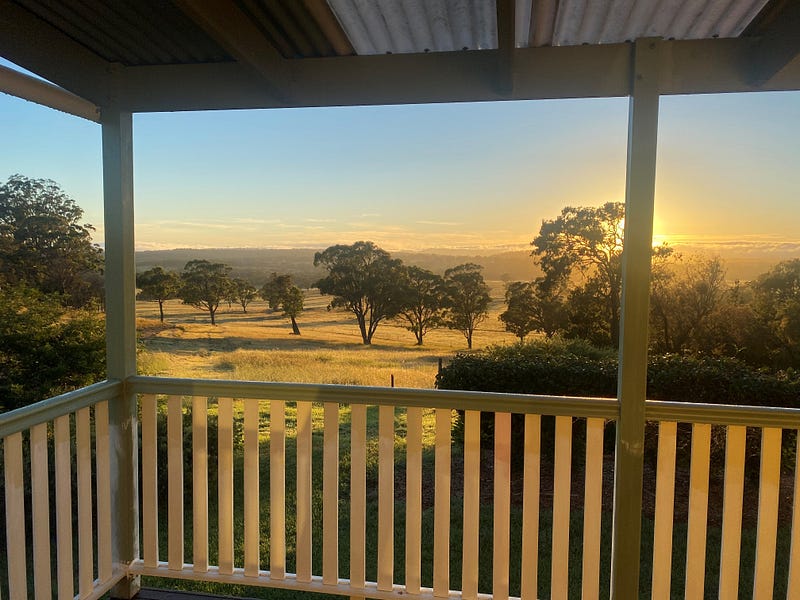
I wrote this story before my farm burned down. The bushfires got in the way of publishing it and also completely changed the view from my window (however, I’m grateful to still have the window and that my home didn’t burn down). So, I’m publishing the article now, and my following stories will be about looking at the bright side when facing disasters.
George J. Ziogas is one of my favourite writers on Medium. His articles are not only very well written but also gems of wisdom and, for me, often thought-provoking. In the latest article I read from George, “No One Cares What Your 40-Year Old-Self Would Tell Your 20-Year-Old Self”, the author talks about wasting time on “I wish I knew it earlier”- cries. I wanted to share the article here for other readers, but unfortunately, George accidentally deleted it. Nonetheless, I would encourage all readers to check George’s other articles, as they are amazing!
I would like to look at the same topic from a different perception: is there any value in the older generation’s wisdom for the modern world? Maybe, in some circumstances, the century-old wisdom is still perfectly valid in today’s world. I believe that everything in life depends on our perspective and the type of knowledge we consider.
If we just discovered how to fix the carburetor in our old car, then… well, useless knowledge, electric cars don’t have carburetors. But, when we say, “I wish I didn’t worry what others think of me and my dreams and just pursued my passion,” maybe this is as valid now as 200 years ago.
Yes, the world has changed drastically; the technology of yesterday’s science fiction is our reality. The gap between “the old generation” and the youngsters is enormous, as it has always been. But have we, humans, really changed that much? Don’t we desire friendship, understanding, respect, love, warm human connections, and peace, as the old generations did? Don’t we face adversity, pain, heartbreaks, and grief as our ancestors did?
I know we believe that nobody suffered as much in the past as we do today. However, maybe this belief comes from the separation of generations. If we would take a moment to glimpse into their stories, we would discover that their life wasn’t easy either. Often, it was harder than ours (it’s enough to check out history to know what had happened since 1900).
If a sixty years lady says, “I wish I knew alcohol and cigarettes will harm my baby. If I knew it, I wouldn’t drink and smoke, and my baby wouldn’t be disabled…”, isn’t it a lesson that is still valid in today’s world?
Sometimes, we all feel down and don’t know how to go about it. An older person comes to us and says, “You know, listening to my favorite music always cheers me up; maybe you try this?”. Wouldn’t we try their advice? This person can’t tell us which type of music will help us; we have to figure out for ourselves what we like; this is experience, but at least they gave us some idea and pointed us in some direction.
And this is also what I’m talking about, saying it all depends on the type of knowledge we want to pass. If someone came to me and said, “Listen to Artie Shaw; it will make you feel better. It is what has always helped me”, this would be rather useless for me. Let’s start with the fact I have no idea who Artie Shaw was. I just googled top music artists in the 1930s, and his name popped up. Secondly, I doubt I would enjoy this type of music. But if someone tells me, “Listen to your favorite music; it might help you”, then depending on my mood, I can turn on Tina Turner, Ed Sheeran, Brian Adams, or something I feel like listening to. And this usually helps me.
I’m a 49-year-old lady with a successful career in IT, often working with the most modern technologies, and having a life I had dreamed of already as a child (though, when I was a kid, people laughed at me, saying it was only an impossible childhood dream). I could achieve it mainly thanks to the knowledge/wisdom passed onto me by my elders. A few of the most important lessons I learned from elders and their stories:
“Don’t worry about what others say about you because no matter what you do, the majority will gossip badly about you. That’s human nature. Live your life in a way that you can look into the mirror and be happy with what you see” (meaning have a clear conscience).
“Don’t judge others because you don’t know their story. You don’t know what happened to them and what led them to become who they are today. If you don’t judge others, you will be free and not worried about what others say about you.”
“Respect everyone no matter their position. Everyone is equally important in an organization because the company wouldn’t exist without the CEO, as it wouldn’t without a cleaner — nobody would want to work in a dirty office.”
“Belief in yourselves and pursue your dreams. Don’t chase money, but gather experiences, and learn from everything life throws your way. If you do this, the money will follow” (by the way, it’s what has actually happened also in my life; in some respect, I never had the money to have the lifestyle I’m having)
The list of the lessons I’ve learned from elders’ stories is very long. Maybe some people say these are old-fashioned wisdom irrelevant to our modern world. But when I look at social media and read posts of psychologists and mental health experts, it is what they are saying, too. Don’t they say, “Don’t be afraid to be you; be yourself. Don’t try to be a copy of someone else because you are unique and this is your beauty”. That’s the same as what my grandpa told me…
I have never said, “I wish I knew this when I was younger”. In fact, there is nothing “I wish I knew it earlier”. When I hear people saying, “I wish I knew it 20 years ago”, my first thought is, “Then why didn’t you listen to elders and their stories? This is not a groundbreaking discovery. My grandpa told me this when I was little…
I had the knowledge, but obviously, I was lacking the experience. There is a big difference between “knowledge” and “experience”. “Experience” comes from the path I had to walk and discover myself. Nobody could do it for me. However, with the knowledge I had from my grandpa, I could make better decisions. When my world collapsed, and I found myself in a very dark place, I knew it was just part of life. I knew I wasn’t the only one who had suffered; in some respect, everyone for generations has faced challenges and had to cope with their own grief. I knew I wasn’t alone; I wasn’t on my own. And this in itself was very helpful.
Yes, I suffered dreadful pain, and in some respect, I felt as if all gods turned their back on me. Still, at the same time, I knew I had two choices: I either take the most common path, fall into despair and self-pity, lament that life is unfair and so on, or I take responsibility for my life (even if others caused my pain and misery), accept what had happened and do the best out of what I have.
I looked at the story of elders, and I knew where each path led them (despair and lament never lead to anything good, while taking responsibility usually had a much better outcome). Therefore, I knew which path to take. And then, I had to figure out what to do because everyone has to figure out this for themselves. Nobody can tell us how to live our lives so that we are happy with it. That is our own experience.
When things go wrong for them, many young people feel absolutely lost and lonely; there is no light at the end of the tunnel. I went through a lot of adversity in life to get where I am now; however, I never lost sight of the light at the end of the tunnel. I always thought to myself, “All the people before me faced such dreadful situations, and they were able to get through it; life changed for them, but it didn’t end through this; they managed to get through it and find happiness again, even if it wasn’t what they dreamed of. If they could do it, I can do it too. In the end, we all are just humans” — and this was my light at the end of the tunnel, showing me the right direction.
There is no point in ruminating about the past, wishing life was different, and listing all the practical lessons we have learned, not to mention wasting time on stories about “back in my days, life was better”. However, I still value sharing our stories and letting others learn from them. We have to track our own path, but we don’t need to repeat the same mistakes our forefathers did or reinvent the wheel. Life is easier when we start building on top of existing wisdom, using the knowledge of what has been discovered before us. Our technology is improving so fast, not because we keep reinventing it, but because we reuse the discoveries of others and keep improving them.
And though I'm getting older myself, I'm still learning from the wisdom of elders, their stories give me strength.