
Is Access to Electricity a Human Right?
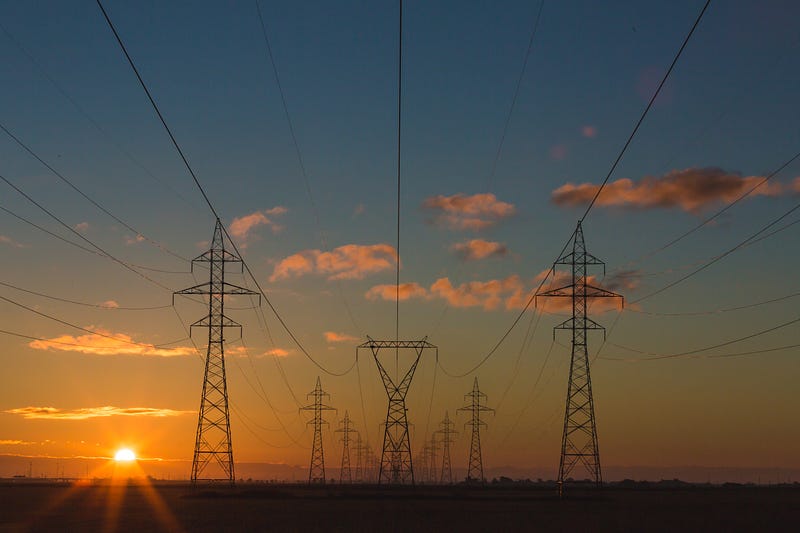
The world has changed significantly, since the fifties, when I was growing up in colonial Sierra Leone. I lived in the capital, but spent my holidays visiting my grandaunt who lived in a village on the outskirts of the capital. The means of lighting available when night fell was a tin kerosene lamp or a candle.
As you imagine from these rudimentary means of lighting, nights were dark.
I remember how I dreamt that people living outside the capital could also have access to electricity to light up after dark. As a child, I figured that these people had a right to benefit from electricity access.
You see, a lot has changed since the fifties. Electricity is not just about access to light. Electricity is about access to internet, technology, education, work.
Today, in the developed world, we cannot imagine life without electricity. A study conducted by World Net Daily, looked into the overall preparedness level of the American public; what they found is pretty troubling. Almost 50% of the people who were polled said they would not be able to survive for more than 2 weeks without electricity. 75% of them said they would be dead within two months.
Power outages in the developed countries, most recently in Texas and California are headlines in the international press.
And yet, 789 million people — predominantly in sub-Saharan Africa — are living without access to electricity, and hundreds of millions more only have access to very limited or unreliable electricity. Sub-Saharan Africa, has the worst access to electricity. I have lived in both developed and developing countries and know exactly what this means.
The COVID crisis has reminded us, in no uncertain terms, of the indispensable role played by electricity today and provides insights into how that role is set to expand and evolve in the years and decades ahead.
The millions of people confined in their homes, depend on electricity to work, to school, to shop, to entertain and to communicate. A reliable electricity supply underpins all of these services, as well as powering the devices most of us take for granted such as fridges, washing machines and light bulbs.
In addition, electricity is needed in hospitals for operating medical equipment needed to treat the high numbers of sick people and to preserve the vaccines. Electricity is also ensuring the timely communication of important information between governments and citizens, and between doctors and patients. In Sub-Saharan Africa, it is estimated that only 28 per cent of health facilities have access to reliable electricity. If hospitals and local communities do not have access to electricity, this could magnify the human catastrophe and significantly slow down the global recovery.
This shows how vital electricity is for the fulfillment of the right to work, the right to education and most importantly, to the right to physical and mental health, as well as the right of freedom of expression through modern technology. In some cases, even the basic human rights — the right to life will be compromised.
In the developed world, we do not even have to think about electricity access, and we take it for granted. But let us, for one moment, stop to consider the people living in developing countries, particularly in sub-Saharan Africa.
Steps to ensure that disadvantaged people do not have their human rights compromised during and after the COVID 19 crisis, should include prioritizing electricity solutions to power health clinics and first responders; keeping vulnerable consumers connected and increasing reliable, uninterrupted, and sufficient energy production in preparation for a more sustainable economic recovery.
SIMPLY PUT, IF ELECTRICITY HAS A KEY ROLE IN PROVIDING THESE SERVICES THEN IT SHOULD NOT BE TAKEN FOR GRANTED AND SHOULD BE GIVEN THE STATUS IT DESERVES IN ALL PARTS OF THE WORLD.
Some people have expressed concern that access to electricity to meet the needs for all, would lead to greater use of fossil fuels, with a potential to increase emissions of carbon dioxide and pollution. I find this argument hypocritical if it is made by those who consider themselves champions of human rights and who benefit from the access to electricity in their own countries. Yes, we need to maintain a safe environment but we also need to ensure that the rights of all are respected. The response should therefore be to promote electricity production by using renewables. This would involve intensifying research that would lower the cost of electricity production from renewable sources, and provide assistance to poor countries to exploit the renewable energy sources that are available to them.
Another argument could be that there are plans underway to increase electricity supply in Sub-Saharan Africa, and every day one hears of new financing that are supposed to be made available for improving electricity access. But implementation of such plans is moving at snail pace. Meanwhile poor people will continue to suffer and some will even lose their lives due to lack of electricity access. The whole world should be concerned about this. (PAUSE)
So what do I think should happen now?
Let me start by saying that there had been a general reluctance, in the past, to bring the subject of energy in general, and electricity in particular, into the debate at the United Nations and it was only in 2015, after years of lobbying and persuasion that recognition was given to energy in the 2030 Sustainable Development Agenda. Indeed, Sustainable Development Goal 7 is: Ensure access to affordable, reliable, sustainable and modern energy for all, with one target as having universal access to electricity by 2030. However, this is a target, and, according to the UN, at the current rate of progress, a projected 620 million people would still lack access to electricity in 2030. This estimate does not even take into account the disruptions caused by COVID 19.
Yes, 620 million people, mainly in developing countries in general, and Sub-Saharan Africa in particular, will have their human rights continue to be denied due to lack of access to electricity. The 2030 Sustainable Development Goals promises that “no one should be left behind” but, as the facts show, Sub-Saharan Africa will be left behind or risks being left even further behind in a world in which technological advancements make access to electricity indispensable for progress.
Even in developed countries, recent events have demonstrated that there is a need to ascertain the reliability of electricity supplies in order to ensure that there is no deprivation of human rights, even if temporarily, as this could result in undue suffering and unnecessary loss of life.
THIS IS UNACCEPTABLE! THE INTERNATIONAL COMMUNITY NEEDS TO DO MUCH BETTER.