
Is a World Without Prisons Possible?
Almost all prison systems are failing miserably, but do we need them?
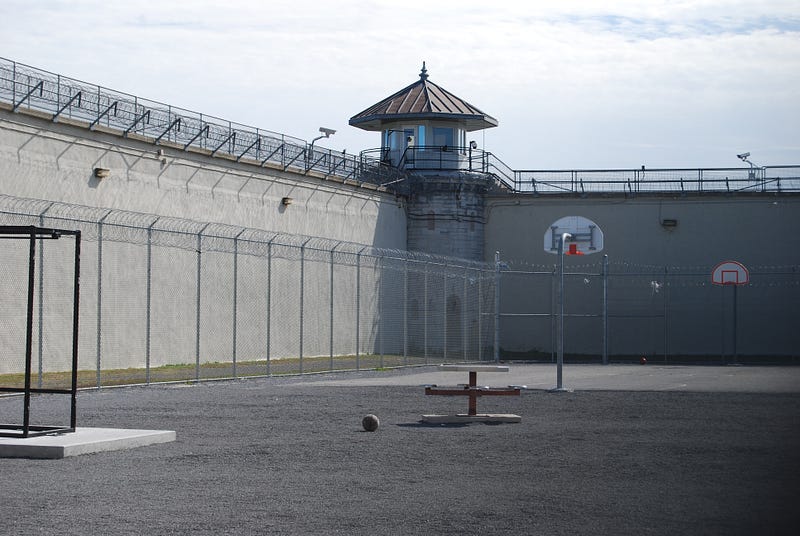
When I got convicted of a felony drug crime, I wished prisons didn’t exist.
You’re housed like an animal in a human cage. You lose your freedom. The ability to see friends and family is severely limited. You’re oftentimes subjected to draconian rules and regulations and abusive prison staff. You feel like you’ve lost your dignity and a big portion of your humanity.
Even though taxpayers are paying a shit ton of money to incarcerate you, it’s extremely difficult to get a good education and quality job training that will help you rebuild your life when you’re released. You’re not getting the most important things you need to have the best chance at rehabilitation and re-integration into society.
On the other hand, people who commit crimes must be held accountable. I was manufacturing and selling an illegal drug. I was lazy, greedy, and living a lawless life. I deserved to be arrested and brought to justice.
After losing everything and ending up in prison, I learned the best lessons in my life. But is this really the best place for people who are convicted of crimes?
A Deeper Dive into the Problem
The incarceration dilemma exists across the world, but the US prison system is a great place to start because our prison system is very bad. Although we have less than 5% of the world’s population, the US has 21% of the world’s prison population.
One of the worst aspects of this senseless incarceration is that many people shouldn’t even be in prison. The US has spent well over a trillion dollars on a failed drug war that has incarcerated tens of thousand of our citizens. Many of these people should’ve been in drug abuse treatment facilities or in county jails instead of languishing in prison.
Mandatory-minimum guidelines have caused many drug offenders to serve insanely long sentences for relatively insignificant crimes. Edward Douglas received a life sentence for selling 140 grams of crack cocaine. He served nearly 16 years in federal prison. He was released in 2019 as a result of the First Step Act, a measure that’s reduced mandatory-minimum sentences for drug crimes. This is really outrageous when you consider that many drug company executives who were responsible for killing thousands of people by selling opioids never even went to jail.
Prior to sentencing reform, thousands of our citizens received these harsh sentences. Countless drug offenders got prison terms that were longer than those given to rapists, murderers, and robbers.
Many other people are incarcerated for low-level, non-violent crimes or for driving drunk. Others are in prison for technical parole violations.
Most people who end up in prison for these non-violent offenses are people of color, who are more likely to have been raised in violent, abusive, impoverished environments, with abusive or absent parents. Unlike people who grew up in privilege, with good role models and money, these individuals are more likely to not have the money for quality attorneys. Many of them get stuck in the gears of the judicial system.
The Solution
In the current world we’re living in, I don’t think it’s possible to not have any prisons. An extremely large number of people in this world grow up in poverty, which makes it difficult to find decent jobs and get the opportunities necessary to live quality lives. Many people are subjected to abuse and trauma while growing up. These are very big factors that contribute to crime.
Other factors include jealousy, anger, rage, revenge, ego, bad parenting, drugs, alcohol, and a lack of education. All of these things lead to more crime, a lot of which will involve violence. Greed drives high-profile financial crimes in both poor and rich countries. These things won’t change anytime soon, which means that violent and major financial crime will continue unabated.
I believe we need prisons to lock up violent people who prey on society and people who commit egregious property and financial crimes.
But I also believe the best solution is to send a LOT fewer people to prison and focus more on rehabilitation. Here’s a more detailed view.
Decarceration
Decarceration is the process of decreasing the incarceration rate by lowering the number of people sent to prison and releasing people in custody far before their scheduled release dates.
There are a lot of people who don’t even belong in prisons. A Time article revealed that 39% of those incarcerated in US prisons don’t even belong there. 25% of them are in prison for non-violent, low-level offenses and would be better off if they got diversion programs, such as drug or alcohol treatment, community service, or probation.
An additional 14% of prisoners already served a long time for more serious crimes and could be safely released. Releasing these people would save $20 billion a year.
Sujatha Baliga is an attorney who runs the Restorative Justice Project. She’s helping set up diversion and restorative justice programs. Restorative justice involves arranging voluntary meetings between crime victims and the people who harmed them. The goal is to get the perpetrators to understand the harm they’ve done and attempt to get victims to forgive the perpetrators. This process helps foster healing and compassion. It also helps reduce criminal behavior.
Sujatha’s diversion and restorative justice programs have had great results so far. In Oakland, California, which has extremely high crime and incarceration rates, her programs resulted in a 44% reduction in recidivism. Sujatha described the process:
“This is a pre-charge process where these cases don’t even go to court at all. We’re never labeling this person, ‘The defendant.’ We’re never stripping them of their humanity, but rather immediately handing them over to communities that they are already embedded in and living in and really helping them come to a deeper understanding of how to be accountable without feeling lousy about yourself. But instead getting to feel great about yourself when you fix stuff that you mess up.”
Focus on Rehabilitation
Perhaps the best way to reduce mass incarceration and recidivism is to focus more on rehabilitation and less on the traditional approach to corrections, which involves punishment, isolation, and dehumanization.
We need to give incarcerated people the education and job training they need to become productive, law-abiding citizens when they get out. We need to offer them college-level educational opportunities. We need to give them marketable, practical job skills, such as computer and technology literacy and job readiness training.
We have to radically change the correctional model. A great model to emulate is the one used in Norway.
In the early 1990s, Norway realized its prison system was failing. Recidivism rates were 60% to 70%, similar to what they currently are in the US. The Norwegian Correctional Service began a major reform that produced spectacular results.
It began focusing less on punishment and more on inmate training and educational programming, guard education, and changing the overall feel of the prison environment. It got rid of electric fences and barbed wire. There were no more prison cells with bars.
Inmates now have a toilet and shower, desk, TV, refrigerator, and views of a forest. There are sofas and kitchens in shared areas. Inmates can vote. They get quality health care and education, and enjoy the same rights as Norwegian citizens.
They learn practical skills that will help them land good jobs after their release. Many of them learn graphic design, professional cooking, auto repair, and carpentry.
Norwegian guards receive 2 to 3 years of training. Each year, 175 trainees are selected from over 1,200 applicants. Texas and California have the biggest prison systems in the world, yet guards at those prison systems receive only 6 weeks and 13 weeks of training, respectively.
Guards and inmates in Norway regularly engage in activities together. They eat and play sports together. They do leisure activities with one another. Guards talk to and motivate inmates, unlike guards from other prison systems, who oftentimes despise and abuse inmates. Inmate-on-guard assaults rarely occur in Norway.
Norway’s focus on using humanity and compassion instead of punishment and overly-strict rules has had great results. Only 20% of people released from Norwegian prisons are arrested within 2 years. In the US, 53% of people who are released are re-arrested within 2 years.
Final Thoughts
Getting rid of prisons entirely is a utopian dream. It’s possible in the very distant future, but won’t happen anytime soon.
A better approach is to first stop building prisons. Then we need to focus on reducing the number of people who go to prison or are currently in prison.
One of the best tools to reduce recidivism and mass incarceration is better rehabilitation. Giving inmates job training and getting them prepared for life on the other side of the wall are great ways to help people stay out of prison. Making them feel more like human beings will also make them better citizens when they’re released.
Perhaps one of the most effective ways to reduce the prison population and rehabilitate people is to give them a good education. In the US, almost 62% of people who are released from prison are re-arrested within 3 years. The recidivism rate for people with an associates degree is 14%; it’s 5.6% for those with a bachelor’s degree, and it’s 0% for people with a master’s degree.
I got my master’s degree and was never re-arrested. Without that higher education, it’s likely I would’ve ended up back in prison, especially if you consider the extreme discrimination I initially faced.
These approaches to decarceration and more effective rehabilitation are much more realistic than getting rid of prison entirely.
Do you think it’s possible to have a world without prisons?


