
Human Nature
Irrationality. Are We Acting With Less of It?
Uncovering the grand split in our brain
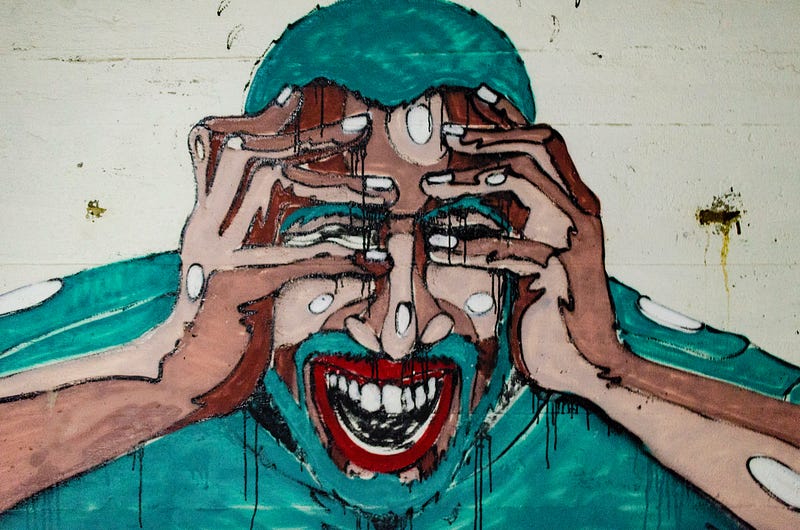
I tried to hold it in, and no, it wasn’t a fart.
Abnormal feelings of anger were swirling up to the surface and intense heat was rising throughout my body. I felt an intense pull guiding me to expel all the built-up negativity towards the person that I loved the most.
I may have just babbled a couple extra words that would completely transform the dynamic of my most beloved relationship. From the most ungraceful part of my being, I began to shout out illogical excuses to back up what I was feeling internally.
I noticed my girlfriend’s tears dripping down, and softly falling off her chin.
Immediately, I felt as though a dark shadow had gotten inside me and drilled a profound hole into my chest.
Disappointed in myself, I shook my head thinking, “Why would I ever say those hurtful things?” The following thoughts would begin to showcase my ability to minimize the seriousness of the issue. Looking for outward explanations and something or someone to blame, my rational mind began to excuse my actions by saying, “You are right. You were under attack. You had to speak out.”
For once, I felt the deep-rooted irrationality that was part of our human nature. Where do these miscalculations and poor choices come from?
Well, for those that have sustained long-term relationships, it is clear to you that fights are inevitable. Emotions are involved. We say things that we regret.
However, this incident stuck with me for the days to come.
What personality trait or aspect of me had the ability to lash out like that? Searching for answers, I came across gems of wisdom that would allow me to understand my behavior, and vanquish the habit of hurting others around me.
Join me on the road to uncover and work with our irrationality.
(Disclaimer: I’m still working on it. Hey, trust the process, right?)
Wait…There Are Actually THREE Brains That Govern Us!?
Consider some recurring human themes: binge eating, bubbles that lead to whole markets crashing, and choosing careers that make us miserable.
If we are supposed to be the most evolved species on this planet, then why are we still driven by impulses that gear us towards self-destruction?
Ancient philosophers, such as Pericles, pondered on top of large stones to deconstruct our fundamental flaw: we are pretty stupid sometimes.
Our talented neuroscientists are now beginning to affirm what old guys wearing robes in ancient Greece knew. Yes, we are pretty stupid. But we can’t help it because we evolved to develop an extremely complex “higher mammalian brain” that is composed of three parts.


Simply put, our oldest part is named the reptilian brain, which controls all automatic responses that regulate the body. Your body temperature is too high? It’s got you covered. To understand what this part does, it helps to remember the 4 F’s rule: our primal brain is in charge of our instincts to Feed, Fight, Flee, and F…(embark on very intimate, PG-21 activities).
Above that, we have the old mammalian or limbic brain. This part governs all our feelings and emotions. From here, we are able to discern complex social feelings such as trust and safety. It helps us to quickly decide to befriend a person based on their charming outlook and skinny jeans. The limbic, or feeling brain, as you’ll see, has A LOT of influence.
Lastly, our most recent acquisition (thanks evolution or whatever it was) is called the neocortex, or thinking brain. This part represents our ability to plan, make calculations, and use words to communicate concepts. This is the only part of us that understands language and intricate concepts like the quadratic formula, marketing plans, or financial statements.
Our reptilian brain does what is has to do, and minds it’s own business. However, it’s the relationship between our thinking brain (neocortex) and our feeling brain (limbic) that leads to what Robert Greene in “The Laws of Human Nature” calls our fundamental irrationality.
The Grand Split
Emotions are just cocktails of chemical reactions and sensations in our body that are meant to capture our attention, like that annoying Instagram advert that has been chasing us for months.
Remember, emotions are ruled by the limbic brain, which does not use language or words. But when we notice intense emotions arising, we try to put them into words. Where’s the beef?
Our thinking brain is struggling to make sense of what our feeling brain is, well, feeling. This has created the grand split: we don’t actually have conscious access to where our emotions and moods are coming from in the moment.
When emotions come up, we use all our vocabulary to translate them into language, and more often than not, we don’t do a very good job. For example, we may lash out in anger and scream “I hate you!” to our parents, but really we are triggered by a need for approval, and want them to accept our decision to move to Bali, and go surfing.
With the constant internal friction between our emotional self and our thinking self, shouldn’t there be a way to reach a state of balance? Greene argues that we must agree on a principle to come to terms with our irrationality.
“We constantly feel emotions, and they continually infect our thinking, making us veer towards thoughts that please us and soothe our egos. It is impossible to not have our inclinations and feelings somehow involved in what we think.”
This means that we must accept the reality: our emotions are deeply ingrained in us and they aren’t going away soon. And the first step towards a balanced state is to understand that we can train ourselves to gravitate towards being rational or irrational.
A Fact-Check on Socrates
Rationality does not imply being completely detached from what we feel.
In his book, “Everything is F*cked”, Mark Manson describes what he calls the “classical assumption.” Since the days of the Greek philosophers, Socrates and the gang declared that reason is the root of all virtues. Thinkers during the Enlightenment, such as Descartes and Kant, followed suit and announced ideas that shaped how we think of passion and emotion. For them, rationality and reason were the only ways to triumph over humanity’s animalistic desires rooted in our emotions.
However, more recently, many psychologists have realized that emotions are integral to our decision-making and actions. Therefore, the classical assumption is wrong. Life would NOT be rainbows, sparkles, and unicorns if humanity learned to control their emotions and solely rely on rational thinking based on reason.
Instead, we must understand what really goes on up there. We can imagine our mind being like a two passenger car whose riders include the emotional self and the thinking self.
Who do you think is driving?
The driver decides where to actually move, when to break, and when to speed up. To my surprise, it is actually our feeling brain that is in the driver seat. Why?
We are moved into action by our emotions. Think about it. E-motion. That translates to energy in motion. We feel emotions throughout our whole body. Muscles tense up, our stomach tightens, our face gets warm, or our chest feels pain. Through these sensations, the feeling brain communicates to us vast sources of wisdom, intuition, and also stupidity, that forces us into action.
It’s simple. Without emotions, we would be lazy, sedentary people lying around doing random things without any real intention. We would not be able to explain WHY we do things, but only explain the what or how.
Simon Sinek, in his book, “Start With Why”, explains that our limbic (feeling) brain is powerful enough to override any rational thinking process because it is precisely in charge of the reason [why] we do things, such as choosing a career or buying from a certain brand.
The Optimal Balance Between Thinking and Feeling
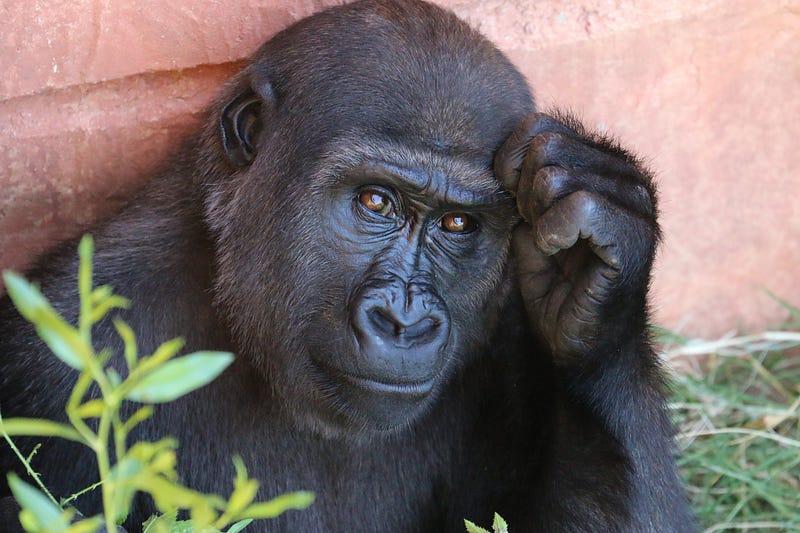
Immense clarity, satisfaction, and calmness comes during the moments we are able to work with our emotions. We understand that they have powerful influences on our behavior, and by objectively observing them in ourselves and others, our true rational self can rise to the surface.
The ancient Greeks used the metaphor of the rider and the horse.
The horse, our emotional self, has a strong will to move with all its overpowering energy. However, every controlled horse needs a rider. One without the other is useless. That rider is our thinking self. By training the rider, it will learn to hold the reins and guide the horse.
As I’ve said earlier, emotions are energy. As in all teachings, energy can be focused towards a purpose or specific goal.
True rationality is found once we realize that our energy is best used when channeled towards what both the feeling and thinking brain have mutually agreed upon. The horse and the rider must work together, allowing our genius potential to arise.
We learn to observe the feelings that arise, understand the underlying reasons they are there, and not act on wild bursts of sensation. Not only will this save us from regrets on our actions, but we will hurt others around us much less.
Leading a life based on rationality, as we’ve observed, does not necessarily force us to suppress the primal instincts, or feelings, within. Just like words, the emotions that we get are also forms of our body communicating. They are just tools in our repertoire to make good decisions.
The “inner knowing” that we receive from our emotions can be immensely aided by our evolved gift of analytical thinking. Learning to align with both can bring transformative effects in our life, and as Greene puts it,
“You want to retain the elasticity of spirit you had as a child, interested in everything, while retaining the hard-nosed need to verify and scrutinize for yourself all ideas and beliefs”
Luckily, I was able to bounce back and recognize the flaws in my actions before I lost a valuable, loving relationship. Since then, I’ve learned to manage the ways my feelings are transmitted, and involve my thinking brain in the process (or, hey, I’m trying).
The horse will no longer sprint with full force wherever it wants to go. The rider merely guides it to the finish line, which is the path of less turmoil and conflict.
From personal experience, I am beginning to embrace my irrationality. I love the fact that all experiences gift us with a choice: will we mindlessly react or tap into our rational genius?
Taming the emotional self is a journey with no end. We will never fully transcend our irrational behaviors, but we can master ourselves in a deep way by accepting them. Through the process, we’ll open up our mental space towards creative projects and experiencing moments of clarity. And, hey, we might even finally tap into that “sixth sense” that our mom has been bragging about.
I wish you the best on your path towards embracing all moments as gifts to practice the power of rationality. And may you leverage this skill to become a more flexible, resilient, and creative human being that by raising his/her consciousness, will plant the seeds to allow others to follow suit.
With love,

If you made it to this point, you are the real MVP. Writing energizes me in extraordinary ways, and I feel very grateful to be able to freely express my thoughts on this platform. I would indeed enjoy bouncing around ideas with other writers and readers, so therefore, feel free to connect with me through my main platforms: LinkedIn, Instagram, or Twitter. Also, I invite you to browse through a new project that I’m working on, The Innergy Motto. Have an awesome day!