
Iranian Hijab Protest: A Four-Decade-Long Oppression of Women
Slogan chanted by protestors— “Woman, Life, Freedom”
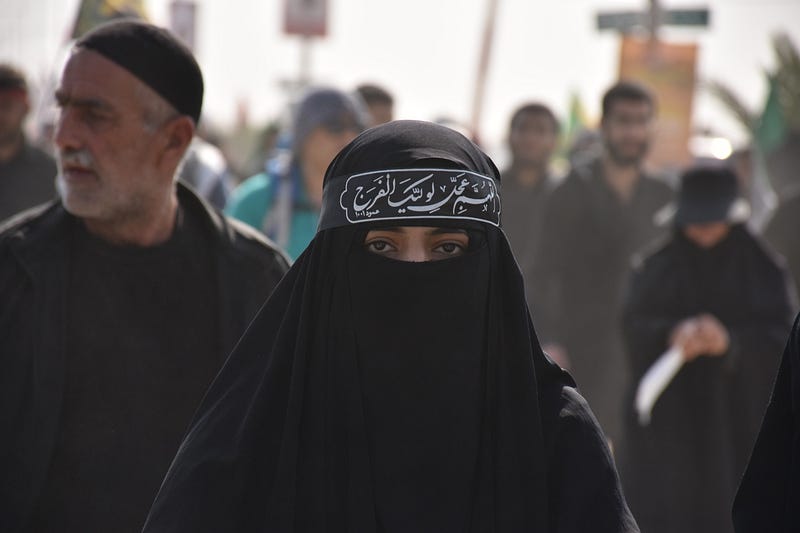
The women are protesting in Iran by not wearing the legally required headscarves. But now things have gone beyond the Hijab against the repressive regime.
It all began when a 22-year-old Iranian girl named Mahsa Amini, fell into a coma after being beaten by Iran’s Morality Police. She was arrested for wearing an improper hijab. Iranian Media reported that she died in hospital.
According to the reports, the incident took place on the 13th of September when Amini was traveling with her Brother Kiarash to Tehran, at the entrance of Shahid Haghani Expressway, she was detained by Morality Police for a one-hour re-education class.
The re-education class is dubbed as the detention center for not conforming to the country’s mandatory hijab rules.
Just after Mahsa Amini’s death, the protest broke out, when her family member Yasi a 20-year-old girl, rejected to wear the hijab. She ran into the streets, waving the scarves and shawls, which usually she wears over her blond hair, in an angry concession to the law of the land.
Yasi said in an interview that — “it could be me, my friend, or my cousins instead of Mahsa Amini.”
The protest has been raging outside her house since Mahsa’s death.
This isn’t any casual protest, it has already hit the economy of Iran.
Now the Iranian authoritarian government is being challenged because of suffocating repression and social restrictions handed down by a handful of elderly clerics.
Despite the international condemnation, those elderly clerics neither showed any sign of moderating nor did the authoritarian government show any effort to stop them.
This protest started with the death of a girl but this is not about a single girl — this is because of the huge systematic discrimination against women by the Iranian system. Women are always treated as second-class citizens.
The fundamental rights are made only for men.
Other people can’t imagine what it is like being in the place of those women being treated as second-class citizens — the girls are being sexually exploited, harassed, jailed, fined, and lashed for the crimes — and crime is no murder or such thing; it is just not covering their hair and complete body in public.
Domestic Violence & Exploitation:
Domestic violence against women isn’t considered a crime according to Iranian law.
Even the murders as the result of domestic violence or honor killings are treated as normal and are given very less importance than murder cases. Generally, domestic violence is regarded as a family matter.
Even Human Rights has criticized the law for domestic violence — “it does not provide effective and sufficient guarantees to protect women against violence and, in many cases, promotes and supports stereotypical, discriminatory, and sexist views toward women.”
Marital rape is completely legal.
For the rape victims who come to seek justice, the culprits are often prosecuted for crimes such as adultery, immoral behavior, or indecency — instead of pressing the rape charges.
The accused rapist can be punished only if the eyewitnesses are in numbers (and that too preferably should be the religious fundamentalists).
The legal age for a girl to be married is 13 years, but if the father or judges give consent then the age limit can become less than 13 as well!
Insane, but true!
There are 40,000 child marriages registered and many of them are under the age of 13.
Mandatory Dress-code for Women:
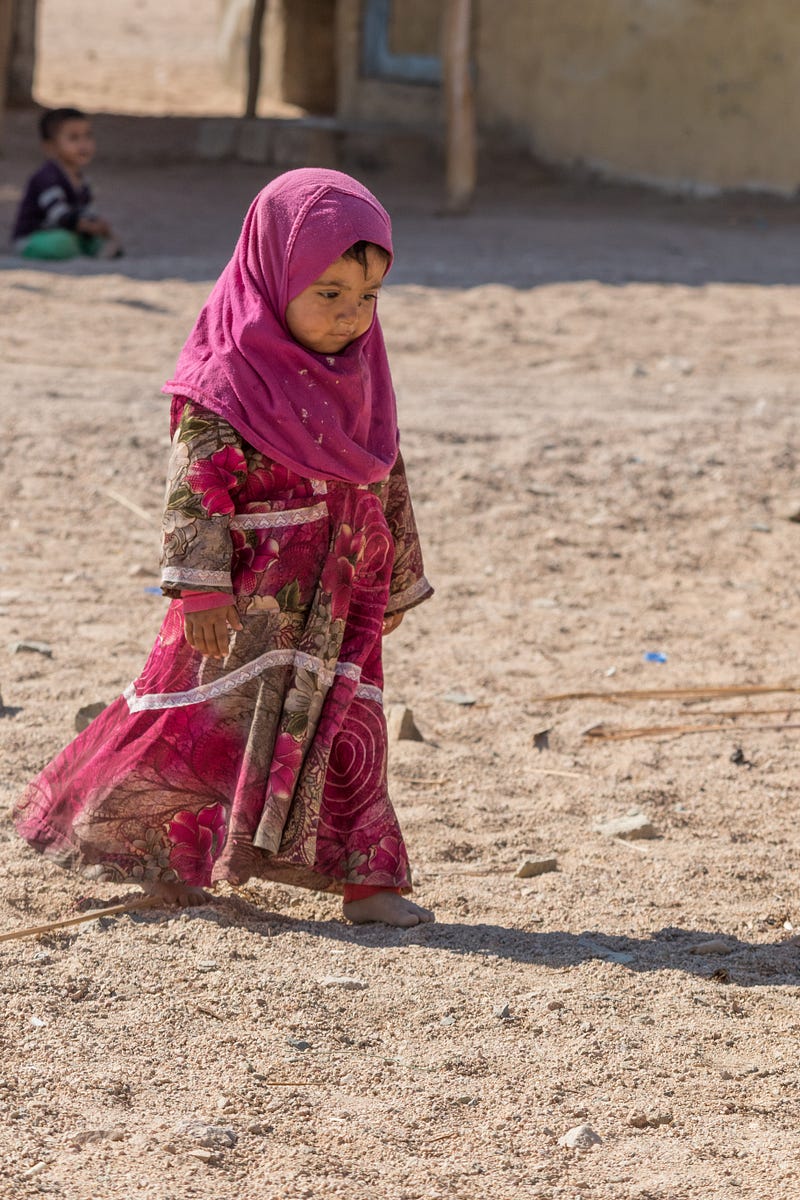
There is a morality police department in Iran — that goes out to seek girls or women who don’t wear the attire to cover their full body in public.
For the dress code violation, any woman can be detained, harassed, fined, and flogged.
Publicly, women are protesting by not covering their heads and waving headscarves in the air.
It is a dress code violation according to the Iranian Regime. There is a law such as “inciting corruption and prostitution” under article 639 of the Islamic Penal Code to punish two months in prison for not wearing a Hijab(headscarf), and for encouraging other women not to wear a hijab the punishment is ten tears of prison.
Men are allowed to have four wives and unlimited temporary wives, while a woman can have only one husband.
If the husband is willing to divorce, he doesn’t have to state the issue, on the other hand, women can’t divorce until and unless her husband is an impotent, insane, or drug addict.
Restricted Opportunities:
Women are not allowed to serve including the high rank such as supreme leader or as members of the Iranian Guardian Council. The council always disqualifies women, if they register as presidential candidates. Women are not permitted to serve as judges.
Even movies based on women’s rights are banned as they will spread subversive ideas about women’s rights.
Iranian law requires that women can’t sit next to men in public transport, in schools, at weddings, and even in stadiums too. Women generally are not allowed to attend men’s sporting events.
Iranian law gives husbands control over their wives to work. Husbands are legally allowed to block their wives from jobs. Even employers need a husband’s consent for offering a job to a woman.
Iranian law also restricts women from pursuing courses such as engineering, science, nuclear physics, English literature and etc.
At last:
There was a time when Mohammad Reza Pahlavi ruled Iran from 1941 to 1979. This government was so liberal and moderate, women in Iran got all the rights that today most developed countries do have.
Women were allowed to study higher education, they had the right to vote. The laws were amended equally for males and females.
Women could choose what they need to dress and what not.
Iran’s 1967 Family Protection Law was one of the most liberal laws in the Islamic world.
Every citizen had all equal rights.
But now time has changed, the regime has been changed, and laws have been changed. The four decades of smoldering discontent are erupting now.
The core reason for the ongoing protest can be the decades of patriarchal oppression.
These women want only one thing today. They are raising slogans — “Woman, Life, Freedom” — in the response to the death of 22-year-old Mahsa Amini.
The protest is growing as a result of the government responding violently.
The father of Mahsa Amini refused to allow any kind of Islamic prayers over his daughter’s dead body.
He said to the Islamic preacher who was praying, “Your Islam denounced her, now you’ve come to pray over her? Aren’t you ashamed of yourself? You killed her for two strands of hair! Take your Islam and go.”
Iran’s Regime may manage to crush this protest. But they can’t crush the desire for freedom of women.
We may witness the biggest revolution for women.
References:
https://www.opindia.com/2022/09/iranian-hijab-protests-ancient-persian-god-ahura-mazda-mahsa-amini/ https://www.nytimes.com/2022/09/26/world/middleeast/women-iran-protests-hijab.html https://www.unitedagainstnucleariran.com/irans-war-on-women?gclid=CjwKCAjwvsqZBhAlEiwAqAHElTIhCYi5PeMbmclu5FI-6CIoM3Xwz27KIseRRjMp_i_j41Gs0nQm9hoCvJoQAvD_BwE https://www.dnaindia.com/world/report-you-killed-her-for-two-strands-of-hair-mahsa-amini-father-refuses-to-perform-islamic-prayers-over-her-body-2987147


