
Invisible Privileges in the Time of Coronavirus
The pandemic helped me see how oblivious people can be to their privileges.
During the initial days of Coronavirus lockdowns, one of my family members shared their concern about the government’s decision to allow migrant workers to travel back to their native villages. They were worried that the virus will now spread more quickly because of the mass travels.
The concern was not exactly a misplaced one. Given the pandemic situation, it is advisable to stay at home and limit the travel to emergencies only.
However, bringing back the migrant laborers to their native is also an emergency.
When the coronavirus started spreading, and the government of India declared 21days nationwide lockdown giving barely four hours of notice — the whole country came to a standstill. All modes of transportations were shutdown.
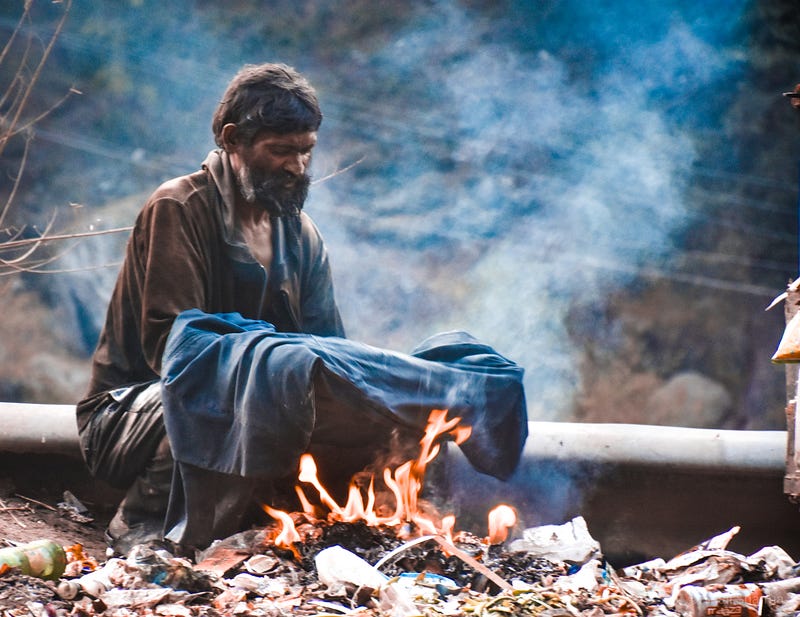
Contractors and factory owners stopped paying daily wages and asked their laborers to vacate their shelters. Without jobs, they were struggling to earn their daily bread. Traveling back home was also not an option for them as there was not enough time to catch the last bus or train to their hometown.
When the country was getting ready to fight against the virus, everyone overlooked the plight of these migrant workers. The government did not think much about how these people will survive without food and shelter.
In such dire circumstances, it is obvious for anyone to try and rush back to their native place. With all means of transport facilities being closed, thousands of migrants began walking back home with empty stomachs — to their villages, which are hundreds of kilometers away.
At home, at least they will have a roof over their heads and something to eat.
After many weeks of the first lockdown declaration, the government finally woke up to the plight of the migrant laborers. It started planning for providing transport facilities for them to go back to their native.
However, the sufferings of these people remained invisible to the rest of the country. The majority of the population was worried that bringing back the workers to their native will cause the virus to spread faster.
The whole situation reminds me of the quote: Privilege is invisible to those who have it.
People who are safely put in their comfortable homes and have stocked up food for weeks are oblivious to the fact that human beings cannot sustain without food and shelter. These are basic necessities for survival.
People cannot see how privileged their behavior is in this time of crisis.
Most of us can work from home and continue to get our salary on time. We can order food and vegetables online anytime we want. We get bored staying inside our warm and safe house binge-watching Netflix. We do not need to step out of our homes unless there is a medical emergency.
All these privileges have made us blind towards the suffering of the people — people who are hundreds of kilometers away from their homes and do not have even a day’s savings to sustain without work.
The current crisis has thrown the migrant worker population into a whirlwind of uncertainty and despair. Without shelter, money, or food, migrant laborers are dying out of starvation.
Instead of trying to support the cause of the underprivileged, we are worried about the probable spread of viruses. People are flooding social media with posts against govt’s decision to provide transportation to the migrant workers.
How deluded can we get with the privileges that we are inclined to prevent the now homeless and jobless people from coming back to their villages in this trying time! These are the same people who built our homes and apartments in which we are comfortably sheltering now, but we fail to see their distress.
Instead of mourning the deaths of hundreds of fellow human beings dying due to starvation caused by unplanned lockdowns, we chose to focus on justifying the act itself!
I hear coronavirus pandemic is equal for everyone, and it does not differentiate between rich and poor. However, It cannot be farther from the truth.
Underprivileged people have higher chances of getting infected due to their living conditions. We cannot expect people living in slums to be able to maintain social distancing. We cannot expect people without any savings to stay at home for weeks together without going out searching for a job.
We must be delusional to assume people who are not able to afford food to buy sanitizers.
I hope we, the privileged ones, wake up from our slumber and see the struggles faced by migrant workers. If we cannot help them directly, at least we should be able to sympathize with their pain and suffering.


