
Invisible Armies & Proxy Warfare
How Proxy Entities Challenge Accountability — Navigating International Laws and Norms in a World of Hidden Warfare
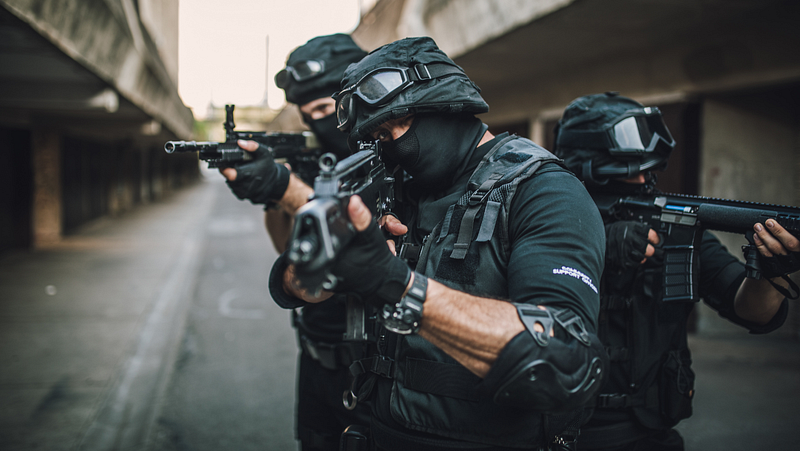
Proxy warfare stands as a prominent feature in today’s global conflicts, with the activities of Russia’s Wagner Group in Ukraine acting as a stark embodiment of this strategy.
Employed under a veil of plausible deniability, such groups allow nations to exert influence and drive their geopolitical agendas, all while skirting the boundaries of direct engagement and accountability.
Yet, this maneuvering isn’t exclusive to Russia. Western nations, despite voicing opposition to such tactics, have been known to employ similar strategies.
From the deployment of professional military contractors and special forces to the use of drone warfare, the West has found ways to maintain a global presence, preserve interests, and mitigate direct involvement.
This phenomenon reveals a glaring challenge to international norms governing warfare.
Civilian casualties, potential war crimes, and the muddying of international legal waters are consequences borne from this trend.
It points to an urgent need for comprehensive reforms that bolster transparency, accountability, and the protection of innocent lives in the increasingly complex theatre of war.
Proxy Warfare Defined
Proxy warfare is a form of conflict in which third parties are leveraged to fight and influence an indirect confrontation between major powers.
It’s a strategic choice employed by states to avoid the conventional, direct conflict that could escalate to undesirable levels, or draw unwanted attention and backlash.
Under this model, nations employ a variety of proxy entities, ranging from private military contractors and special forces to organised non-state actors and local militias.
This enables them to project power, safeguard their interests, and alter geopolitical landscapes without officially setting foot on the battlefield.
Inherent in the fabric of proxy warfare is plausible deniability, a significant feature allowing states to deny involvement and evade responsibility.
This strategic obfuscation poses significant challenges to maintaining transparency, upholding accountability, and preserving international norms governing warfare.
It’s a tactic that has profound implications on the ground, impacting civilian lives, geopolitical stability, and the state of global peace.
Russia’s Wagner Group
The Wagner Group stands as a prime example of a modern private military company utilised in proxy warfare.
Though not officially recognised by the Russian state (with Wagner’s leader now having recently rebelled against Russian dictates) its operations in Ukraine and beyond have been inextricably aligned with Moscow’s interests, manifesting predominantly in conflict zones where Russia seeks to secure political and economic gains.
The group has gained significant international attention for its actions in Ukraine in recent years particularly, where it played a critical role in supporting pro-Russian separatists.
It’s footprint has also extended across various global hotspots, including Syria, Libya, and Africa, where it reportedly offers military services in exchange for resources and political influence.
What distinguishes the Wagner Group is its veiled nature. While it carries out tasks typically reserved for a nation’s armed forces, Moscow maintains an arm’s length relationship, providing the group with a layer of plausible deniability.
This relationship enables Russia to reject direct accountability for the group’s actions and to sidestep criticisms and potential violations of international laws.
Where Wagner Group soldiers have been accused of committing atrocities, the Russian state has been able to claim “plausible deniability”.
The tactics of the Wagner Group, often shrouded in secrecy and away from the public eye, bring a new dimension to proxy warfare.
The group’s activities raise concerns about the increasing privatisation of warfare, and the subsequent challenges this brings in ensuring accountability, adherence to the laws of war, and protection of civilian lives.
Proxy Practices in the West: A Closer Look at Complicity
Despite public opposition to practices like those of Russia’s Wagner Group, Western nations are not immune to the allure of proxy warfare.
This approach, deployed subtly and often concealed beneath layers of bureaucracy and semantics, enables these nations to participate in global conflicts while maintaining a degree of separation from direct engagement too.
In the United States, for example, private military contractors have been a fixture of the nation’s foreign policy, particularly visible during the Iraq and Afghanistan conflicts.
These organisations, such as the formerly named Blackwater, operate in volatile regions, performing tasks ranging from security protection to direct combat roles.
Their operational conduct, however, has raised significant questions about accountability and compliance with international humanitarian laws.
The United Kingdom, too, has utilised private entities and special forces in conflict zones, contributing to this trend of outsourcing warfare.
The extensive use of drone warfare by Western nations, primarily the US, introduces a new layer to this discussion too.
Drones offer an ability to strike targets remotely, minimising risk to military personnel. Yet, their use often results in civilian casualties and raises questions about oversight, accountability, and ethical considerations.
These practices underscore a widespread complicity in the West.
Historical Context: The evolution of proxy warfare.
Proxy warfare, while seemingly a product of contemporary geopolitical manoeuvring, has historical roots that trace back centuries.
The French Foreign Legion, established in 1831, for example, can be seen as an early example of a state’s utilisation of proxy forces, setting a precedent that still echoes today.
Originally created to protect and expand French colonial interests, the Legion was composed mainly of foreign nationals. These volunteers were often drawn from the ranks of those seeking redemption, adventure, or a fresh start.
What set the Foreign Legion apart was its detachment from the regular French military, offering France an opportunity to pursue its objectives without the same level of direct responsibility.
The Legion was engaged in a multitude of conflicts, ranging from colonial wars in Algeria and Indochina to both World Wars.
Their operational autonomy allowed France to carry out military objectives while distancing the nation from potential political repercussions.
This separation served to insulate France from some of the accountability tied to the actions of traditional military forces.
The Legion’s existence demonstrates an early understanding of how a nation could use an external entity to further its geopolitical aims, potentially bypassing domestic and international scrutiny.
In many ways, the French Foreign Legion’s historical role laid the groundwork for modern practices in proxy warfare.
The evolution of proxy warfare can be viewed as an adaptation to changing geopolitical climates, technological advancements, and shifts in warfare norms.
During the Cold War, for example, the United States and the Soviet Union used proxy warfare extensively to wage conflicts on ideological battlegrounds without triggering a direct, potentially nuclear, confrontation.
This period saw the funding, arming, and training of local factions in diverse regions such as Vietnam, Korea, Afghanistan, and various Latin American and African nations.
These proxy wars served to extend the superpowers’ spheres of influence and combat perceived threats, while keeping the risk of escalation in check.
In the post-Cold War era, the dynamics of proxy warfare began to change.
The rise of non-state actors, along with the increased use of private military contractors and special forces, added new dimensions to the proxy warfare playbook.
The broadening of proxy actors provided states with even greater distance from direct conflict, offering an enhanced layer of deniability and a decreased risk of retaliation.
The advent of technology further revolutionised proxy warfare, with remotely piloted drones becoming a prominent feature of the modern battlefield.
This has allowed states to conduct operations with an unprecedented level of detachment, raising new ethical, legal, and accountability questions.
American and British Contractors: Exporting the Battlefield
The utilisation of private military contractors by the United States and the United Kingdom represents a key component of their modern approach to warfare.
These contractors, often staffed by former military personnel, provide a range of services, from logistics and maintenance support to direct combat operations.
Their use has been particularly prominent in recent conflicts such as those in Iraq and Afghanistan.
American firms like the former Blackwater (now Academi) and British companies such as Aegis Defense Services have operated extensively in these regions.
They’ve been involved in numerous high-profile incidents, prompting discussions about oversight, accountability, and adherence to international humanitarian laws.
These contractors operate in a nebulous space. They are not considered part of the regular armed forces and are often subjected to different legal frameworks, complicating issues of jurisdiction and accountability.
This can lead to situations where violations of laws and norms can go unpunished, further muddying the waters of international conflict.
The utilisation of private military contractors essentially exports the battlefield, extending the reach of nations while providing a buffer against direct responsibility for actions undertaken.
Special Forces: The Elite Shadows
Special Forces units represent another layer of complexity in the landscape of proxy warfare. These elite troops, highly trained in unconventional warfare, operate across the globe, often working under the radar to achieve strategic objectives.
The United States’ Navy SEALs, Delta Force, the United Kingdom’s SAS, and similar units from other nations are engaged in missions that include counterterrorism, reconnaissance, and direct action against specific targets.
Their highly specialised skills and ability to operate covertly make them valuable assets for their respective governments.
The secretive nature of Special Forces’ missions grants them an ability to move and act without attracting public attention.
This secrecy often leads to a lack of transparency, making it difficult to hold these units accountable for their actions.
Though part of the official military structure, their operations can resemble those of private military contractors in terms of obfuscation and deniability.
In some cases, these units have been linked to controversial actions, including targeted killings and other acts that blur the lines of international laws and norms.
Their role in the broader context of proxy warfare emphasises the nuanced and multifaceted ways in which nations extend their influence and project power without direct, conventional military engagement.
Special Forces illustrate the fine balance that modern states must navigate between achieving strategic goals and maintaining adherence to international legal and ethical standards.
As instruments of foreign policy, these “elite shadows” of warfare raise essential questions about oversight, governance, and the evolving nature of conflict in our time.
Drone Warfare: The Silent Watchers
Drone Warfare had introduced a further high-tech dimension to the practices of proxy warfare and has become a defining aspect of modern military strategy.
Unmanned aerial vehicles (UAVs), or drones, provide the capability to surveil, target, and strike from vast distances without risking the lives of soldiers.
Their widespread adoption is reflective of technological advancements that vary in design, capability, and purpose.
From small surveillance drones used for intelligence gathering to larger, armed drones capable of targeted strikes, drones have become highly effective tools.
The strategic applications of drones are extensive, including counterterrorism operations, border security, search and rescue missions, and more.
Countries like the United States, Israel, and the United Kingdom have effectively integrated drones into their military doctrines.
This adoption, however, has brought significant ethical and legal questions to the fore, especially concerning targeted killings outside recognised war zones.
The lack of transparency in decision-making, unclear accountability mechanisms, and potential violations of sovereignty challenge established international norms.
A major and persistent concern surrounding drone warfare is the risk of civilian casualties. Strikes that miss intended targets or are based on faulty intelligence can lead to the tragic loss of innocent lives.
This problem is exacerbated by the difficulty in accurately determining targets and the remote nature of drone operation.
Additionally, while drones remove pilots from physical danger, the psychological impact on operators controlling these unmanned vehicles can be profound, leading to stress, anxiety, and a disconnect between the virtual act of killing and its real-world consequences.
International responses to drone warfare have varied, with some nations developing their drone programs, while others call for tighter regulation and oversight.
Balancing the strategic benefits with the ethical considerations remains a contentious issue in international relations.
The Human Cost: A stark look at the civilian toll
The Human Cost of proxy warfare is a profound and often overlooked aspect of modern conflict, manifesting in a stark and tragic toll on civilian populations.
This tragic dimension extends across various forms of proxy warfare, including the utilisation of private contractors, special forces, and technological means such as drones.
Civilian casualties are not a new phenomenon in warfare, but the indirect nature of proxy conflicts often exacerbates the lack of accountability and oversight.
In regions where private military contractors operate, incidents involving civilian harm may go un-investigated or unpunished, shrouded in a cloud of legal ambiguity.
Special forces, with their covert nature, may engage in operations that lead to unintended civilian loss without sufficient public scrutiny.
The use of drone strikes offers a particularly poignant example of how remote warfare can lead to civilian casualties.
Despite the precision that technology purports to offer, errors in intelligence, targeting, and execution can, and do, lead to the deaths of innocents.
Such incidents have occurred in places like Pakistan, Yemen, and Afghanistan, often leaving families devastated and communities disrupted without clear avenues for redress.
The psychological toll on affected populations must also not be underestimated. Living under the constant threat of drone strikes or in areas controlled by proxy forces can create an environment of fear and uncertainty.
This psychological impact, in turn, can have long-term effects on mental health, community cohesion, and overall stability in the region.
Even in the context of seemingly “controlled” engagements like those conducted by special forces or highly trained contractors, the human cost can be immense.
Operations may lead to collateral damage, affecting non-combatants caught in the crossfire, or indirectly impacting civilians through the destruction of infrastructure, loss of livelihoods, and displacement.
The lack of clear accountability mechanisms in proxy warfare contributes to a culture of impunity, where transgressions against civilians may go unchecked.
International laws and norms that aim to protect non-combatants often find limited application in these shadowy conflicts, leading to a breakdown in the traditional safeguards that govern warfare.
The Accountability Gap: Examining how nations evade responsibility
The Accountability Gap in proxy warfare presents a fundamental challenge to the pursuit of justice and the enforcement of international laws and norms.
Nations have historically leveraged the indirect nature of these conflicts to evade responsibility, an alarming trend that continues in modern warfare.
One of the principal methods of evading accountability lies in the use of private military contractors. As these groups operate outside the traditional military chain of command, their actions often fall into a legal grey area.
In cases of misconduct or war crimes, it can be difficult to establish jurisdiction and launch a thorough investigation.
This ambiguity can offer nations a degree of deniability, blurring lines of responsibility, and making it challenging to hold them accountable.
Similarly, the covert operations conducted by special forces units are often shrouded in secrecy, allowing nations to deny or downplay their involvement.
As these operations are typically classified, it becomes extremely challenging to investigate claims of wrongdoing or breaches of international law.
This secrecy can facilitate a lack of transparency that allows countries to avoid accountability.
Drone warfare presents another layer of complexity. The remote nature of these operations, combined with the often unclear chain of command and decision-making processes, can obscure lines of accountability.
When a drone strike leads to civilian casualties, it is often unclear who should bear responsibility. The lack of an international legal framework governing the use of armed drones exacerbates this accountability gap.
The human cost of this accountability gap is tragically high, leading to a culture of impunity where violations of international law can go unpunished.
The failure to hold states accountable not only perpetuates suffering and injustice but also undermines the norms and laws that govern conflict.
Addressing this accountability gap requires concerted international effort. Transparency, oversight, and clear rules governing the use of proxy forces and drone warfare are necessary steps.
In addition, strengthening international law and its enforcement mechanisms will be important to ensuring that states cannot evade responsibility for their actions.
The implications of proxy warfare present a formidable challenge to the established norms of international conduct, law, and morality.
This form of conflict, often shrouded in ambiguity, effectively allows nations to evade traditional rules of warfare and, crucially, their associated accountability mechanisms.
The recent use of the Wagner Group by Russia starkly illustrates this problem.
By leveraging such a private military company, a state can maintain a veneer of deniability, blurring clear lines of responsibility and making it difficult to hold them accountable for potential violations of international law.
The obscurity surrounding such entities and their operations allows for actions that may otherwise be politically, morally, or legally untenable if performed by traditional state military forces.
However, Western nations are far from exempt from this issue. Their engagement in similar practices, albeit under different guises, exposes a striking level of hypocrisy.
For instance, the extensive use of private military contractors and special forces by the United States and the United Kingdom, often operating in legal grey zones, is indicative of a similar evasion of responsibility.
The proliferation of drone warfare, predominantly led by Western nations, presents yet another layer of complexity.
Despite the undeniable strategic benefits, the use of armed drones has raised profound ethical and legal questions.
This form of warfare, often characterised by a lack of transparency and potential breaches of national sovereignty, embodies another aspect of the accountability crisis in modern warfare.
The devastating impact on civilian populations resulting from these practices underscores the urgent need for action.
Existing laws and norms must be strengthened, new ones developed as necessary, and effective enforcement mechanisms put in place.
There is a dire need for increased transparency, stringent oversight, and robust accountability in all aspects of proxy warfare.
In addition, the global community must address the uncomfortable truth of the shared culpability in proxy warfare.
Nations that employ such tactics — whether they are Eastern or Western, developed or developing — must acknowledge the consequences of their actions and take steps to rectify them.
In a world increasingly shaped by outsourced conflict, the responsibility for maintaining peace and justice must not follow suit.
The onus lies on every nation to uphold the principles of international law and humanitarian conduct, to confront the harsh realities of modern warfare, and to work collectively towards solutions.


