avatarJason Toh

Summary

The article discusses the invention and mechanics of bulletproof vests, particularly the role of Kevlar fibers in their construction and the distinction between soft and hard body armor.

Abstract

The article titled "Inventor of the Bulletproof Vest: A Stroke of Genius" celebrates the ingenuity behind the creation of bulletproof vests, emphasizing the revolutionary impact of Kevlar, a fiber material invented by Stephanie Kwolek in 1964. Kevlar's exceptional toughness and strength, which surpass steel in relative terms, make it an ideal component for bulletproof vests. The vests are designed to absorb a bullet's kinetic energy through multiple layers of Kevlar, effectively stopping the projectile. The article distinguishes between soft body armor, which uses Kevlar layers, and hard body armor, which incorporates a ceramic insert to deal with higher-velocity bullets that Kevlar alone cannot stop. The evolution of bulletproof vest technology is a testament to human ingenuity in creating life-saving protective gear.

Opinions

  • The inventor of the bulletproof vest, particularly through the development of Kevlar, is hailed as a genius.
  • The article expresses admiration for the ability of Kevlar fibers to absorb the energy of a bullet, despite their lightweight nature.
  • There is a recognition that while Kevlar is highly effective against conventional handguns, it is insufficient against high-velocity weapons like the AK47, indicating the need for additional protective measures such as ceramic inserts.
  • The article implies that the design of bulletproof vests is a balance between protection and wearability, as evidenced by the transition from steel plates to ceramic inserts to reduce the risk of internal injuries from bullet impact.
  • The author poses a rhetorical question to the reader, challenging them to consider which type of firearm could penetrate the described bulletproof vest, suggesting an interactive engagement with the topic.
  • The author invites readers to follow and subscribe for more insights, indicating a desire to continue sharing knowledge and engaging with an audience interested in such topics.

Inventor of the Bulletproof Vest: A Stroke of Genius
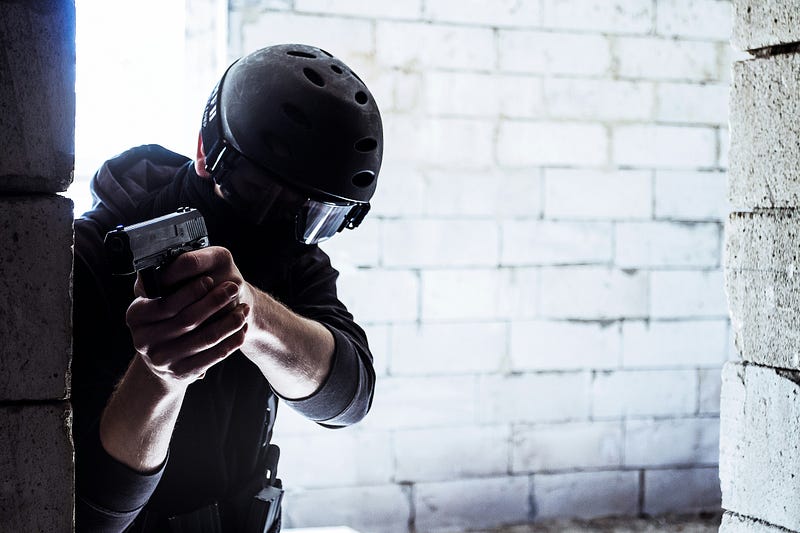
Photo by Kevin Woblick on Unsplash

The inventor of the bulletproof vest is truly a genius.

How can just a few layers of special fiber materials withstand the penetration damage of bullets?

In 1964, American chemist Stephanie Kwolek invented a fiber material called Kevlar. Its toughness and strength are extremely high, with excellent tear resistance. With a strength five times that of steel at equal weight, yet only 20% of the density of steel, multiple layers of Kevlar material are incorporated into the bulletproof layer of the bulletproof vest. This is what we call a soft body armor.

When an enemy pulls the trigger of a conventional handgun, firing bullets at a velocity of 400 meters per second, although the bullets can penetrate the front layers of Kevlar fiber almost instantly, their kinetic energy is gradually absorbed by the subsequent layers of fiber material until the bullet head and fragments are enveloped within the fiber layers, thus achieving the bulletproof effect. However, if an AK47 automatic rifle, with a velocity of 800 meters per second, were to be used, these Kevlar fibers would fail.

Initially, engineers considered adding a steel plate to the front. Although this would prevent bullet penetration, it would also fail to absorb the kinetic energy of the bullet, potentially causing serious internal injuries to the body due to the impact. To address this challenge, engineers decided to replace the steel plate with a ceramic insert. This perfectly solved the problem of bullet kinetic energy. Although it cannot completely stop the bullet, most of the kinetic energy can be consumed by the ceramic insert at the moment of penetration, while the subsequent layers of Kevlar fibers can easily slow down the remaining bullet velocity, significantly reducing the impact force on the human body. This is what we call hard body armor.

Now, which type of firearm do you think can penetrate this type of bulletproof vest?

Self Improvement
Science
Life
Mindfulness
Technology
Recommended from ReadMedium