
Introverts Are Not Winning In Quarantine
Social connection is as important as ever
You’ve seen the memes on social media mimicking extroverts for their anxiety about keeping social distance. As an introvert, I confess that I am appreciative of my increased alone time. I’ve even been scolded by my walking partner for sneaking in walks without her. But, introverts are struggling too.
The Mark of an Introvert
Introverts are often misrepresented as shy or withdrawn. But those are not traits used to describe the personality type in research. In psychology, introverts are described as people who focus more on their internal world than the external world. How they feel may be more important than where they are. A person who is an introvert would strongly agree with the following statement.
“I like getting my energy from dealing with the ideas, pictures, memories, and reactions that are inside my head, in my inner world. I often prefer doing things alone or with one or two people I feel comfortable with. I take time to reflect so that I have a clear idea of what I’ll be doing when I decide to act. Ideas are almost solid things for me. Sometimes I like the idea of something better than the real thing.” (Myersbriggs.org)
Introverts are not hermits. They do not choose isolation as a way of life. They just limit social interaction by the quantity of time and people. Most introverts have at least one close friend, if not several. Usually, they have carefully selected them and may spend a lot of time in their presence. However, introverts limit the time spent with people outside of the highly selective friends.
Energy spend
Introverts expend energy in social situations whereas extroverts are more likely to absorb energy in the same circumstance. The difference is not always visible to spectators. Introverts can appear quite social. People often mistake me for an extrovert because I teach and I perform. Most introverts do work and enjoy life, even if we are less likely to be leaders.
The mark of an introvert is how they become energized. The more social time introverts have, the more alone time they require to rejuvenate. Social interaction tends to be draining even when introverts are having fun, even when they seem to be the life of the party.
Business as usual
Unfortunately, introverts fare worse in the business world than extroverts because of the social requirements of success. One study found that the less enthusiasm participants expressed for social activities, the less likely they were to emerge as leaders. Disagreement with the following statements about social activities was compared with leadership: “I will feel strong; I will feel excited; I will feel interested” (Spark, 2018).
Unfortunately, the western world caters to extroverts and people who are internally focused are assumed to have deficits not worthy of leadership. Quantity of relationships is more highly valued than the quality of relationships. This social bias has bearing on the quality of life for introverts. Although the population consists of 25–40% introverts, individuals with an internal focus area condemned in a way that research suggests is unhealthy.
Overall, we interpret our findings to mean that introverts in the West might be more authentic, and hence boost their overall well-being, if they can change their beliefs to become more accepting of their introversion. (Lawn, et. al. 2019)
Viral Isolation
Social media has been a place of refuge for many introverts. Positive social relationships have been associated with FaceBook. One team of researchers concluded that online relations can even increase face-to-face interactions for introverts.
“Facebook (and potentially SNSs more generally) may be especially beneficial for introverts by allowing them to build trust and rapport in a less threatening social environment that, in turn, makes them more comfortable engaging in face-to-face communication.” (Spalding)
However, research also suggests that introverts use social media in less social ways than extroverts. Their engagements are less personal. For example, research led by Zhou found that introverts tweet significantly more news items than selfies.
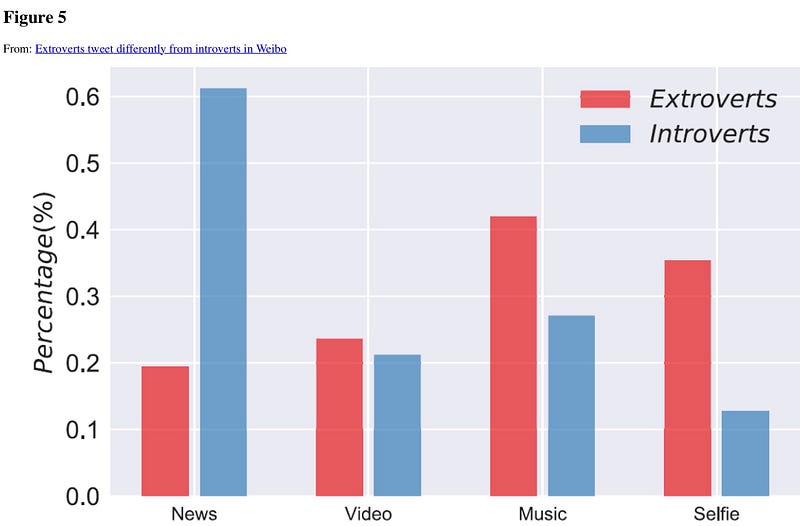
Spading’s research concluded that introverts are less socially interactive and engage less frequently than their extrovert counterparts. Herein lies the disadvantage of quarantine for introverts. Without any question, the human response to the order for social distancing is social media.
Seized by extroverts
While extroverts were taking over the world and climbing corporate ladders, introverts carved out space for themselves online. The super highway was already super cluttered with more information posted in an hour than any person could absorb in a lifetime.
Social distancing has turned online platforms into an extrovert-hijacked commodity. Introverts are all but invisible beneath the virtual parties, events, pandemic news, and conspiracy theories. Extroverts are coming to get their fix.
Introverts went into the pandemic with few friends. The small number of friends means they are more important, not less important. Remember, introverts are not hermits. Removing access to those few friends puts introverts at greater risk for isolation and loneliness, especially if they live alone.
While extroverts may transition their social investment to online activities, introverts may be more likely to sit out on social interaction.
Introverts may not be inclined to participate in online social events. For many introverts, work or school may have served as their major source of social interaction. While extroverts may transition their social investment to online activities, introverts may be more likely to sit out on social interaction.
Even if introverts engage on social media with their lean toward news or more serious spins, they may be overlooked. People are looking to socialize. There’s enough selfies, memes, and social invitations to send any introvert hiding under the covers.
So, no, introverts are not fine in quarantine. All joking aside, introverts live with a higher risk of depression and anxiety. Quarantine and a global pandemic don’t lower that risk. While extroverts may voice their discontent the loudest, they aren’t the biggest loser.
Quality Mental Health For All
Human beings are social creatures. According to Maslow’s hierarchy of needs, our physiological and safety needs must be met before we can focus on sociological needs. The COVID-19 has sent all humans back to the basics. We are all concerned about protecting life.
For those who feel reasonably secure in sustaining their life, a sense of belonging is the third level of social pursuit. “The need for interpersonal relationships motivates behavior” (McLeod, 2020). Maslow did not make an exception for introverts. All humans require some form of human interaction.
Mastering the media
Introverts may not be on people’s radar. They may not have mastered social media platforms enough to participate in getting their needs met. The family members and friends may also assume that introverts are in their happy place during the quarantine. This assumption puts introverts at risk for negative mental health outcomes.
Introverts need to know that they matter, even when they don’t make grand appearances or reach out. Sometimes, introverts need that personal invitation to join in. When they don’t join in, reaching out to them afterward may be welcomed too.
Introverts need to know that they matter, even when they don’t make grand appearances or reach out.
Introverts need to know that the decision not to join in is acceptable in a way that will not void all future invitations. Saying yes to all social invitations during quarantine is not a requirement to maintain relationships. Instead of inviting introverts to social events, occasionally invite them to engage one-on-one.
Leave no personality behind as we all become more conscious of survival. Social needs are as important as physiological needs. In the same way, we want to make sure no one goes hungry during these times, let’s consider the social thirst of all people. Leave no introvert behind.
References
Bakari, R. (2020). Social isolation can bring humanity together. Medium. https://readmedium.com/social-isolation-can-bring-humanity-together-307c12bd0ca.
Cabello, R., & Fernandez-Berrocal, P. (2015). Under which conditions can introverts achieve happiness? mediation and moderation effects of the quality of social relationships and emotion regulation ability on happiness. Peerj, 3, e1300. doi:10.7717/peerj.1300
Consider the myths and realities of introversion. (2017). Student Affairs Today, 20(8), 7–7. doi:10.1002/say.30400
Heid, M. (2020). We were not made for social isolation. Medium. https://elemental.medium.com/we-are-not-made-for-social-isolation-17e539944a0c.
Lawn, R. B., Lawn, R. B., Slemp, G. R., Slemp, G. R., Vella-Brodrick, D. A., & Vella-Brodrick, D. A. (2019). Quiet flourishing: The authenticity and well-being of trait introverts living in the west depends on extraversion-deficit beliefs. Journal of Happiness Studies, 20(7), 2055–2075. doi:10.1007/s10902–018–0037–5
McLeod, S. (2020). Maslow’s hierarchy of needs. Simple Psychology. https://www.simplypsychology.org/maslow.html
Myers-Briggs.org. https://www.myersbriggs.org/my-mbti-personality-type/mbti-basics/extraversion-or-introversion.htm
Spradlin, A., Cuttler, C., Bunce, J. P., & Carrier, L. M. (2019). Connected: Facebook may facilitate face-to-face relationships for introverts. Psychology of Popular Media Culture, 8(1), 34–40. doi:10.1037/ppm0000162
Spark, A., Stansmore, T., & O’Connor, P. (2018). The failure of introverts to emerge as leaders: The role of forecasted affect. Personality and Individual Differences, 121, 84–88. doi:10.1016/j.paid.2017.09.026
Zhou, Z., Xu, K., & Zhao, J. (2018). Extroverts tweet differently from introverts in weibo. EPJ Data Science, 7(1), 1–22. doi:10.1140/epjds/s13688–018–0146–8


