avatarAshwin Rachha

Free AI web copilot to create summaries, insights and extended knowledge, download it at here

5267

Abstract

9"><img src="https://cdn-images-1.readmedium.com/v2/resize:fit:800/1*TAUM7jciFnnd6atSbBMSQg.jpeg"><figcaption><a href="https://www.nvidia.com/en-us/data-center/h100/">https://www.nvidia.com/en-us/data-center/h100/</a></figcaption></figure><h1 id="ec37">Impact of Infrastructure and training on the Carbon Footprint</h1><figure id="28f3"><img src="https://cdn-images-1.readmedium.com/v2/resize:fit:800/1*3IaczhOPpV9glGFHmDU4rw.jpeg"><figcaption><a href="https://tinyml.substack.com/p/the-carbon-impact-of-large-language">https://tinyml.substack.com/p/the-carbon-impact-of-large-language</a></figcaption></figure><p id="0b19">Training a LLM of the scale and scope of Llama 3 has a significant environmental impact, as it consumes a large amount of energy and emits a large amount of carbon dioxide. According to a recent study by researchers from the University of Massachusetts Amherst, training a LLM with 1.5 billion parameters, such as GPT-2, can emit as much carbon dioxide as five average American cars over their lifetimes. This means that training a LLM with 3.6 trillion parameters, such as Llama 3, can emit as much carbon dioxide as 12,000 average American cars over their lifetimes.</p><figure id="213b"><img src="https://cdn-images-1.readmedium.com/v2/resize:fit:800/1*mi-r4JXEgLX7mNIU0AFrPw.jpeg"><figcaption><a href="https://tinyml.substack.com/p/the-carbon-impact-of-large-language">https://tinyml.substack.com/p/the-carbon-impact-of-large-language</a></figcaption></figure><p id="1ff8">To calculate the carbon footprint of training Llama 3, we need to consider two factors: the energy consumption of the servers and the lifecycle of the electronic components used. The energy consumption of the servers depends on the number, type, and efficiency of the GPUs, as well as the duration and frequency of the training. The lifecycle of the electronic components includes the extraction, manufacturing, transportation, and disposal of the materials and devices used.</p><p id="9280">Using the data and assumptions from the study, we can estimate the carbon footprint of training Llama 3 as follows:</p><ul><li>The energy consumption of the servers is estimated to be 0.6 kWh per GPU per hour, based on the average power consumption of the NVIDIA H100 GPU. Assuming that Llama 3 uses 350,000 GPUs and trains for 6 months, the total energy consumption of the servers is:</li></ul><div id="8fa8"><pre><span class="hljs-number">0.6</span>×<span class="hljs-number">350</span>,<span class="hljs-number">000</span>×<span class="hljs-number">24</span>×<span class="hljs-number">30</span>×<span class="hljs-number">6</span>=<span class="hljs-number">907</span>,<span class="hljs-number">200</span>,<span class="hljs-number">000</span> kWh</pre></div><ul><li>The carbon dioxide emission factor of the electricity grid is estimated to be 0.475 kg per kWh, based on the average emission factor of the US electricity grid. Assuming that Llama 3 uses electricity from the US grid, the total carbon dioxide emission from the energy consumption of the servers is:</li></ul><div id="32d7"><pre><span class="hljs-number">907</span>,<span class="hljs-number">200</span>,<span class="hljs-number">000</span>×<span class="hljs-number">0.475</span>=<span class="hljs-number">431</span>,<span class="hljs-number">220</span>,<span class="hljs-number">000</span> kg</pre></div><ul><li>The carbon dioxide emission from the lifecycle of the electronic components is estimated to be 626 kg per GPU, based on the average emission from the lifecycle of the NVIDIA V100 GPU. Assuming that Llama 3 uses 350,000 GPUs, the total carbon dioxide emission from the lifecycle of the electronic components is:</li></ul><div id="0ee7"><pre><span class="hljs-number">626</span>×<span class="hljs-number">350</span>,<span class="hljs-number">000</span>=<span class="hljs-number">219</span>,<span class="hljs-number">100</span>,<span class="hljs-number">000</span> kg</pre></div><ul><li>The total carbon dioxide emission from training Llama 3 is the sum of the emission from the energy consumption of the servers and the emission from the lifecycle of the electronic components:</li></ul><div id="6520"><pre><span class="hljs-number">431</span>,<span class="hljs-number">220</span>,<span class="hljs-number">000</span>+<span class="hljs-number">219</span>,<span class="hljs-number">100</span>,<span class="hljs-number">000</span>=<span class="hljs-number">650</span>,<span class="hljs-number">320</span>,<span class="hljs-number">000</span> kg</pre></div><p id="f907">This is equivalent to the carbon dioxide emission from driving 1.6 billion miles, or from consuming 73 million gallons of gasoline.</p><p id="4ba5">Meta has stated that it is committed to reducing the environmental impact of its AI research and development, and that it will offset the carbon footprint of training Llama 3 by investing in renewable energy sources and carbon capture technologies. Meta has also claimed that it will share some of the best practices and lessons learned from training Llama 3 with the AI community, as well as collaborate with other stakeholders to promote and support green and sustainable AI initiatives.</p><h1 id="f971">Feasibility of deploying Llama 3 in the industry</h1><p id="5817">Deploying L

Options

lama 3 in the industry would be a promising but challenging endeavor as it would involve various factors such as technical, economic, social and ethical concerns. The feasibility of deploying Llama 3 in the industry would largely depend on the ability and willingness of different stakeholders to successfully implement this model in their projects. These stakeholders include:</p><ul><li>Large Tech Companies : Large tech companies, such as Microsoft, Google and Meta, have the advantage of having access to the most advanced technology and resources, as well as the most experienced and talented experts, to deploy Llama 3 in their projects. They also have the advantage of having a large and loyal customer base, as well as a strong brand reputation, to market and sell their products and services powered by Llama 3. However, large tech companies also face some challenges, such as competition, regulation and responsibility to deploy Llama 3 in their projects. They have to compete with other tech giants, as well as emerging startups and innovators, to gain and maintain their market share and edge. They also have to comply with various laws and regulations such as data privacy, intellectual property and antitrust that may limit their scope and freedom of action. They also have to take responsibility for the potential risks and harms that Llama 3 may cause, such as bias, misinformation, and manipulation, and ensure that their products and services are ethical, safe and trustworthy.</li><li>Independent creators : Independent creators, such as researchers, developers, artists and entrepreneurs have the advantage of having access to the open source version of Llama 3, which is freely available and modifiable by anyone. They also have the advantage of having more creativity and flexibility as well as less pressure and constraint, to deploy Llama 3 in their projects. They can use Llama 3 to explore new ideas and domains, create novel and original content, and solve challenging and meaningful problems. However, independent creators also face some challenges such as resources, skills and support, to deploy Llama 3 in their projects. They may lack the sufficient computational and hardware resources as well as the necessary skills and expertise to train and run Llama 3 effectively and efficiently. They may also lack the adequate support and guidance, such as documentation, tutorials, and community to learn and use Llama 3 properly and successfully.</li></ul><h1 id="cfc1">Embracing the Future: The Potential and Commitment of Llama 3</h1><p id="08bb">As we edge closer to the introduction of Llama 3, excitement and commitment are the twin pillars upholding Meta’s vision. This new model stands as a beacon of potential for products, users, and Meta’s mission to build AI in alignment with societal values.</p><p id="279e">In conclusion, Llama 3 stands as a harbinger of the generality and intelligence that AGI aspires to achieve. It is a testament to Meta’s ambitious goal of creating a model that encapsulates the myriad aspects of human intelligence. As we await its arrival, one thing is certain: the future of AI is poised for a revolution, with Llama 3 at its vanguard.</p><p id="d0a6">This comprehensive look into the future of AI with Meta’s Llama 3 is designed for the intellectually curious reader. If you found this exploration insightful, I invite you to engage in the conversation and share your perspective on this pivotal moment in AI history.</p><p id="b59d">References:</p><p id="7cbc"><a href="https://www.linkedin.com/pulse/carbon-impact-large-language-models-ais-growing-cost-vaidheeswaran-fcbhc">https://www.linkedin.com/pulse/carbon-impact-large-language-models-ais-growing-cost-vaidheeswaran-fcbhc</a></p><p id="5b51"><a href="https://www.axios.com/2024/01/18/zuckerberg-meta-llama-3-ai">https://www.axios.com/2024/01/18/zuckerberg-meta-llama-3-ai</a></p><p id="5a10"><a href="https://www.forbes.com/sites/johnkoetsier/2024/01/18/zuckerberg-on-ai-meta-building-agi-for-everyone-and-open-sourcing-it/">https://www.forbes.com/sites/johnkoetsier/2024/01/18/zuckerberg-on-ai-meta-building-agi-for-everyone-and-open-sourcing-it/</a></p><p id="8b64"><a href="https://www.linkedin.com/posts/yann-lecun_training-llama-13b-emits-24-times-less-greenhouse-activity-7056043112372039680-8up9">https://www.linkedin.com/posts/yann-lecun_training-llama-13b-emits-24-times-less-greenhouse-activity-7056043112372039680-8up9</a></p><p id="7c9f"><a href="https://deepgram.com/learn/ai-carbon-cost">https://deepgram.com/learn/ai-carbon-cost</a></p><h1 id="2d9f">Stackademic</h1><p id="73ba">Thank you for reading until the end. Before you go:</p><ul><li>Please consider <b>clapping</b> and <b>following</b> the writer! 👏</li><li>Follow us <a href="https://twitter.com/stackademichq"><b>X</b></a><b> | <a href="https://www.linkedin.com/company/stackademic">LinkedIn</a> | <a href="https://www.youtube.com/c/stackademic">YouTube</a> | <a href="https://discord.gg/in-plain-english-709094664682340443">Discord</a></b></li><li>Visit our other platforms: <a href="https://plainenglish.io"><b>In Plain English</b></a><b> | <a href="https://cofeed.app/">CoFeed</a> | <a href="https://venturemagazine.net/">Venture</a></b></li></ul></article></body>

Introducing Llama 3: The Dawn of a New Era in Artificial General Intelligence

Published with anticipation for the transformative era that Llama 3 will usher in.

Author’s Note: This article is a work of anticipation and intellectual exploration, crafted to engage and inspire readers about the future of AI. It is based on current information and forward-looking statements regarding Meta’s development of Llama 3.

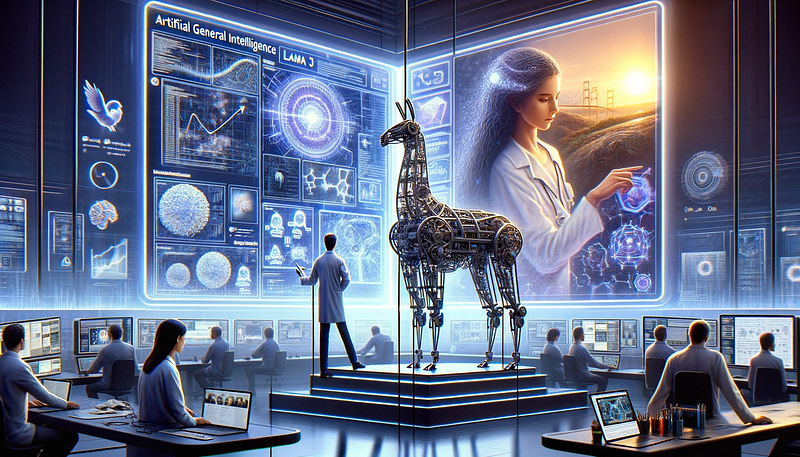
In the grand tapestry of technological evolution, few threads capture the imagination quite like the promise of Artificial General Intelligence (AGI). As we stand on the precipice of groundbreaking advances in AI, Meta’s announcement of training Llama 3, the next iteration of its large language model, heralds a new chapter in this exhilarating narrative.

Some updates on our AI efforts. Our long term vision is to build general intelligence, open source it responsibly and make it widely available so everyone can benefit. We’re currently training Llama 3, and we’re building massive compute infrastructure to support our future roadmap, including 350,000 H100 GPUs by the end of this year — and overall almost 600,000 H100s of compute if other GPUs are included.

— Mark Zuckerberg, Instagram Post

While Not all LLMs are created equal, some are more equal than the others. Most powerful LLMs already deployed in GenAI applications today are proprietary such as OpenAI GPT 4 and GPT 3.5 , Gemini Pro and Anthropic Claude. These LLMs are not publicly accessible and currently are accessible on their platforms or via APIs. The Llama Family of Models from Meta on the other hand has come up with Llama 1 and Llama 2 models which have completely transformed the frontiers of Open Source LLM developement. Now the training of the Llama 3 model and its announcement of being open source and geared towards being a model closer to reach AGI is a promising and exciting news for the world.

Meta’s Ambitious Vision: Crafting the Fabric of Intelligence

https://playtoearngames.com/news/unveiling-the-metaverse-2023-2024-from-sci-fi-dream-to-digital-reality-reshaping-gaming-economy-and-human-interaction

The journey towards AGI is a mosaic of complex capabilities. Meta’s Llama 3 will be an embodiment of this quest, weaving together meta-learning, reinforcement learning, causal inference, and commonsense reasoning. This confluence of capabilities suggests a monumental leap beyond its predecessor, Llama 2, aiming to create a fabric of intelligence that mirrors the human mind’s versatility.

The landscape of AGI is set to evolve further towards an intuitive, application-agnostic approach. Substantial productivity gains are anticipated through automation.

Llama 3 will not be a monolithic model. It will rather be a symphony of Advanced features. Llama 3 will not merely an incremental update; it is a symphony of sophistication and complexity. Zuckerberg’s vision for Llama 3 is one of profound impact, suggesting that it will not only refine our digital experiences across platforms but also fuel a surge of research and innovation within the broader AI community.

The Open Source Ethos: A Beacon of Collaboration and Innovation

https://imgflip.com/tag/open+source

Meta’s commitment to open sourcing its models is a testament to the power of collaboration. By offering Llama 3 as a beacon of shared progress, Meta is championing a future where AI development is anchored in ethical use and beneficial outcomes. This stance is critical in fostering an environment where advancements are made with the values and interests of society firmly in mind.

Infrastructure for Training Llama 3

Training Llama 3 is a formidable challenge, as it would enormous amounts of computational and hardware resources. To train Llama 3, Meta will be deploying a formidable fleet of Nvidia H100 Graphics Processing Units — 350,000 of them by the end of the year 2024. This move will significantly boost the company’s processing power, which is essential for running the complex algorithms that Llama 3 would require. When you factor in the other types of GPUs that Meta plans to use, the total computational power will be equivalent to having 600,000 H100 GPUs at their disposal. The financial stakes are high with Meta investing over $10 billion in this project.
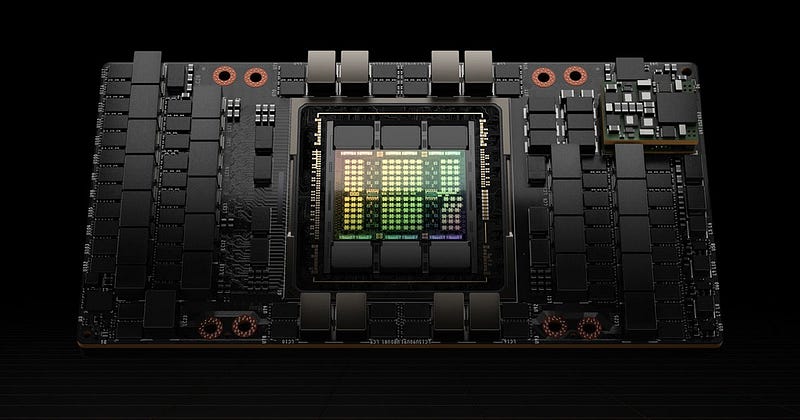
https://www.nvidia.com/en-us/data-center/h100/

Impact of Infrastructure and training on the Carbon Footprint
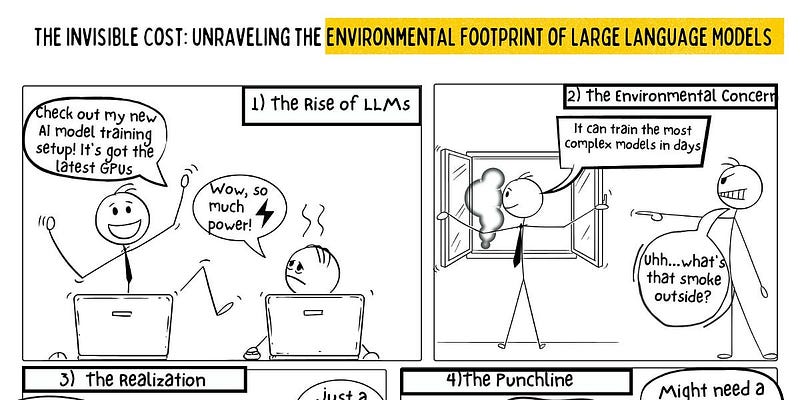
https://tinyml.substack.com/p/the-carbon-impact-of-large-language

Training a LLM of the scale and scope of Llama 3 has a significant environmental impact, as it consumes a large amount of energy and emits a large amount of carbon dioxide. According to a recent study by researchers from the University of Massachusetts Amherst, training a LLM with 1.5 billion parameters, such as GPT-2, can emit as much carbon dioxide as five average American cars over their lifetimes. This means that training a LLM with 3.6 trillion parameters, such as Llama 3, can emit as much carbon dioxide as 12,000 average American cars over their lifetimes.
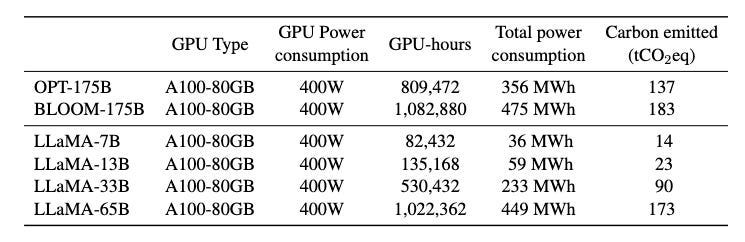
https://tinyml.substack.com/p/the-carbon-impact-of-large-language

To calculate the carbon footprint of training Llama 3, we need to consider two factors: the energy consumption of the servers and the lifecycle of the electronic components used. The energy consumption of the servers depends on the number, type, and efficiency of the GPUs, as well as the duration and frequency of the training. The lifecycle of the electronic components includes the extraction, manufacturing, transportation, and disposal of the materials and devices used.

Using the data and assumptions from the study, we can estimate the carbon footprint of training Llama 3 as follows:

  • The energy consumption of the servers is estimated to be 0.6 kWh per GPU per hour, based on the average power consumption of the NVIDIA H100 GPU. Assuming that Llama 3 uses 350,000 GPUs and trains for 6 months, the total energy consumption of the servers is:
0.6×350,000×24×30×6=907,200,000 kWh
  • The carbon dioxide emission factor of the electricity grid is estimated to be 0.475 kg per kWh, based on the average emission factor of the US electricity grid. Assuming that Llama 3 uses electricity from the US grid, the total carbon dioxide emission from the energy consumption of the servers is:
907,200,000×0.475=431,220,000 kg
  • The carbon dioxide emission from the lifecycle of the electronic components is estimated to be 626 kg per GPU, based on the average emission from the lifecycle of the NVIDIA V100 GPU. Assuming that Llama 3 uses 350,000 GPUs, the total carbon dioxide emission from the lifecycle of the electronic components is:
626×350,000=219,100,000 kg
  • The total carbon dioxide emission from training Llama 3 is the sum of the emission from the energy consumption of the servers and the emission from the lifecycle of the electronic components:
431,220,000+219,100,000=650,320,000 kg

This is equivalent to the carbon dioxide emission from driving 1.6 billion miles, or from consuming 73 million gallons of gasoline.

Meta has stated that it is committed to reducing the environmental impact of its AI research and development, and that it will offset the carbon footprint of training Llama 3 by investing in renewable energy sources and carbon capture technologies. Meta has also claimed that it will share some of the best practices and lessons learned from training Llama 3 with the AI community, as well as collaborate with other stakeholders to promote and support green and sustainable AI initiatives.

Feasibility of deploying Llama 3 in the industry

Deploying Llama 3 in the industry would be a promising but challenging endeavor as it would involve various factors such as technical, economic, social and ethical concerns. The feasibility of deploying Llama 3 in the industry would largely depend on the ability and willingness of different stakeholders to successfully implement this model in their projects. These stakeholders include:

  • Large Tech Companies : Large tech companies, such as Microsoft, Google and Meta, have the advantage of having access to the most advanced technology and resources, as well as the most experienced and talented experts, to deploy Llama 3 in their projects. They also have the advantage of having a large and loyal customer base, as well as a strong brand reputation, to market and sell their products and services powered by Llama 3. However, large tech companies also face some challenges, such as competition, regulation and responsibility to deploy Llama 3 in their projects. They have to compete with other tech giants, as well as emerging startups and innovators, to gain and maintain their market share and edge. They also have to comply with various laws and regulations such as data privacy, intellectual property and antitrust that may limit their scope and freedom of action. They also have to take responsibility for the potential risks and harms that Llama 3 may cause, such as bias, misinformation, and manipulation, and ensure that their products and services are ethical, safe and trustworthy.
  • Independent creators : Independent creators, such as researchers, developers, artists and entrepreneurs have the advantage of having access to the open source version of Llama 3, which is freely available and modifiable by anyone. They also have the advantage of having more creativity and flexibility as well as less pressure and constraint, to deploy Llama 3 in their projects. They can use Llama 3 to explore new ideas and domains, create novel and original content, and solve challenging and meaningful problems. However, independent creators also face some challenges such as resources, skills and support, to deploy Llama 3 in their projects. They may lack the sufficient computational and hardware resources as well as the necessary skills and expertise to train and run Llama 3 effectively and efficiently. They may also lack the adequate support and guidance, such as documentation, tutorials, and community to learn and use Llama 3 properly and successfully.

Embracing the Future: The Potential and Commitment of Llama 3

As we edge closer to the introduction of Llama 3, excitement and commitment are the twin pillars upholding Meta’s vision. This new model stands as a beacon of potential for products, users, and Meta’s mission to build AI in alignment with societal values.

In conclusion, Llama 3 stands as a harbinger of the generality and intelligence that AGI aspires to achieve. It is a testament to Meta’s ambitious goal of creating a model that encapsulates the myriad aspects of human intelligence. As we await its arrival, one thing is certain: the future of AI is poised for a revolution, with Llama 3 at its vanguard.

This comprehensive look into the future of AI with Meta’s Llama 3 is designed for the intellectually curious reader. If you found this exploration insightful, I invite you to engage in the conversation and share your perspective on this pivotal moment in AI history.

References:

https://www.linkedin.com/pulse/carbon-impact-large-language-models-ais-growing-cost-vaidheeswaran-fcbhc

https://www.axios.com/2024/01/18/zuckerberg-meta-llama-3-ai

https://www.forbes.com/sites/johnkoetsier/2024/01/18/zuckerberg-on-ai-meta-building-agi-for-everyone-and-open-sourcing-it/

https://www.linkedin.com/posts/yann-lecun_training-llama-13b-emits-24-times-less-greenhouse-activity-7056043112372039680-8up9

https://deepgram.com/learn/ai-carbon-cost

Stackademic

Thank you for reading until the end. Before you go:

Artificial Intelligence
Large Language Models
Startup
Technology
AGI
Recommended from ReadMedium