avatarRhonda Carrier

Free AI web copilot to create summaries, insights and extended knowledge, download it at here

1330

Abstract

two photos below show beautifully crafted kabayas using lace and embroidery. The style of these would have been for more formal occasions rather than day-to-day wear. I took these photos on a tour of the Textile Museum in Kuala Lumpur, Malaysia last week.</p><figure id="e1e9"><img src="https://cdn-images-1.readmedium.com/v2/resize:fit:800/1*7YjB5qUVI9iiI0GPadvNEQ.jpeg"><figcaption>Kabaya at the Textile Museum in Kuala Lumpur, Malaysia. (iPhone 12 Pro photo by author)</figcaption></figure><figure id="86b2"><img src="https://cdn-images-1.readmedium.com/v2/resize:fit:800/1*Ghboxklpc8aZbiISNJTSCw.jpeg"><figcaption>Kabaya at the Textile Museum in Kuala Lumpur, Malaysia (iPhone 12 Pro photo by author)</figcaption></figure><p id="2647">The grouped photos below show the design of a formal kabaya on display in the Peranakan Museum. The design and the use of the gold thread indicate it was an expensive and formal kabaya.</p><p id="652f">We all first looked at and admired the beautiful pattern, but then the tour guide used his iPhone to zoom in on one of the flowers to show more of the detail of the design using gold thread. He then zoomed in further to show the cotton stitching that held the gold thread in place to create the flower design.</p><p id="93b5">I copied his demonstration-style to zoom in to capture the image

Options

of the design with my iPhone. The intricate needlework required to make these delicate gold flowers is amazing.</p><figure id="82c0"><img src="https://cdn-images-1.readmedium.com/v2/resize:fit:800/1*Qzh59HY3h6ipML2_MrzeQA.jpeg"><figcaption>3 views of gold thread held in place with cotton stitching. (iPhone 12 Pro photos by author)</figcaption></figure><p id="6e0b">In the photo at the top of the story, note the colorful slippers the women are wearing. Their slippers are modern versions with a design created using colorful thread to embroider the patterns.</p><p id="b51d">Older more traditional slippers often had beads sewn on to create complicated patterns. I zoomed in with my iPhone to highlight the individual beads used to produce the beaded slippers. Wow. Think of the time required to stitch on each bead to create a beautiful, colorful design.</p><figure id="a65c"><img src="https://cdn-images-1.readmedium.com/v2/resize:fit:800/1*OFn8SnEkmztOfPGr8eLlBQ.jpeg"><figcaption>2 Views of Beaded Slippers (iPhone 12 Pro photos by author)</figcaption></figure><p id="4124">The traditional costumes are lovely. We seldom see women wearing them now except for very formal occasions such as weddings.</p><p id="be68">I wonder how many skilled craft people there are left to create these beautiful designs.</p></article></body>

Intricacies of Traditional Crafts

Beautifully Crafted Asian Designs
Peranakan Museum (iPhone 12 Pro photo by author)

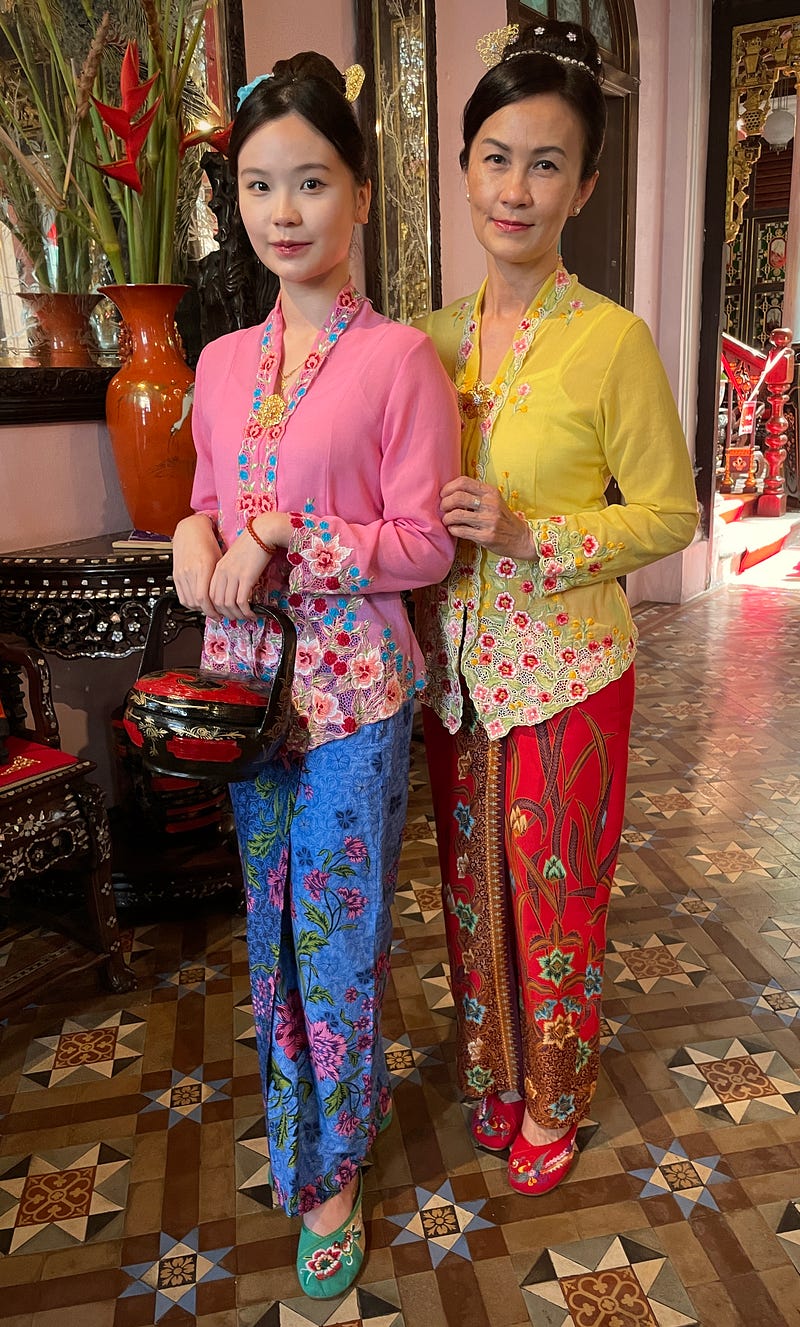
During a recent visit to the Peranakan Museum in Penang, Malaysia, a mother and daughter were dressed in traditional Peranakan costumes for a photo shoot. Read Traditional Mother/Daughter Beauty for another photo of the duo and a brief history of the Baba/Nonya Peranakan culture.

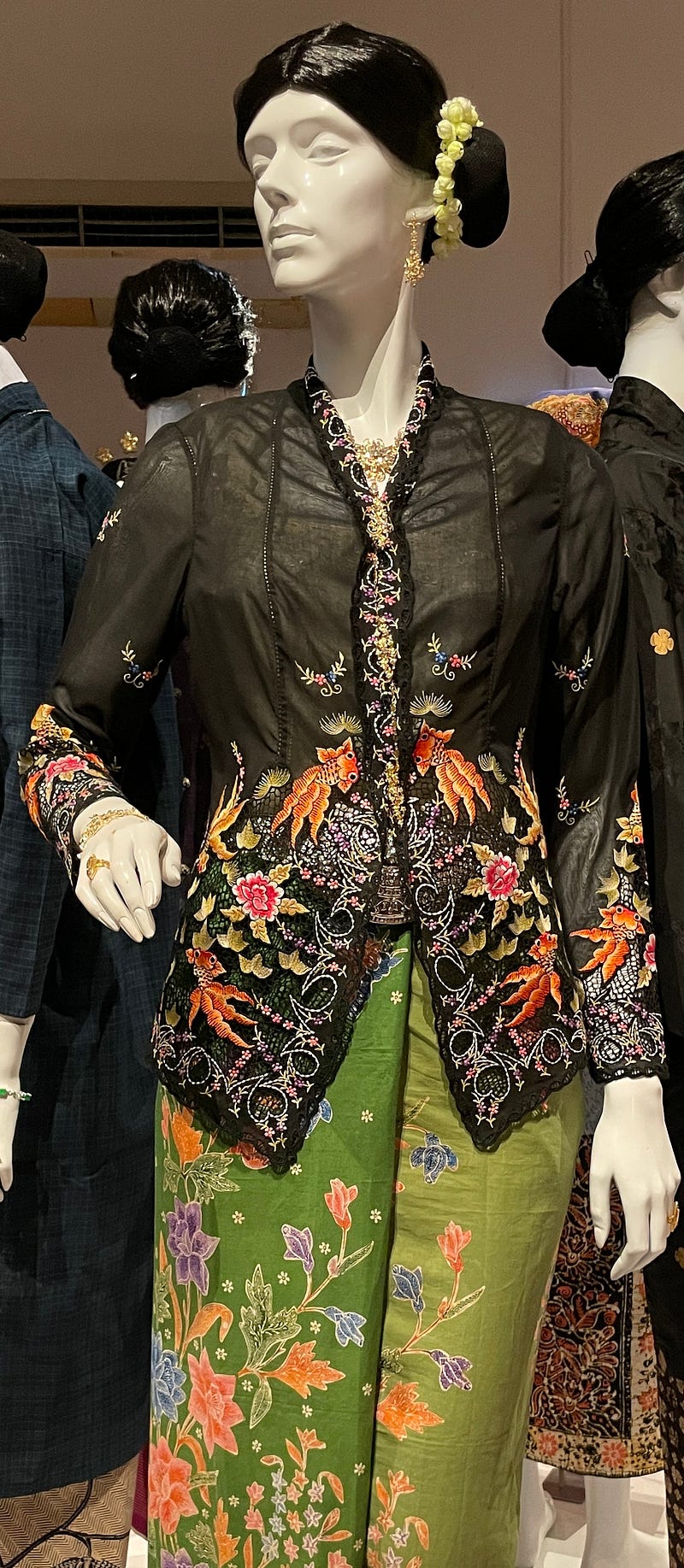
The upper garment both women are wearing is called a kabaya. It is a traditional garment that was worn by women throughout most of Southeast Asia. It is usually made of light cotton or gauze, lace, or voile. Buttons, brooches, or pins are used to close it. It is often covered with embroidered designs.

Their elegant kabayas coordinated with colorful cotton sarongs reminded me of the kabayas and sarongs that were worn by the babysitter who took care of our children when we lived in Jakarta, Indonesia 40 years ago. Back then, this was the standard daily dress for many Asian women.

The two photos below show beautifully crafted kabayas using lace and embroidery. The style of these would have been for more formal occasions rather than day-to-day wear. I took these photos on a tour of the Textile Museum in Kuala Lumpur, Malaysia last week.
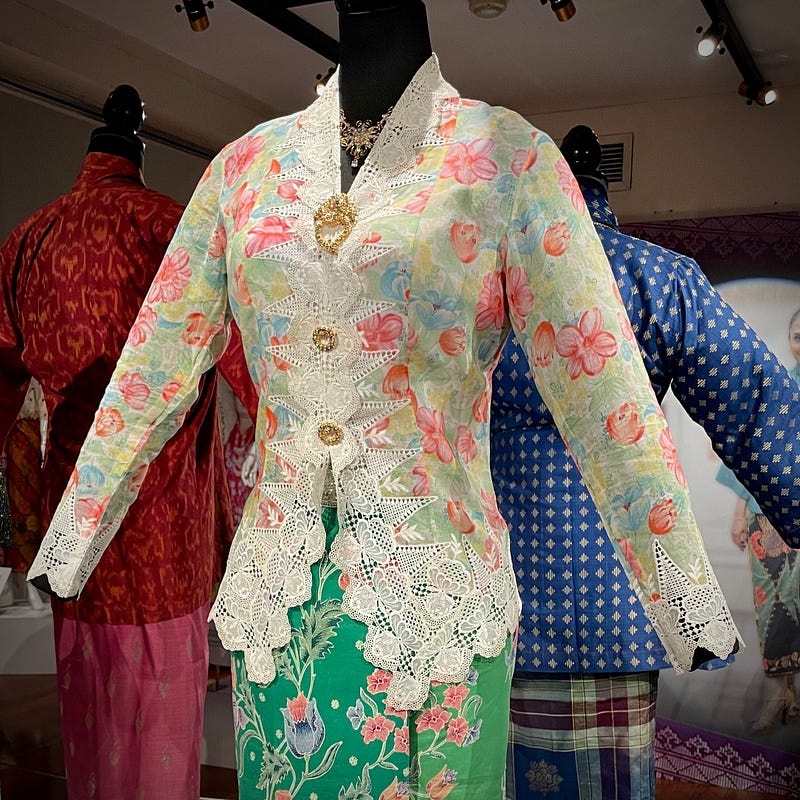
Kabaya at the Textile Museum in Kuala Lumpur, Malaysia. (iPhone 12 Pro photo by author)
Kabaya at the Textile Museum in Kuala Lumpur, Malaysia (iPhone 12 Pro photo by author)

The grouped photos below show the design of a formal kabaya on display in the Peranakan Museum. The design and the use of the gold thread indicate it was an expensive and formal kabaya.

We all first looked at and admired the beautiful pattern, but then the tour guide used his iPhone to zoom in on one of the flowers to show more of the detail of the design using gold thread. He then zoomed in further to show the cotton stitching that held the gold thread in place to create the flower design.

I copied his demonstration-style to zoom in to capture the image of the design with my iPhone. The intricate needlework required to make these delicate gold flowers is amazing.
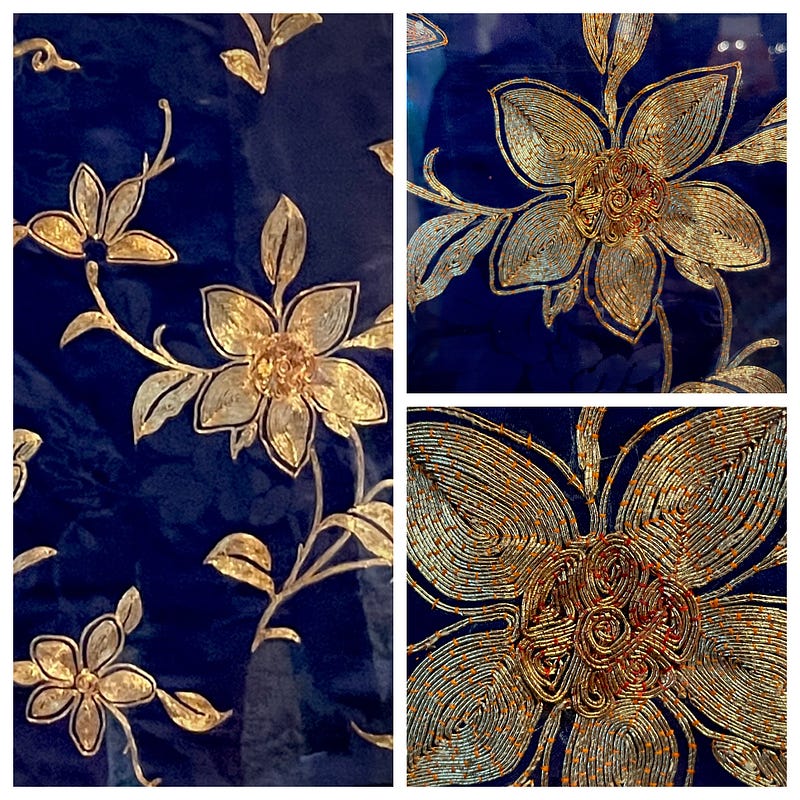
3 views of gold thread held in place with cotton stitching. (iPhone 12 Pro photos by author)

In the photo at the top of the story, note the colorful slippers the women are wearing. Their slippers are modern versions with a design created using colorful thread to embroider the patterns.

Older more traditional slippers often had beads sewn on to create complicated patterns. I zoomed in with my iPhone to highlight the individual beads used to produce the beaded slippers. Wow. Think of the time required to stitch on each bead to create a beautiful, colorful design.
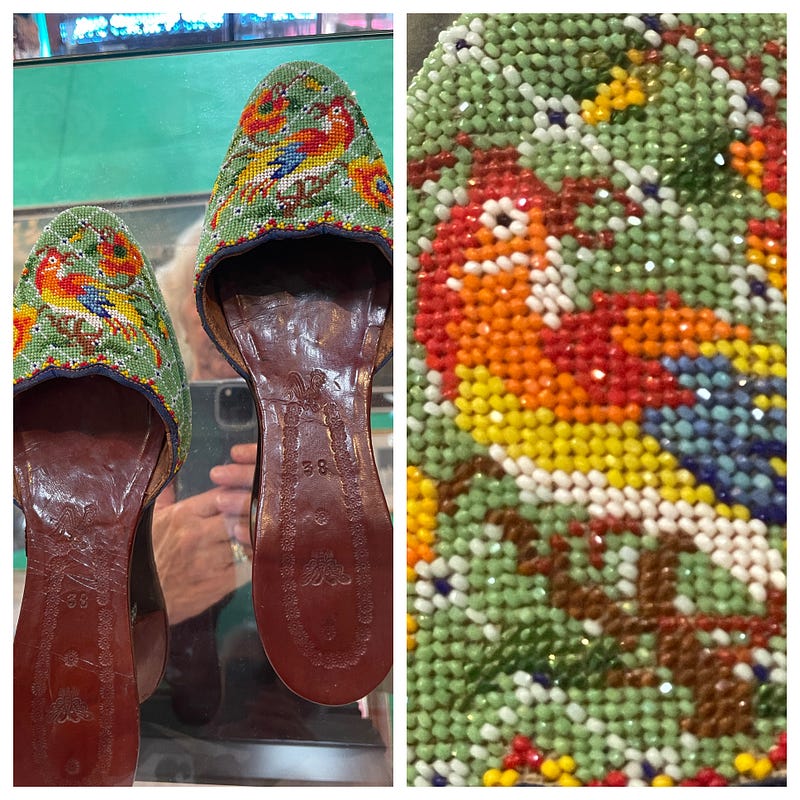
2 Views of Beaded Slippers (iPhone 12 Pro photos by author)

The traditional costumes are lovely. We seldom see women wearing them now except for very formal occasions such as weddings.

I wonder how many skilled craft people there are left to create these beautiful designs.

Asia
Photography
Museums
Traditional Costume
Traditional Design
Recommended from ReadMedium