
Into the Woods: The Psychological Significance of Forests in Fairy Tales
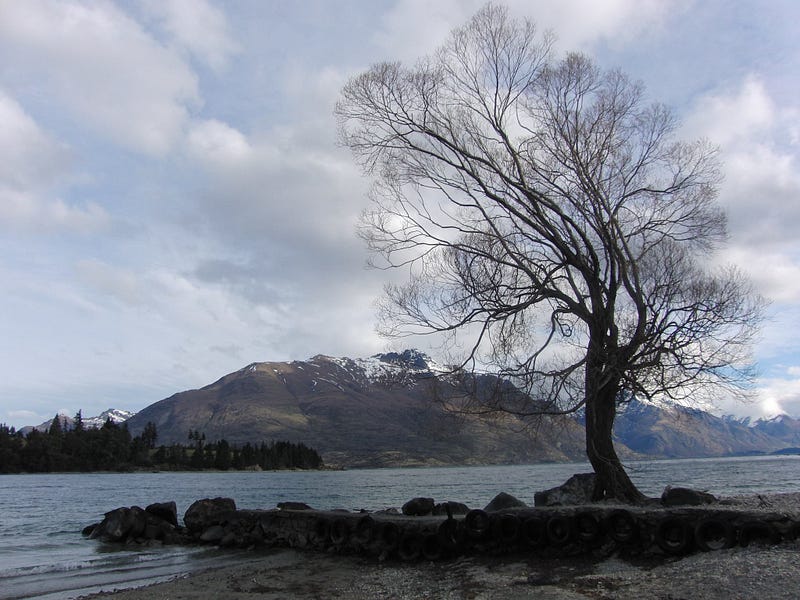
Throughout literature, a pervasive fear of the woods has found its way into the subconscious of several texts, both ancient and modern. Every Little Red Riding Hood has its wolf in the forest, every Hansel and Gretel its witch in the woods. Psychologists have interpreted such symbols “as an expression of unconscious processes in the mind” (Luthi 83), deconstructing a journey into the woods to be more than just a literal journey through the forest; it is a metaphorical journey into the mind.
Carl Jung elaborated on the persistence of these images when he explained that they are:
“The primordial language natural to these psychic processes, and no intellectual formulation comes anywhere near the richness and expressiveness of mythological imagery. Such processes are concerned with the primordial images [Urbilder = archetypes], and these are best and most succinctly reproduced by figurative language” (Walker 17).
His observation makes us think twice about writing off fairy tales as nothing more than child’s play. Instead, we should see them as subtle ways to teach and prompt the reader and listener to a new level of understanding. Every character we read about that is sent into the woods is likewise brought out, implying that while the woods contribute to the story as a significant obstacle, it is never one that is not eventually conquered. Never the less, the character must still travel through it. It is always the woods that stands between defeat and success. In fact, the woods are oftentimes what make the character’s success possible. They enter the forest with little or no knowledge of how to proceed but come out self-aware.
Mirroring fictional forests to real ones such as the Black Forest in Germany, these literary recreations are often described using words like dark and deep. Jung analyzed this as meaning that they are “essentially culturally elaborated representations of the contents of the deepest recesses of the human psyche” (Walker 4). Not only must our heroes go into the woods but they must go all the way in and confront the darkness that awaits them.
Dating back to the early 19th century, the Grimm brothers’ version of Sleeping Beauty illustrates a variant of this journey into the woods, in that the woods come to Sleeping Beauty instead of the other way around. Pricked by the fateful spindle spoken of at her birth, Sleeping Beauty and “the whole palace” fall under a “deep sleep” for “a hundred years” and “round about the castle there began to grow a hedge of thorns, which every year became higher, and at last grew close up round the castle and all over it, so that there was nothing of it to be seen, not even the flag upon the roof.”
As word spreads about the royal household’s plight, several rescue attempts are made by “kings’ sons”, only to result in several deaths: “The thorns held fast together . . . and the youths were caught in them, could not get loose again, and died a miserable death”.
This is significant because this version supports the theory that periods of development are marked and cannot be rushed. Although we can control our daily schedules to the second, the recesses of the mind operate on one all their own. It is not until the end of the prescribed century that another “king’s son” hears of the tale and decides to see the “wonderfully beautiful princess, named briar-rose”. Antithetical to his predecessors, he is greeted not by threatening thorns but “large and beautiful flowers” because the princess’ mind is finally ready to open itself up to the prince and the new stage of life he represents. Even the thorns have transformed into pleasing reminders, rather than harsh ones, of what the princess has gone through. The flowers “parted from each other of their own accord, and let him pass unhurt” into the princess’ presence. Only doing his royal duty, the prince “stooped down and gave her a kiss” to which “briar-rose opened her eyes and awoke”. The tale ends with the “marriage of the king’s son with briar-rose” and they of course “lived contented to the end of their days”.
Sleeping Beauty is not only a story about the wish fulfillment of a 15 year old; it is also about the “processes in the human soul”(Luthi 24):
“Every important turning point in development, every transition from one stage of life to another, is felt as a threat. At this age it is natural for the young man to be self-conscious and the young woman retiring, for both sexes to become for a period either shy and withdrawn or caustic, defiant, and unfriendly. A hedge of thorns seems to grow around young people to shield them from the world. But in the protection such seclusion affords, the youth matures and will awaken to a new, larger, and brighter life” (Luthi 24).
Sleeping Beauty’s submission to the death-like sleep is entrance into the forest of her maturation process, which brings her out of it with new self-actualization.
Rapunzel is another Grimm brothers’ creation that, when “viewed psychologically . . . is concerned with the portrayal of a process of development” (Luthi 112). Lost in a trade by her parents to a ‘fairy’ (equal to our concept of a witch) Rapunzel is taken into the woods when she is 12 years old and kept “in a tall, tall tower which had neither door nor staircase but only a tiny window way up near the top” (Luthi 110). Isolation is depicted as an essential factor in personal development. With nothing else to do, Rapunzel spends much of her time “standing in her window and singing” (Luthi 110), indicative of Rapunzel learning to express her inner self. Eventually a prince passes by, sees and hears Rapunzel, and falls “completely in love with her” (Luthi 110). Determined to get his girl, he returns “to the forest every day” (Luthi 110) to learn how he can reach her.
This detail differs from any of those found in Sleeping Beauty because it teaches us that after the process of maturation is complete, it can still be some time before the person becomes confident within their new self. Finally, the prince sees the fairy’s entreaty for Rapunzel to “let thy hair down” (Luthi 110) and when he does the same, “she untied her hair, and when it came down he tied himself on and was pulled up” (Luthi 111). Rapunzel’s hair can be seen as a symbol of herself, one that she has complete control over. Although the prince has done the work to learn how to get to her, Rapunzel in the end is the only one with the say of when she is ready to extend herself to someone else.
In another Grimm tale, the brother and sister team Hansel and Gretel are also given up by their parents to the dark woods. This action tries to force the natural developmental cycles of the mind before the children are ready to be confronted by them. Starving and unable to provide for them, the stepmother explains to their father that “early to-morrow morning we will take the children out into the forest to where it is the thickest. There we will light a fire for them, and give each of them one more piece of bread, and then we will go to our work and leave them alone. They will not find the way home again, and we shall be rid of them.”
Reluctantly, but agreeing none the less, the father goes with his wife and together they lead Hansel and Gretel to their presumable deaths. Family circumstances can sometimes necessitate the acquisition of capacities that usually do not develop until later in life. Also unlike the previous two examples, in this case Hansel and Gretel already know what is coming. We can try and prepare for coming trials, which may or may not aid us.
Overhearing their parents’ plan, brother Hansel leaves a trail of pebbles and they make their way back to the house, much to the stepmother’s dismay. Hansel’s preparation did succeed, but even more determined to succeed is his stepmother who locks them up before the second trip into the woods in order to prevent any more plans of sabotage. This time, Hansel “little by little, threw all the crumbs” of his bread on the trail so that they again can make their way home. But once we enter the forest of the mind we cannot turn back, and Hansel and Gretel find after their parents have left them that “many thousands of bird which fly about in the woods and fields” have eaten all the crumbs. Left with no choice but to go forward, they wander for three days before coming upon the house of a “wicked witch”. Having grown up with this story, we know the rest: the house is a temptation of sweets to fatten little children for the witch to bake and eat. But like Hansel and Gretel’s parents, the witch also underestimates these children and their instinct for survival, as demonstrated by what follows:
“We will bake first,” said the old woman, “I have already heated the oven, and kneaded the dough.” . . . “Creep in,” said the witch, “and see if it properly heated, so that we can put the bread in.” . . . But Gretel saw what she had in mind, and said, “I do not know how I am to do it. How do I get in.” “Silly goose,” said the old woman, “the door is big enough. Just look, I can get in myself,” and she crept up and thrust her head into the oven. Then Gretel gave her a push that drove her far into it, and shut the iron door, and fastened the bolt. Oh. Then she began to howl quite horribly, but Gretel ran away, and the godless witch was miserably burnt to death.”
After rejoicing over Gretel’s quick thinking, the children discover “chests full of pearls and jewels” in the house that they take “out of the witch’s forest”. To leave the jewels behind would be to forget what they have experienced and nullify everything they did to survive the witch. As they make their way home, Hansel and Gretel realize that “the forest seemed more and more familiar to them”. What was once unknown and symbolized their imminent deaths has been diminished by their new knowledge of what was in the woods. Although frightening at first, the more we explore our own minds, the more we know ourselves.
At last Hansel and Gretel are reunited with just their father, who “had not known one happy hour since he had left the children in the forest”. Now a widower, “the poor wood-cutter’s” wife “died after the destruction of the witch” (Luthi 64). Reminiscent of the same evil of the witch in the woods, the stepmother no longer has any power to wield over the children and subsequently dies. With both witches vanquished and treasure to spare, they “lived together in perfect happiness”. Their journey of self-awareness has brought unity, gleaning understanding from what was once inner turmoil.
Unlike their contemporaries Sleeping Beauty and Rapunzel, Hansel and Gretel “manage to do without outside help completely” (Luthi 65) as they “free themselves by their own ability and cunning” (Luthi 65). Another contrasting variant in this tale is that after their stint in the forest, “Hansel and Gretel do not venture forth happily into the world, but attempt to return home” (Luthi 66). Because their experience was psychologically premature and the threatening influence of the stepmother is gone, Hansel and Gretel can go back to being children in the safe environment of their father’s home. Unnecessary for them to leave home again until it is time, they return richer and wiser.
A popular modern example of another tandem is that of J.R.R. Tolkien’s second installment of The Lord of the Rings trilogy, The Two Towers. At the end of Book I, The Fellowship of the Ring, two of the four hobbits, Merry and Pippin (who are rare examples because they are both boys), have been taken captive by Orcs. As their companions Aragorn, Gimli, and Legolas search for them in the beginning of The Two Towers, they come to “the very edge of Fangorn” (Tolkien 430) Forest, where Aragorn explains that “it is perilous to touch the trees of that wood” (Tolkien 430). “Our paths are likely to lead us into the very forest itself,” he continues, “so have a care! Cut no living wood!” (Tolkien 431). Since the mind is also a living thing, it is no wonder that the forest makes an excellent corollary. To enter the mind carelessly and proceed to “cut” its “living wood” would be perilous to the self. This ominous warning prompts a brief discussion about Fangorn’s “great brooding presence” (Tolkien 431). Legolas asks, “what are the fables of the forest?” (Tolkien 431) and Aragorn responds:
“I have heard many tales in Gondor and elsewhere . . . it is old, as old as the forest by the Barrow-downs, and it is far greater. Elrond says that the two are akin, the last strongholds of the mighty woods of the Elder Days, in which the Firstborn roamed while men still slept. Yet Fangorn holds some secret of its own. What it is I do not know” (Tolkien 431).
Tolkien creates a wonderful atmosphere of dread and fear often associated with untangling and understanding one’s own thought processes. We sometimes look at our own minds as full of secrets we are afraid to give voice to. It is into this “dark and tangled forest” (Tolkien 450) that Merry and Pippin end up spending a few days hiding in. Although the amount of time each character spends in the forest varies, they all must come out sooner or later. Having escaped from their captors, Merry and Pippin find themselves at “the dark edge of the forest” (Tolkien 448) that they had “been warned against” (Tolkien 448). Never the less, Merry reasons that “the forest seems better to me, all the same, than turning back into the middle of a battle” (Tolkien 448). Sometimes it is the threat of a greater opposition that forces us to turn inward for pertinent answers. And so, afraid of being captured again, they “[flee] deep into the shadows of the wood” (Tolkien 449).
However, it isn’t long before they realize that they’re not alone. With all of these examples so far, the character has encountered someone in the woods that signifies the answers they are looking for, and because few characters forget what they learned in the woods, these symbols often leave the forest with them. Sleeping Beauty and Rapunzel eventually marry their princes, finally being unified in their self-awareness, Hansel and Gretel leave with the treasure, and Tolkien is no different.
Almost immediately, Merry and Pippin meet “a large Man-like, almost Troll-like, figure, at least fourteen foot high, very sturdy, with a tall head, and hardly any neck” (Tolkien 452). They learn that his name is Treebeard, an Ent and shepherd of the forest — someone who knows it, and its inhabitants, extensively. Treebeard befriends them and questions them about their journey. In reference to the wicked Saruman who is in league with Lord Sauron, they “regretted very much that they knew so little” (Tolkien 461). As loyal as they are to the other hobbits, Frodo and Sam, Merry and Pippin are up until this point frighteningly unaware of the grave importance of Frodo’s quest to destroy the one ring. Their knowledge has not yet emerged from the unconscious.
As Treebeard pieces elements of what they do know together, he declares, “I will stop it! And you shall come with me” (Tolkien 463). And just as resolutely, the hobbits reply, “we will come with you. We will do what we can” (Tolkien 463). They leave the forest with Treebeard with not only new information about the war their friends are fighting, but with a stalwart conviction to help. Merry later recounts that as they made their way to Isenguard, they “had the feeling that the Forest itself was moving behind us” (Tolkien 551). Once knowledge has been brought to consciousness, it can no longer stay in the realm of the unconscious. In essence, when we leave the forest, we bring it with us. This symbol of surviving the dark woods “suggests that when man overcomes himself he also overcomes nature and a miracle takes place” (Luthi 81).
We often hear stories that resonate with us for reasons we can’t explain, and in turn we pass the tale along, spreading our fascination with it to others, hoping that they too will connect with it as much as we did. Because images in literature such as the forest are often “the symbolic formulation of . . . instinct itself” (Walker 12), it is of no surprise that the tales they are found in become a “means of recognizing the manifestation of an instinctual [i.e., archetypal] situation” (Walker 12).
Something within the story calls out to the regions of our mind that have not yet been given a voice of their own, and each time we read these tales we are being brought deep into the woods, only to come out knowing ourselves better on the other side.
References
LuÌthi, Max. Once upon a Time on the Nature of Fairy Tales. Indiana University Press, 1976.
Tolkien, J. R. R. The Lord of the Rings. London: HarperCollins, 2016.
Walker, Steven F. Jung and the Jungians on Myth. Psychology Press, 2002.