
Into The Woods Journal
Year 2024 — Week Five
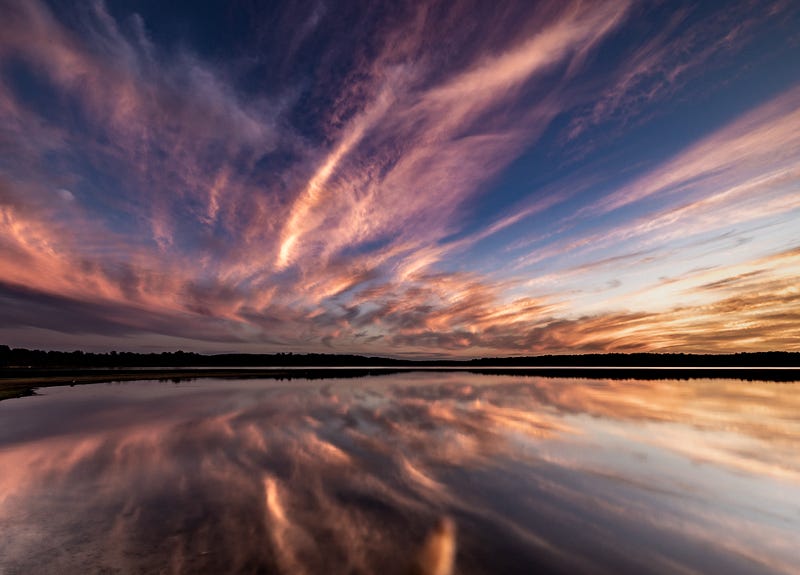
January 29 After waking up at 4:30 AM, I took care of the morning chores, making coffee, feeding and taking the dogs outside, putting some clothes to wash, and cleaning the kitchen. After, I did a workout and then sat down to write. Before I knew it, it was time to jump in the shower and get ready for the day. During lunch, I drove into Nash County to the Piggly Wiggly to pick up food for lunch and dinner. The store was busier than usual and I was happy to get out and head back home. After finishing work, I took a long walk into the woods, snapping a few photographs along the way. I visited a fallen tree I recently discovered on the west side of the woodland and found a crow feather resting underneath it. The feather was so black that it gave off a blue hue. Seeing the feather reminded me of an article I read last week about how crows recognize human faces. If they find someone they don’t like, they somehow communicate the person’s features to crows in other locations. Remarkably, those crows can recognize a person they have never seen, and harassed them because the original crow must have passed on some awful rumor. I continued on to my favorite sitting place, which we have unofficially named Beaver Teeth Rock. The large boulder earned this name after we discovered beaver teeth pooped out of a coyote or bobcat. Of course, we found lots of teeth and bones, including deer teeth and a cat’s claw. We’ll see if the name sticks. I sat on the rock for about an hour with my small pocket journal, making notes about whatever came to mind. My thoughts drifted to an article I read in the local paper, The Wilson Times. Someone submitted an article, political commentary if you could call it that, that outlined some pretty outrageous claims, presenting them as commonsense. It returned me to an old question I have been trying to answer for several decades now: How do you open a willfully closed mind? Specifically, how can you educate someone who doesn’t want to be educated? While the simple answer is that you cannot, it’s my opinion that this topic is so critical to human progress that we have to look harder for solutions. Certainly, specific experiences change people and help them realize the shortcomings of emotional decision making and general closed-mindedness. But it’s a tragedy that we have information that can make the world a better place, but, sometimes, the very people who would benefit from it have blocked its transmission. While that seems like a harmless personal choice, this type of self or group management will inevitably cross paths with the protected rights of others. And once the rights of one group violate the rights of another, then the first group’s rights are no longer protected. That’s a hard concept for many to swallow until someone tries doing the same thing to them. The two paths I have found in my contemplations are to break society up into groups of children and adults. Most adults believe in improvement and want better circumstances. However, the population is divided into two different philosophies centered on attitudes toward change. While the first group accepts change, there are always those who resist it, because they like things just the way they are. Unsurprisingly, this is commonly the attitudes of those unaffected by injustice and inequality. This is the approach that, “if it ain’t broke, then don’t fix it”. Unfortunately, humans often show indifference when things are broken for others. We seem to have a hard time understanding that what harms my neighbor harms me. There are those who accept change and those who want things to remain the same. The fallacy here is that, by definition and the natural laws of the universe, improvement requires change. If we want something to be better than it is now, then is has to differ from the way it is now. And if we want to move from how it is now to something different, well, that is called change. To desire improvement and fight against change is another way of expressing the idea of repeating the same behavior and expecting a different result, the layperson’s definition of insanity. The second path towards addressing this issue in society is a grander scheme of the way nature operates, improvement through attrition. We should accept that many adults are incapable of, or choose not to, changing their views. Here, improving society would involve teaching children how to think properly and make rational decisions based on universal moral principles like justice and equality. This is how nature creates change, in with the new and out with the old. Let ignorance wither and die. I think both fronts are worthy pursuits, to educate our young and offer adults the opportunity to learn the complexities of human observation, analysis, decision-making, and behavioral changes. When some people have the tools to see more, then they often choose a better way. But of course, there are those that will always choose to stand their ground, defending their ignorance until you pry it from their cold dead hands. I closed my journal and made my way back to the house. In the pine grove, I noticed the deer had made dozens of swirls in the thick bed of dead pine needles that covered the grove’s floor. They searched out stray morsels of corn, using their noses to pinpoint single kernels of the tasty snack. When I arrived back at my SUV, I grabbed a bag of deer corn and carried it off to the forest, where I poured several piles until the bag was empty. Nightfall came quickly as I fed the dogs and barbecued small beef ribs on the grill. I cooked the ribs with a thick barbecue sauce and ate them with a side of Japanese short grain rice scooped from the rice cooker. Before I knew it, it was time for bed.
January 30 I woke up in the middle of the night with sharp stomach cramps, peering over at the clock. It was 1:37 AM. I spent the next hour being sick in the restroom. I must have eaten something bad. Who’s running this place? I definitely want to speak with the house manager. After falling back asleep, I woke up at 6 AM, the latest I’ve slept in a while. I felt better in the morning and had some coffee while I wrote for an hour. The dogs were feeling tired and slept while I worked. They were probably awake last night while I was sick. After work, I took a long walk into the woods. On the central portion of the property, I found a new animal trail and followed it, spotting droppings from a rabbit, fox, and deer. The trail led me to a small tree that was being crushed by the top of a large pine that had broken off during our last storm. The little tree was still alive, but I thought the weight of the pine might kill it. That would be a shame. This little tree was special. Working hard in the cold, I tried to dislodge the large pine. I walked it up off the surrounding trees, but it was too long to untangle. I would have to return with some equipment. In the meantime, I propped a large section of the tree against another pine, taking pressure off the little tree. The small tree was special to me. A forest has its own ecosystem. The trees all compete for sunshine, which is reserved for only the tallest. Young trees lie in wait for old trees to die, and when they do, the younger trees shoot up toward the sunlight in the open canopy. However, some species of plants have learned a workaround to get to the sun. Vines have adapted to the forest by using tall trees, climbing them like poles in order to reach the sunlight. They are not everywhere, but in the forest, you see several trees covered, if not smothered, in vines. Of these few trees, something special occurs in a select few. After the vine spirals up the tree, the tree continues to grow. After some time, the vine becomes too tight and seems to cut into the tree’s bark, but something else is taking place. The tree slowly, but steadily, expands its girth until it swallows the vine. After several years, the tree completely envelopes the vine, killing it. The tree, however, bulges where the vine once grew, creating a permanent scar. The mark gives the tree the appearance of being spiraled, as if someone twisted it while it was growing. While I’ve seen a couple of dozen trees like this on the property, this small tree being crushed by the dead pine stood out with its nine or ten spirals. I’ll go back in the next few days to remove the pine and use it for firewood. The air was damp and felt cold. I made my way to the pine grove to check the deer corn. There was still plenty left. After I arrived back home, I made a quick dinner, something easy on my stomach. Then, I practiced the guitar and read a new book I purchased. Robert Solpolsky wrote the book titled Determined. It examines the notion that free will does not exist, but goes a step further in describing how we can use this understanding to improve our society and social interactions. I’m looking forward to reading on this topic. I think most people believe we have the free will to make the choices we want in our life, but science has known for a while now that determinism is real. And because it is real, then we must accept that free will is likely a cognitive illusion. The truth ain’t always pretty, but it is the truth. I’ll take that over ignorance any day of the week.
January 31 This morning, I woke up at 4 AM. When I opened the back door to let the dogs out, it was cold and pouring down rain. To their credit, all four dogs went outside and did their business despite the weather. I made some coffee and sat down to write, but the dogs were feeling especially rowdy. I fed them earlier than usual and within half an hour; they were all back asleep. Before getting ready for work, I worked out and then jumped into the shower. I had a busy morning schedule, and I wanted to be prepared for a few key meetings. I would be at my desk most of the day, except for a quick trip to the Piggly Wiggly for a Wild Mike’s frozen pizza. It was pizza night. After work, I went for my customary walk through the woods. Lately, while I’m in the forest, I’ve made time to sit down quietly and think, contemplating various ideas. As they say, a writer spends a majority of their time thinking. On the way to my sitting spot, I noticed most of the deer corn I laid down a few days ago was still there. It appeared the feeding frenzy was over, and I lamented the deer’s absence. This time of year, it is not uncommon for deer to move on to a different location. Deer will usually live within one square mile. While that doesn’t sound like a large area, it’s actually six hundred and forty acres. I still find that unbelievable. I sauntered down the trail, thinking about how I would miss the deer. Suddenly, I heard something familiar. It was faint and off in the distance, but it was the distinct sound of a deer’s bark. The deer were still around. Earlier, in the pine grove, I saw a large rubbing mark in the pine needles. It was too big to be anything other than a deer. When I arrived at Beaver Teeth Rock, I plopped down and pulled out my journal. It was cold and the damp air made it feel more so. In the winter months, the entire area looked sparse; rugged. On social media, everyone, myself included, seems to post scenic views full of color and life. Nature is this, but it also has a shadow. Life in the wild is harsh; severe. This winter, I drove to Raleigh to visit a museum. The weather was cold and I remember some people waiting at the door before leaving, thinking the weather was going to improve somehow. Their clothes were more fashionable than functional in terms of warmth. At one point, it rained, which literally kept people trapped inside, again, trying to wait out the weather. In the past year, I have spent a lot of time outdoors. And this winter, I’ve spent hours at a time outside in the subfreezing temperatures. After some time, I noticed it still felt cold outside, but my attitude changed. If I wanted to go for a hike, or to take photographs, it stopped mattering whether it was freezing, windy, or rainy. I just went. Spending time out in winter’s harshness didn’t make me feel warmer, but I became accustomed to it. Hands so cold, I couldn’t move my fingers; normal. A numb face from the biting wind; normal. Being uncomfortable; normal. Thinking about this, I realized nature is harsh. It is tough, and if you spend enough time with her, you will become more like her. Time in the woods has taught me to accept, and even cherish, nature’s severity. While being uncomfortable is never fun, the things you see, the experiences you have, and the value you receive from being outdoors makes the trade off worth it. When I am out in the nature, I am my most focused, most relaxed, sharpest, and happiest self. And if you take the time to get closer to nature, she rewards you by giving you the ability to bear her. It is really nice having a cute house, dependable car, and warm, soft bed. But these things also take me away from where I want to be. When the sun goes down and I head inside, it feels like I’m walking back into my cage. Yes, the house is warm and relaxing. There is food and drink. There is protection from the elements. But somehow, I would rather sit on this rock, out in the cold, alone in the dark, hearing these sounds, inhaling these smells, tasting this life. When someone asks me what is most difficult about living out in nature, I always tell them it’s having to go back inside at the end of the day. That’s why I go out every evening at what I have termed “last light”. Last light, to me, is the last chance I have to be where I want to be, before heading back into captivity. On the way home, I took a trail toward the grove just inside the tree line next to an empty crop field. The golden light of the setting sun lit up a large herd of deer, making their dull gray winter coats look more like their reddish spring fur. The herd was still near. They all stared at me while I stole glances, walking calmly down the trail. In the herd, a large buck seemed interested but wary. While passing by a trail camera, I pulled the SD card and put it in my pocket. When I was inside my home, the warm air made my stiff hands pulse and throb, with the feeling of poking needles. I laughed, noting that the comfort of my home was seemingly punishing me for my adventurous escape from conformity.
February 1 The dogs must have heard something in the front yard, because they all set off barking. It was 3:47 AM. I got out of bed and jumped into the shower. There was an early yoga class at the Wilson YMCA that I wanted to make this morning. The drive to the gym was dark, and the frosty night air still lingered. The morning yoga instructor always teaches an exceptional class, and this morning, the room was full of people on yoga mats, stretching as they breathed audibly in and out. On my way home, the sky was lighting and there was a thick layer of fog everywhere. The ordinary drive home took on an ethereal appearance, as if I were in a dream. Instead of heading home, I passed my turn and headed straight to the reservoir. It was a little before 7 AM and I had time to make it to Buckhorn to catch the sunrise. When I arrived at the large lake, the place was empty, except for one white truck parked sideways near the pier. I parked in a different location, which I frequented when photographing waterfowl. I stepped out of my truck and rounded the corner, seeing for the first time what the morning brought. It was the most serene vista I’d seen in a long while. Sunrises and sunsets. There’s not one alike, and some look more spectacular than others. This morning, a dense fog enveloped the entire reservoir. When the colors from the sky hit the thick mist, the light dispersed and softened. The colors of the sunrise filled the entire area with muted shades of blue, pink, orange, and magenta. The scene looked like a minimalistic piece of art with its shifting sky and shimmering water, while white seagulls circled, seemingly in slow motion. I left the reservoir feeling gratitude for my journey that lead me to this haven. After almost two years of immersing myself in nature, she has given me a deeper understanding of the ever thinning line between person and environment. When I arrived home, I made another coffee and sipped it slowly. The fat from the cream settled my hungry stomach. I remembered the SD cards I pulled from a trail camera and fetched my card reader from my office. There were eighty-one videos, mostly of two or three different deer herds, with an occasional appearance of an opossum, raccoon, or squirrel. One video showed a little raccoon feeding with the deer, everyone looking well acquainted. I fired off my favorite two videos to my wife, one showing two does walking around on their hind legs like humans. Apparently, they were posturing against each other over the food, but it looked awkward, if not creepy. I was thinking, Not A Deer. IYKYK. The other video showed five bucks, two quite large, hanging out together and feeding. Last year, I was lucky to catch one large buck on a camera, never seeing it with my own eyes. This year, the bucks stopped here. After work, I took each dog, one at a time, to the pine grove to run. Last year, my wife and I cleared a lane in the grove so we could walk end to end. The walking path has become popular with the deer and other wildlife. This straight path is relatively close to the house and made an excellent running lane for the dogs. With my wife gone and my work busy, I know the dogs have been a little antsy and building up stress. The time outdoors, running back and forth at full speed, was just the medicine the doctor, or veterinarian I suppose, ordered. While I enjoyed seeing each dog running, it was really special seeing Koda. Last year, he suffered a spinal cord injury, leaving the back half of his body completely paralyzed. He couldn’t walk or relieve himself and we had discussions about putting him down if he didn’t improve. After undergoing steroid therapy, he made an amazing recovery. Although he still walks a little wonky when he first gets up, he can run and jump just fine. It made me smile when he blew past me in the grove at full speed, his long hair flowing in the wind and feet sounding like a galloping horse. After running the dogs, I took a lone walk into the forest, thinking about how nice it felt having a little private space. My mind drifted back to life in Tokyo, where endless seas of people moved above and below the city streets. In the evenings, I would go back to an apartment that was just a few hundred square feet in size. In a place where people needed personal space, home felt less like an escape from society and more like a tiny prison. There is no comparing Raleigh or Durham to Tokyo, but I noted how being around too many people for too long tired me. I used to thrive in the city. Life in the fast lane seemed pleasant and felt like progress. But once you’ve lived in the country in a space of your own, you gain a new perspective on life. Society used to seem natural, but now it feels overly designed and constructed. Nature is just the opposite. It feels open and free. When I visit the city, I can’t wait to get back home and into the woods, where I’m more likely to see a deer than another person. Talking about a life in the city and contrasting it to a life in nature might sound like we’re looking at two versions of the same thing. The city life has its advantages and nature brings its own hardships. But thinking more deeply, we must all admit that living in nature is not the same thing as living outside of it, for one is the place from which we were born, and the other is something people contrived.
February 2 The alarm went off at 4AM. I popped out of bed, brushed my teeth, and made an espresso. This morning, I planned to do a one hour writing session before heading to the trails for a four-mile walk. When I arrived at the lake, the sky was still pitch black. Bundled in warm clothes and armed with my new Petzl headlamp, I made my way to the trailhead. I texted my wife and sent her a picture of my lighted path so she would not be worried about me. It was still an hour before twilight, but my 1100 lumen headlamp lighted the path like the headlights of a car. While walking in the dark, I turned toward the lake to see a beaver dive underwater, splashing its paddle-shaped tail against the surface. While there are beavers at this lake, it’s uncommon to spot them in the open. This trail sported several large trees near the water that bear the wear and tear of the beaver’s sharp teeth. Some scrapings were fresh, while old ones scarred several of the nearby trees. The sun wasn’t even up and it was already a good day. I noticed the faint light of first twilight at about 6:18 AM. It was just enough light for me to notice there was a band of perfectly glassed water on the lake’s west bank. The surrounding water’s surface, however, was covered in small ripples that shimmered under the moon’s light. As I rounded the bend that led to a large wooden bridge, I heard the sounds of waterfowl awaking. A pair of mallards quacked before taking flight, skimming the water at high speed until they became airborne. In the distance, a flock of geese sounded, their honks echoing, bouncing off the water and surrounding trees. A shadowy blue heron flew by the bridge, stopping to perch high in a tree, readying itself for breakfast. As the sun slowed toward the horizon, the sky transformed from monotone to color, with sharp hues of indigo and magenta. A soft orange glow emerged, reminding me of the color of a Creamsicle. Empty patches in the clouded sky formed streaks of light, creating long slivers of silver across the lake. Fifteen minutes later, the entire show was over as Lake Wilson returned to its normal beauty, the scene everyone would see throughout the day. But its daytime attire was no match for its twilight performance, a special show reserved for those who ventured out into nature before the sun awoke. On the bridge, I ran into an acquaintance and his dog, someone who also frequents the area on early mornings. One of his unique habits is taking his dog out to the lake and taking a daily picture as a keepsake. If you’re a dog owner, then this will make more sense. As we chatted quietly on the bridge, a large beaver swam right by us, making its way toward the rising sun, its wake cutting the water like a zipper. The man took a few pictures of the beaver while I caught some video and sent it to my wife. She loves seeing these little animals at the lake, and I was sorry she missed this sighting. It was Friday, but work was very busy as I prepped for an important presentation I had to give the following Monday. In my last meeting of the day, after we had completed our agenda, two workers and I fell into conversation about our past work in law enforcement. It was interesting to learn how similar our experiences were after leaving the field. One worker was a police officer in California and the other a sheriff’s deputy in Colorado. I previously worked on a fugitive apprehension unit in Texas. Now, we had all retired from that line of work. I was asked if my old unit posted a Hemingway quote in our office, which we did not. But the quote is worth mentioning. Hemingway wrote, “There is no hunting like the hunting of man, and those who have hunted armed men long enough and liked it, never care for anything else thereafter.” We talked about the quote and how our experience had ruined hunting deer and other wildlife. We all supported hunting but also relayed how it did not give us any special feeling. I constantly see videos on the internet of hunters making a kill and being filled with excitement and emotion from the thrill of the hunt. I remember the excitement of tracking down fugitives and, like a hunter, planning on how to control or blend in with the environment, so we could successfully apprehend another human being while getting no one injured or killed. For all that it is, nothing quite prepares you for prolonged exposure to what we dubbed “hyper-violent environments”. Encountering resistance was normal. Car chases, foot chases, physical confrontations; dealing with threats that weren’t just someone’s words, but the possibility, and probability, of real and imminent danger. I loved my job in that team. Our unit brought in thousands of fugitives who were sexual or violent predators. I worked alongside every local, state, and federal agency you can think of. And while running and gunning taught me more about myself and human beings than any other thing I’ve done, I’m also happy that part of my life is over. We all were. Standing in a deer stand, or sitting in a blind, to hunt a deer does not excite me. It cannot stand up to the thrill of tracking down another human being and facing them, two people who have harshly conflicting goals that make people act feral. We all supported hunting, however, we understood the importance of facing oneself in challenging circumstances in a way that required one to be strong and bend at the same time. For many people, hunting wildlife is the closest they will ever come to see this side of themselves. To us, however, feeling something exciting after killing a deer seemed like a dishonest exaggeration of what it means to face conflict in nature; in oneself. Now, each of us in our fifties, felt grateful for our experiences but recognized that we had more to do in life. As we mature, priorities change, not because we are through with wildness in life, but because we matured enough to accept what is meaningless and what is important. It was a meaningful conversation. Three humans bonding over shared experiences. During my meeting, the dogs started barking. I muted my mic and peeked out the window, glimpsing car tires in front of my house. I asked my teammates to hold on, and I headed to the front door. It was probably a neighbor looking for their package; I thought to myself. The dogs were barking loudly as I opened the door. My brain just froze, unsuccessfully processing what my eyes were seeing. My wife, who I thought I would not see for a month, was standing outside her SUV smiling at me, looking pretty as ever. She had made the trip home for the weekend, wanting to surprise me. It did. I don’t even know how I finished my meeting, but when I did, my best friend and I just held each other. There are no words to describe the silent conversation that goes on between two people so closely attached. Tightly embraced, we didn’t say a word, and we didn’t have to. A thousand thoughts and feelings flashed through my head and heart. This woman who I love so deeply, who loves me the same, was no longer an imaginary friend in my mind during her absence. This person was real flesh and blood; heart and soul. It was undeniably the absolute best moment in my life.
February 3 Last night, I didn’t sleep very well. I woke up a little before 3 AM and dozed for a half hour before waking again. I stayed in bed, open-eyed, until I finally got up around 4 AM. My brain was probably excited that my wife, still sleeping, was home. It was really nice to have her back. I knew she’d wake when I got out of bed, so I coaxed her to stay under the covers and sleep longer. After a quick shower, I sat down to write. It was still dark outside. I wrote for about an hour before my wife woke up. Once awake, I made us both cappuccinos, and we sat on the couch teasing and playing with the dogs. It all felt so normal, like someone hit a reset button and erased my wife’s absence from the previous week. I wasn’t the only happy one in the house that missed our routine. Today, the dogs were especially playful, happy to get all the love my wife gives them. Ear “scritches” were in abundance. My wife jumped in the shower while I washed our coffee cups. After, we both sat at the kitchen table, my wife studying and me writing. We didn’t move for at least two hours. We took a brief break and then left the house, heading to the YMCA for a Saturday morning yoga class. It was good to see the studio was full of people. Leaving the facility, we googled pizza places and found one we wanted to try in Wilson called Pinots. The pizzeria was in a suitable location, but was empty. There was loud music playing, something Middle Eastern that sounded religious. It reminded me of Sufi music played in the background of a Coleman Barks recital of Rumi’s poems. We ordered some garlic knots and a medium pepperoni pizza. The man behind the counter was very kind and seemed excited that we opted to stay and eat at the location. My wife and I talked about how the quality of the bread or crust can make or break a pizza. The crust at Pinots was great, floppy like a slice of pizza, but somehow still crisp with every bite. The mozzarella cheese was also delicious and pulled into long strands of yumminess with every slice. We were thrilled by the find. When we were about to leave, the owner came to talk to us. We probably talked for about ten or fifteen minutes. He was from Egypt and had been in the U.S. for over twenty years. The man had several grandchildren and pulled out his phone to show us pictures of his son’s family. He also told us how he missed his relatives in Egypt, as they had been apart for a long time. There was a sense of deep sadness, but full appreciation for all that he had accomplished while living here. I think those who have lived in other countries have an ability to appreciate this country more than those who have been here their whole life. American pride seems, to me, to have a twinge of entitlement, without the perspective of what makes life here unique. Of course, things are not perfect, but this man’s story was a reminder that life never is. I think all humans know what it feels like to be happy and sad at the same time. Exhausted from the week, my wife and I opted to take a nap in the afternoon. We slept hard for over two hours, waking up, feeling refreshed. It’s hard to beat a good nap on the weekend. When we woke up, we took a walk into the woods together with our oldest dog, Kilo. In the pine grove, we stopped to watch a woodpecker, its bright red head bobbing as it pecked a small hole in a tree. Listening more carefully, we heard the sounds of several more woodpeckers. There was a small flock in the trees, just like I had seen last week in a nearby location. After running Kilo for a while, we took a shortcut through the woods to a tree I wanted to rescue. Last week, I noticed a large dead pine fell, landing on top of the spiraled tree. Since I had last been there, the base of the dead tree had almost detached. I was able to move it back and forth enough to sever it, allowing us to remove the dead pine. With some help, I lifted the pine off the live tree and let it fall unobstructed. Some time next week, I’ll go back and harvest the dead tree for firewood. In the evening, my wife studied for several more hours while I did some reading. After, it was time to shut down our brains and give them a rest. We put on some music and had dinner together. The evening was relaxing as we eased into all of our favorite routines together. We knew she would have to leave town on the following day, but this evening was ours to cherish.
February 4 In the morning, we woke up feeling refreshed and ready for the day. My wife jumped in the shower while I prepared some laundry and cleaned the kitchen. She must have had an epiphany in the shower, because when she got out, she asked, “Do you want to go get breakfast?” Yup. The dynamic duo was back in full force. The Cracker Barrel, normally hopping on Sundays, was pleasantly quiet. The fireplace was full of burning logs and embers. Breakfast was a feast. There were stacks of freshly buttered pancakes with maple syrup, thick cut bacon, and eggs smothered in tabasco sauce. I drank more coffee while my wife opted for a hot chocolate, complete with chocolate whipped cream. Work hard; play hard. After eating, we went straight to Lake Wilson for some exercise. The lake was quiet, too. Where were all the people? As usual, the scenery was beautiful. There were several mallards and a large flock of Canadian geese. We also spotted a blue heron and one lone cormorant. The waterfowl seemed relaxed, as if they knew it was Sunday. Most of my walks, lately, have either been in the dark or at sunrise, when the temperatures are uncomfortably cold. It was nice to be at the lake when the sun was out. Even though the wind was cold, I could feel the sun’s heat radiating. After our walk, we stopped by a local grocery story to stock up on groceries for the week. We sorted everything out when we arrived home and packed my wife’s car for the trip. Before we knew it, and before we were ready, it was time for her to leave. The goodbyes were tougher than we expected, but we knew we had stolen some time together from our scheduled month apart. I needed a little time to settle after she left, so I picked up the guitar for a while before sitting at my desk to work on a writing project. When I looked up from my desk, I peered outside of the window and saw it was a beautiful day. I changed clothes, grabbed my camera and harness, and headed into the woods. I climbed up into a tree stand in the central area of the property and sat quietly, hoping to see some wildlife. It was a quiet day in the tree stand, but hey, I was in a tree stand out in the middle of the woods. Doing this was kind of like going fishing. Sometimes, the fish aren’t biting, but you’re still out of the house and on the water. This is the real reason most people fish and hunt (or take photographs). We just want to be in the environment that makes us happy. After an hour, a lone woodpecker landed in a tree about thirty yards from my position. I shot a couple of photos, but they were nothing spectacular. Still, I enjoy watching these little birds. Seeing red in nature always feel special, whether its a woodpecker’s head, cardinal, or Japanese maple in fall. The evening on the stand was just what the doctor ordered. Spending time in nature allowed me to snap back into my routine of living alone. Everything was going to be okay. And by okay, I meant I was going to miss my wife, but I was going to do it in style. After the second hour on the stand, I climbed down and hiked back to the house. I was going to build a fire. I split three logs into kindling and lit them. It rained a few days ago, and some of the wood was still wet. While the flame in the fire pit did not go out, the wood was having trouble igniting. I stacked everything neatly, placing multiple pieces of small wood in the flame’s path while making sure there was adequate airflow. After a few minutes, it was clear the wood was wet, so I exited the back gate and found three long, but skinny, pine branches. Because the limbs were thin, they had completely dried. Small skinny branches burn fast and hot. When you’re starting a fire, the primary goal is to produce hot coals, something small sticks do quickly. Once you have enough hot coals in a pit, the temperature becomes so hot that a large log will quickly ignite, even if it was wet when you threw it in. The temperature was dropping, but the fire was plenty warm, keeping me outside for hours. As the sky darkened, I opted to make a couple of hotdogs right there on the fire pit, eating them outside while sipping a cold beer and listening to music. I also cooked a few hotdog wieners to add to the dog’s dinner. It was a good night. Not perfect; but as good as things can be when your partner is gone. I let the fire pit burn down, fed the dogs, and then washed the smoke off me in a hot shower. The weekend was over and it was time to begin a new week. I had a big presentation in the morning, so I would have an early start. But first, that pesky thing called sleep.