
Intimacy Has Nothing to Do with Others
And everything to do with ourselves
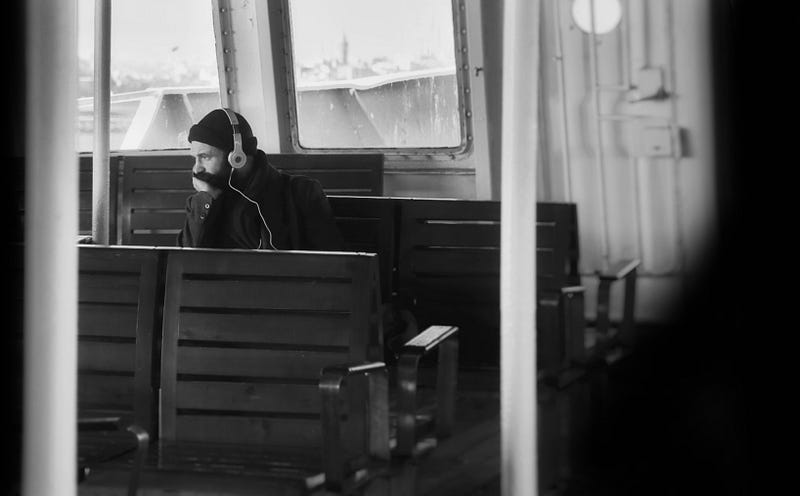
In college, I was well-known among my friends for pacing the halls of the apartment in the wee hours of the night. Like a ghost, I walked back and forth across creaky floorboards, engrossed in my thoughts.
I always felt that it was at these times — totally alone, seemingly in a trance — when I was most alive and most intimate. When my roommates got up to get a midnight snack and stumbled upon me, my mind was jolted to reality, and the feeling of intimacy suddenly vanished. It was as if that feeling depended on me being alone, in my own body, with space and privacy to think and feel.
Intimacy, in my mind, has a lot to do with what Audre Lorde, poet and writer, calls the erotic:
“A resource within each of us that lies in a deeply female and spiritual plane, firmly rooted in the power of our unexpressed or unrecognized feeling.”
Intimacy is sensation and feeling combined, an acknowledgment and praise of our own intuition and the power it wields.
And while it can be acted out with others in the form of a stimulating conversation or a sensual encounter, intimacy begins from within. It is the ultimate understanding of self, and it requires paying attention to what is happening inside of us. Intimacy has much less to do with other people, and much more to do with ourselves.
Intimacy is sensation and feeling combined, an acknowledgment and praise of our own intuition and the power it wields.
All too often, we examine our lives from the outside looking in. We have been trained to appraise our own value with the eyes of our neighbors, or our parents, or our friends. And this conditioning undermines any intimate relationship we can have with ourselves.
For example, I look into my own life and think, “A writing career? What’s he thinking?” Or, “Laying in bed all day — you must be kidding!” And so I have lived thus far in service to the prying eyes of society. I work 60 hours and average one panic attack a week doing scientific research. My alarms are set, every day (including weekends), for 7:30 — whether I am ill or lacking energy, I shame myself into getting out of bed.
Consequently, I’ve hidden the things that I most value, first from society’s eyes but ultimately from myself. I’ve taken what I most loved about myself, packed it into a box, and stored it in the dusty attic of my mind. Out of fear, I alienated myself from the parts of me that I didn’t think others would understand or take seriously.
But cultivating intimacy is our chance to re-examine ourselves from the inside, using our own eyes. We can finally reclaim and reconnect to the power that we’ve hidden from ourselves because we’ve been taught to be ashamed of it. When one is truly intimate, they no longer fear themselves but live in awe of their potential. As Audre Lorde writes:
“Another important way in which the erotic connection functions is the open and fearless underlining of my capacity for joy.”
Slowly, I’ve begun to dust off my box of what I love about myself. I try on words like “writer” in the mirror. I start to type out a few lines— always with the blinds drawn, the door closed. And I’ve begun to notice that when I’m sure that nobody is watching, I have a lot of power left in me.
Of course, there are moments when we can be intimate with someone else — these are the moments when two people recognize and share the power within each other. But I like to think that most often, intimacy isn’t a fleeting experience but an enduring condition. Because at its heart, it’s about living authentically and with intent. I’ve always felt most intimate when I’m alone, tapping into the rhythms of my own body, listening to my unfiltered thoughts.
My family used to have a trampoline in our backyard when I was younger. And whenever I found myself mulling over a big idea, I couldn’t resist the urge to jump around on the trampoline. It was as if the thoughts I had were giving me some sort of energy that I didn’t know how to process without bouncing around. I would spend hours jumping and pondering in the mornings before school, and again after I got off the bus in the afternoon. The sun would set, and yet I bounced on in the glow of the bug-zapper, wrestling with some conundrum.
This, I think, was the ultimate form of intimacy: jumping on a trampoline, alone, in lime-green Crocs. And I experienced all the benefits that intimacy can give. I felt a surge of energy and power. I knew that anything was possible, provided that I had adequate time to bounce around on the trampoline and think about how to do it. This was self-connection and existing from within.
Intimacy isn’t a fleeting experience but an enduring condition. Because at its heart, it’s about living authentically and with intent.
But I don’t experience that level of intimacy all the time. It can be not only hard to achieve true intimacy, but it’s also really scary to think about. Because, as Audre Lorde writes,
“As we begin to recognize our deepest feelings, we begin to give up, of necessity, being satisfied with suffering and self-negation, and with the numbness which so often seems like their only alternative in our society.”
Part of cultivating intimacy with ourselves is becoming comfortable with our wants and needs as human beings and refusing to be placated by anything that doesn’t completely fulfill them. Intimacy doesn’t tolerate whatever is “good enough.” It calls on us to acknowledge that we can be better, that we must stand up for ourselves, and that we have to pursue a life of self-actualization that is ours alone.
And we are afraid because deep inside, we know that we can be better. We already know what will bring us joy. And we already know where it is inside ourselves — stowed away in that dusty old box in the attic of minds, where we hope that no one will ever find it, including ourselves. But we can’t forget it. Something holds us back each time we try to throw that box of true joy into the trash. That something is our intimacy, calling out to us.
We will only come alive when that dusty old box sees the light of day, and when we can flaunt its contents, brazenly, against a world that wanted it out of sight.