
Interpretation Of Shakespeare
All’s Well That Ends Well.
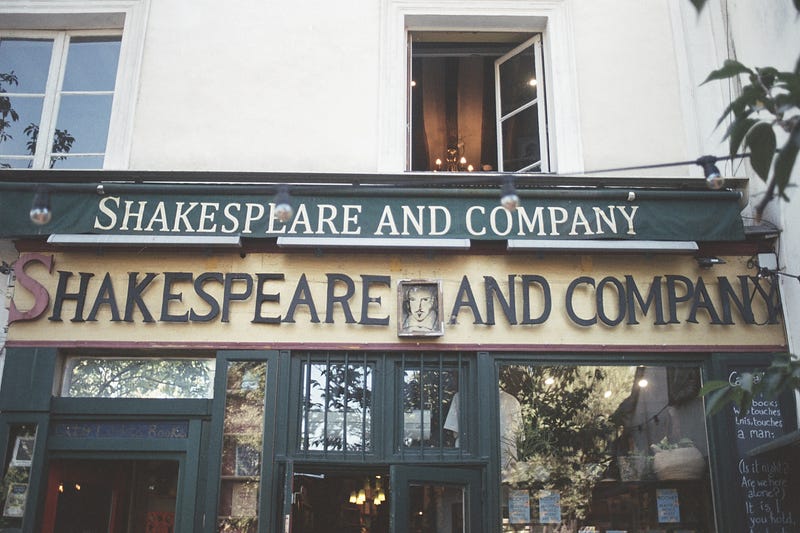
I started out thinking I would write a book review of one of Shakespeare's works. After looking through his works. I decided on one of his comedies, “All is well, that ends Well.” I choose this because it seemed to be the shortest of his works.
Not only that, but I soon discovered that the challenge of translating from old English to modern English was daunting, and I better change the description from review to interpretation
All’s Well That Ends Well is one of Shakespeare's comedies.
It was published in the First Folio in 1623. The First Folio is a collection of plays.
You can buy the literary text of this play from the Amazon.com online bookstore: All's Well That Ends Well: Second Series Paperback You can also find the entire play on one page at: Shakespear.mit.edu.
The play consists of five acts with multiple scenes.
The play starts with the characters Bertum, the countess of Rousillon, Helena, and Lafeu a feisty old nobleman in the king of France’s court. They were all wearing black and attending the funeral of the former count, the funeral of the husband of the countess.
The countess is Bertram’s mother and Helena’s guardian (sort of like a foster mother). She’s also a widow, but Shakespeare makes it pretty clear that her most important job in this play is being a mom.
During the Middle Ages, the County of Roussillon mostly occupied what is now South East France and North East modern Spain. It was ruled by the Counts of Roussillon.
Bertran states that he has inherited his deceased father’s obligations to the King of France and must go to Paris and attend to the ailing King, for which he is responsible now that his father has passed away.
Countess asks what is the condition of the ailing King.
Lafue answers: The King has fired all his physicians, which were not improving his health.
The countess then states that she is the guardian of Helena, whose late father was a physician with healing skills that no one could match. Helena’s late father had healing skills that were very great.
What was this man’s name, asked Lafue.
The countess replied, He was famous within his profession and his name was. Gerard de Narbon.
Lafue then replied. He was excellent. The King recently spoke of him admiringly and in mourning.
Bertram then breaks in. What is the problem with the King?
An abnormal connection between an artery and a vein cause puss to come out of his anus. Said Lefue.
Bertram then states, “This is the first time I’ve heard of this.”
Lafue then asks Bertran, Was Helena really the daughter of Gerard de Narbon?
The countess breaks in. His sole child, and left responsible to me.
Helena gets my highest praise
The character PAROLES enters.
Okay, in the interest of brevity, I will change the format of this story from here on out. The above is my interpretation of about a third of Shajesoaer’s comedy “All’s well that ends well” Act 1: Scene 1.
If you want to see what it looks like in Old English, go to the bottom reference link below and search for PAROBLLES.
High-Level Verbiage
Helena is in love with the countess’s son Bertram, who doesn’t feel the same way about Helena.
Bertram goes to Paris to take over his late father’s responsibilities, replacing caring for the ailing King of France.
Helena, the daughter of a skilled lately deceased physician, tracks Bertram, seemingly offering the King her services as a healer.
The King is suspicious, and she ensures the cure with her life: if he dies, she will be put to death, but if he lives, she may choose a husband from the court.
The King is cured and Helena decides to select Bertram as a husband, Bertram, rejects her. The King forces him to marry her, but after the ceremony, Bertram immediately goes to war in Italy.
He says that he will only marry her after she has carried his child and wears his family ring.
Helena returns back to the countess, who is terrified at what her son has done, and claims Helena as her youngster in Bertram’s place.
In Italy, Bertram is a victorious warrior and also a successful seducer of local virgins. Helena follows him to Italy, bonds with Diana, a virgin with whom Bertram is infatuated, and they arrange for Helena to take Diana’s place in bed.
Diana acquires Bertram’s ring in a swap for one of Helena’s. In this way, Helena, without Bertram’s understanding, accomplishes their marriage and wears his ring.
Helena pretends her own death. Bertram, believing he is free of her, comes home. He tries to marry a local lord’s daughter, but Diana shows up and breaks up the engagement. Helena appears and explains the ring swap, announcing that she has fulfilled Bertram’s challenge; Bertram, moved by all she has done to win him, professes his love to her.
Thus, all ends well.
After it’s all said and done. You can see why the works of Shakespeare have lived through the ages.
References
Shakespear.mit.edu.all=is-well-that=ends=well
The Complete Works of William Shakespeare at mit.edu.com
All’s well that ends well: Act 1. Scene 1
additional links you can find my work at:
Facebook| Twitter| LinkedIn|Amazon author page|Medium| simily
If you’re already a member and want to get an email whenever I publish a new story, click below. Thanks.
Not a Medium member yet? Do you want to have access to tens of thousands of stories every day and support those who write them? Click below to join today and help us writers tell our stories. By signing up, a part of your membership will help me without any additional cost to you. It only costs $5 per month, and I’ve made money every month since I became a paying member, and you can too. Thank you.


