
International efforts are ramping up to find a vaccine for COVID-19
Medical researchers around the world are working on multiple approaches to find the best vaccine candidate
Desperate times call for desperate measures. As the world finally awakes to the dangers of an aggressively spreading pandemic, one burning question arising in everybody’s mind — what is being done to fight the disease? Looking at the data, it is abundantly clear that it is not a localized phenomenon anymore and the spread is global and accelerating.
Especially here in North America, the governments were oblivious to having a problem until the number of infected cases started to grow exponentially last week. As the situation turned extremely fluid, U.S has now declared a state of national emergency & Canada has gone into a partial shut down as well. No point in discussing why it took them so long to decide on these actions.
The entire focus has now shifted to changing social behaviors so that the spread can be at least slowed down enough to better understand what we are dealing with. While the people come to this realization, the ultimate aim is of course to find some kind of vaccine which can offer protection. So far, we have some basic knowledge of the virus from the comprehensive study conducted in China earlier.
With the emergency measures now in place, the focus has shifted to international efforts by medical researchers to find a vaccine. The foremost effort is being undertaken by Coalition for Epidemic Preparedness Innovations (CEPI) — a partnership between public, private, philanthropic, and civil organizations, which is investing more than $23 million to develop a vaccine against COVID-19.
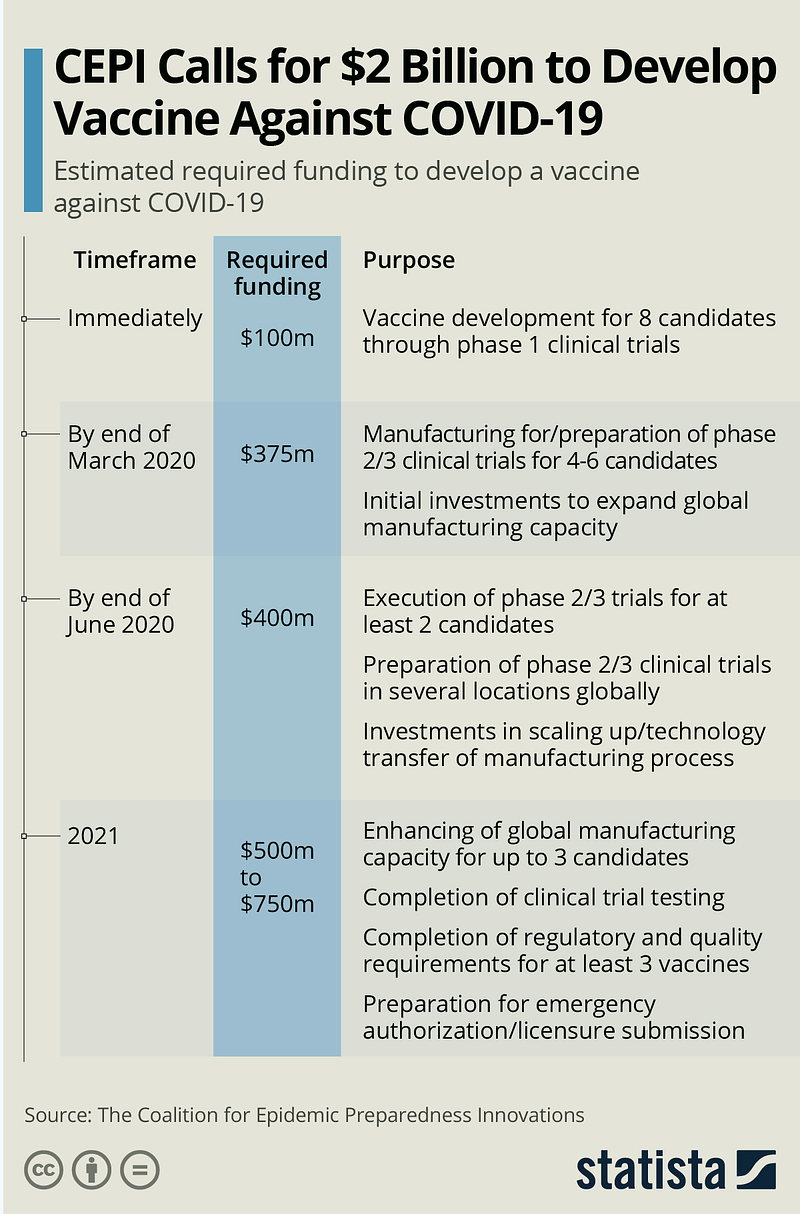
To avoid putting all its eggs in one basket, medical researchers are working on multiple approaches to find the most effective vaccine in the shortest possible time. However, it is rare to develop a vaccine under a year. This is what happened to Canada’s Ebola vaccine, while the trials happened years before, the vaccine couldn’t be developed in time for the 2014 epidemic that ravaged West Africa. On a positive note though, the same vaccine is now being used to control the epidemic in Congo.
New viruses are not well understood and that is the case with SARS-CoV2 as scientists scramble to learn more about it. We do know that it is primarily a lung infection and any new vaccine would need to protect specifically against the virus getting into the lungs, as suggested by Canadian immunologist, Charu Kaushic of the Canadian Institutes of Health Research.
Meanwhile, the U.S. National Institutes of Health (NIH) is working with the biotech company Moderna to develop a vaccine. Although testing has been done in record time, it will be at least a year to year and a half before a working vaccine could be produced as reiterated by NIH director. World Health Organization has already given a time frame of 18 months to develop a vaccine.
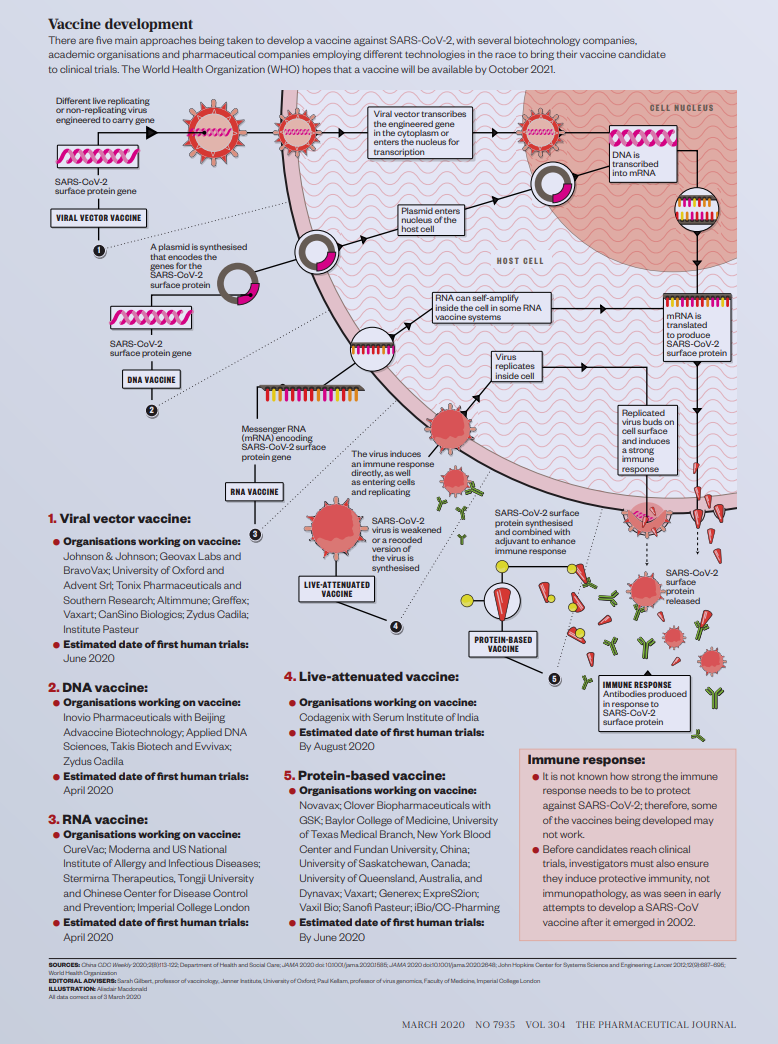
Another biotech firm in Quebec city of Canada by the name of Medicago is working on producing a potential COVID-19 vaccine that uses particles that mimic the virus. Researchers are planning to mass-produce the vaccine using plants, which is quicker than the traditional way of using animal cells or eggs.
In other developments, U.S health regulators have approved a novel COVID-19 test that is 10x faster in its ability to test patients. This has at least removed a hurdle that was causing unnecessary delays in efforts to contain the virus. The FDA gave emergency approval for Roche Holding AG’s cobas 6800/8800 systems — capable of testing 4,128 patients a day, and the 6800 version can test as many as 1,440. The tool also is available in Europe and countries that accept its CE marking for medical devices.
As the global population anxiously waits for more clarity on the virus, we need to stay calm and take precautionary measures as being suggested by the global health authorities — avoid physical contact, restrict unnecessary travel & social gatherings, wash hands regularly. A strong immune system at the end of the day is our best bet against any health threat. Daily intake of Vitamin C is known to prop it up.
Huge challenges lie ahead, but together we can pull it off.