
I Tried Intermittent Fasting for a Year: Here’s What I Discovered
Time restricted eating is one of the hottest diets around. I experimented to see if it works.
Intermittent fasting is a hot dieting trend. Even the experts at Harvard Medical School advocate it.
That’s because this age-old technique offers the promises of losing weight, burning fat, evening out blood sugar spikes/drops and the possible stimulation of autophagy (the body’s way of cleaning out damaged cells).
But I wanted to see if the practice would work for me. I experimented with intermittent fasting for a year.
Here’s what I discovered.
Note: I am not a doctor or nutritionist. Also, even strong proponents of intermittent fasting say that it isn’t for everyone. Some medications need to be taken with food, and people who are pregnant, breastfeeding or have eating disorders clearly should avoid intermittent fasting. So should children.
How It Works
If those caveats don’t apply to you, here’s a brief look at how intermittent fasting works.
When we eat, we get energy from our food. Some of that energy is not used immediately. Instead, it is stored in one two ways: 1) as glycogen or 2) as fat.
Glycogen (formed from sugar) is easy for our bodies to access and use for energy. Unfortunately, our bodies can only store small amounts of glycogen. So we have to store the excess energy as fat.
The problem is that it is harder for us to access our fat stores when we need energy.
Intermittent fasting is a way for us to deplete our glycogen stores and cause our bodies to turn to stored fat for energy.
Experts recommend a range of different intermittent fasting styles, from 5:2, where you eat five days a week and fast two days a week, to 16:8 where you fast for 16 hours and eat within an 8-hour window, to longer fasts.
I chose a 16:8 fasting style because it seemed the most doable to me. This is also sometimes called time-restricted eating.
So here’s what I’ve learned about intermittent fasting.
I didn’t have to stop eating at 8 p.m.
A lot of fasting enthusiasts claim that you need to stop eating at 7 or 8 p.m. But Jason Fung who has authored several books on the subject, including The Complete Guide to Fasting, says not so.
Since I’m more of a night owl, I followed his approach.
Instead of having my last meal at 7 or 8 p.m. and breaking my fast at noon the next day, I stopped eating around 10 or 11 p.m. and ate my first meal of the day around 2 p.m.
This was easy and sustainable for me and allowed me to lose about 12 pounds in a few months.
But it’s important to note that most of the time I was following this approach I was also following a keto diet. It worked less well when I added more carbs back into my diet. See below.
The fewer carbohydrates I ate, the easier it was to fast.
About a month after I started intermittent fasting, I experimented with a keto diet. I used both strategies for about eight months and had great results. I lost 12 pounds in two months, easily maintained the weight loss for six months after that, and enjoyed sustained energy, no cravings and good mental clarity the whole time.
But once COVID-19 and the accompanying quarantines hit, I found keto very challenging to follow. I was cooking nearly every meal at home, and I was the only one in my family following keto. Everyone else wanted to eat potatoes or pasta, and eventually, I got tired of cooking meals where I could only eat part of them.
Of course, that wasn’t the only problem. Quarantine is stressful. So is a pandemic! Eating is one of the few areas of socializing we had left.
So I relaxed my keto standards. I ended up going low carb.
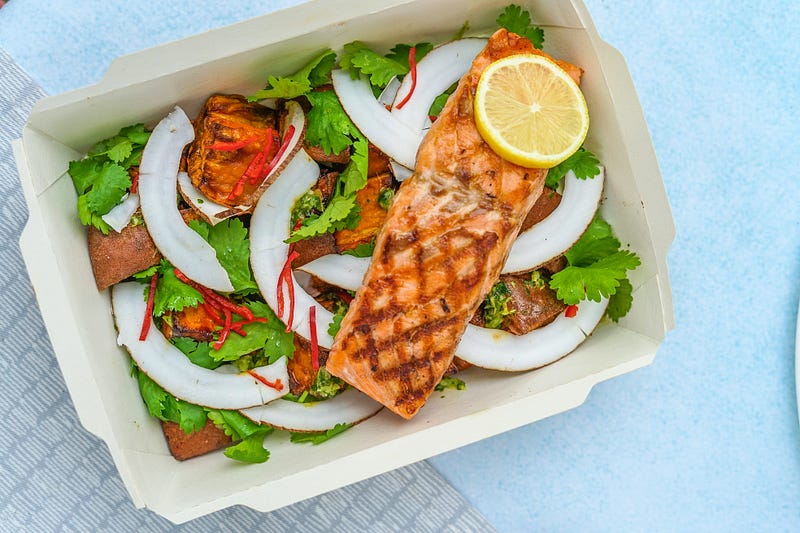
I still avoid bread and pasta and focus on lower carb fruits and vegetables. But I’ve allowed a lot of carbs back into my diet — beans, more fruits, some potatoes and whole grains.
All the while, I’ve maintained the intermittent fasting, but it’s a very different experience without keto.
Fasting is much harder now. When I was doing keto, I could easily go 16 hours, even 20 hours without food. It was effortless, I always felt satiated, and I had plenty of energy.
Now that I’m eating more carbs, I find I get hungry after 12 or 13 hours. Sometimes I can’t make it to 16 hours. I’ve also put on about 5 pounds since March.
Clearly, I need to lower my carb intake again. Or let myself go hungry and go the full 16 hours.
I am planning to experiment with both strategies.
My energy levels are steady throughout most of the day.
You would think that going without food all morning would make your blood sugar surge and crash. For me, it’s had the opposite effect. I wake up with plenty of energy and that stays pretty much the same all day.
I don’t count coffee.
Coffee is a somewhat controversial subject in intermittent fasting circles. Some people believe that you aren’t really fasting if you’re drinking coffee. But I turned to experts like Fung, who say coffee is fine if you only add heavy cream — no sugar, no half and half — because heavy cream has no impact on insulin.
I’m the first to admit this is a crutch. I need my coffee. It’s a habit and an addiction — no question. But it’s not a harmful one. In fact, many studies have shown that there are health benefits to drinking coffee.
In terms of fasting, it helps me get through the morning without feeling hungry, so I feel like it’s a useful crutch.
I have a few tricks for coping with hunger.
Fasting experts recommending drinking a tall glass of water and waiting 15 minutes if you feel hungry. They say hunger comes in waves and often dissipates. I’ve found this to be true.
They also recommend taking a walk. That also works for me. And if I can’t walk, I’ll just do some stretching or indoor exercises.
The best trick I have, though, is simply staying busy. As long as I’m engaged mentally, I don’t think about eating.
The best breakfast for me is last night’s dinner.
Having spent most of my life on an extremely carbohydrate-rich diet, I was used to a mid-afternoon crash (and sometimes a post-breakfast crash) nearly every day before I tried keto and intermittent fasting.
I would eat my low-fat cereal topped with sliced bananas and skim milk, and an hour later, I’d have to fight the urge to take a nap.
I was delighted to discover that with keto, my post-breakfast crashes ended. So did my mid-afternoon slumps.
Unfortunately, when I was just doing intermittent fasting without keto, I’d still sometimes get those post-breakfast crashes (except that instead of a 10 a.m. crash, it would be a 2 p.m. crash).
I realized that it was when I had a higher carb breakfast, say yogurt and raspberries, that I’d get the crash. For me, it’s best to start my day with fat and protein.
That often means eating last night’s dinner. I’m never happier than I am when I have cold leftover salmon or chicken for breakfast. To be clear, it isn’t just the protein. It’s the fat, too. If I have a lean protein with no sauce, I’ll add some olives and macadamia nuts to my meal.
The fat keeps me satiated and keeps my blood sugar even. I feel satisfied and happy for hours.
Exercise is easiest and most effective when I’m fasting.
The idea of exercising in a fasted state seems horrible. It seems like you’d run out of energy or feel absolutely famished afterward. It also seems like you wouldn’t build muscle.
None of that has been true for me. I perform best when I exercise after fasting at least 12 hours. I may feel hungry before exercising, but I never feel hungry after exercising. And I have built muscle in my legs (you can see it) since I started intermittent fasting.
I never bloat.
I used to have all kinds of stomach issues — bloating, gas, irritable bowel syndrome — but not since I started intermittent fasting and low carb. My stomach issues are gone. Just gone. I literally never have gas.
I am not willing to say that this will be the case for everyone. I don’t believe diets are a one-size-fits-all kind of thing. I think my happy stomach is the result of happy gut bacteria. And I think my gut bacteria are happy because they were getting sick of having to cope with all that sugar.
Lowering my carb intake was probably the biggest health improvement I’ve made, but the intermittent fasting has definitely had an effect, too.
I’m continuing to use intermittent fasting today. And I’m experimenting with eating more carbs, but being more rigorous about keeping track of them. If I eat a very low carb diet during the day and have 40 or 50 grams of carbs at night, my body seems to be happy.
Like this story and want more? Sign up for my newsletter now!
If you like this, you may also be interested in these articles: