
‘Interior Chinatown’ Tackles Racism and Explores Asian American Identities
A book review of Charles Yu’s 2020 National Book Award winning novel
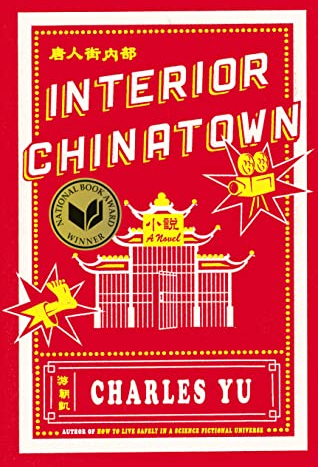
“He is asking to be treated like an American. A real American. Because, honestly, when you think American, what color do you see? White? Black? We have been here 200 years. The first Chinese came in 1815. Germans and Dutch and Irish and Italians who came at the turn of century. They’re Americans. Why doesn’t this face register as American? Is it because we make the story too complicated?” — Charles Yu, Interior Chinatown
After spending a good portion of my year reading Asian American fiction, I was excited to cap off my year with Interior Chinatown. Published in 2020, it’s a timely read given the anti-Asian sentiment rising during the pandemic. Charles Yu incorporates his background in TV writing with the book’s unconventional form: part screenplay and prose. Thematically, the story feels like a crash course in Asian American Studies. Asian Americans will feel seen and heard while readers of other races can hope to gain some knowledge about a diverse and misunderstood group.
The story follows Willis Wu, a Taiwanese American and actor, who lives in Chinatown and views himself as Generic Asian Man. He works at the Golden Palace restaurant where Black and White, a procedural cop show is in perpetual production. Hoping to snag a guest star role someday, Willis aspires to be what all Asian boys wish to be: Kung Fu Guy. But his mother tells him to be more — if only Willis can imagine a possibility outside of the roles available to him.
Yu’s writing is honest and straightforward, peppered with humor, yet thought-provoking and reflective of the sad reality of racism. As an Asian American, I could relate to several points in the book that made me nod in affirmation, sigh in resignation, or simply laugh at a common experience. While Yu’s points are obvious if you’re Asian, readers of other races can hopefully leave with empathy and insight into the Asian American experience.
Despite my preference for nuanced characters, Willis (and the other Asians) adopting cardboard, stereotypical roles like Generic Asian Man, Background Oriental, Kung Fu Guy, serves to make Yu’s point of being defined by a singular role. Although cartoonish and on-the-nose, it somehow works given the intentional satire and self-awareness. Although Yu never clarifies if Willis’s story is actually happening (or if it’s imagined), the focus of the book is meant to represent a collective experience.
In making fun of stereotypes, Yu asks why a person can’t just be seen as a human being. Unfortunately, we’re so used to categorizing people and reducing them to singular labels. In storytelling, this often happens to the secondary, background characters. Thus, if Asians are relegated to those roles, it reinforces a distorted view of a diverse group. Sadly, Hollywood and the entertainment industry shapes public perception. Despite recent steps in featuring Asian Americans in lead roles, there’s a huge history of misrepresentation and lack of representation to overcome.
Willis’s perspective shows how the media can influence how minorities see themselves. People internalize these messages to the point that they can become self-imposed. Willis’s has a narrow outlook at his life prospects, unsure of where he can go and where he can fit in. While we can’t necessarily transform public perception overnight or completely erase internalized racism, we have the power to deconstruct these beliefs that hold us back from being ourselves.
As for my critiques, Interior Chinatown’s speaks of the Asian American experience from a male perspective. Yu’s presentation of Asian men as undesirable and even emasculated could’ve been highlighted more to show a need to reclaim masculinity. Perhaps the heavy emphasis on the masculine detracted from some discussion of the female experience or even a gender-neutral one. Therefore, it’d be interesting for an Asian woman writer to add to the conversation.
The other critique concerns the tenuous relationship between Asians and Blacks. Often pitted against one another, both Asian and Black experiences with racism are valid and real. However, Yu portrays his Black detective, Miles Turner as someone more desirable in American eyes, but doing so puts Yu’s discussion of racism towards Asians in an awkward spot, almost diluting some of the empathy he seeks to evoke from this book. I think his dislike of the lead detective would’ve worked if Turner was white and if Willis was in conflict with a secondary Black character. Nonetheless, Interior Chinatown raises a much needed discussion about where Asians can exist in the conversation on race.
Overall, Interior Chinatown is a unique read with a lot to say about race and identity. If you have any interest in the Asian American experience or just like unconventional and hilarious stories, I’d recommend checking out this book.