
Memoir
Insights from a Scientist with a Poet’s Soul
JD Pernoste at the center of science, art, music, and spirit
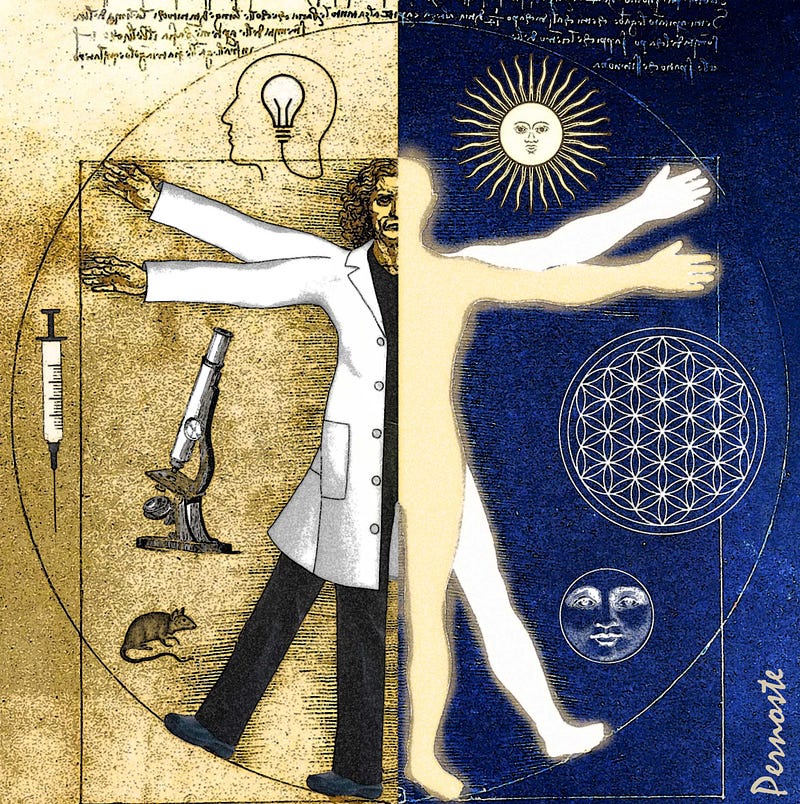
For those of you who are not scientists and don’t know any scientists, have you ever wondered what it’s like to be one?
I remember as a young man what I thought about science. The whole concept, learning, careful research, and figuring things out just seemed so exciting. On top of that, I believed there was a world full of scientists who were objective and brilliant and working together to figure out the world to cure diseases and launch people into space.
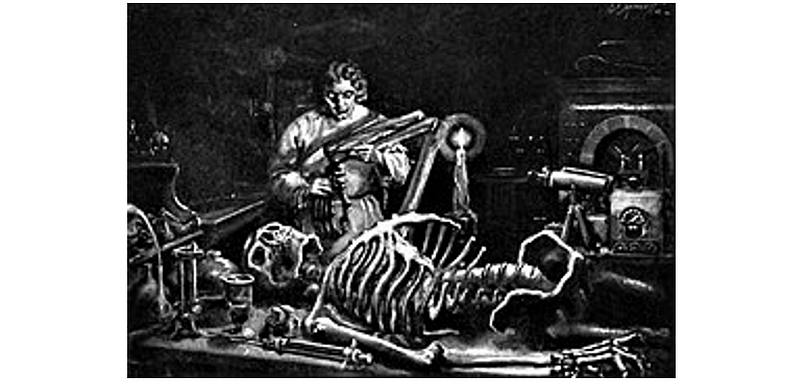
Of course, some of you may have grown up thinking more about Victor Frankenstein and mad scientists.
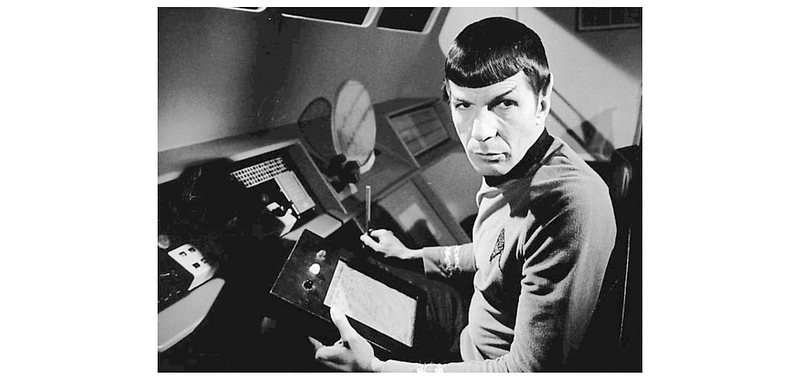
In some ways, when I was young, I wanted to be Star Trek’s Spock, intelligent, rational, unaffected by emotion, and perfectly objective in all things. I wanted to understand things and maybe discover or invent novel treatments, devices, or ideas. As in many things in life, the expectation was not the complete reality. Wherever there are people, there are egos, politics, and people hungry for power. But I don’t want to focus on that. (I’ll save that fascinating exploration for another time). There are also a lot of very hard-working and extremely intelligent people doing research for all the right reasons and in the right ways, and I found my way to being successful with my own unique approaches.
Much of biology and physiology is a black box, even today. The more we learn, the more we realize that the box is darker and deeper than we thought. The only systematic way to reveal the contents of that black box is the “Scientific Method,” which is a very important part of the training of a scientist, especially when you are a biological scientist. It is the empirical approach to scientific study that has been a fundamental aspect of research into unknown things since at least the 17th century. Careful observation and rigorous skepticism are essential in the process of hypothesis-based research generated through careful observations.
Iterative testing of hypotheses is done by carefully designing studies, making measurements, interpreting results, and then refining hypotheses based on the experimental findings. In other words, you poke the black box and see what happens. Then, you poke it in a different way until you figure out little by little how it works. This often means that a scientific “smoking gun” of observations is often sufficient to achieve a scientific “certainty.” Though certainty can be somewhat subjective in the world of human beings, we do walk away with more information each time we perform such studies.
But… science can be completely wrong sometimes, as often as it is right, and the scientific “certainty” can evolve over time. For example, we no longer believe the sun revolves around the earth, that disease is caused by bad air (and bloodletting is the best cure), that you can measure character and intelligence by the bumps on your head (phrenology), or that Freudian psychological theories had any merit. The greatest minds of our times once believed these things, and there are “facts” we believe scientifically today that will likely be proved at least partially incorrect in the future. There are even aspects of previously known immunology that I studied twenty years ago that have changed significantly in our understanding.
Certainty can too easily become dogma, with nobody interested in continuing to question this truth. Then, suddenly, somebody stumbles upon a uniquely different answer… and the world changes just a little.
It is a humbling thing to be a scientist, or it should be.
Embracing the Dichotomy of Science and Spirituality
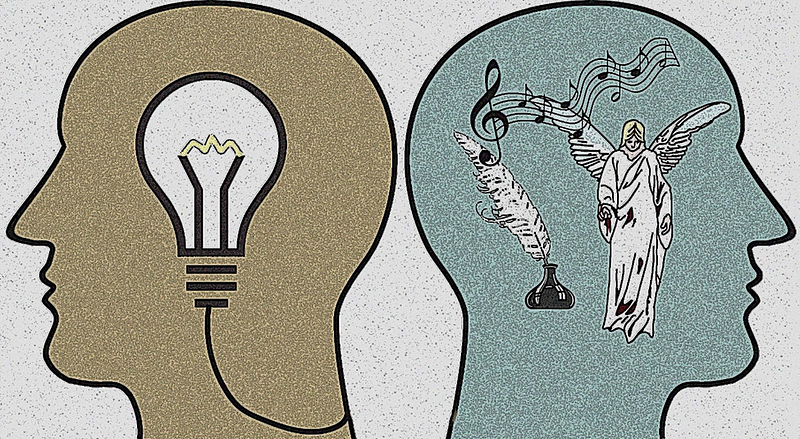
I have a different perspective on the practice of biological research than most of my colleagues. For me, creativity and spirituality are integral parts of my scientific process of understanding human disease. But even creativity alone gets much less attention than the nuts and bolts of research, i.e., the technological advances. Spirituality? Forget about it.
When I was young, I was blessed with an intelligent mind and gifts for music, writing, and mathematics, and it is a wonderful thing about childhood that you can have the time to do everything if you want to. I was born in a time when there were no computers, no smartphones, and only simple video games, which (in retrospect) was a blessing for a child with a curious mind, and I was somewhat accomplished in all these areas.
It seemed that I was born looking at the world differently than most other children, and from a spiritual perspective. This was perhaps a bit surprising, as I was born into a family of atheists. Yet, from the age of four, living in the Philippines at the time (my father was in the Air Force), I was both a devout believer in God and a skeptic of religious rules and judgments.
I was a perplexing 4-year-old creature to the nuns in the Catholic pre-school (the only English-speaking pre-school in the area), for I knew that God loved us and didn’t wish upon us those harsh judgments of which the nuns spoke. I often knew things I should not know, and I understood people just by looking at them. I later learned that this is called claircognizance or psychically intuited knowledge. This claircognizance, combined with my intelligence and discipline, has given me many advantages in life, though it has made me fragile in some ways, as well.
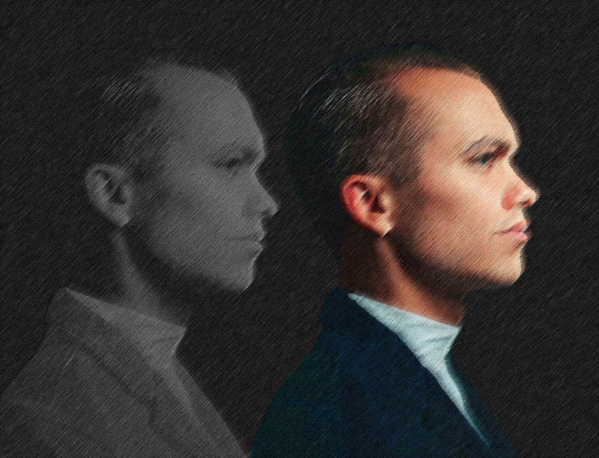
Barely surviving the harshness and soul-hurting bullying of High School, my intuition guided me to go to college to get a Bachelor’s degree in Biology despite my other interests in art, music, and spirituality. I was followed to college by my doppelganger, who had begun appearing in my life late in high school.
My small group of close friends would see him, semi-transparent and looking identical to me, though sometimes wearing old-fashioned clothing. I would never see him, though, so it was somewhat perplexing. I later realized (through some careful research and contemplation) that I was translocating my spirit to two places at once, my doppelganger often acting upon my unspoken desires of the moment to fetch a book or just be a nuisance.
I began to appreciate that the world was a more mysterious place than I had been told.
I did well in college, worked for two years as a technician at a major University in Boston, researching atherosclerosis, and then applied to the graduate Neuroscience Program at Northwestern University in Chicago. Grad school was an exciting challenge for me, and eventually, I found the lab in which I wanted to do my doctoral research. I found my path and (for the most part) found my people among the other graduate students. I couldn’t completely open up to them about doppelgangers and poetry and art and my growing spiritual research, but I found like minds interested in science. They were only mildly curious when, at times, I could accurately predict the mass of samples being weighed to 6 decimal places.
I won’t bore you with the process of growing as a scientist, but (in summary) after five years as a postdoctoral fellow in autoimmune diabetes research, I worked another two years doing basic immunology research before getting a job in a large Pharmaceutical Company in the Northeast of the US. I moved around to different companies and different fields of research and over three decades, achieved a high level of scientific leadership.

Hard work, integrity, and well-designed scientific studies, for the most part, have been the reason for my success, but I must acknowledge my spiritual connectedness and claircognizance. I am an unconventional Christian, meditate daily, and pray, and I seem to have the ability to keep my mind clear at most times to follow my intuitions.
Like when I was a child, I still just know things. I can’t claim to be great at this by any means, especially if I think too much. But when my mind is relaxed, you can put a picture of somebody in front of me, and I can tell you things about their personality or intentions and answer questions about them accurately. This same ability appears to be helpful in my research.
It seems that my claircognizance is my own, but often, I also receive external signs in numbers or images. Other times, somebody will bring me a published research article that answers a question the person didn’t know I was looking for. I have had spiritual visitations in the night and day, spectacular synchronicities of events, and uncanny coincidences of meeting exactly the right person at the right time.
These unusual synchronicities also occur in my private life to satisfy my drive to be of help to others in this life. One time, flying the red-eye flight from Los Angeles to Boston, I was sitting next to a woman about my age who was crying quietly. Of course being a kind person, I didn’t go to sleep as I so needed to do. Rather I talked with her for the entire flight, finding out that her adult daughter had developed a particular and unusual life-threatening health situation about which I had in-depth knowledge.
I was, without a doubt, the only person on the entire plane who was directly working in the specific area relating to the treatment of this condition. She didn’t need me to help her daughter, but what she did need was someone to spend time with to explain what the doctors would likely do to help her. I was the Angel she needed at that moment, as others have, at times, been the Angel that I needed. The daughter ended up fine, as I predicted.
When I was active on Twitter, only writing poetry, it was curious that a certain type of person (only) would reach out to me through DMs. In the beginning, they would only talk about poetry but tell me they were drawn to talk to me. Eventually, it would be revealed that they had either a spiritual question or a problem with a ghost.
One of these people told me she had this feeling that I could fly in spirit to her house in England and talk to a ghost that was haunting her. I had never done this before, except unconsciously via my doppelganger, but I tried anyway. I found myself able to project myself there and get useful information from the ghost. I was able to help to resolve the situation. Of course, ghosts visit me in my home as well to get help in crossing over, usually giving signs like pulling out all my dresser drawers or moving things into unusual places. With the help of prayer to high spirits, I guide these lost souls to cross over.
Twitter also brought my co-author, Anneliese Dahl, into my life in a rather mysterious way. She is the latest and best influence in my life who further changed how I see the world. Together, in addition to writing, we perform remote healings around the world, now starting to use certain forms of music as well. We are most grateful to be of service and never ask for anything in return. Our reward has been the intuitively written “In the Minuses” verse novel that contains many spiritual truths and our ongoing spiritual learning.
Balancing the scientist side with the joy of art and writing

As human beings, we perform better in life when we are happy and find joy in what we do every day. This positivity also helps to keep us open and aligned with our spiritual side, and I find it particularly important with regard to working as a scientist. I cannot tell you how many people I have met in life who seem miserable in their jobs yet do nothing about it.
Even though I enjoy scientific research, it can often be a lesson in delayed gratification. Wonderful breakthroughs in our work come occasionally, but not usually quickly, so you must appreciate them while you have them. Much of the time, breakthroughs are just hard (sometimes tedious) work.
I have found ways to bring more joy into the daily scientific hard work, making science more fun for me by including art or listening to music. When I write a scientific paper for a peer-reviewed journal, for example, I create my own illustrations of critical components of the biology I am studying. I compose beautiful graphs and images of the research. I write my papers in evocative and descriptive ways, not outside of the realm of scientific writing, though, rather just carefully composed and structured with my innate skills and intuition. Often, my images are selected for the covers of the journals in which I publish, even to this day.
Of course, the most unusual contributor to my success is that I simultaneously (in parallel) write a work of fiction or poetry whenever I write a scientific paper. I write the science until I start losing momentum, then switch to creative writing for a while, then back. I think of it as switching from the right brain to the left brain and back to the right brain again. It doesn’t slow me down at all, as I never suffer from writer’s block. Instead, I write two things in the time of one and have more fun in the process. Similarly, when doing the background reading for the science, I will often alternate with reading about the spiritual realm, for example, Allan Kardec, Edgar Cayce, The Ra Materials, or about reincarnation.
You may wonder how I, as a scientist, can reconcile my spiritual beliefs and practices with being a scientist. I can only say that scientists are supposed to be able to study the unknown. We are trained to make observations in an objective manner. And we are certainly NOT trained to deny our senses. How foolish would a person be to deny things just because they are new to his/her experience? How strange would it be to ignore my own intuition that comes from within me? That would not be good science.
Am I unusual? I know I am not. Nor am I special. Like all of you, I am just on my own unique path. We are all children of the Universe, made predominantly of energy and light when you really examine the realities of subatomic structure. It takes only time to be quiet within yourself and to ask your guardian spirits to receive help and guidance. You will learn about yourself and the Universe in the process.
Should we be surprised that we don’t really understand everything? I choose to have faith that it all makes sense, and someday, I will understand it all.
Check out our other writing on Medium.
Here is a review of our work:


