
Insights at the Intersection of Science, Art & Religion.
A response to the Mind and Life Institute’s XXVth Dialogue with His Holiness, the 14th Dalai Lama, 2012

Civilization is in an interesting state.
How many human souls occupy this beautiful planet journeying through the Milky Way Galaxy/ among a multitude of galaxies?
We are crowding not only other species, but seriously damaging our biome whose health is required for our own lives to be sustained.
Our current economic model contributes to this by requiring businesses to deliver continuous growth every quarter for investors or lose their support. However, resources to accomplish this objective are not infinite, and all the best mathematical models available reveal cycles of expansion and contraction, not infinite growth, are the way processes on Earth and in this Universe work.
Armed conflict is still flaring up yet again, like a bad tooth no dentist can heal. We are tormented by many destructive regional conflicts. These United States are divided and having difficulty governing itself. The Eurozone is in economic turmoil. Certainly in our social and news media we can’t seem to stop fighting, shouting, shoving, blaming. Somewhere in the best part of our minds we know this situation is untenable and our fault. But, what can be done? What medicine could calm us down, balance our perspective, heal our rift with our Earth biome, and reunite us with our own better sense?
When I was a child, my father taught me that our minds were the source of our problems. He always said, “if we could just get our minds right, all our problems would go away.” I asked him what he meant. He asserted, “Since our minds produce all the ideas used in business, government, science, war, religion, and daily life, those ideas need to be constructive, not destructive!” That made sense to me. But, how were we to ‘get our minds right?’ “Be rational!” he asserted. I wasn’t sure what that meant, but, Dad was brilliant, kind, and loved and protected me unconditionally, so I took his words to heart.
My mother felt similarly and encouraged me to cultivate my mind through education. She wholeheartedly insisted I aspire to the highest levels of attainment, even though I was born in 1956, and the ideal of female intellectual achievement was still subordinated to the ideal of woman as wife and mother in popular culture. She also insisted I learn to think for myself. I have a vivid memory of her expressing her love of a particular singer’s work. A dutiful daughter, I immediately parroted her opinion. Shockingly to me, this angered her. She puffed up in contempt and said, “You just said that because I did. Go to your room until you can get your own thoughts and opinions.” And then she did send me to my room, where I was confronted with the task of figuring out what it meant to get my own thoughts. Thus, I have spent my life trying to understanding human Mind, what it might mean to get it right, and to construct my own thoughts on these difficult questions.
Where did I look? Well, religion for starters. When I was ten, my dad gave me a book outlining the ten great religions of the world and their belief systems. He instructed me to read it and make my own mind up about religion. I did read that book and decided all religions operate from a relatively consistent moral system that demands we do unto others as we would have done unto us. We should not lie, cheat, or steal. We should not kill. We should be charitable to those less fortunate. We should seek right relationship with God, and especially we should not think evil thoughts, for from our thoughts spring actions that affect everyone with whom we come in contact.
All of these shoulds made intuitive sense to me, and I incorporated them into my attempts to ‘get my mind right.’ During this time of exploration, my father became an atheist. He was an electrical engineer whose study of physics and science led him to question the bedrock cosmology and definitions of natural events put forth by his native evangelical faith. The earth was not formed in seven days, but rather over billions of years. Germs not evil spirits or evil acts accounted for disease. Natural disasters were due to geologic or meteorological events not God’s displeasure with human activities. Evolutionary adaptation accounted for the diverse life forms present on Earth. The scientific method was capable of discovering and describing actual rather than imagined patterns in the natural world.
Through scientific investigation, people were able to address what religion had not been able to: ignorance, disease, hunger, and lack. Importantly, in my father’s mind, religion’s moral injunctions and assertions that it acted on God’s authority could not explain or excuse its own complicity in patterns of thought which gave rise to injustice, persecution, and wars throughout history. Again, at issue was ‘getting one’s mind right.’
At this point, I was entering college, but instead of going into science, I took a hard left turn into art and philosophy. This disappointed my parents to no end, but I had learned to get my own thoughts, and I thought that art and philosophy were intimately involved with shaping the human mind, and through those vectors, I would be better able to ‘get my mind right,’ and share my thoughts on such through artistic and philosophic expression.
“Fine, but you’ll never make a living,” was my father’s prosaic pronouncement.
Bless them, they paid for my artistic and philosophic education resulting in a Bachelor of Fine Arts — a rigorous interdisciplinary program that did involve a grounding in science, as well as philosophy, history, art history, and art technique — in my case, modern dance. Indeed, artists and philosophers, though they found defining things like rationality, beauty, and causation as difficult as I did, seemed more interested in helping people shape their own minds in response to changing circumstance than religious folks who often claimed to have all the answers to questions they never really seemed to listen to.
Artists and philosophers seemed to push the envelope of our understanding of what it is to be human. There was room to be moral, ethical, and to breathe in art and philosophy. Subsequently, I spent many years dancing, reading and writing poetry and philosophical essays, running a literary website, raising two beautiful boys, studying dance meditation, and trying to get my mind right. Along the way I discovered the scientific investigation of human mind through reading Scientific American and other science journals geared to a lay audience.
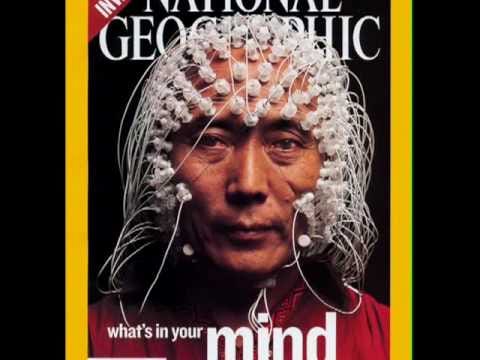
I began to realize that the structure and properties of our nervous system give rise to what we experience as human mind. When my children were of an appropriate age, I entered graduate school to study human physiology, and specifically human neurophysiology. I wanted to know how the nervous system produces mind, for if it does, and science via medicine and psychology can influence it, then perhaps this was the surest, most powerful vector available to ‘get our minds right.’ Of course, this was a simplistic understanding of science, as scientists in the audience will surely see. But at that time I was only an artist given to philosophy, not a scientist, and I had a lot to learn.
I entered the Human Physiology Ph.D. program at the University of Oregon in the fall of 2005. I discovered scientists do not conduct discourse in the same manner as artists, religious scholars, or philosophers. They don’t speak in terms of informed opinion, dialectics, comparisons to past precedent, or what is apparent after thinking questions through.
Scientists speak in terms of reliable evidence gathered during very tightly focused experiments using null hypothesis testing to ask yes/no questions resulting in estimates of the probability that the experimental outcomes obtained will generalize to carefully defined populations or circumstances.
This process is so central to the scientific method that I will repeat what I just said, and then attempt to explain it in lay terms.
Scientists speak in terms of reliable evidence gathered during very tightly focused experiments using null hypothesis testing to ask yes/no questions resulting in estimates of the probability the outcomes obtained will generalize to carefully defined populations or circumstances.
Evidence is considered reliable if the same results are obtained when the same experiment is repeated independently in different laboratories.
In other words, scientists are not interested in ideas per se. They are interested in the mechanisms underlying observed evidence.
They ask what evidence has been collected and how in past experiments. They ask if that evidence has been replicated and to what degree.
They ask if there is a reliable interpretation of this evidence in light of the broader scientific record?
Is there another way to interpret the evidence?
Is there additional evidence needed to clarify each interpretation?
Which interpretation is the most reasonable?
Further experiments are then designed to ask and answer these questions.
The most common experimental designs utilized are derived from inferential statistics, a broad field in applied mathematics that includes correlation, regression, and analysis of variance. These procedures let scientists evaluate the data they collect in terms of probabilities of causation and effect sizes of conditions propagating causation.
Scientists organize this data, this evidence, by field, specialization, and sub-specialization. An example is the field of Biology with specializations such as microbiology, zoology, and sub-specializations such as entomologist or physician. My specialization is Human Physiology. My sub-specialization is human neurophysiology.
I learned how to design human subjects scientific experiments to evaluate the effect of physical activity on human neurophysiology and mental function, referred to as cognition in scientific discourse.
In other words, I learned to scientifically investigate human mind.
I was also trained in grant-writing. Writing grants is the chief means to fund scientific experiments. My first grant was to the Mind and Life Institute, where I was Summer Research Fellow in 2007, 2008, and 2010, and was co-written with my program chair, Dr. Marjorie Woollacott, a serious meditator and Professor of Human Physiology (now Emeritus) at the University of Oregon Department of Human Physiology. My project was a proposal to investigate the effect of the long-term practice of Tai Chi, meditation, or aerobic fitness versus a generally inactive lifestyle on the adult human ability to focus the mind. That project was funded, and I became a Mind & Life Francisco J. Varela Research Fellow in 2007.
The Mind & Life Institute is an interdisciplinary group of scientists and contemplative educators, philosophers, and scholars which was founded 25 years ago by Francesco J. Varela, a prominent neuroscientist who also developed neurophenomenology, a branch of philosophy called phenomenology. He was joined in this task by Adam Engle, a very gifted businessman and entrepreneur who secured financial backing from the Hershey Family Foundation. Engle was passionate about the social benefits of contemplative training of the mind. When he learned the Dalai Lama was passionate about engaging in dialogue with scientists to investigate the ultimate nature of reality he set about arranging such a dialogue.
Knowing ultimate reality is a key concern of Buddhist philosophy and religion. Indeed, His Holiness has pursued dialogues regarding such with scientists for 40 years. He has said what first attracted him to scientists was their “genuine spirit of internationalism. They maintain open skepticism, look at questions objectively, and try to remain unbiased.” He was initially warned by an American friend that science was a killer of religion. He reports laughing when he heard that.
He replied, the Buddhist tradition emphasizes the importance of skepticism. He further relates that “Buddha instructed his followers they should not follow his teachings out of faith or devotion, but rather, they should be skeptical, because, without skepticism, there is no questioning, without questioning, there is no investigation, without investigation reality cannot be found.
Since there is always a gap between appearance and reality, investigation and research are very essential in order to know reality. We can only accept explanations that have logical support, even if these contradict scripture or Buddha’s own words. This is implied in Buddha’s own instructions to his followers.”
Thus, Adam Engle originally engaged the Dalai Lama on the possibility of arranging a dialogue with Fritjof Capra, a prominent physicist and the author of The Tao of Physics, which correlates Taoist philosophy and explanations of reality with contemporary scientific investigations of subatomic physics.
Meanwhile, back at the coincidence ranch, Dr. Varela met the Dalai Lama in Austria and they began discussing neuroscience, the nature of consciousness, and Buddhist mental disciplines which cultivate the mind’s ability to accurately perceive reality.
Subsequently, Dr. Varela heard that a rogue entrepreneur with big ideas was working to set up a dialogue between scientists and His Holiness. He contacted Engle and persuaded him to instead organize a dialogue on neuroscience and the nature of human mind. Dr. Varela’s case was strengthened when Joan Halifax Roshi, a prominent American Buddhist contemplative, added her influence, and a dialogue between neuroscientists, Buddhist contemplatives, and His Holiness was organized and held in Dharmasala in 1987.
Dharamsala is his Holiness’ refuge in India. From this first dialogue, the Mind & Life Institute evolved. Its mission is to combine the mental disciplines cultivated over centuries by contemplative traditions such as Buddhism with scientific investigation into the neurophysiological basis of Mind. Further, their goal is to take the results of these collaborative investigations and through education and outreach, use reliable scientific evidence for the effectiveness of practices such as loving kindness, compassion, and mindfulness, to promote mental training which relieves human suffering and promotes universal well-being.
You can imagine my immense sense of joy and wonder at finding my way purely by accident through the complex highways and byways of Life to this group of people doing exactly what I wanted to do with my own life. I completed my Ph.D. and my Varela Fellowship project.
The evidence I cite in my Ph.D. work includes the effects of meditation, exercise, and Tai Chi practice on human physiology and human mind. I will cite several key examples. Concentrative meditation involves sustained, exclusive focus on a specific sensation, image, or a syllable or syllables for extended periods of time (such as 30 minutes — 18 hours) (Lutz, 2007; Joshi, 2007; Kubota, 2001). The goal of this practice is sustained, nonjudgmental awareness of all thoughts and sensations, as well as the ability to resist engagement with such (Bishop, 2007).
Meditation came under scrutiny by neuroscientists because meditators claim the ability to reliably sustain attention. If this can be shown to be true, this may work in the laboratory setting to shed light on human cognitive processes during neuroimaging that includes functional magnetic resonance imaging (fMRI) and electroencephalography (EEG)(Lutz, 2007).
An fMRI study of novices, and medium- and long-term concentrative meditators revealed that long-term meditators showed the greatest ability to regulate neural and behavioral responses to auditory distractor stimuli while resting or meditating. (Brefczynski-Lewis, 2007). Specifically, individuals with more than 37,000 lifetime hours of practice showed less activation in areas of the brain dedicated to attention and sensory processing than either novices or medium-term concentrative meditators.
This suggests meditation practice may result in a reliable ability to suppress irrelevant stimuli.
An observational study of meditators matched with non-meditator controls revealed significantly larger grey matter volume in brain regions known to generate response control and emotion regulation. Gray matter is specialized groups of cell bodies responsible for integration of inputs from surrounding neurons. Let us just say they are critical modules which are responsible for the brain’s ability to process information and generate responses.
Brain regions with greater grey-matter volume were areas involved in the sense of self and understanding symbolic information, like right from wrong. (Luders, 2008; Lazar, 2005). Importantly, this study recruited meditators from a number of different meditation traditions including Vipassana, Samatha, and mindfulness to test for any significant differences between meditation practices on grey-matter volume. None were found, suggesting that the attentional control required to perform various meditation practices recruits similar sets of specialized brain regions.
Long and short-term attention benefits have been reported for individuals engaging in meditation. This includes the ability to make correct decisions during stressful situations (Chan, 2007), the ability to quickly and accurately orient to new situations (Jha, 2007), and sharper, more efficient stimulus detection during difficult tests of visual perception. These behavioral benefits have been correlated with more efficient and robust neural processing in the brain itself (Slagter, 2007; 2008).
A study in 2007 (Srinivasan) showed that meditators but not non-meditators demonstrated enhanced mismatch negativities (MMN), an event-related electroencephalographic wave that is reliably correlated with pre-conscious levels of sensory processing.
Electroencephalographic waves collected at the scalp during mental testing have been reliably correlated with the formation of perceptions, working memory, and long-term memory recall.
The Srinivasan study suggests meditation enhances very early processing of percept formation by the brain. Thus, at the cellular level, meditation training seems to affect those processes required for sensory perception. Output from these processes are key inputs to other areas of the brain that are engaged in directing attention as necessary to accomplish goals and make decisions.
In line with this evidence, my results suggest that meditation in combination with exercise (yoga or Tai Chi) has strong, beneficial effects on the ability to correctly perceive and process visual information and make quick accurate decisions.
I was invited to present my preliminary findings to the Mind & Life Summer Research Institute in 2010. In October of 2012, I had the honor of being invited to observe the 14th Dalai Lama during a dialogue with selected scientists from the Mind and Life Institute as they discussed some of their latest findings. These included evidence that mindfulness training improves concentration and emotional control in abused school-age children and improves survival in patients struggling with cancer.
At the end of this dialogue, His Holiness was thanked for his many decades of unselfish support of the scientific exploration of human mind. He was also asked if scientists had been able to give him anything in return. He thought for a moment, and then with characteristic humility said, “They have helped me see that I have not been wasting my time with all these years of meditation.”
The audience felt an electric thrill charge through us at these words. This very wealthy man who has been worshipped as a manifestation of the bodhisattva of compassion since he was a toddler certainly displayed the kind of openness of mind, skepticism, and willingness to challenge articles of faith he so admires in scientists.
His Holiness continued by noting that scientific research investigating the outer world (the domain of physics and biology), and the inner world of the human mind results in better human health, and ways and means to produce happier families and societies. Then he said religion has tried for four thousand years to improve humanity and ease human suffering with some benefit, but in general they have failed.
He concluded by saying, there are many religions. No one religion can unite all of humanity. So now, modern science must fill the gap with research that shows that acting from moral and ethical principles has positive effects on our biology.
I agree with His Holiness that science has done much to ease our suffering and will do more. This includes advances in medicine, food production, sanitation, engineering, and now the investigation of the biological basis of a sound mind.
But I would also say that just as he and many of his fellow Buddhists have fruitfully collaborated with scientists in investigations of human mind, members from other religions could choose to do the same. Indeed, religion has been a repository of moral and ethical ideals gleaned from thousands of years of human experience, as well as practices to help shape human minds in the ways of kindness, and charity. Religion has always provided a warm community setting within which human minds have been nurtured. Just so, the thought experiments and investigations of ‘the big questions’ like what is space and time, rationality, beauty, right and wrong pursued by philosophers and artists from time immemorial have much to offer scientists as they investigate the ultimate nature of inner and outer reality.
We all must simply emulate the humility and curiosity of Tenzin Gyatso, His Holiness the 14th Dalai Lama, as we strive to get our minds right, be peaceful, and contribute to happy families, happy societies, and a peace-based world in which the suffering of human and biome alike is minimized and our minds’ contact with reality maximized. I leave you with these words from a great poet, writing after encountering scientific information on the brain.
I Was Reading a Scientific Article
By Margaret Atwood They have photographed the brain and here is the picture, it is full of branches as I always suspected, each time you arrive the electricity of seeing you is a huge tree lumbering through my skull, the roots waving. It is an earth, its fibres wrap things buried, your forgotten words are graved in my head, an intricate red blue and pink prehensile chemistry veined like a leaf network, or is it a seascape with corals and shining tentacles. I touch you, I am created in you somewhere as a complex filament of light You rest on me and my shoulder holds your heavy unbelievable skull, crowded with radiant suns, a new planet, the people submerged in you, a lost civilization I can never excavate: my hands trace the contours of a total universe, its different colours, flowers, its undiscovered animals, violent or serene its other air its claws its paradise rivers.
References
Atwood, Margaret. (1976). Selected Poems. Oxford University Press. Out of print.
Bishop, S.R., Lau, M., Shapiro, S., Carlson, L., Anderson, N.D., Carmondy, J., Segal, Z.V., et al. (2004). Mindfulness: a proposed operational definition. Clinical Psychology: Science and Practice, 11, 3, 230–241.
Brefczynski-Lewis, J.A., Lutz, A., Schaefer, H.S., Levinson, D.B. & Davidson, R.J. (2007). Neural correlates of attentional expertise in long-term meditation practitioners. Proceedings of the National Academy of Sciences, 104, 27, 11483–11488.
Derryberry, D. & Rothbart, M.K. (1988). Arousal, affect, and attention as components of temperament. Journal of Personality and Social Psychology, 55, 958–966.
Chan D & Woollacott MH (2007). Effects of level of meditation experience on attentional focus: is the efficiency of executive or orientation networks improved? Journal of Alternative Complementary Medicine, 13, 6, 651–7.
Churchland, P.S. (2008). The significance of neuroscience for philosophy. Functional Neurology, 23, 4, 175–8.
Fan, J., Gu, X., Guise, K.G., Liu, X., Fossella, J., Wang, H. & Posner, M.I. (2009). Testing the behavioral interaction and integration of attentional networks. Brain Cognition, 70, 2, 209–20.
Gyatso, Tenzin. (2012). His Holiness the Dalai Lama’s opening address at science dialogue in Japan. Retrieved from http://www.dalailama.com/webcasts/post/262-his-holiness-the-dalai-lamas-opening-address-at-science-dialogue-in-japan, November 21, 2012.
Jha AP, Krompinger J, Baim MJ. (2007). Mindfulness Training Modifies Subsystems of Attention. Cognitive, Affective, and Behavioral Neuroscience. 7, 109–119.
Joshi, A.A. (2007). Effects of meditation training on attentional networks: a randomized controlled trial examining psychometric and electrophysiological (EEG) measures. Doctoral Dissertation, Department of Human Physiology, University of Oregon.
Kubota, Y., Sato, W., Toichu, M., Murai, T., Okada, T., Hayashi, A. & Sengoku, A. (2001). Frontal midline theta rhythm is correlated with cardiac autonomic activities during the performance of an attention demanding meditation procedure. Cognitive Brain Research, 11, 281–286.
Lazar, S.W., Kerr, C.E., Wasserman, R.H., Gray, J.R., Greve, D.N., Treadway, M.T., McGarvey, M., et al. (2005). Meditation experience is associated with increased cortical thickness. Neuroreport. 28, 16, 1893–1897.
LLinas, R.R., Ribary, U., Contreras, D. and Pedroarena,C. (1998). The neuronal basis of consciousness. Philosophical Transactions of the Royal Society, London, B, 353, 1841–1849.
Luders, E., Toga, A.W., Lepore, N. & Gaser, C. (2009). The underlying anatomical correlates of long-term meditation: larger hippocampal and frontal volumes of grey matter. NeuroImage, 45, 672–678.
Lutz A, Dunne JD, Davidson RJ. (2007). Meditation and the Neuroscience of Consciousness: An Introduction. In: The Cambridge Handbook of Consciousness, eds Zelazo PD, Moscovitch M, Thompson E. Cambridge, UK: Cambridge University Press.
Lutz, A. (2007) Neurophenomenology and the study of self-consciousness. Consciousness and Cognition, 16, 765–767.
Lutz, A., and Thompson, E. (2003). Neurophenomenology: integrating subjective experience and brain dynamics in the neuroscience of consciousness. Journal of Consciousness Studies, 10, 9–10, 31–52.
Mind and Life Institute. www.mindandlife.org.
Slagter, H.A., Lutz, A., Greischar, L.L., Francis, A.D., Nieuwenhuis, S., Davis, J.M. & Davidson, R.J. (2007). Mental training affects distribution of limited brain resources. PLoS Biology, 5, 6, 1228–1235.
Slagter, H.A., Lutz, A., Greischa, L.L., Nieuwenhuis, S. & Davidson, R.J. (2008). Theta phase synchrony and conscious target perception: impact of intensive mental training. Journal of Cognitive Neuroscience, 2008 Sep 29. [Epub ahead of print].
Srinivasan, N. & Baijal, S. (2007). Concentrative meditation enhances preattentive processing: a mismatch negativity study. NeuroReport, 18, 16, 1709–1712.
Thompson, E. and Varela, F.J. (2001). Radical embodiment: neural dynamics and consciousness. Trends in Cognitive Science, 5, 10, 418–425.
Whitmer, A.J. and Banich, M.T. (2009). Brain activity related to the ability to inhibit previous task sets: an fMRI study. Cognitive, Affective, and Behaviorial Neuroscience, 12, 4, 661–70. Doi: 10.3758/s13415–012–0118–6.