My Lessons Learned from Screening and Interviewing Designer Candidates
Last September, I was invited to be part of the designer hiring team that helps to screen candidates (review profiles, portfolios, resumes, etc.) and interview them. As we finally managed to hire someone after a long process, I decided to spend some time documenting what I’ve learned from the process in the blog post.
First things first, what does the backstage of the Greenhouse look like?
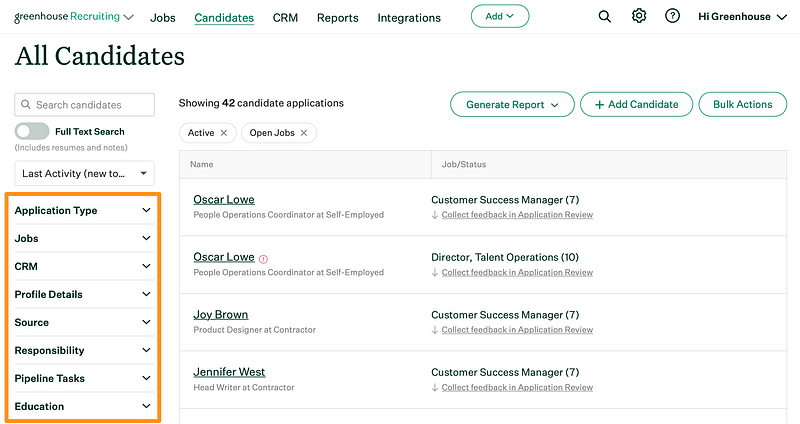
When I wanted to look into the candidates’ profiles in the backstage (Recruiter’s dashboard), I normally saw two views. By default, when I entered the candidate page, I saw a table with a list of candidates who had applied for the position, along with their interview stage and current job title, if available. One interesting thing is that if someone referred you, then the name of the referral would be shown with a yellow tag next to your name, so that I could easily spot it.
To investigate the details, I can click on the candidate’s name, then I will get a full-screen view with the details. Something like this:
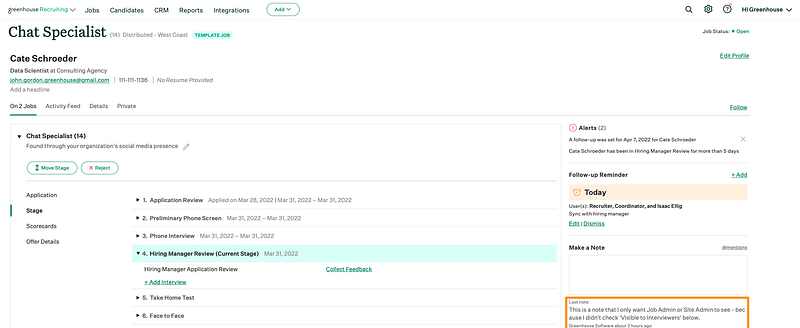
The way Greenhouse has structured this page is interesting. The first tab (default view) is the application stage, which is not the most interesting for me, but I guess it’s something important for my HR colleague. The second tab is an activity feed where I can see all the emails and communication about the candidates, and the third tab is the actual application details.
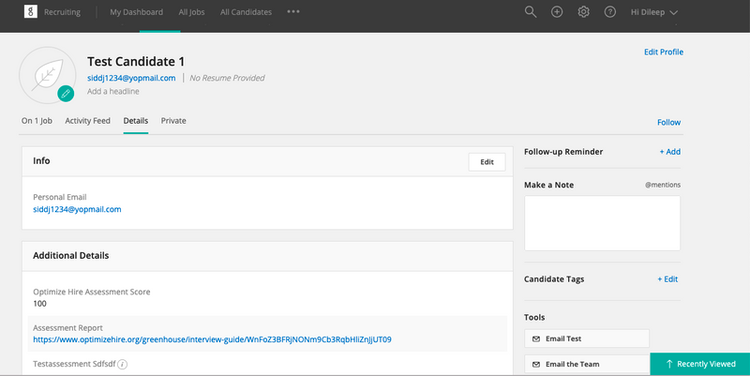
The third tab is the “Details” tab, and is probably the most important tab for both the candidates and recruiters. Within the Details tab, in the first section on the top, I can see the applicant’s personal info, such as email, phone number, link to portfolio, etc. In the second section, I can see some additional info, such as the cover letter or motivation to join. Lastly, in the final section below, I can see all the attachments, including the resume and cover letter (if it’s being attached).
How do I then evaluate the candidates?
Since the position we are hiring for is a specific role for Design System, the first thing I do is to scan for keywords. I will open the candidate’s LinkedIn page and portfolio simultaneously, trying to see if there are any keywords related to design system. If not, I will still spend some more time to look into their first case studies, just to get a feeling of the person’s seniority and make sure the applicant is a good fit. If their profile does contain the keywords that I am looking for, then I will look into their case studies, description on LinkedIn, and all the side projects they have worked on before, so that I can understand the candidate’s past work, experience, and a bit of personality (what they do outside of work). As a side note, I usually open the resume last, and it is often just for me to make sure everything about this person is alright, rather than looking at it first. If everything checks out, then I will notify my recruiter and she will then move the candidate forward.
What happens before and during the interview?
For this specific position, I have a list of template questions that I have come up with, as well as some provided by the company. I normally spend 10–20 minutes before the interview to understand the candidate’s profile a bit more and come up with some customized questions for the person.
During the interview, despite the applicant having already talked with my recruiter in the first stage, I will still start with a round of introduction since that’s probably the most prepared part for the most time, to lower the stress from both of us (Yes, if the candidate looks stressed then I will be stressed as well). Then I will start the actual interview by letting the applicant know our agenda and what I am expecting from the call. Then depending on the format, I might ask questions one by one or go through the case studies together with the candidate to know their work and ask questions.
One thing to take note of is that I realized I could mostly make a decision within the first 20–30 minutes of the call. The first 20–30 minutes, I normally focus on if I want to work with this person, their past work, how they communicate, and their relation to the position; the last 10–15 minutes are for me to ask extra questions to make sure that we would both enjoy working with each other.
Another thing to take note of is that I really enjoy when candidates ask some interesting and detailed questions about the company and not just “Google-able” questions.
What are the standard questions I meant?
- “How big is your company, how big is your team?” (These details are publicly available on LinkedIn)
- “Are you a self-funded company? Or venture-backed” (These details are also available everywhere)
Some examples of the questions I enjoyed
- “What makes you stay in the company?” (You will get interesting answers from every person you talk to)
- “What’s one Slack channel in the company that you enjoyed?” (Company culture :p)
- “What are your daily routines within the company? What does the relationship of the designers, PM, and engineers look like?” (Understanding workflow, ways of working, etc.)
- Any detail questions that are not Google-able.
What happens after the interview?
What happens next is I normally leave my notes in Notion for a few hours to calm down, then I come back and write a summary with all the aspects that I like and don’t like about, as well as a general summary and my final decision. My recruiter will then look at the decision and notes and decide if the candidate should be moved forward.
I personally enjoy when candidates connect with me on LinkedIn, not necessarily to ask more questions, but to stay in touch and potentially work together in the future. If I see the person advancing to the next stage, I’ll usually send them an informal message of encouragement on LinkedIn to see if there’s anything the person needs help with (And… be human to each other).
Main Takeaways
To make a good impression when applying for a job, it’s important to:
- Craft your LinkedIn profile and portfolio to match the position you’re applying for and include relevant keywords.
- Make sure you are proud of your portfolio and any other materials you shared — I wouldn’t say yes to someone with bad UX/visuals on their portfolio.
- Be prepared for the interview, and spend time researching the company and its products.
- Customizing your portfolio, resume, cover letter, or even attaching a video lets you score extra points.
- Your resume is likely the last thing a recruiter reviews before deciding whether to move you forward, so make sure there’s nothing that could be seen as a negative.
- Be human — be friendly and show that you would be a good person to work with.
Good luck on your future job search :-)