
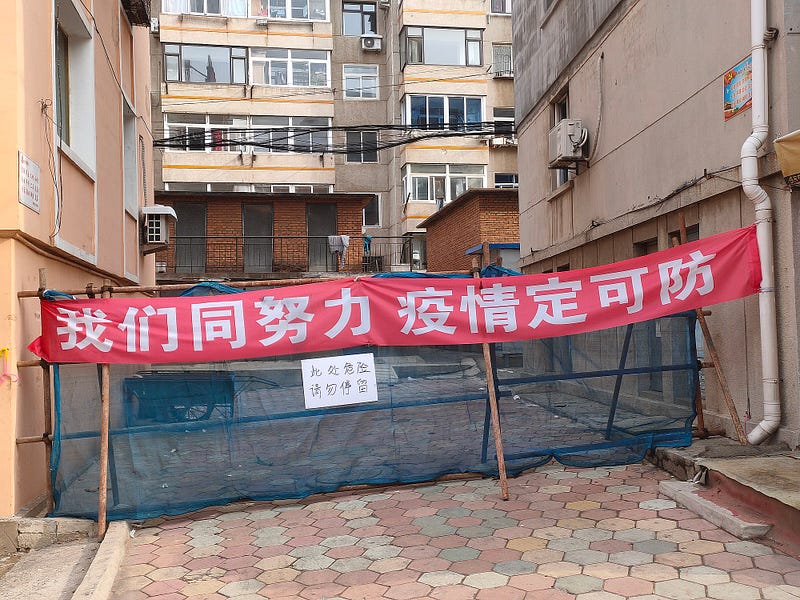

Inside China’s Zero-Tolerance Covid Policy
China’s zero-tolerance policy towards Covid-19 has proven to be quite effective in containing the virus inside of their borders.
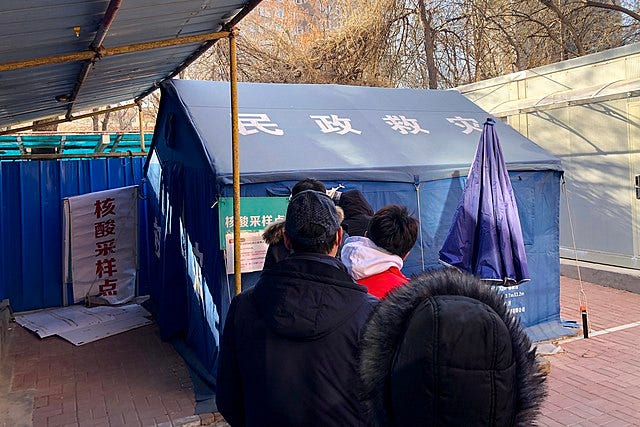
Limiting all access into the country, even in the case of some nationals, enacting strict quarantine measures that can last as long as one month, and QR codes that track your location. These are just a few aspects of their policy towards Covid control throughout the epidemic.
Although rather controversial, it has proven beneficial numbers-wise for the country. There is a reported total of 98,897 all-time cases at the time of writing, according to the World Health Organization.
I’m not here to write what’s “right” or “wrong” about what China’s government chooses for its people. Instead, I want to give an inside account as someone who has experienced the zero-tolerance policy firsthand as an expat living in China.
QR Codes
Perhaps the most controversial part of the strategy to contain Covid-19 within China is using QR codes. Everyone who is inside China has a QR “health code” that tracks their movement. If someone has tested positive, their code will turn green to red. If someone was in contact with a red-colored code and hasn’t been tested yet, it will turn yellow.
You may wonder how the QR code knows you’re near a positive case. This is due to their ability to track your location at all times. No matter where you are, whether your app is on or not, it is tracking your location. Every time I open my code, I have a mini-anxiety attack thinking it could somehow turn yellow, but luckily that hasn’t happened yet.
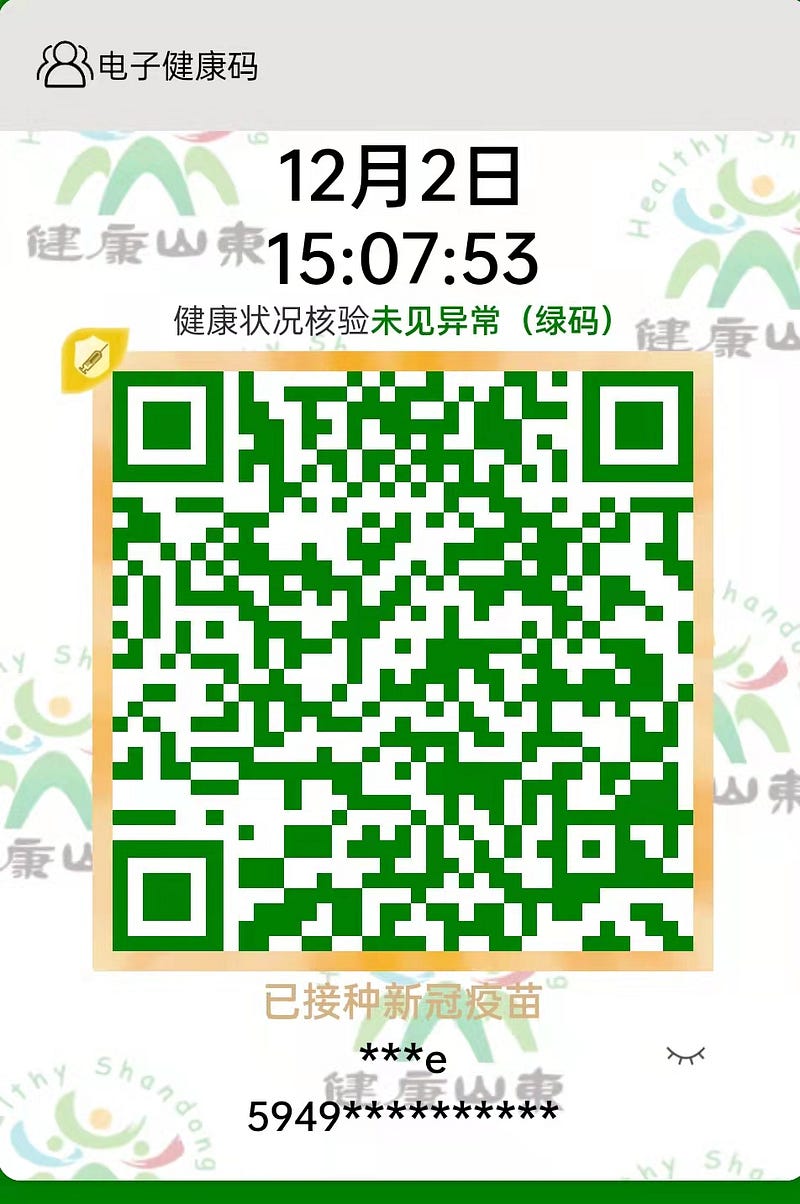
Besides tracking contact, what are these QR codes used for? Well, basically everything. You will show your QR code to security guards to enter malls, supermarkets, subways, or any other establishment. This way if someone’s code turns yellow they can be given an official test and quarantine right away.
One of my best friends, Wosen, visited another city quickly to see his family. During his vacation, he decided to go to a bar with some friends. However, when he returned to Qingdao, he realized his code was yellow. He had to be quarantined for 21 days inside a government-backed hotel. He later found out that someone sitting three tables away from him at the bar had been in close contact or had a yellow code, and in turn, gave him a yellow code for being in the same room.
To my understanding, each province has a different QR code that is used. If you travel to another province you need to download that province’s code in order to leave the train station or airport. Along with this, there is a second health code specifically for travel which tracks your passport use to see which cities you have visited recently.
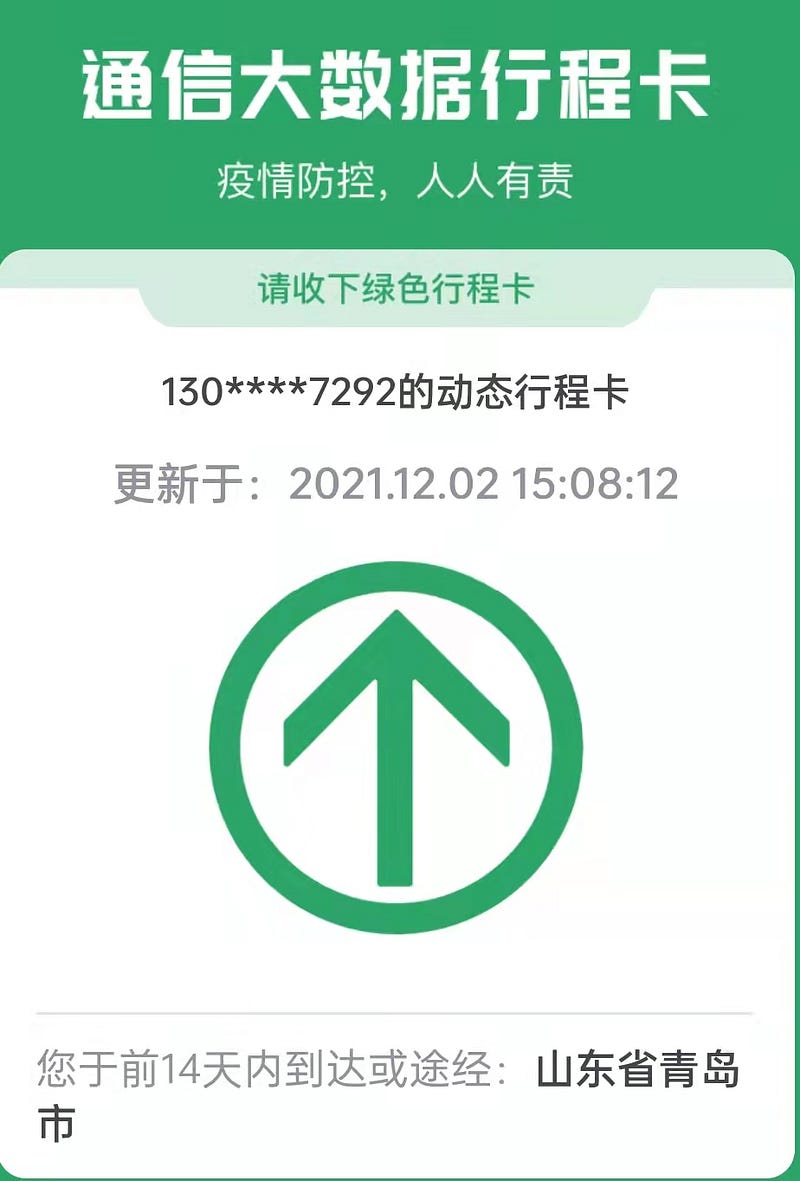
This is just one way that the Chinese government has tracked and controlled the spread of the virus within their country. It seems to be highly effective but also intrusive.
My personal opinion on the matter is that my Instagram, Twitter, Facebook, and other social apps already track everything I do, so I don’t mind feeling a little safer at the cost of the app tracking me.
Quarantines
As with many countries, quarantines have held a strong presence within China to take better control of the virus.
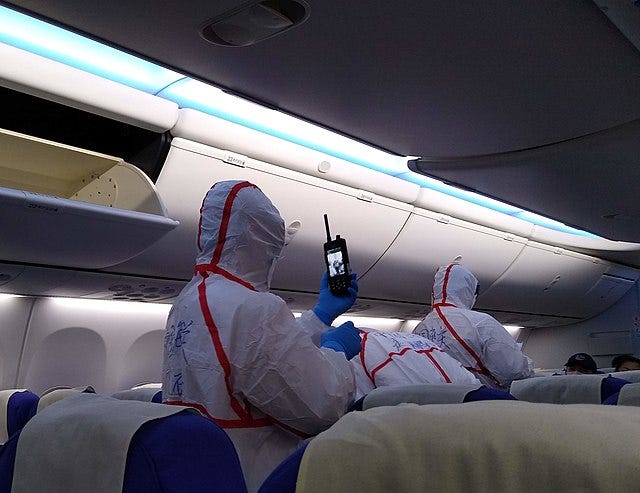
Quarantines within China range from case to case and depend on the severity of the situation. There are typically two reasons for quarantine: someone has entered the country from the outside, or someone has come in contact with an infected person.
For people entering the country, no matter where they are from, there is a long period of quarantine waiting. Total time depends on which part of the country they are entering. The amount of time I have most commonly seen on r/chinavisa (a valuable resource for entering China) is around three weeks at a government hotel, then one to two weeks at your home.
Secondly, people who come in contact with a yellow or red health code will be put into quarantine for a varying amount of time. To bring up Wosen again, the world’s most unlucky digital designer, he stayed in quarantine for 21 days in a government-backed hotel.
I’ve heard of others who had shorter stays in quarantine, but Wosen’s I know is a fact because he missed a going away party for our other buddy (we still haven’t let that down).
All quarantine expenses depend on you, ranging from the hotel room to food and drink. After paying for the correct paperwork, flights, and the many other expenses of moving across the world, the quarantine costs can add up.
To be prepared for these quarantines, it’s important to be flexible. As I mentioned, not all people entering the country will have the same experience. It all happens on a case-by-case basis. I am glad I haven’t needed to experience any quarantines thus far. Hopefully, it stays that way.

Harder Entry into China
With the pandemic taking hold, China began to close its borders. In my upcoming article, Getting a Teaching Job in China Just Got Harder, I went into more detail. For a more in-depth look into the clampdown on visas and the need for PU letters, I suggest you keep your eyes up for its release.
Chinese visas, no matter the type, are notoriously hard to get. It is a lengthy process of obtaining paperwork, having it apostilled, taking it to an embassy, and then applying after all that. A lot of hiccups can come along the way in obtaining your visa.
An example is me, who took just about a year to finally complete mine even before the pandemic. Luckily once you have your paperwork and are within the country, it is relatively easy to renew as long as your employer is legit.
You couple the arduous task of receiving your working visa with the need to obtain a PU letter, and you’ll start to rethink even wanting to enter the country.
The Office of Foreign Affairs grants a PU letter within China. They are only sent in small quantities to specific hand-selected employers. These employers are typically reputable trade companies, international schools, or universities. Some provinces don’t offer PU letters at all, including the province I live in, Shandong.
Along with stricter visa and PU letter rules, travel has been completely shut down for most individuals within China. The times of taking a weekend off to fly to Korea are over, and I never even got to experience it! Now, if you leave the country as a foreign national, you will need to gather all your paperwork again and reapply for an entry visa. That’s not worth a vacation, in my opinion.
This clampdown makes containing the virus much easier within China. With fewer people returning to the country, there are fewer chances of the virus coming in from abroad. This helps keep the numbers down. Of course, there are exceptions, as most cases found within China today come from Chinese nationals flying back from other countries.
Many expats who want to enter China have hopes that the border restrictions will loosen in the next year, but with reports of the Omicron variant spreading, it seems less likely that it will happen anytime soon.
Well, author, how do you feel living with this policy?
I may be in the minority, in my opinion, amongst expats living in China, but I can appreciate the policy for what it is. Not one person in China has been infected with the virus in these two years. It isn't easy to juxtapose this with my friends back in the United States.
Although I lose a lot of privacy from the location tracking of the health codes, it’s not like we have much privacy in the first place. We all carry location tracking devices (our phones) everywhere daily. If having just one more location tracking software on my phone means I have a better chance of not catching the virus, or at least learning that I have caught it sooner rather than later, I can roll with that.
Of course, it sucks that I can’t travel, as that was one of my biggest goals in moving to China. Even traveling within the country is hard, as you can unknowingly travel to an area with an outbreak of the virus and be quarantined upon return. But even with that, I can put up with it for the time being if it means I can have a better chance of not being quarantined and losing out on working time.
Ultimately, whether or not this policy is good is up to what you, as the reader, value. Do you want to give up some of your nonexistent privacy to have a better chance at staying clear of the virus? If so, then China’s zero-tolerance covid policy does a hell of a job.
.jpg)