
Video: 30 Years Later
Innovations in Technology May Often Rob the Moment from the Moment
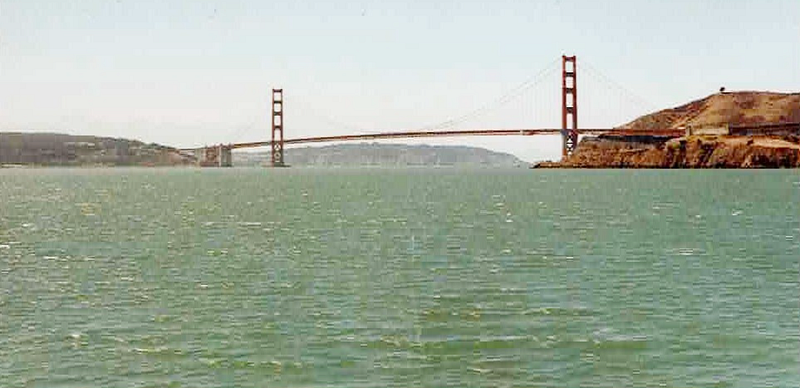
Tech Then — 1994
It was another family gathering. The July heat exposed our child-like nature, my family, aunts and uncles and cousins alike, armed with Supersoakers, water balloons, and dime store water pistols, waged guerrilla warfare amongst the picnic tables, the maple trees, and the restrooms.
The battle cries attracted the curious stare of disbelief from other patrons of the park. But the summer fun did not last long. Soon I was the only weaponized adult. Standing like trees, as still but not as alive, now armed and dangerous with another weapon, my family was not shooting video, taping the fun we should have been having.
Was this the new normal? Or has video led to nostalgia explosions in other families as well? Have we become so obsessed with capturing the present for the future so we can recall the past that we somehow forget to live in the present? Have we become slaves to memory, chained to the very memories we have refused to live during the present?
Such questions developed as I fiddled with my scrambled eggs with my fork in the breakfast car of Amtrak’s Coast Starlight, ‘’We’ll Get There … Eventually” Express. This was long ago. August of ’93. I was twenty-four. Just before I started graduate school. The camcorder was still fairly new. I was traveling from Los Angeles to Vancouver, my version of Jesus getting his head together in the desert, alone, and I was sharing the table with a couple from Glendale, California, enjoying a second honeymoon.
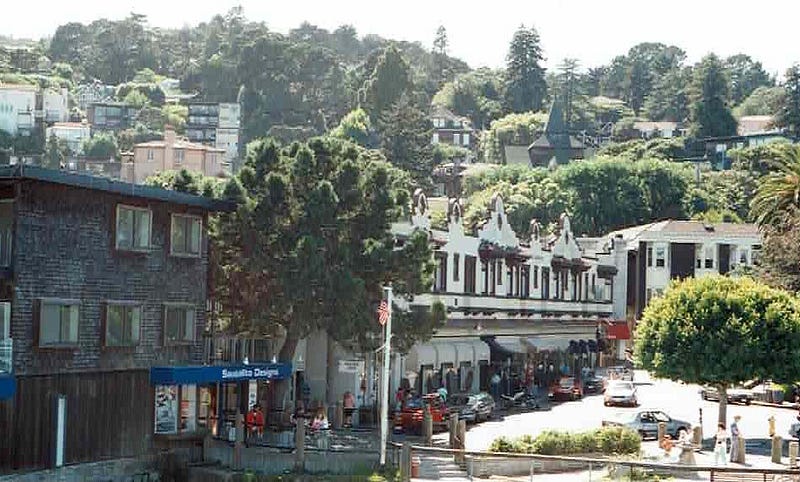
“You’ve never been to San Francisco?” the woman asked me, spreading jam on her husband’s toast. The husband was more hungry recording the dry and rolling hills just above San Luis Obispo than with his breakfast. She held up the piece of toast for Harold. “You can’t miss the view from Sausalito. Do you have a video camera?”
“No,” I said. “Just a 35 mm …”
The town of Sausalito from the ferry from San Fran. Photo by Walter Bowne
“No,” I said. “Just a 35 mm …”
“Harold here just got us a Panasonic Palmcorder IQ. Look at how small it is. Show him how small it is, Harold. It has a color viewfinder, a flying erase head, and Xl4 variable speed zoom. He likes the zoom. You like the zoom, don’t you, Harold? Harold, aren’t you eating?” Harold, what’s a flying erase head? Harold? Well, whatever it is, it has it.”
I censored myself. I didn’t say that it was something thrown at substitute teachers.
“And he won’t miss a single minute of the trip,” she told me without a hint of irony.
Even though I envied Harold for a moment, wishing I had something like a video camera, or a newspaper perhaps to serve as a protective barrier from the ongoing one-sided barrage, I wondered, at a deeper level, whether Harold’s obsession deprived him of the preciousness of the moment.
Watching Harold tape mile after mile of the mildly interesting landscape made me sad. Shouldn’t he be savoring the golden years of his life? Good conversation? Golding the hand of his good wife?
But then I remembered my want of a newspaper. Did the video camera serve another purpose? Perhaps, this time, I could excuse him.
I then excused myself, cursing my romanticism, and sank into my coach seat. I closed the curtain and opened a book of Greek philosophy that I just casually carry around. Holding the book against my head, as if the book was reading my thoughts, I opened randomly to a page in “Phaedrus.”
A section seemed highlighted for my benefit. “They will cease to exercise memory because they rely on that which is written, (which I substituted the word ‘taped’) calling things to remembrance no longer from themselves, but by means of extremal marks; what you have discovered is not a recipe for memory, but for reminder.”
Rereading the passage, I considered my family at the picnic and Harold at the table. They all seemed obsessed with video technology, “external marks” acting as “reminders.” But why?
Any family occasion must be taped. My cousins cannot celebrate birthdays without Spielberg and Company yelling, “action.” The children play on the “set” until they hear the words, ‘’Roll it!” They become self-conscious and wonder what could be so important that it must be taped. Will they ever watch these tapes again? Does knowing that they’re there, in order, marked, and stored, constitute part of their peace of mind?
It is rather convincing at times to have believed we have cheated time. And captured time. We believe that technology will teach us to cope with the passing of time.
They also believe that what they love, I will also love. My uncle says, ‘’We taped the carpenter building an extension to our house.” My aunt tells me, “You must see this!” I then watch my aunt’s reaction as she lands on my uncle’s Park Place with a hotel. ‘’Wow. Look at the time. I must be late for something.”
Monopoly aside, I concede that the video camera records landmark occasions: the wedding dance, the baby’s first steps, the signing of divorce papers. But the video camera should remain hidden more often than not. Leave the third eye open in the hands of a Hitchcock or a Kubrick. They have better sight than any of us. And better judgment.
I also realize that the video camera, unlike a photograph, records sound. The voice is no longer recorded in the memory machine of the mind, remembered ideally in a song, a saying, whisper, imitated through science. Perhaps the appeal of the video camera is its ability to immortalize the human spirit.
The immortalizing, however, is still an act of the human mind, an internal mark, a lifelong feeling, a psychic residue, and a videotape is only a tool for memory. We have become too dependent on those tools which simplify the process of memory building. Although we all want to say, “Not so fast, Time, I caught you,” the human command of’ “fast forward” and “rewind” do not control time.

As I was nearing the end of my West Coast journey, crossing Puget Sound from Seattle to Victoria, British Columbia, watching the female half of a young newlywed couple tape the porpoises surfing on the ferry’s wake, I realized that people used to live life, now we just tape it and watch it later to see what we did.
“How was your honeymoon?” I would want to ask them. “We don’t know. We haven’t seen the tape yet.”
Ah, romance. Who can forget that?
Tech Now: 2021
I composed that essay in graduate school in 1994. It won an award but was never published. I was married in 1995. And then my daughters Madeline and Nancy came in 1997 and in 2001.
Looking over this “blast from the past,” I wonder: Am I a hypocrite? Have I become like that Harold on the train, all those years ago?
After all, I have a YouTube Channel with hundreds of videos, mostly lectures for my students on writing and authors and novels. I have video lectures on gardening, book reviews, beer reviews, and humor narratives.
I just received my latest response from a student who wrote: “Thank you, a great explanation, it helped me a lot!”
How would I have helped that student from God knows where twenty years ago?
In fact, I even videotape myself before the first day of class as an Introduction to Walter Bowne. I try to make the video as funny as possible, and the students love it.
I have also videotaped the concerts of my children. Marching Band competitions. Nancy singing solos on stage. Watching her sing “Danny Boy” and hearing her voice still makes me cry. I’ve videotaped Madeline’s graduation speeches and her humorous speeches on a variety of occasions.
Her interest in video documentaries paved the way for winning six CSPAN StudentCam competitions, making enough to pay for her own car. She used video to capture the spirit of Rutgers Formula Racing. She earned scholarship money, too, for Science Ambassadors. My own daughter Nancy, too, is heavily involved with her radio station at The College of New Jersey, as well as the TV station, and newspaper, and she’s not even a communication major. She uses my green screens to broadcast news programs. She uses Spotify for her news programs and even has her own YouTube station for her JogVlogs.
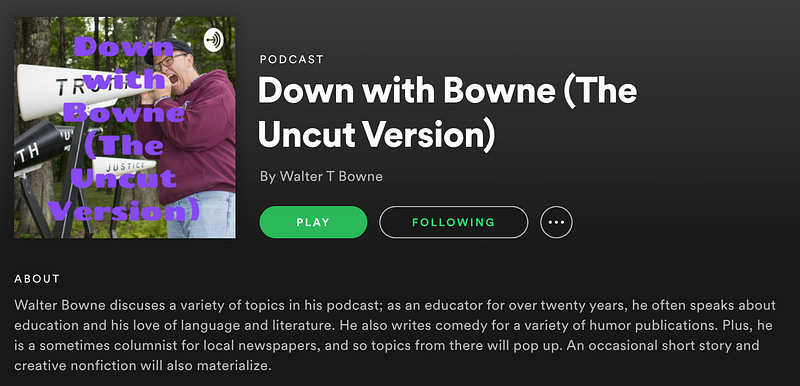
Her knowledge of Final Cut Pro has helped me produce better quality videos. My knowledge of podcasting has now helped my students create their own podcasts. Students are so happy to have a following on Spotify.
Have I watched all that I have filmed? No. Have I videotaped so many birthday celebrations and Halloween events? Yes. Did I ever feel that it took away from “the moment?” Yes and no. I learned to use the technology.
Have I listened to all that I audio recorded from their childhood events? No. Have I taken way too many photos of my plants in my garden and my beers for Untappd. Yes. Too many? Well, no.
New technology like the camcorder and CDs and DVDs and streaming and online instruction now causes many interruptions in what is the perceived normal. I once worked at a sales job, before teaching, where we duplicated college and boarding school videos for admissions departments.
This was in 1997 and 1998. Think about that. We used to duplicate VHS tapes and send them to interested students for the college. We feared DVDs, and started duplicating them, but did we ever fear the days of “streaming”?
Now, we take streaming everything for granted. We still need producers and creators for content. Whether at home watching Netflix or in a Cinemark, we need content creators. Now, we can become our own Content Creators.
I’m writing this now for Medium. In a day or two, you may be reading this. I may get a few bucks, too. Last year, I would submit work, and not hear back from editors for months. Or a year. Or the local newspapers would run my essays and I would receive a grand total of no dollars.
I am never going back to not being paid for my writing. Ever.
Aristotle was right, though, in a way. He feared writing because it was new. It does separate the speaker from their audience. Writing was a new invention back in Ancient Greece. They were used to Oratory. Oral literature, like Homer, was the norm. Memorization was key. Now, do we really need to memorize the beginning of the Civil War back in 1861 for a test? No. Not really. Uncle Google can supply that, right?
For Oratory, there were rules and procedures, and I still teach the Art of Rhetoric in AP Lang and Comp and in Public Speaking classes at college. Martin Luther King followed those protocols, and we have a MAsterpiece like “I Have a Dream.” Winston Churchill did, too, often turning to Cicero for advice and models.
The Ancient Greeks could not conceive of a world of the Gutenberg Press and printed books in the millions or Wipikedia or having access to all the great works (and some truly horrible stuff, too, online) at our fingertips. New inventions and gadgets get us giddy. We get caught up in creating Spotify lists. And something like Pandora, which used to be cool, is no longer the “thing.”
But here’s the takeaway: it’s a middle ground. Let’s use the technology to create and inspire. Let’s learn to use technology as a tool, like how students in China and Turkey, respond to my YouTube lectures, thanking me for my insight into English and composition. Let’s celebrate the convenience of not having to go back and forth to Blockbuster or RedBox.
But let’s stay with humans, more. Let’s stay in the moment, more. My own daughter Nancy, often when we’re out, would ask me: “Dad, do you really need to take a photo of your beer now, and rate it on Untappd?”
“No.”
She is so much like me. She’s right. She wants to live in the moment. She does not want to be sidelined because of my obsession with ranking craft beers. I do take a quick photo, and later, when I ready for bed, I will rank that new Triple IPA “Snag and Drop” from Cape May.

We need to know when to turn off the gadgets. And we need to learn to turn on to new technology, like my wife and I snuggling on the couch, listening to Stephen King’s “The Stand” together.
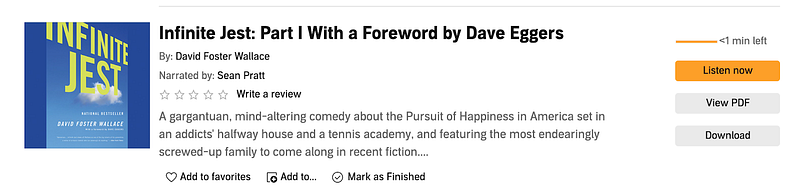
That was something that we could have never perceived in 1995. Maybe we could get the book on CD from the library, but Bluetooth and portable speakers, make the consumption of media much easier. It’s the reason why I read and listened to 46 books last year. That’s something to celebrate. And it’s because of Audible.
So at your kid’s concert, take a small sample. Audio record it. Then maybe store it. But keep your eyes close and open to the world. That Smartphone is not a replacement for your wife and husband. It beeps. It’s fun. Everyone now can take videos. It doesn’t take a high powered machine with tape. We have all become our own documentarians and videographers and historians.
Let’s just learn to better at it. And not forget humanity.
I have seen enough “Black Mirror” and “Electric Dreams” and classic “Twilight Zone” episodes to be terrified of what the future of technology may do to our humanity. We need to check our use almost daily. Do we really want to become part of The Borg?
No. Not at all.
But picture our joy now, when after watching a TV show, our pictures of our life show up on a slideshow, and my wife and I are laughing and filled with stories that we may have forgotten. We may watch those pictures for ten minutes. I don’t think that is bad; as long as nostalgia doesn’t like its original name suggests, impose sadness and regret. We can become slaves to the past by forgetting our humanity in the present.