
Innocent Until Proven Guilty
What Does That Actually Mean?
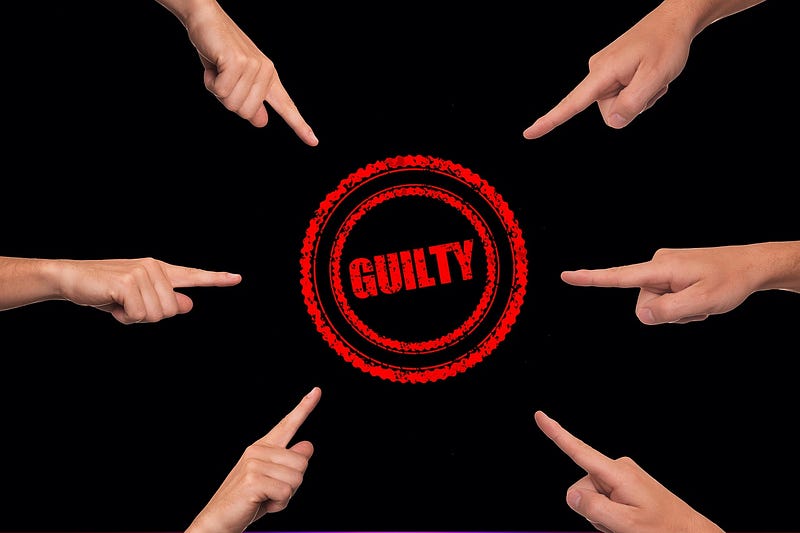
“Innocent until proven guilty” is seen as one of the cornerstones of our democratic system. But what does that phrase actually mean and in what context does it apply?
“A principle that requires the government to prove the guilt of a criminal defendant and relieves the defendant of any burden to prove his or her innocence.
The presumption of innocence, an ancient tenet of Criminal Law, is actually a misnomer.
According to the U.S. Supreme Court, the presumption of the innocence of a criminal defendant is best described as an assumption of innocence that is indulged in the absence of contrary evidence (Taylor v. Kentucky, 436 U.S. 478, 98 S. Ct. 1930, 56 L. Ed. 2d 468 [1978]). It is not considered evidence of the defendant’s innocence, (empahsis mine) and it does not require that a mandatory inference favorable to the defendant be drawn from any facts in evidence.
In practice the presumption of innocence is animated by the requirement that the government prove the charges against the defendant Beyond a Reasonable Doubt. This due process requirement, a fundamental tenet of criminal law, is contained in statutes and judicial opinions.” -The Free Legal Dictionary.
In other words, this presumption is not literal, but is simply indicative of who has the burden of persuasion and proof in a trial setting. If we were routinely sending people to trial whom we presumed to be there for no good reason because we believed them to be innocent, our court system would be more clogged than it already is.
Instead, we arrest and indict those for whom we have probable cause to believe deserve to be arrested and indicted. We come to that conclusion after thorough investigation and analysis of evidence. It is via this level of due process that we can be reasonably assured that those who are standing trial deserve to be there although they do not bear the burden of proving their own innocence. Rather, the burden of proof of guilt lies with the prosecution.
It does not literally mean that we think people who are standing trial are considered innocent, and it’s misleading to continue to bandy that phrase around as if it did. We also are not out of line to accuse or suspect someone when given probable cause to do so. When a crime is reported, we believe the accuser until such time as further investigation reveals that we should not believe them. And then we proceed accordingly.