
Influential Indian LGBTQIA+ 🏳️🌈Individuals
A list of prominent advocates who were instrumental in bringing about societal reforms with regards to LGBTQIA+ Individuals.
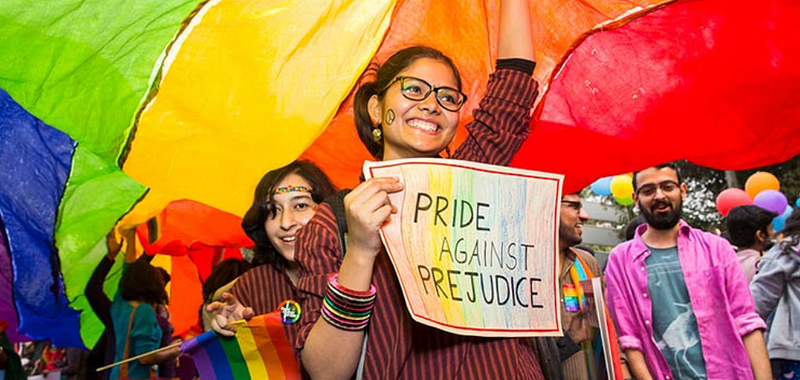
A list of prominent advocates who were instrumental in bringing about societal reforms with regards to LGBTQIA+ individuals.
Over the past few years, India has faced a surfeit of unrest over gender norms which discriminate against LGBTQIA+ individuals. It is indeed unfortunate that societal progress pales in comparison to the momentum of economic growth in our country. After a long haul of advocating rights and petitions, Section 377c of the Indian Penal Code was finally decriminalized in 2018; years after several other nations of similar political and economic stature recognised similar rights. Even though ideas such as homosexuality have been presented in Bollywood movies and various other entertainment platforms, LGBTQIA+ individuals are yet to be fully accepted by the majority of Indian society. Some Indian societies that are underexposed to such ideas, parochially harbour ideologies that consider homosexuality and gender dysmorphia to be taboos. As Jason Collins, an openly gay man, once said: “Openness may not completely disarm prejudice, but it’s a good place to start.” Similarly, the LGBTQIA+ society of India is working tirelessly towards spreading awareness and endorsing their rights. Despite the current regressive sociopolitical environment in India, here are a few individuals who have confronted gender norms and societal standards to stand up for LGBTQIA+ individuals:
Menaka Guruswamy
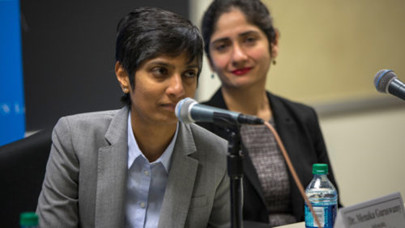
Menaka Guruswamy, a renowned lawyer and a Senior Activist at the Supreme Court of India was instrumental in the decriminalization of Section 377c of the Indian Penal Code (1860), after over two years of constant struggle. In 2016, Guruswamy filed a petition, along with several other lawyers and five activists (including Navtej Singh Johar), questioning the constitutionality of Section 377c. This soon became a landmark case (Navtej Singh Johar v. Union of India) where consensual sex, especially between same-sex individuals was decriminalized in September 2018. She mentioned that Section 377c was not relevant to consenting adults, reinforcing the fact that it may violate one’s privacy. Menaka Guruswamy announced that she is in a relationship with a fellow advocate, and lawyer in the Navtej Singh case, Arundhati Katju. They felt that the scrapping of Section 377c was not only a milestone in their careers, but it was “a personal win” as well. Along with this successful case, Guruswamy has been an advocate for educational and human rights, and a successful, passionate lawyer.
Arundhati Katju
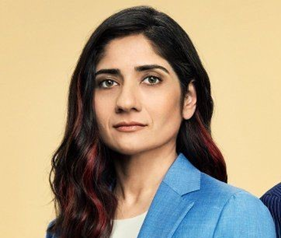
Similarly, Arundhati Katju, a lawyer practising white-collar defence, civil litigation, and community credited cases, in India and the United States of America, has contributed to reforms for LGBTQIA+ individuals. She has actively participated in the Navtej Singh Johar v. Union of India case and has fought for a transgender person who was unlawfully restrained by his parents. Before the Navtej Singh Johar v. Union of India case, Katju was also involved in the Suresh Kumar Koushal v. Naz Foundation case (2013), which was similar to the Navtej Singh case, however, that case was invalidated and Section 377c was reinstated. This is an example of an event that led Katju to petition against the Supreme Court in 2016, alongside Menaka Guruswamy. Through her activism for LGBTQIA+ rights, Katju has achieved the honourable Human Rights Fellowship and is widely recognized throughout India. She too identifies as an LGBTQIA+ individual.
Dutee Chand
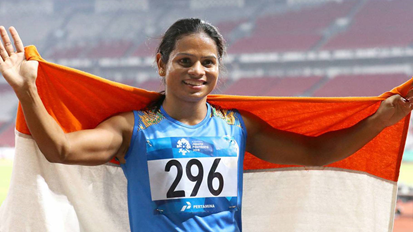
Sportswoman, Dutee Chand has opened up ideas about homosexuality within her profession. She is an Indian athlete professionally trained in sprinting and is a prevailing national upholder in the women’s 100 meters event. She is both the third Indian woman to qualify for the Summer Olympic Games and the first-ever Indian athlete to openly identify as an LGBTQIA+ individual. She has continuously supported LGBTQIA+ individuals since she publicly came out about her same-sex relationship, in 2019. She spoke about how the Supreme Court’s decision to decriminalize Section 377c in 2018 motivated her to be open about her sexuality. Unfortunately, Chand tackled severe criticism and negativity from her hometown after she decided to come out. Despite such circumstances, Chand remains an active voice for LGBTQIA+ individuals and has frequently expressed her gratitude during pride month.
Faraz Ansari
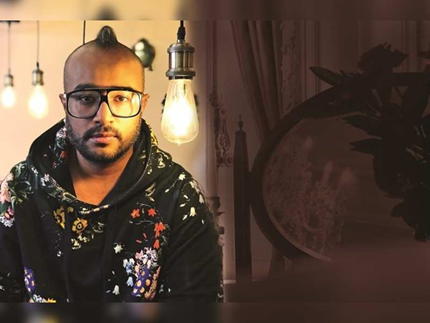
Shifting the focus to the Indian entertainment industry, various figures have opened up about their identity, and use their talent to educate their audience about the same. Faraz Ansari is an Indian filmmaker, writer, and director, also known for films like Taare Zameen Par, Silvat, Stanley Ka Dabba, etc. Ansari’s preferred pronouns are “they/them”, and they identify as queer. To advocate for LGBTQIA+ individuals, Ansari has produced several projects like ‘Sheer Korma’, which is a movie about queer women choosing to express love beyond social norms and conventional beliefs, and ‘Sisak’ (translate to a cry caught in the chest’ in Urdu), a movie born out of reinstating Section 377c (by the Supreme Court). Sisak, a silent film, demonstrates how societies often suppress and quieten the voice of an individual. Ansari mentions how there is a lot to say, however much cannot be put into words in such films.
Gazal Dhaliwal
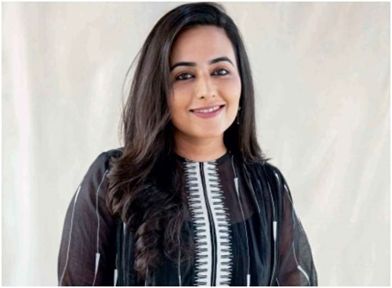
Along with Ansari, the talented Gazal Dhaliwal has art to spread awareness about LGBTQIA+ concepts through Indian entertainment. Gazal Dhaliwal is a screenwriter for Indian cinema and is known for her works such as Lipstick Under My Burkha and Tanuja Chandra’s Qarib Qarib Singlle. She has also openly expressed that she is a transgender woman. ‘Ek Ladki Ko Dekha Toh Aisa Laga’, one of her projects, is based on how homosexuality is still heavily stigmatized in modern-day India. This project became fairly controversial due to the open display of same-sex relationships on a prominent platform just like Indian cinema, however, the film was received well by most of the audience and was considered to be an innovative story, shedding more light on LGBTQIA+ individuals. Dhaliwal has stated that she grew up in a predominantly masculine environment and was often verbally bullied with transphobic slurs, making it rather difficult to conform to her true identity. After thorough research via the internet and a lot of convincing, Dhaliwal’s parents finally allowed her to undergo sex-reassignment surgery. Since then, Dhaliwal has been an active advocate for LGBTQIA+ individuals, and has also appeared on Satyamev Jayate’s episode ‘Accepting Alternate Identities’. Besides this, she has acted against the Transgender Persons Bill (2018), demanding an alteration due to its numerous discrepancies.
Alok Vaid-Menon
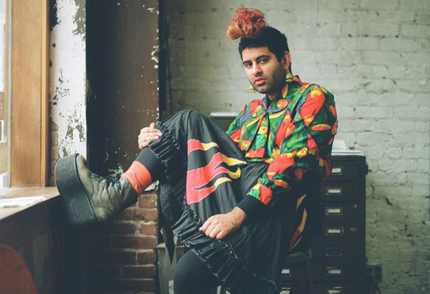
International Indian figures like Alok Vaid-Menon have helped young individuals all over the world gather the courage to express their true identity. Alok Vaid-Menon is a writer, performer, and media celebrity. Similar to Ansari’s preferences, Vaid-Menon’s largely makes use of pronouns like “they/them” and they identify as gender non-conforming and transfeminine. Vaid-Menon uses multiple platforms and his art to advocate for LGBTQIA+ rights and explore various ideas of gender, identity, race, and much more. Vaid-Menon found it difficult to come out as gender non-conforming because it was not openly accepted in their environment. Due to such suppression, Vaid-Menon resorted to artistic means of expression, and it provided them with a platform to openly illustrate their identity. They work towards spread awareness through art and poetry, as well as emphasizing the importance of liberating individuals from restrictive gender norms. In 2017, Vaid-Menon published the book ‘Femme In Public’, a reflection on violence against transfeminine bodies. They have mentioned that many still believe that trans is simply an appearance and not an identity, and has been fighting against this delusion for the benefit of LGBTQIA+ individuals.
Joyita Mondal
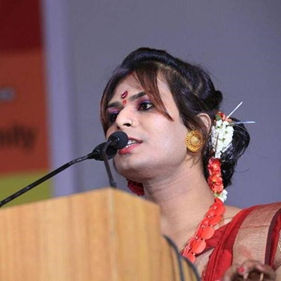
Concerning stoic figures like Vaid-Menon, Joyita Mondal is also a courageous figure who has worked determinedly towards demystifying homosexuality and gender dysmorphia in India. Joyita Mondal is the first openly intersex identifying person who is a judge of a Lok Adalat and an activist from West Bengal, India. She was born as “Joyonto” to a conventional Hindu family. Due to her gender identity, Mondal faced an overwhelming amount of judgment and hatred from her own family. She also dropped out of high school and ended up homeless for a long period, with her main source of income through begging on the streets. She relocated to Islampur and to work for transgender rights. She then completed her education and ended up being the first intersex person to receive a voter ID. Mondal created her organisation, Dinajpur Notun Alo (New Light), to reach out to and help thousands of transgenders individuals within the same district. She has also set up shelters for older HIV positive people and has developed a patients’ welfare committee for the same.
Grace Banu
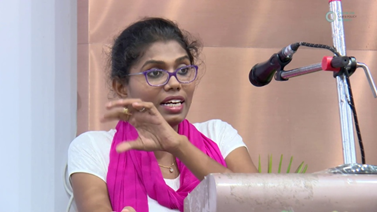
Another Indian activist, Grace Banu, has faced trying and torturous obstacles throughout their journey but continues to put up a strong front. Grace Banu is a Dalit and trans rights activist. Banu’s preferred pronouns are “they/them”. They have faced severe discrimination as a young person due to their Dalit status along with gender identity, causing them to be treated differently and harshly from the rest, especially in their school. This drove Banu towards depression and even an attempt to commit suicide. When Banu finally admitted their gender identity to their family, they were not accepted and bleakly ignored. Conquering such emotional setbacks, Banu enrolled in an engineering college in Tamil Nadu and was the first transgender person to do so. Banu feels strongly about reservations, believing that it is necessary for the upliftment of the trans individuals. They demand that transgender figures, just like them, receive reservations based on both gender identity and caste. Banu continues to be an active advocate for the trans persons.
Sriti Jha

Finally, popular figure, Sriti Jha, has emerged from the bounds of the Indian entertainment industry and has publicly vouched for LGBTQIA+ individuals. Sriti Jha is an Indian television actress who has worked in soap operas such as Kumkum Bhagya. She has been a key figure with her two appearances in the events like the ‘spoken fest’ where she explained her struggles and confessions being an asexual individual. She’s also a supporter of pro-choice options in India and LGBTQIA+ individuals.
It serves well to those fighting for their rights to see such figures bring out a change in their communities, however, a significant amount of improvement is yet to follow. The decriminalization of Section 377c merely a stepping stone for further development in the Indian constitution and society. Hopefully, in the not so distant future, with many more activists coming to the forefront, India will live up to its ‘democratic’ repute.