
Influencers Rachel Hollis and Myka Stauffer Have a Vulnerability Problem
Do you know how to avoid the same pitfalls?
“The most important learning is the ability to accept and expect mistakes, and deal with the disappointments that they bring.”
— Fred Rogers
At some point, all creatives and content creators who work online will need to weigh the pros and cons of cultivating vulnerability. We live in a post-reality show era and we are quickly moving into a post-truth world as well. As a result, “vulnerability” has become a lucrative asset for many people in their careers, particularly those who work online or do business in the public eye.
But vulnerability isn’t easy. It literally isn’t everything it’s cracked up to be and if you decide to use it in your career, it isn’t something you can simply “take back” whenever you feel like it. It also isn’t the kind of thing that most people can pretend to exude — at least not for long — and it appears that moms like Rachel Hollis and Myka Stauffer are just finding that out.
In case you missed it, Stauffer and Hollis are two different mommy bloggers who each shot to their own brand of fame by perpetuating a myth of vulnerability. Both women gave the world a supposedly inside view into their worlds and experiences with marriage, Christianity, and adoption.
Unsurprisingly, both women have made a name for themselves by sharing a variety of life hacks and attracting multi-level marketing (MLM) moms who dream of living in the same lap of luxury that these two have achieved. For the most part, their success has been predictable.
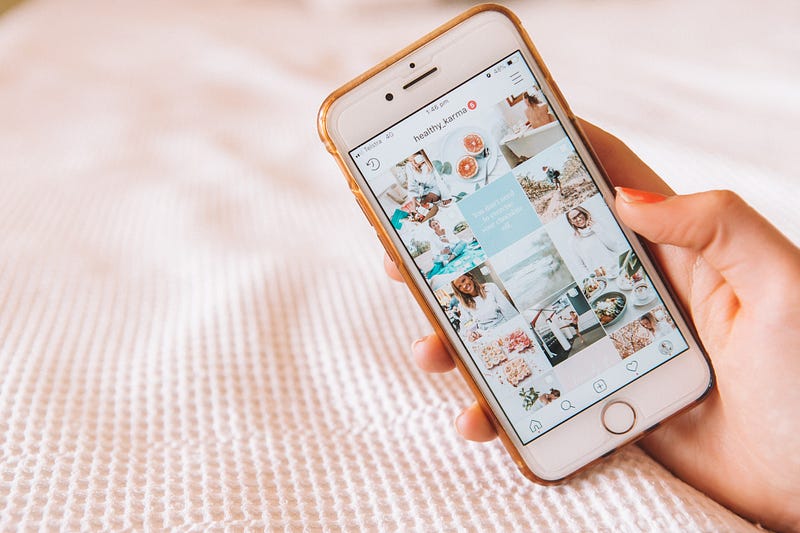
Both Myka and Rachel have excelled at “selling the dream” of motherhood and online entrepreneurship. So, it’s only natural that other moms would see their carefully curated feeds on social media and decide they want it too. The designer handbags, the dream vacations, the fully engaged and attentive husbands.
While that image is oh so pretty and perfectly fit for Instagram, it isn’t particularly honest.
A lack of transparency is what’s causing so many problems. First, Myka Stauffer announced to the world that she and her husband had placed their special needs son Huxley with a new adoptive family, and then Rachel Hollis announced that she and her husband would be getting a divorce.
For the most part, people are angry because they trusted Myka and Rachel to be honest about their lives. Because they built their platforms and profits on this idea that they were raw and vulnerable — something plenty of moms simply don’t feel they can be.
With both women, you get the sense that people would have taken the news a bit better if they’d simply been more open about their challenges from the start. But along with their messages of vulnerability, Rachel and Myka have profited off the notion that they’ve achieved something the rest of us haven’t. Something that looks a lot like balance and a healthy family life.
It’s not that anyone expected either woman to be perfect, but most did expect them to be real. And plenty of people are speaking up because they object to influencers who dress up damaging habits as somehow positive or healthy choices.
In the case of Myka Stauffer, there’s a lot that folks find objectionable. There’s already a lot of criticism about international adoptions, so, the fact that the Stauffers would adopt a special needs child from China, make so much of that adoption journey public, but send him to a new home two years later is a nightmare. It reeks of white savior complex.
While some of us might certainly recognize that Huxley is “better off” in a truly forever home away from the Stauffers, that doesn’t erase the damage that has been done. If Huxley genuinely suffered from reactive attachment disorder as Myka has recently suggested, that actually makes her decision worse. It’s widely recognized by experts that neglect, abuse, or even frequent change in a child’s primary caregivers all contribute to a higher risk of insecure attachment and a full-on disorder.
“Safety is the core issue for children with attachment problems. They are distant and distrustful because they feel unsafe in the world. They keep their guard up to protect themselves, but it also prevents them from accepting love and support. So, before anything else, it is essential to build up your child’s sense of security. You can accomplish this by establishing clear expectations and rules of behavior, and by responding consistently so your child knows what to expect when they act a certain way and—even more importantly—knows that no matter what happens, you can be counted on.” — Helpguide, Reactive Attachment Disorder (RAD) and Other Attachment Issues
As a fellow mother, I have to admit I find it upsetting that the Stauffer’s treatment of choice was to send their son away. It’s a choice in direct opposition to every standard of treatment for RAD since it’s essentially one more abandonment a child must heal from. And it’s one more heavy piece of reinforcement to convince a hurting child that they really are alone in this world.
In the weeks since making their announcement, the Stauffers have scrubbed Huxley from their digital life. Posts and videos have been deleted. Comments on Instagram have been limited. On more than one occasion, I’ve caught a statement by Myka which suggests she feels that she and her family have been victims.
On the one hand, she claims she couldn’t have said anything about the issues with Huxley because that would have invaded his privacy. But she’s also suggested that this was a decision she and her husband made in the interest of the other children’s safety.
So, let’s be honest. A lot of the behavior that people find so off-putting is this notion that their adoptive son’s issues were somehow too great for them to bear. They don’t come out and say they blame him, but their comments and actions suggest they were (in their own minds) “helpless.” Frankly, I find that hard to believe. I don’t doubt the difficulty or seriousness of RAD if that’s what they were dealing with. I doubt their inability to get the outside help they needed.
If anyone is equipped to get help or at least, get connected to the help they need, it’s the Instagram influencer with millions of followers and lucrative partnerships with some of the world’s leading baby and parenting brands.
I don’t believe Myka Stauffer needed to betray her son’s trust on social media. But I do think she could have treated him more like the son she supposedly longed for and less like a burden she didn’t ask for.
In terms of vulnerability, she also could have been far more honest about her personal struggles as a mother and how she was coping with her stress. If anything, such honesty and authenticity would have elevated her brand and led the way for the frank discussions parents need to feel free to have.
Rachel and Dave Hollis are also adoptive parents. They’ve been pretty upfront about their adoption journey which lasted five years and cumulated with the birth of their daughter Noah in 2017.
But according to her husband Dave, they’d been thinking about divorce for years. Let’s think on that timeline for a moment. They adopted a child in 2017, Rachel published Girl, Wash Your Face in 2018, and then Girl, Stop Apologizing in 2019. Dave came out with his first book this year, Get Out of Your Own Way.
So, they wrote these books and then grew them into a marital advice podcast along with those pricey marriage seminars… all while considering divorce.
When exactly were they working on their supposedly healthy marriage?
Now, personally, I think that divorce for the right reasons is a whole lot better than staying married for the wrong ones. It’s not the fact that they are getting divorced that’s so terrible. It’s the fact that they coached everybody else on how to not get divorced, all while speaking as if their serious marriage troubles were all in the past.
Why is that so problematic? If you Google “rachel hollis marriage problems,” nothing of substance comes up from either her or Dave. There’s one article from 2015 where she admits to fighting about certain things but guess what — it’s the same stuff that virtually every married couple with children fights about. Nothing about it was groundbreaking or vulnerable.
Instead, the most noteworthy revelations about their marriage come from Rachel and Dave in the offhand things they say as if it’s no big deal. Meanwhile, as critics, we’re gasping in disbelief and wondering if a couple of life coaches were ever any less self-aware than these two.
It’s problematic because they’re modeling vulnerability to their followers and essentially, students, as if authenticity is just another mask that you wear on your climb to success.
Wearing masks on social media is nothing new. And putting on airs or graces as a Christian leader is definitely not a new thing either. It’s a widely acknowledged problem that Christian publishers continue to indulge.
And it’s an especially big problem among these supposedly inspirational and wholesome influencers.
So, how do we deal with this frightfully common impulse to claim vulnerability without actually, you know, being vulnerable? Folks, I think it starts early — long before we ever feel as if we’ve “made it.”
I don’t believe there’s anything wrong with peddling authenticity and vulnerability, assuming that’s what you’re actually selling. But if you’re going to do that, there are things you’ve got to understand first before you haphazardly start swinging around that big dick energy.
Vulnerability isn’t free. Whoever told you that vulnerability and being your authentic self doesn’t cost you anything was either lying or terribly confused. Vulnerability will practically always come at a cost.
Maybe it’s somebody’s opinion of you that falters because you dared to tell it like it is. Perhaps someone else is disgusted to see you “bragging about your issues.” The truth is that vulnerability makes many people uncomfortable. The stuff that a genuine and authentic person reveals about their own life and real-world struggles has a way of making the rest of us feel a little bit exposed.
Too many people look at vulnerability, and in particular, vulnerability among writers as some sort of easy way out. Like it’s all gossip and no substance.
The reality, however, is that vulnerability is something you carry with you. Once you’ve gone there, it’s out there. You can’t just take it back. And if it turns out that whatever you’ve been sharing and calling vulnerability is easily put away or given without having to live with the consequences, you need to have a little heart-to-heart with yourself about what it is that you’ve been selling.
It’s better to rip off the bandaid now and get people to dislike you sooner rather than later. In this area, I feel very fortunate. I’ve gotten a lot of hate mail and nasty comments from the get-go, ever since I began my personal writing career in 2018.
At first, it bothered me. I was upset to discover how intent some folks are upon twisting my words and seeing whatever they want to see. But after a while, I realized that the early hate mail was a blessing in disguise.
When people dislike you in the beginning for being your honest self, it frees up a lot of energy for you to keep on being yourself and appealing to your real audience. Because you (and I), are not Mister Rogers. Most of us will never have that thing that makes us dearly beloved by all. But it doesn’t matter. You don’t need the entire world to love you so you can follow your purpose. You just need to believe in what you’re doing and appeal to the people who get your message.
Wherever you stand on the spectrum of influence, if you are a creative or content creator, you want loyal fans. You want people who are gonna see you through the highs and lows of your career. The people who don’t understand you or your message were never going to stick around. You should let them go.
So, seriously. Be vulnerable and authentic about wherever you are right now. Do it from the start and you’ll avoid a lot of the heartache that Myka Stauffer and Rachel Hollis are currently going through.
Remember, it’s hard to slip up when you’re telling the truth.
You don’t get to decide how other people read and respond to you. And yes, I know that’s really hard to accept. Still, the sooner you understand that the sooner you can quit doing the awkward shuffle dance we all fall into because we’re trying to avoid putting our foot in our mouths.
Sometimes, you will say or do the wrong things. Whether your blunder is big or small, it’s important to come clean about it and say, “I fucked up.” Or, “I was wrong.”
I’m not saying you’re going to be perfectly on the ball. I sure don’t have it all sorted, but we’re allowed to be works in progress.
And when somebody does read you terribly wrong, it’s okay to accept that your work isn’t for them. At least not right now and maybe never.
Cultivating a healthy understanding of what you can and cannot control in your work is an important part of surviving the backlash of vulnerability.
Is there hope for influencers like Myka Stauffer and Rachel Hollis? I want to say yes, partly because it helps me to believe there’s hope for me too. Personally, I find an enormous amount of value in the ability to be vulnerable with strangers and to willingly shine a light upon our scariest secrets.
Talking about something scary or disconcerting seems to be the best way to relieve it of its power. At least, talking about it openly and voicing the concerns we’re afraid that nobody else can understand. There’s so much peace in knowing that we are not alone in our imperfections.
Or in knowing that we can live a beautiful and fulfilling life without having all of our shit together.
I’d say the recent revelations from the Stauffers and Hollis brand are a pretty loud wakeup call.
Maybe it’s time to quit looking for advice from folks who think they’ve conquered their biggest demons. Instead, it might be better to hear from those who are going through struggles right along with you but managing them in a healthy way.
We can’t manage what we don’t acknowledge. I have no doubt that Rachel and Myka could both put their careers into a better place by pivoting toward true vulnerability. But it’s a very heavy choice. Vulnerability opens us up to criticism, growth, and even more struggle — often more than we feel ready for.
There are zero road maps and no hacks to authentic personal growth. There are plenty of drawbacks too. Even so, I will never stop promoting vulnerability for creatives because I am convinced it’s the best way to pave a path forward for ourselves and for others.
"We all want to be met with compassion, but in order to do that, you actually need to lead with some brand of vulnerability, which is: I feel that bad too." — Tom Hanks, 3 Life Lessons Tom Hanks Learned From Playing the Kindest Man, Mr. Rogers


