
Infinity in a Twist: Understanding the Möbius Strip
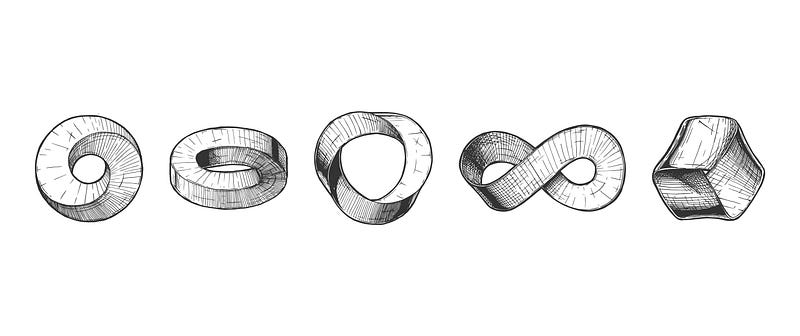
It’s fascinating to think about how much of our daily lives are tied to mathematics, a subject that exists solely in our minds. From balancing a checkbook to calculating the time it will take to travel to a new destination like the Moon, we rely on the principles of mathematics to make informed decisions. Even the simplest of tasks, like measuring out ingredients when cooking a delicious Fettuccini Alfredo, involves using math in some capacity. It’s a testament to the ubiquitous nature of the subject and the power of the human mind to create and apply it to various aspects of our everyday lives.
Even the concept of infinity, a notion that has engaged the human intellect for millennia, can be seen as a mathematical construct born from the depths of our consciousness. Various philosophers and mathematicians strived for thousands of years to encapsulate and define what infinity truly means, yet this elusive concept always seemed to slip through their intellectual grasp. However, this all changed approximately a century ago with the pioneering work of Georg Cantor, a luminary in the field of mathematics. Cantor, often hailed as the father of modern mathematics, dedicated his life to the understanding and elucidation of infinity. His groundbreaking work finally presented a way to comprehend the concept of infinity within the confines of mathematical logic, offering a tangible construct for what had previously been an abstract, intangible idea.
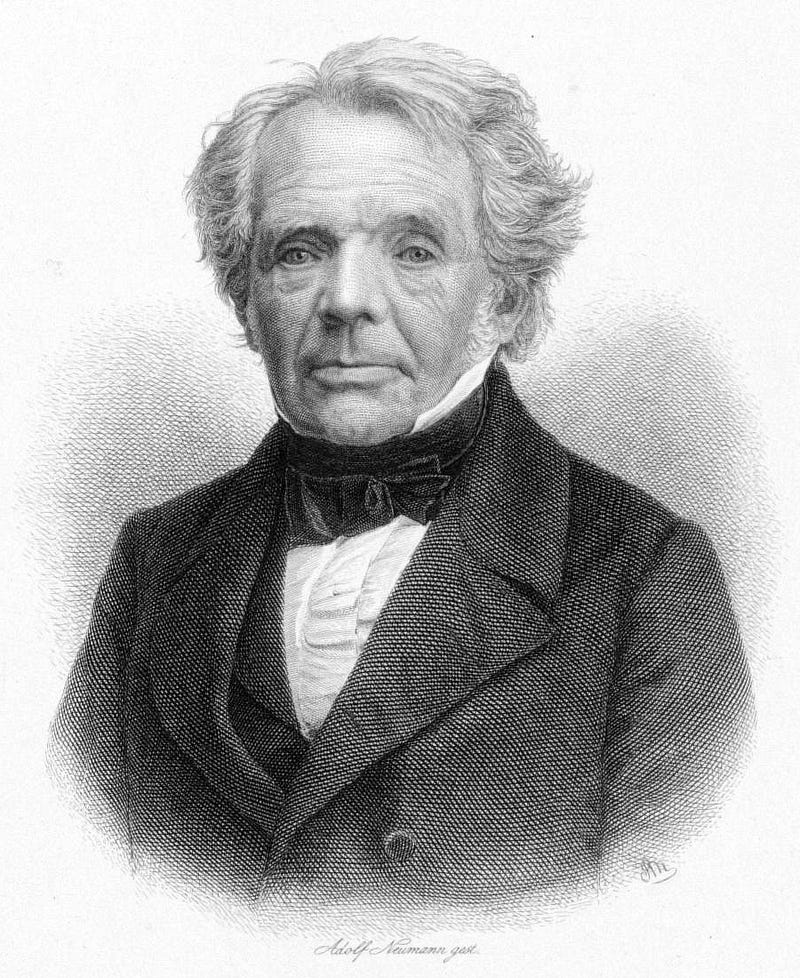
In fact, a little before Georg Cantor, another mathematician had also managed to express infinity in a concrete way with a mathematical object that he designed. August Ferdinand Möbius, a German mathematician and astronomer, introduced this intriguing object to the world in 1858. Though at the time Möbius did not name this object after himself, it later came to be known as the “Möbius Strip”. This unique, one-sided object would become a powerful symbol of infinity, providing a tangible illustration of a concept that had long eluded concrete representation.

In its most elementary form, a Möbius Strip can be described as a surface with no front or back, but a single continuous side. Such a description might seem confounding initially, perhaps even implausible. However, a simple experiment can help elucidate this concept. Take a strip of paper and give it a half twist before joining the ends together — voila, you’ve created a Möbius Strip.
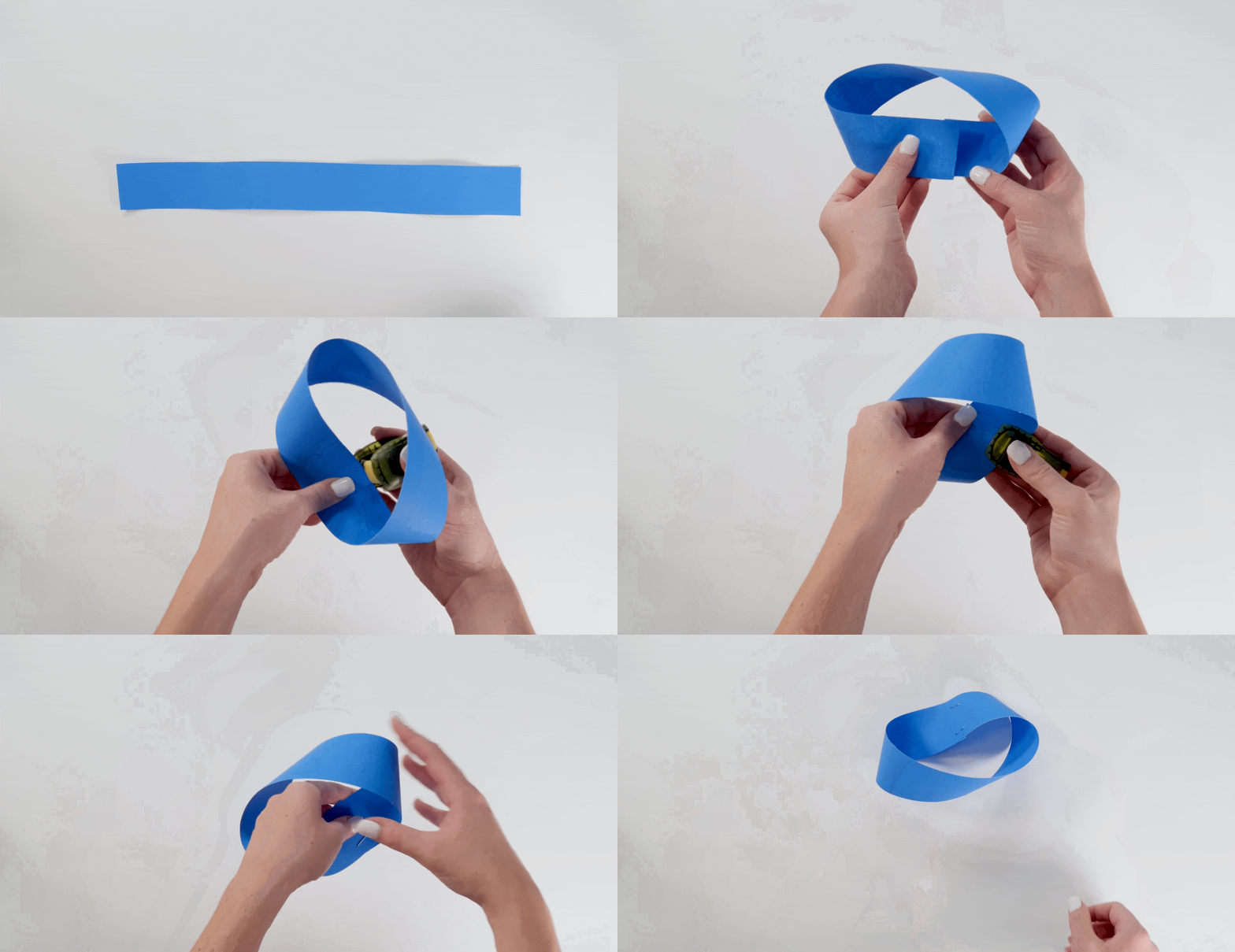
Now, grab a pencil and draw a line along the surface without lifting your pencil. Surprisingly, you’ll end up back at your starting point, having drawn on what seems like both sides of the strip. Yet, you never actually flipped the strip or moved your pencil to the other side. This is the magic of the Möbius Strip, an object that truly embodies the abstract concept of infinity in a tangible form.
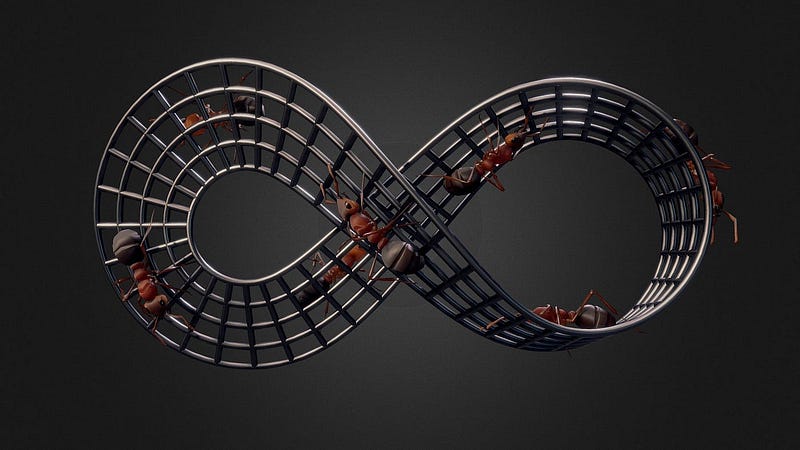
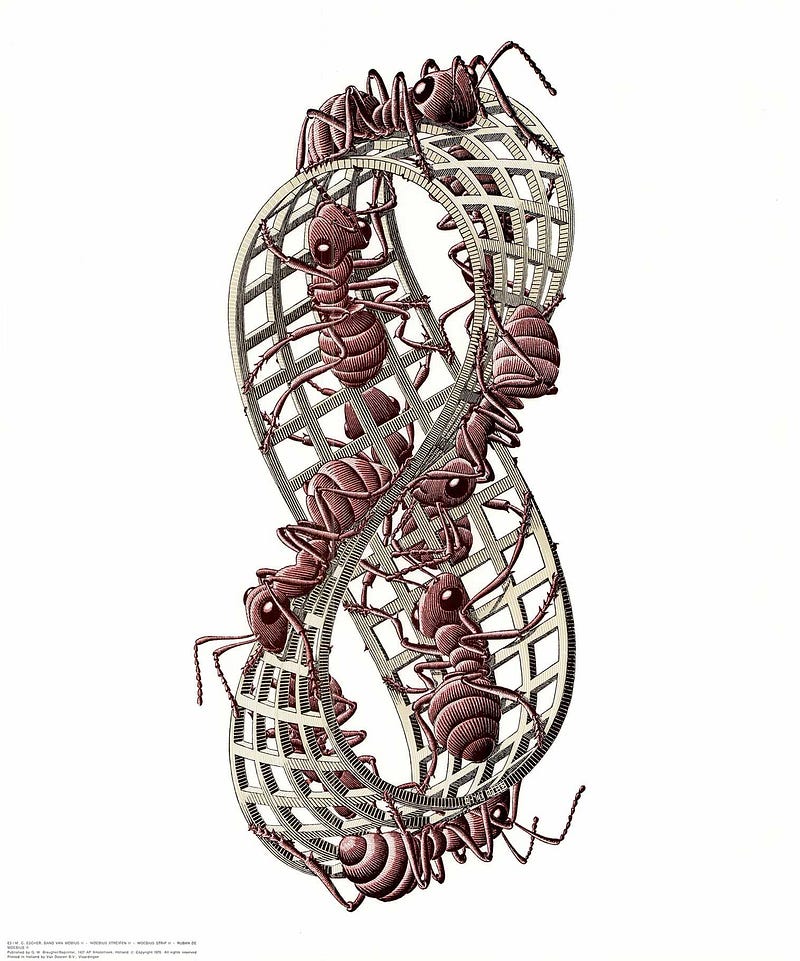
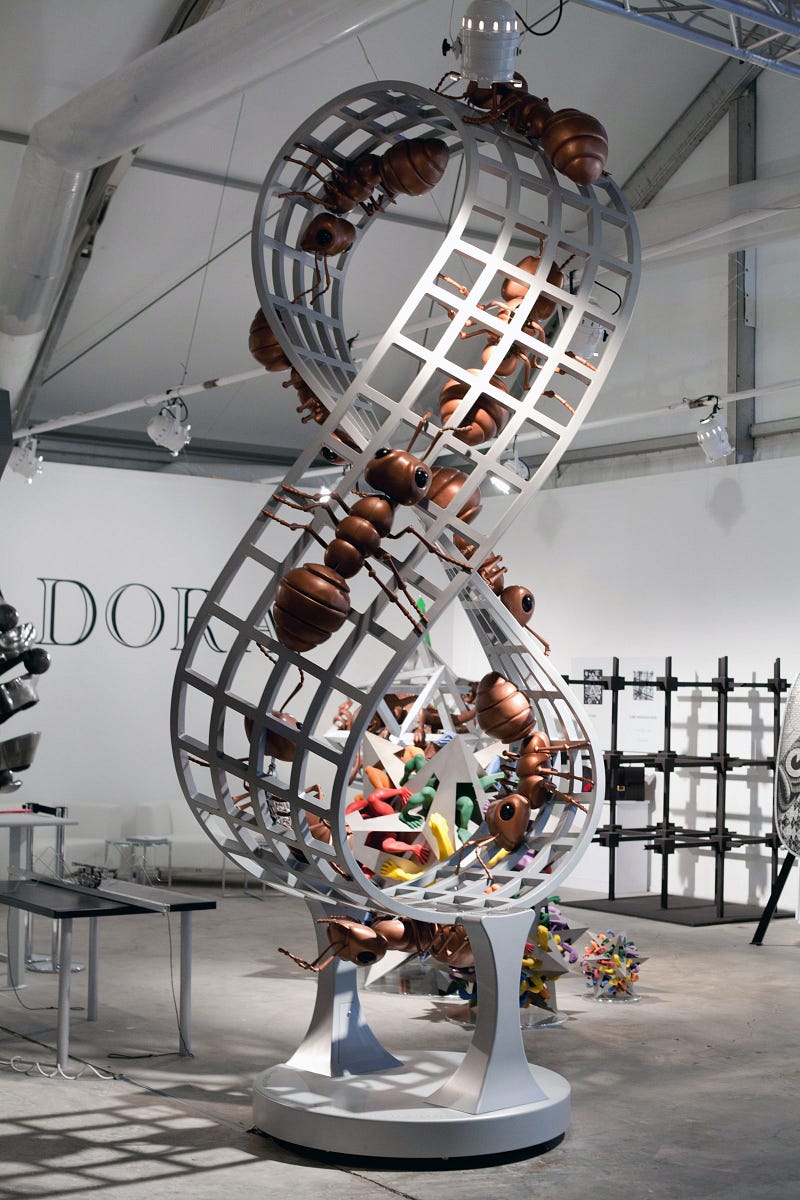
The Möbius Strip indeed serves as a profound analogy for infinity. Imagine placing some ants on this strip; the ants could walk indefinitely without ever needing to halt or change its direction. This perpetual cycle reflects the concept of infinity where the ending and beginning are indistinguishable.
Applying this concept, we can appreciate the reasoning behind the design of the recycling symbol, which is inspired by the Möbius Strip. The three chasing arrows forming a loop with no beginning or end, represents the continuous cycle of recycling. It suggests that a product, once used, doesn’t just disappear in nature but is instead, recycled and reincarnated into a new form, ready for use again. This circular process mirrors the Möbius strip’s infinite loop, driving home the importance of sustainable practices and the conservation of resources.

In the field of topology, a branch of mathematics, the Möbius strip finds a prominent place. Topology fundamentally studies the properties of space that are preserved under continuous transformations such as stretching and bending, but not tearing or gluing. By this line of reasoning, a coffee mug and a donut are considered the same, or “topologically equivalent”, because one could be morphed into the other by stretching and bending.
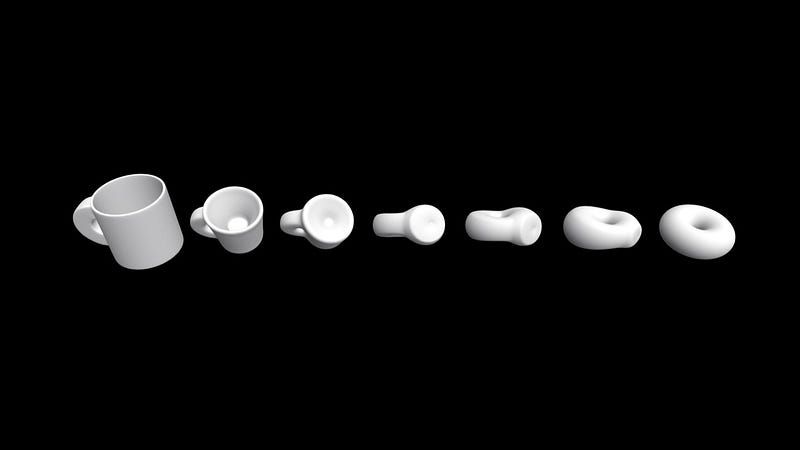
One of the key concepts in topology is the idea of a “topological invariant”, a property or characteristic that remains unchanged under these continuous transformations. This is where the Möbius strip becomes extremely significant. Its unique property of having only one side is a topological invariant. No matter how you stretch or bend a Möbius strip, it will always have one continuous side. This makes the Möbius strip a fascinating subject of study in topology, offering immense insights into the complex and fascinating world of mathematical shapes and forms.
Applications of Möbius Strip in Real Life
The Möbius strip is not just an intriguing mathematical model, but also a practical design that enhances efficiency in everyday objects. A prime example of this can be found in the hustle and bustle of airports, where the conveyor belts that transport our luggage are engineered as Möbius strips. This ingenious design ensures an even wear of the belt surface, thereby extending its lifespan. Similarly, the fan belts in cars are designed on the same principle. By adopting the Möbius strip’s one-sided design, the entire surface area of the fan belt comes into use, leading to uniform wear and tear. This not only prolongs the belt’s longevity but also enhances the overall efficiency and performance of the vehicle. This practical application underscores the significant influence the Möbius strip has on enhancing our daily lives, translating the abstract concept of infinity into tangible reality.
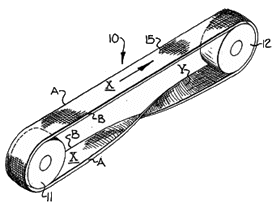
In the realm of audio technology, the Möbius strip has been notably applied in cassette tape recordings, specifically in endless loop cassette tapes. These tapes, which were particularly popular for use in answering machines and in-car players, were engineered to allow for a continuous playback without the need for manual flipping. This was achieved by the application of the Möbius strip concept to the tape design. The magnetic tape was given a 180-degree twist before connecting the ends, thereby forming a Möbius strip. This allowed the tape to be read on both sides, doubling the effective length of playtime while ensuring a seamless, uninterrupted audio experience. Here yet again, the Möbius strip’s principle of infinity proves instrumental in enhancing technological designs.
Möbius Strip in Art Form
However, the Möbius strip isn’t only confined to the realm of complex mathematics and sustainable practices; it has also found its way into the world of art. An intriguing representation of this mathematical object first made its appearance in the paintings of Maurits Cornelis Escher, a Dutch graphic artist renowned for his mathematically-inspired works. Escher’s art often played with concepts of infinity and paradoxes, and the Möbius strip proved to be a perfect subject for his explorations.
In one of his most celebrated works, “Möbius Strip II (Red Ants)”, an army of ants is depicted traversing the single, never-ending surface of the strip. This visual representation of an abstract mathematical concept not only demonstrates the crossover between mathematics and art but also challenges our perceptions, revealing the captivating and mind-bending possibilities that emerge when art and science intertwine.
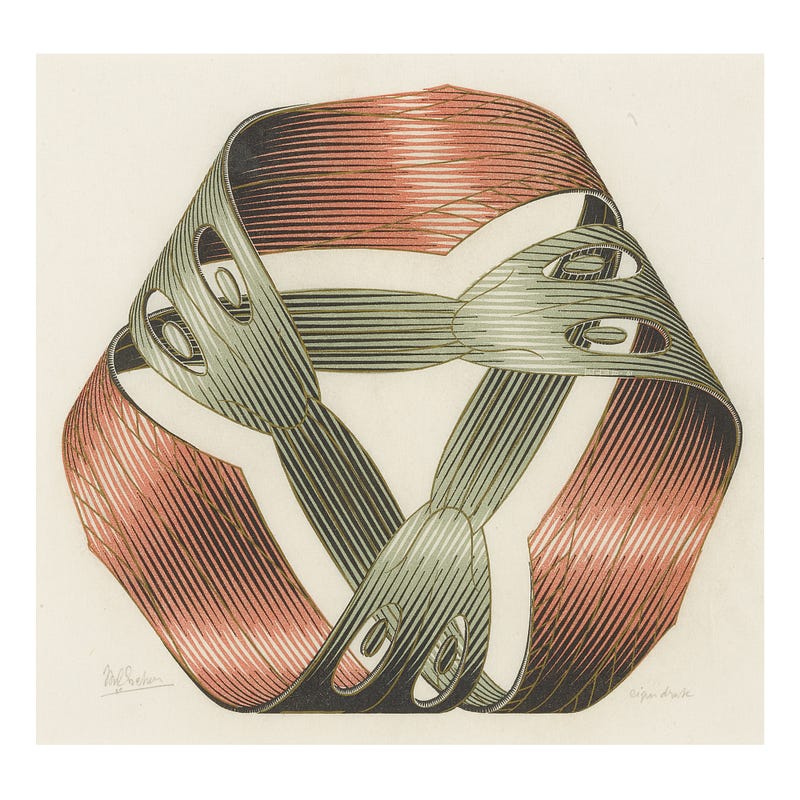
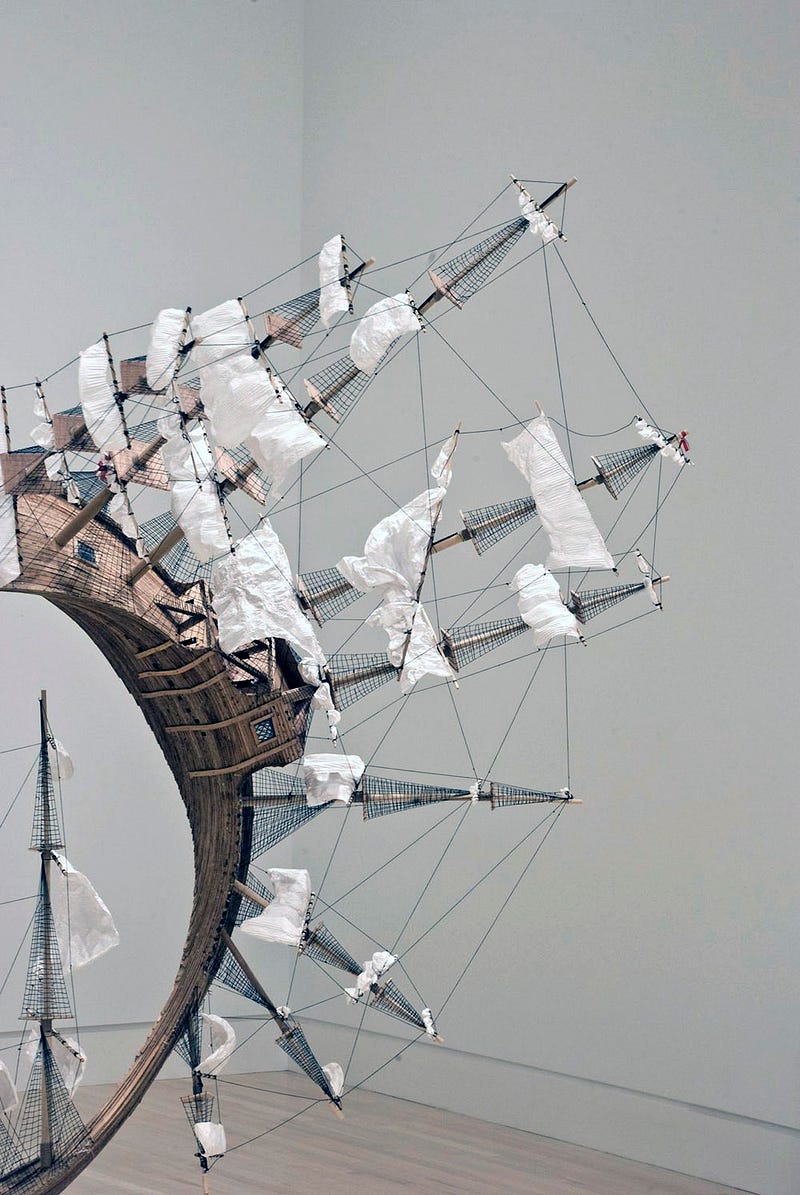
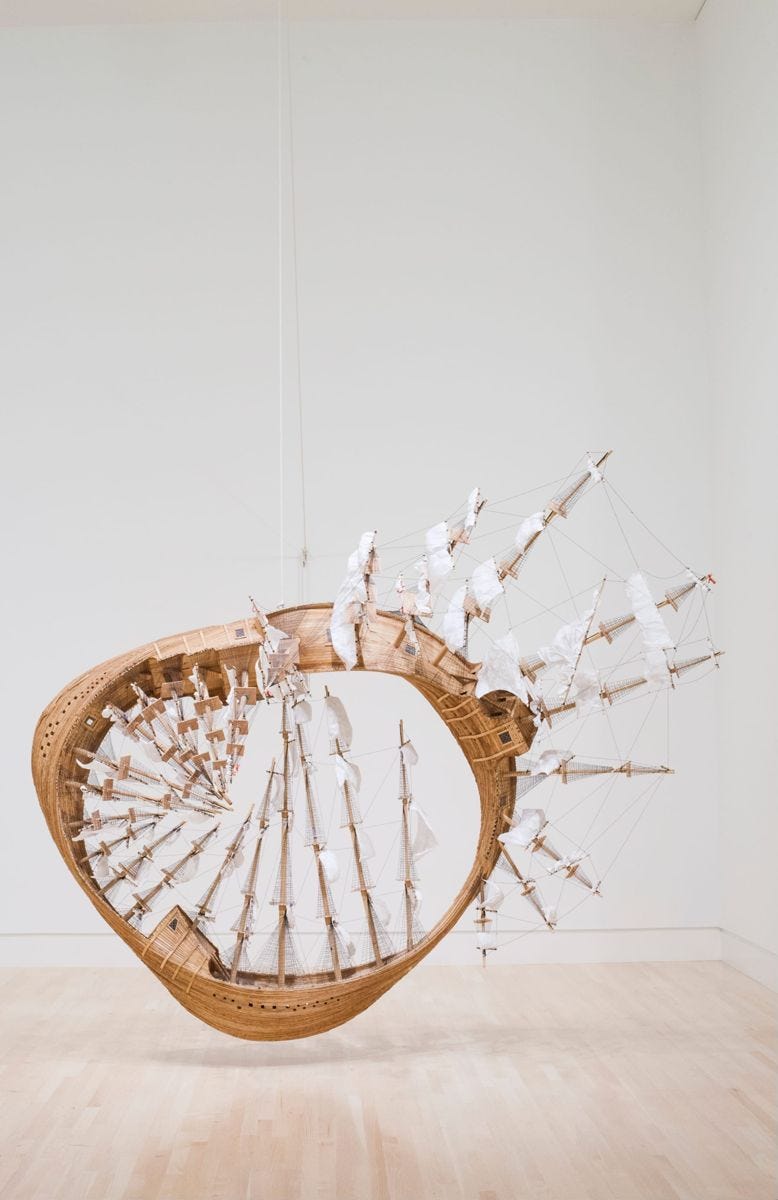
In 2006, an artist named Tim Hawkinson was profoundly inspired by the Möbius strip, leading him to create an exceptional wooden sculpture dubbed the “Möbius Ship”. This extraordinary sculpture curves in an endless loop, perfectly mirroring the unique properties of its namesake. Hawkinson constructed this 10-meter-wide masterpiece out of ordinary objects that most people would overlook — twist ties and packing materials. These humble elements came together to form a complex, intricate work of art, highlighting Hawkinson’s innovative thinking and the transformative power of creativity. This captivating Möbius Ship is on display at the Indianapolis Museum of Art and is a must-visit for anyone in the area. It serves as a compelling testament to the intriguing interplay of mathematics and art, and how abstract concepts can be brought to life in the most unexpected ways.
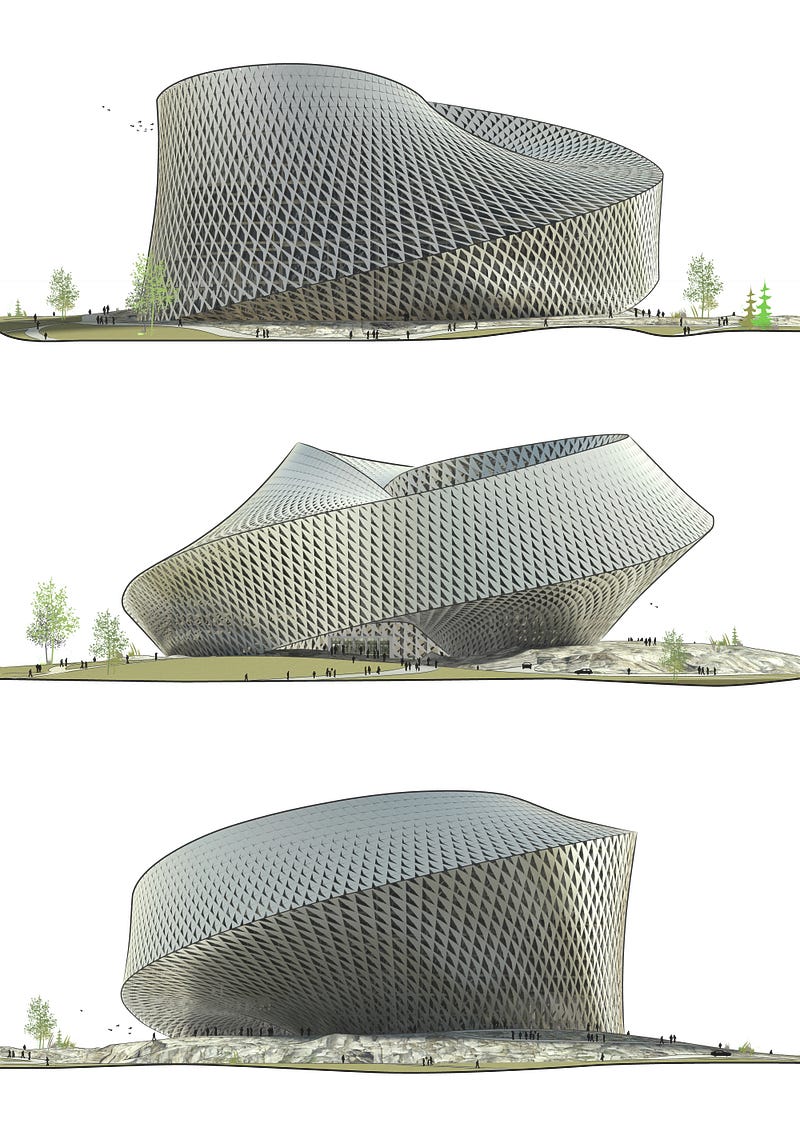
The influence of the Möbius strip has also reached the field of architecture, with one of the most notable examples being the National Library of Kazakhstan in Astana. Designed by the renowned Danish architectural practice, BIG (Bjarke Ingels Group), the library’s structure takes inspiration from the Möbius strip, creating a continuous loop of interior and exterior spaces seamlessly flowing into each other. This architectural marvel symbolizes the infinity of knowledge, a fitting manifestation for a library housing an extensive collection of the nation’s literature. The design was so exceptional that it won first prize in an international competition, further underscoring the pervasive impact of the Möbius strip, from the realms of art and mathematics to architecture.

Möbius Strip in Nature
In addition to its influence in art, mathematics, and architecture, the Möbius strip also makes a stunning appearance in nature.
The Möbius Arch, a remarkable natural formation found in the Alabama Hills of Inyo County, California, is another fascinating instance of the Möbius strip being mirrored in nature. This spectacular rock outcropping, a major tourist attraction, embodies the signature twist of the Möbius strip, seemingly defying the norms of conventional geometry.

One of its most intriguing features is its window-like aperture, which artfully frames the vista of Mount Whitney, the tallest summit in the contiguous United States. This breathtaking alignment adds a unique dimension to the panoramic landscape, creating a harmonious blend of mathematical wonder and natural beauty. This geographical marvel is a testament to the omnipresent influence of the Möbius strip, demonstrating its grandeur not only in the abstract world of mathematics and art, but also in the tangible world around us.
Note 1: Beyond Euclid! is my weekly newsletter that brings you only high-quality math and science stuff to ensure you are having a good week. Please do yourself a favor by subscribing to Beyond Euclid and enjoy it! And if you can be a member and support my work, that would be awesome! Thank you!
Note 2: I get commissions for purchases made through links in this post.