India’s Success Against the Third Wave and The Return to Normalcy
Third Wave in India, Omicron, Vaccines, Hospitalisation, Etc.
India has successfully fought and won against the third wave. On 31st January, PM Narendra Modi announced that India’s fight against the third wave is a success. This will prompt us to have a question in our mind, what did India do remarkably, how did India deal with the issue much better than the US which saw over 1 million cases being reported every day.
Read about India before the Third Wave
The Omicron-led Third Wave
India’s peak in the third wave was 317,000 while during the second wave was 450,000 around. This is also at a time when Omicron which has caused the third wave, has higher transmissibility and infection rate. The chances of asymptomatic cases may also be true. India in the same period had started unveiling booster doses, even if it was late. It is also possible that a very large population is not getting tested and had ignored the infection.
Another big achievement for India is the emergency approval of the Covaxin vaccine to be used for children 15–17 age group. India also surpassed the goal of 75% vaccination of the adult population which indeed is a remarkable achievement. In the third wave, we can see the centre and state being more proactive and better coordinated in their approach.
Return to normalcy
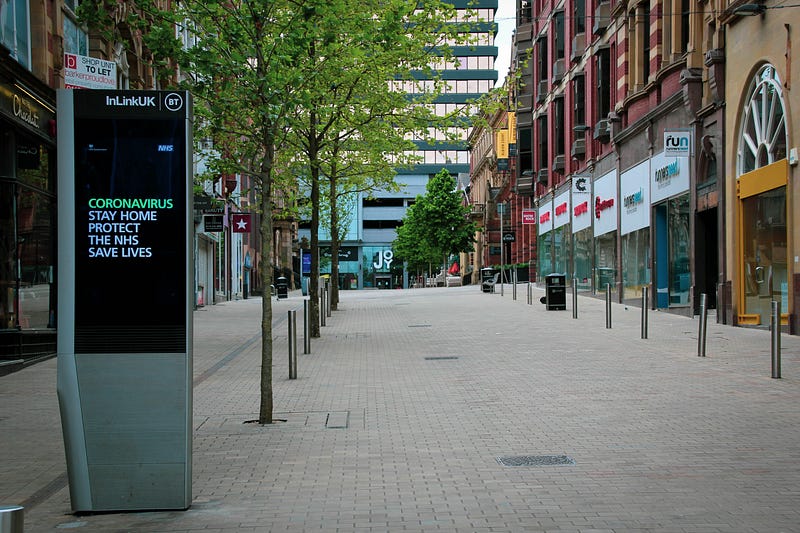
India after two years revoked the National Disaster Management Act of 2005 for imposing pandemic based restrictions. It was invoked on 23rd March 2020 and on the same day, two years later it was revoked. The govt. said that all the restrictions will end on 31st March 2022. Thus we can see the country return to normalcy although the mask mandate hasn’t been evoked, rather it has been made only been decriminalised for not wearing it.
The National Disaster Management Authority had recommended the discontinuation of the invocation of the Act to the Centre since the pandemic situation is under control in the country.- FirstPost.
Through this act, India was successfully able to test, monitor, survey, treat and also distribute vaccines more effectively.
On 27 March, the country was open for International Commercial flights. Several Indian states- Delhi, Maharastra, Telangana etc. have made facemasks optional. Even then all health agencies have repeatedly suggested that the wearing of masks shouldn’t optional but rather continued. More states might come forward and try to relax the rules in future.
Kerala- A third wave exception
Unlike India in the picture, the state of Kerala saw its peak when the national-level cases were coming down heavily. The state reported close to 55,000 cases per day which by itself is a record. Kerala still continued to report a large number of cases even when nationwide case numbers were dropping.
Just two months back the case count was so high that the neighbouring state of Karnataka had imposed RTPCR checking for all people entering Karnataka from Kerala. With the present numbers, Kerala is fully vaccinated for the age of 18 and above. Unlike the second wave, the third wave was more destructive in Southern states than in northern states. Unlike other states, Kerala saw a mix of both delta and omicron variants.
The CM was not in the state during this period, he was in the USA for treatment and also spent a week in Dubai. Exams were planned to be connected which were later postponed due to protests. Restrictions for funerals and wedding functions were planned when CPIM’s district-level conventions were being held across the state. This led to massive backlash from the people as well as the opposition and the media.
Curious case- Why didn’t Kerala get into Lockdown? It is not a curious case that Kerala had the most number of cases, but the fact that a state which was very much ahead in imposing lockdown didn’t lockdown this time. The health minister also made a statement that there won’t be a complete lockdown.
Lockdown just got restricted to Sunday curfew and schools and colleges staying closed. So the main reasons could be that Kerala now thinks it should focus more on the economy and stabilise the normal lives of people. Post the second wave, there were massive criticisms against the government for continuing with the lockdown and for shops not being allowed to open. This had upset a lot of shopkeepers and shop owner unions, These are the people who turn out for the ruling LDF in large numbers. So there is no way the govt could have politically angered them.
Primarily, Kerala’s hospitalisation rate despite the high number of cases was less than 3% and the death rate was only 0.5%. so the govt. could take a risk in prioritising resources for the economy. As of now, we are in the second half of February and per day cases have fallen to around 10,000 only. In March it was well below 500. During the second wave, Kerala’s lockdown had prompted the formation of clusters across the state and unimmunised people were affected the most.
It was only four weeks back, that Kerala’s Case Fatality Rate crosses 1%. Upon post reopening of the state, there has been increasing in tourists from Karnataka. This will boost the economy through the revenge spending phenomenon that is seen across the globe.
That was the context when Prime Minister Modi announced in late January that India is fighting omicron led the third wave with great success.
Is COVID-19 still there?
Yes, COVID is still very much active and spreading across the globe. China and South Korea are seeing a massive surge in cases. Shanghai is under lockdown. Even Hong Kong is slowly seeing some challenges. China’s zero covid policy post-Winter Olympics has failed. South Korea is seeing its worst-ever tally to date. Vietnam is another South Eastern state with a lot of new cases being reported.
Europe is seeing its fourth wave, with Germany and France seeing a new wave of cases. The good thing is that the US and (Western) Europe are ahead in vaccination. The new XE strain of Omicron was found in the UK that has very high transmissibility. In a globalised world, this strain can easily become the dominant one in no time. Although we can see globally threat perception of COVID-19 has significantly come down.
Being vigilant and not declaring victory is the best thing to do right now. Everything is not over, but we have a gap not to pack up everything but for preventing our past mistakes and plan out things in a much better way.
Future
Vaccination should have done the magic, or else it would have more hard for people and also be a threat to public health. We can also see how the developed nations saw a record number of cases each day. There are multiple anti-vaccine protests, anti-mandate protests and a lot more. These have all resulted in cases being spurting again and again in the west. Getting vaccinated is the best way to counter the disease and get out of this pandemic.
India’s fight against the third wave has been a success and an important case study to learn about as well as it is important to learn it for politics, vaccine diplomacy, geopolitics as well as public policy. India is also at the forefront of providing booster doses as well as vaccinating children. Only if we are able to do them both together we can successfully emerge victoriously.
Also read
If you enjoy my content and find it informative, do support me at Buy Me a Coffee. My membership is only $1 per month, which means a lot to me and helps me present the best of the article. If you’re financially capable and willing to support me, please consider taking my membership, means a lot.
I have started a Telegram Channel which will contain the record of all my articles. Follow my blog for behind-the-scenes and informative content. Do join my medium mailing list.
Join Medium through my referral link, which will give you access to tons of articles.


