
India: The Romance of Agra
The Taj Mahal, a symbol of love with deadly consequences
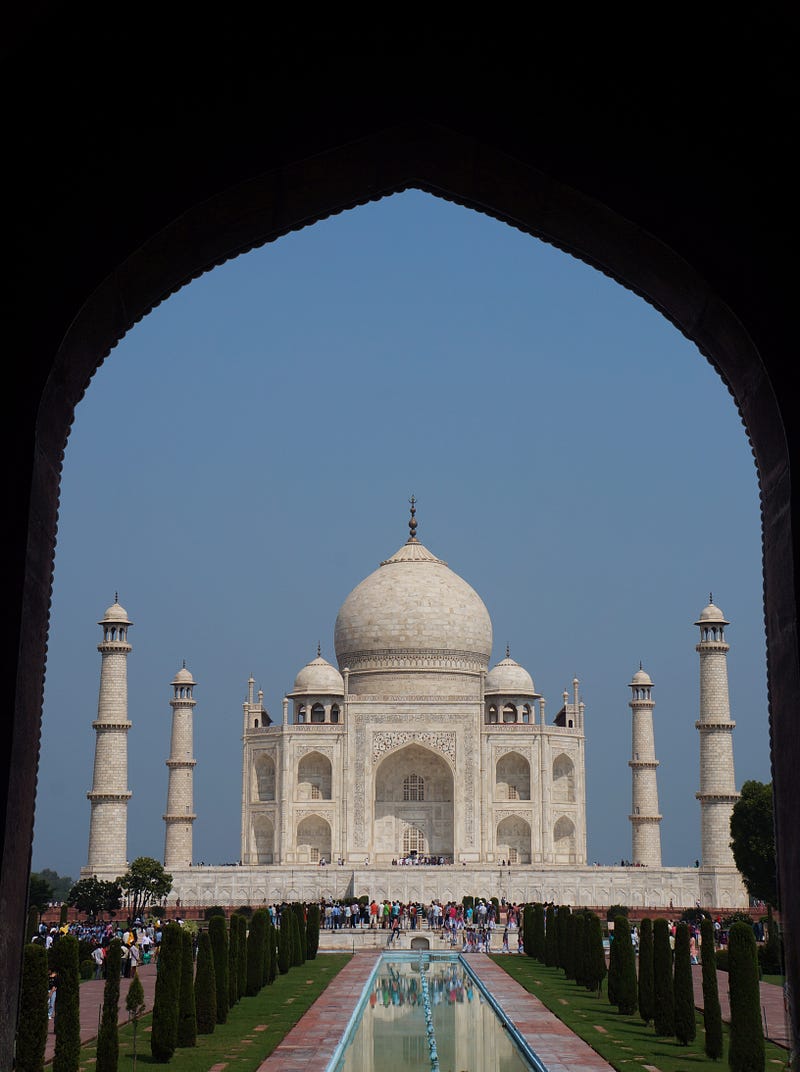
Navigating romantic love has been a persistent challenge in my life, marked by a string of broken relationships that consistently fall short of my expectations. Regardless of their diverse backgrounds, they tend to swing between extremes – either too uncommitted or too clingy, too unreliable or too safe.
Acknowledging that my romantic ideals draw inspiration from romantic comedies, I’ve come to realise that my standards are set unrealistically high. I admit, I can be a bit demanding and somewhat selective.
Likely it’s because, my parents, who were devoted to each other for over 60 years until the very end, set a powerful example. I yearn for a love that mirrors theirs, which is why I’m selective about giving my heart 100% – once committed, it’s for life, with no room for divorce.
As I grapple with the fading notion of romance, we embarked on a journey to witness the world’s greatest symbol of love – The Taj Mahal, shrouded in the dim light of an unearthly hour for our early train.
To us over melodramatic romanticists, this architectural marvel epitomises the greatest love story ever told, a testament to the enduring power of profound and genuine love – the tale of Shah Jahan and Mumtaz.
Shah Jahan first laid eyes on Mumtaz at a marketplace and was utterly enchanted. They fell in love, and five years later, in 1612, they tied the knot. However, 19 years after that joyful day, in 1631, Mumtaz tragically passed away while giving birth to their 14th child. It was her memory that inspired Shah Jahan to build this magnificent monument as a tribute to her.
Our driver, a young lad who looked like he’d recently graduated from the playground, weaved through the chaotic Delhi traffic with the skill of a seasoned F1 racer. We darted in and out of what could generously be called “lanes” and occasionally flirted with the “wrong” side of the road in a desperate bid to make our train.
In the end, we arrived at New Delhi Railway Station with time to spare, but the scene outside was pure mayhem – a tangle of tuk-tuks, rickshaws, cars, and buses blocked any sense of order.
Inside the station, the sight was nothing short of surreal. Bodies covered with blankets lay scattered everywhere. It was a stark reminder of how fortune and misfortune danced hand in hand in this part of the world.
After a quick bag scan and the customary body search (a Delhi rite of passage), we were en route to Agra.
Train journeys in India unfold as their own unique adventure, and our tickets brought an unexpected touch of hospitality – complimentary water, morning tea, and breakfast served with finesse by a young lad who showcased an impressive talent for balancing multiple trays on his head.
Morning tea materialised in a vibrant red flask, its cleanliness a matter I tactfully chose to overlook as I poured myself a much-needed cup of tea. Breakfast featured spicy vegetable croquettes paired with two slices of white bread.
But during one of our brief stops, an unexpected fragrance infiltrated our carriage bringing on an olfactory shock and a chorus of retching from our group. Breakfast was left untouched.
Our first destination – the Amar Hotel – beckoned, serving as the rendezvous point with our guide for the day. And what an extraordinary day it promised to be. After all, it’s not every day that you can say, “I’m going to the Taj Mahal!”
Our guide, Anil, made his grand introduction. It seemed the enchanting love stories of the Taj Mahal had left their mark on him. He presented himself with a touch of Romeo-esque / Bollywood flair, with slicked-back hair, paired with sunglasses and a white suit.
Anil, began narrating the Taj Mahal’s history during the drive from our hotel, but my exhaustion left me only half-listening, capturing only fragments of information. “The monument was constructed from white marble imported from all over India and central Asia…”
We arrived at the parking area, where a horde of eager souvenir sellers descended upon us. Anil advised us to keep walking, as these merchants were known to employ tricks of distraction while pilfering unsuspecting tourists.
We pushed through to the ticket office, paying 250 rupees each and surrendering any forbidden items – lighters, cigarettes, and even edible treats.
In return, we received shoe covers and a complimentary bottle of water, a small sacrifice to preserve the Taj Mahal’s pristine beauty.
To shield the monument from pollution, electric cars and horse-drawn carriages served as the chosen means to transport visitors to the entrance. We hopped into our awaiting vehicle, embarking on a short drive that would bring us to the red sandstone boundary wall.
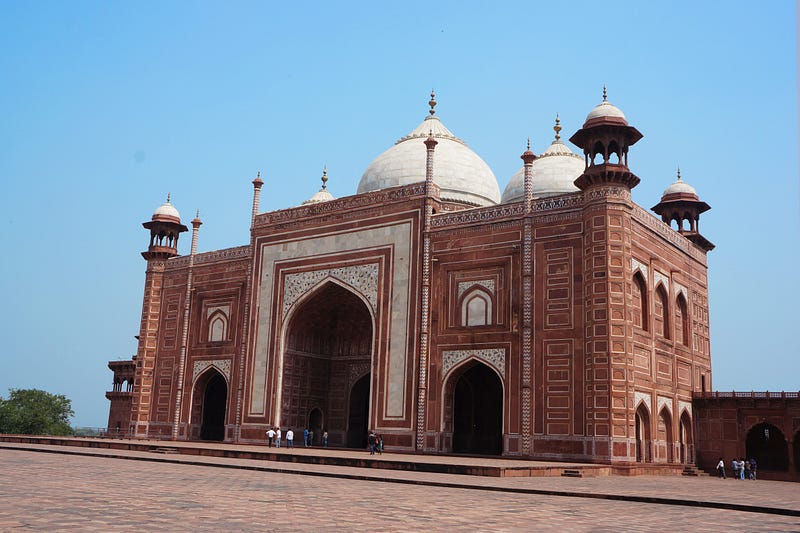
As we approached, Anil halted us just outside the archway of the gatehouse, launching into another recitation of facts and figures. “Twenty-two minarets adorn the gateway, symbolising the years it took to build the Taj Mahal…”
We struggled to contain our excitement, yearning for the moment when we could feast our eyes on its splendour. The place was already abuzz with tourists, and the window of opportunity for capturing that perfect photo without a crowd had long closed since the break of dawn.
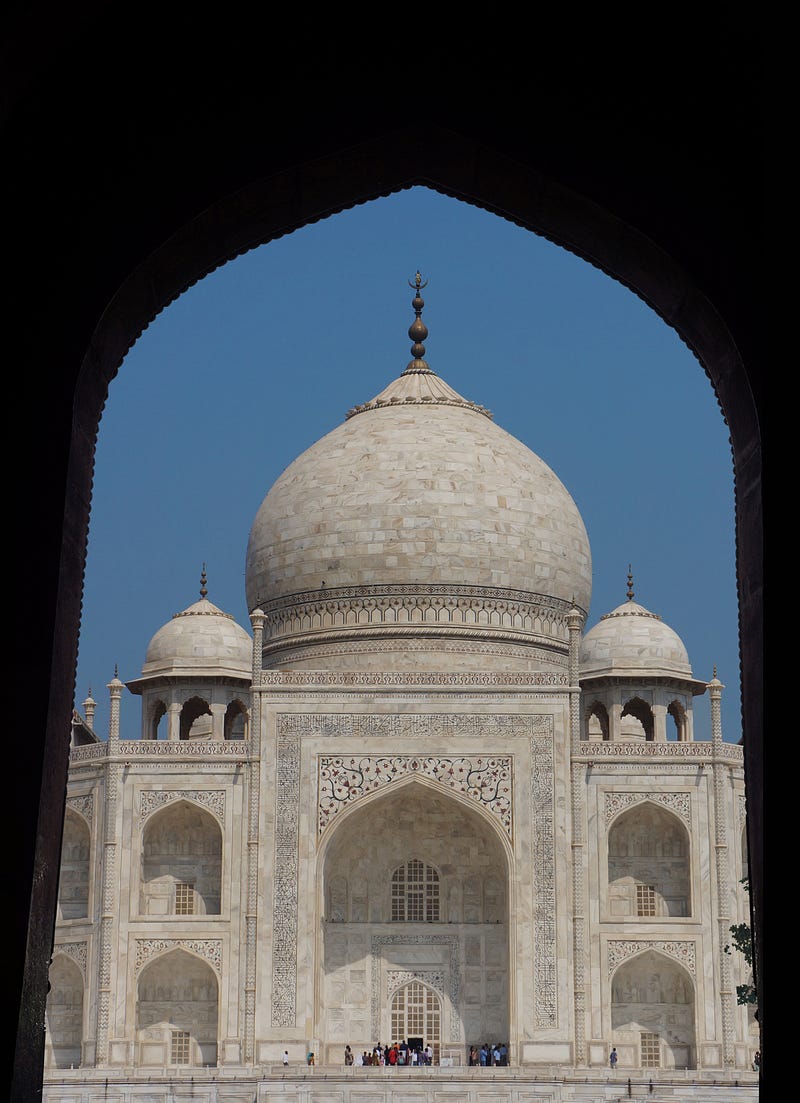
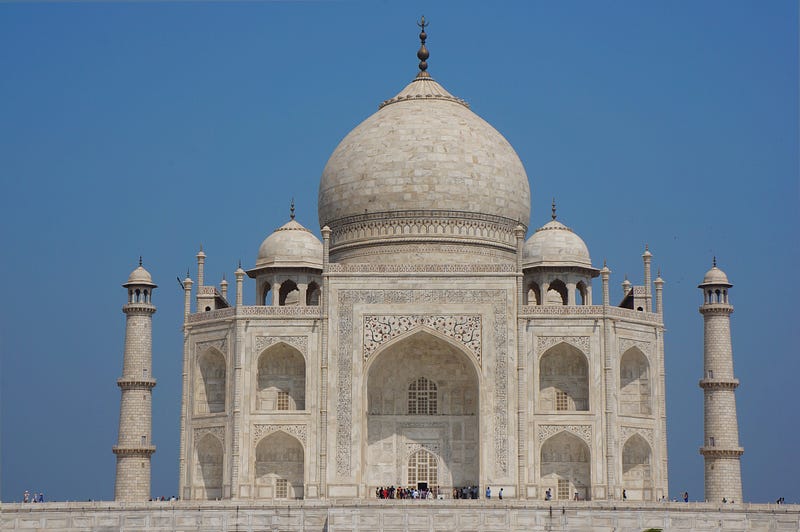
Finally, Anil guided us through the archway, and there she stood – radiant and ethereal, gleaming in all her glory.
As an aficionado of architecture and design, I could appreciate every painstaking detail, every carved arch, every exquisite piece of marble, every floral motif. The flawless beauty she possessed was undoubtedly worthy of her prestigious UNESCO World Heritage status, a testament to the enduring legacy of human craftsmanship.
It was a shame the presence of throngs of tourists dampened the enchanting atmosphere around us. They were engrossed in taking selfies and striking poses as if reaching out to touch the tip of the Taj.
I could empathize with my brother-in-law’s decision to change his proposal location at the last minute when he and my sister were here many years ago.
Apparently my sister, unimpressed with the location, bluntly quipped, “Is this it?!”
Little did she know, he discreetly stowed an engagement ring away, sensing it wasn’t the right moment after all.
Perhaps it was a sign of the times — ‘romance is dead’ as they say. Instagram reigns supreme. The Taj Mahal, once a sanctuary for love, now witnesses a more superficial connection — an iconic backdrop for a digital narrative rather than a sacred space for genuine emotions!
Although Anil didn’t seem to lose his grasp of romance. Spotting the absence of a wedding ring, he developed a liking for me, showering me with constant compliments. If this was the start of a love story, it was hardly as enchanting as Shah Jahan and Mumtaz’s.
“Are you single?” he inquired, causing some amusement among our group. His inquiries continued in rapid succession. “Do you drink? Smoke? Like curry? Have an email address?”
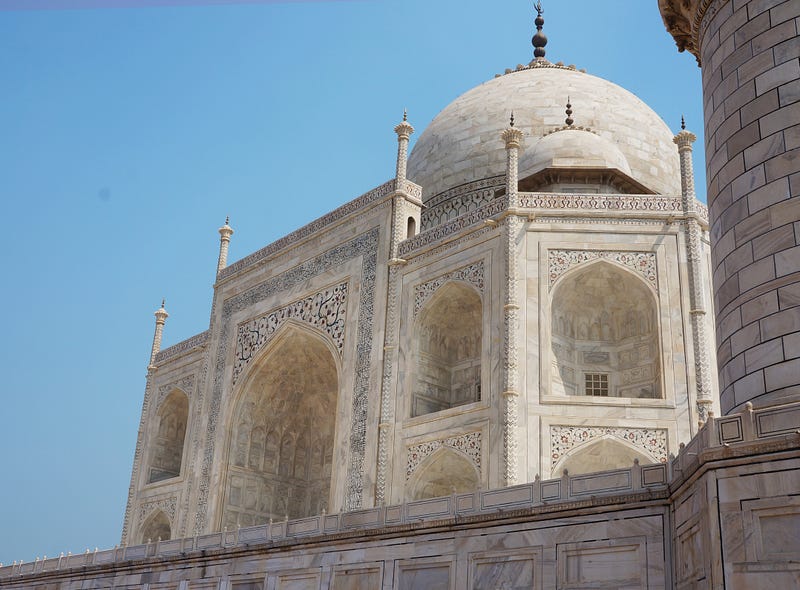
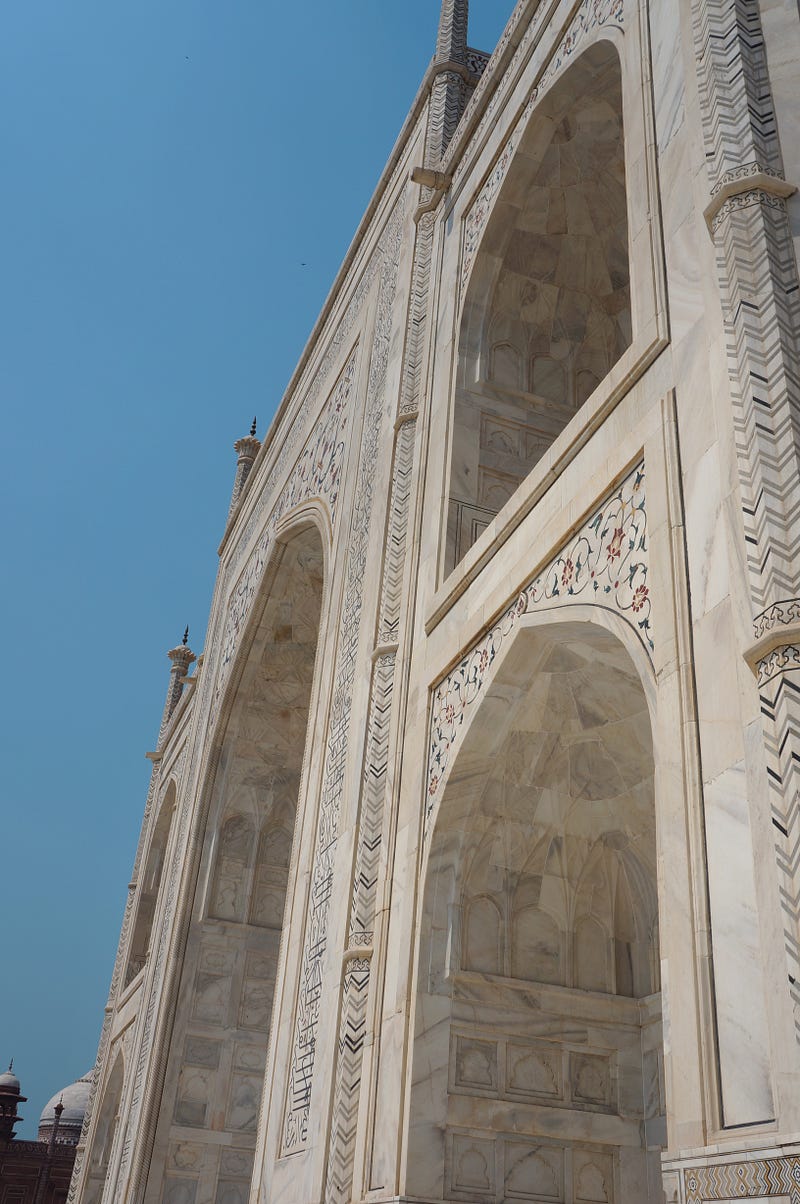
Inside the Taj Mahal, cenotaphs in honour of Mumtaz Mahal and Shah Jahan graced an eight-sided chamber adorned with pietra dura, an intricate inlay of semi-precious stones, and a marble lattice screen.
These cenotaphs were empty, serving only as symbols of the entombed. The actual resting place of Shah Jahan and his beloved wife lay beneath, in a lower chamber.
Anil, back to business, continued to unfold the layers of history, revealing that the construction of the Taj Mahal was a colossal undertaking.
It took a staggering 22 years to complete and was no small feat. Masons, stonecutters, marble inlayers, carvers, calligraphers, dome builders, and other artisans were recruited from all over India and Asia – a workforce that included an astonishing 22,000 labourers and 1,000 elephants.
With a dramatic flourish, Anil unveiled that amidst the romantic intentions of the Taj Mahal, there lurked a darker chapter in its history – a tale of ambition, power, and the ruthless pursuit of perfection.
Behind the gleaming white marble facades lay the untold brutal stories of sweat and sacrifice that brought Shah Jahan’s vision to life. Thousands of labourers and artisans faced grueling conditions, with many losing their lives during the prolonged construction. For the ones who survived, hands were severed ensuring that they could never replicate such a masterpiece elsewhere.
Anil’s narrative left me utterly gobsmacked. The Taj Mahal, initially to me, a symbol of love, ended up being a huge disappointment.
Shah was a man consumed by obsession – not so much with Mumtaz, but with his relentless commitment to his building project. His ego seemed to be bigger than his love, overshadowing the very essence of the monument that was meant to be a tribute to their profound connection.
Shah Jahan bore the consequences of his actions as the extravagant expense of building the Taj Mahal likely contributed to his eventual overthrow by his own son. Ironically, he found himself under house arrest at Agra Fort, with a view of the magnificent monument he had created.
It’s said that Shah Jahan passed away on a beautiful marble balcony, where he spent hours gazing at the memory of his cherished wife.
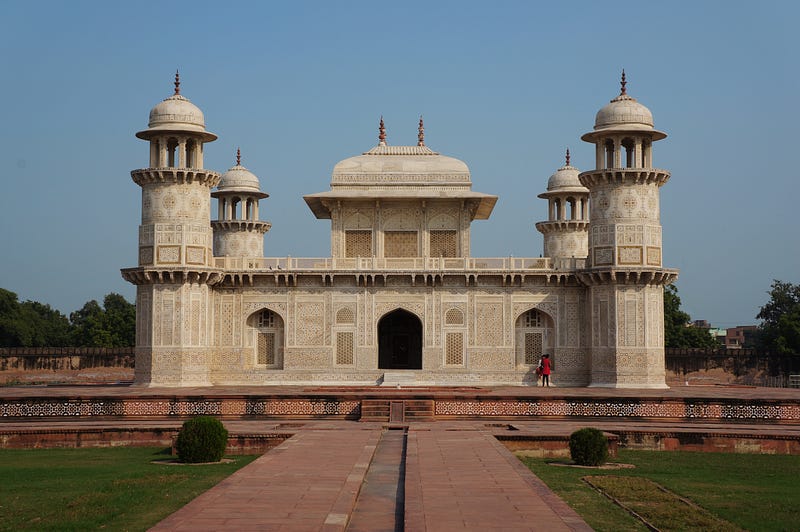
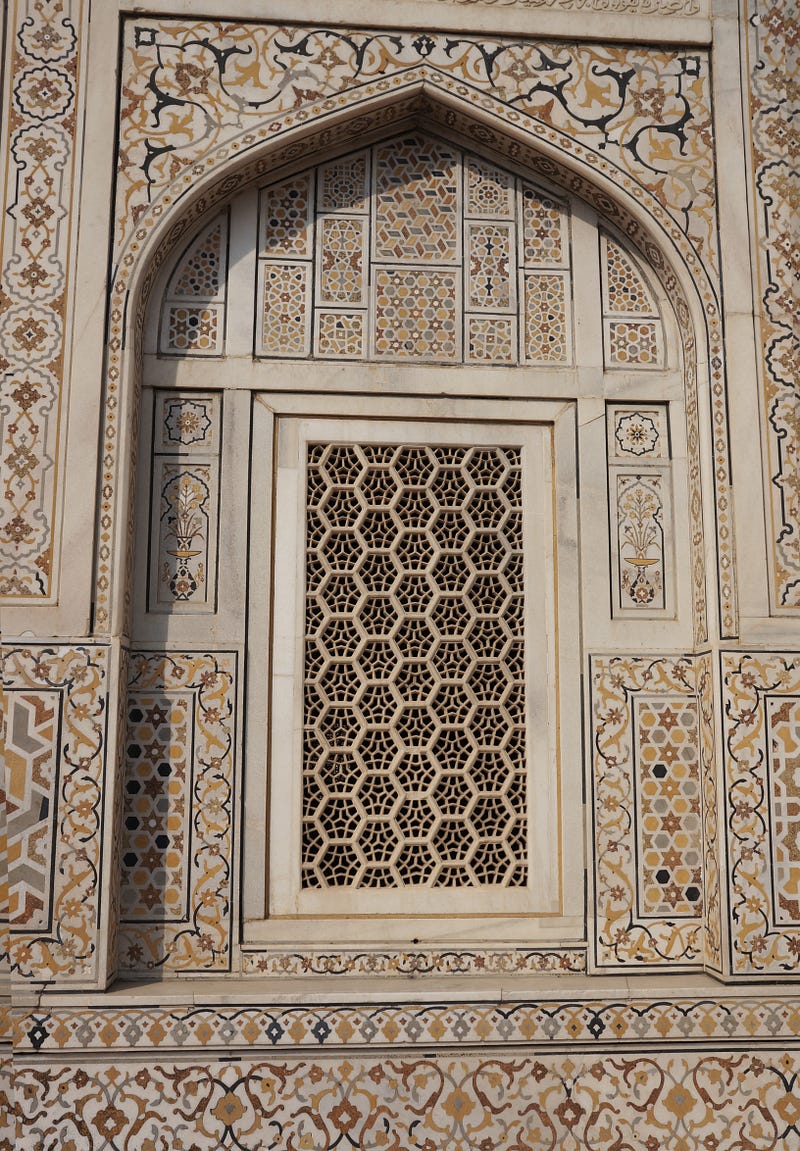
Our return journey unfolded in the charm of a horse-drawn carriage – white horses to match with the Taj Mahal.
Anil, with eager anticipation, raced to claim the seat beside me. He really fancied himself as my Prince Charming, taking my hand and kissing it.
No longer the world’s most prominent symbol of love, I lost any sense of romance, and his proposal went unrequited.
As I stole one last glance at the Taj Mahal, I wondered what Mumtaz would have thought of her husband’s exploits? Whether she would have been swept up in the romance of the grand gesture or sickened by the murderous consequences it brought.
Most of all I was curious about unlocking the mystery of Mumtaz’s enchantment, the powerful force that fueled such an extraordinary love.
My curiosity wasn’t just idle; I sought to unveil the mystery behind her profound secret for my own purpose!