
Incredible Benefits of Bitter Melon: It’s Much More Than A Strange Looking Fruit
It is said to be good for diabetes, high blood pressure, cancer, and much more
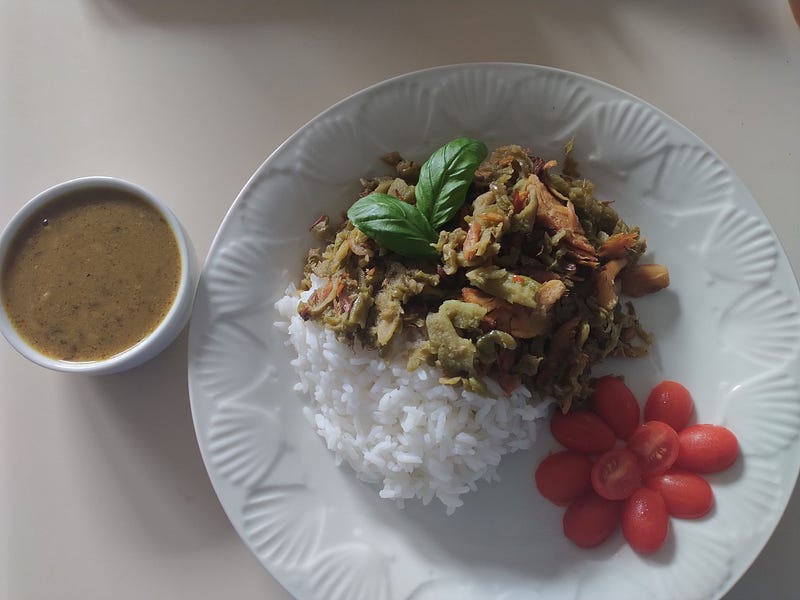
Stewed bitter melon with rice and dahl
Yesterday, in preparation for this post, my mother cooked karela.
Though I have eaten it numerous times since childhood, I have never cooked it for myself. No particular reason why.
I only eat it when it is prepared by my mother or one of my aunts.
I do know how to prepare it and I will have to cook it for myself someday. But happily, that day is not today.
We simply prepared this dish with dried shrimps, salted fish, and bits of some smoked salmon I had left over.
It was delicious!
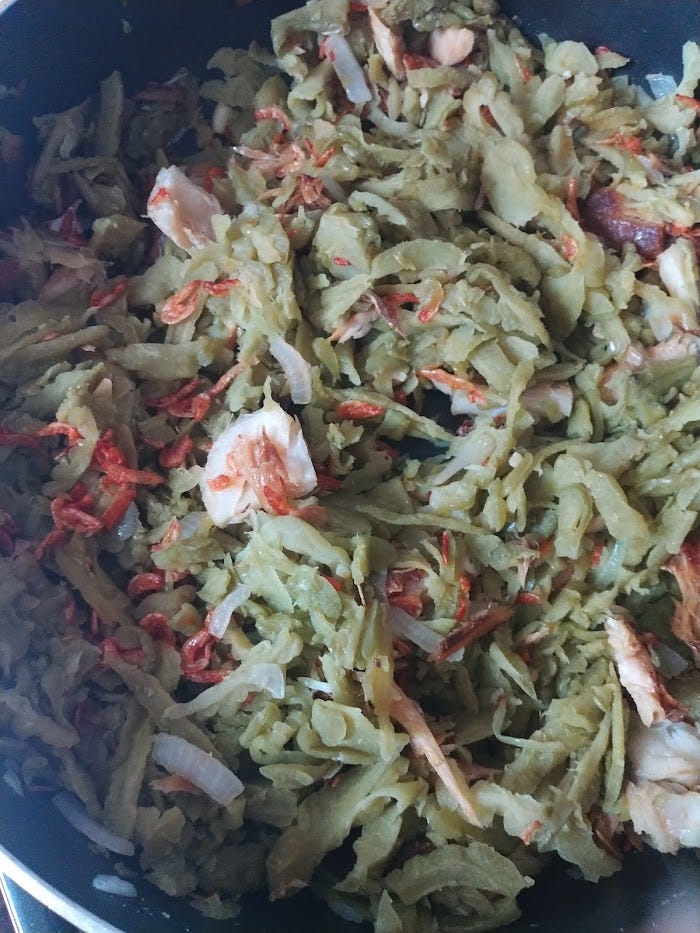
A familiar taste
Karela was a staple of my childhood.
Though I could not appreciate its goodness until much later in life. Back then I was not a fan of the taste.
It is bitter!
But whenever my grandma cooked bitter melon or, anything else for that matter, you ate it without question.
There was no room for argument.
Bitter melon grew in abundance during my young years. There were several empty lots around the home I grew up in and karela grew aplenty. One side of the fence to our yard was always littered with the gourd.
Now I travel miles to the Asian markets to find it. It is expensive and the last two times I traveled seeking it out, to my shock, there were none on the shelves.
It has been gaining in popularity of late and as such, I cannot find it at the usual spots.
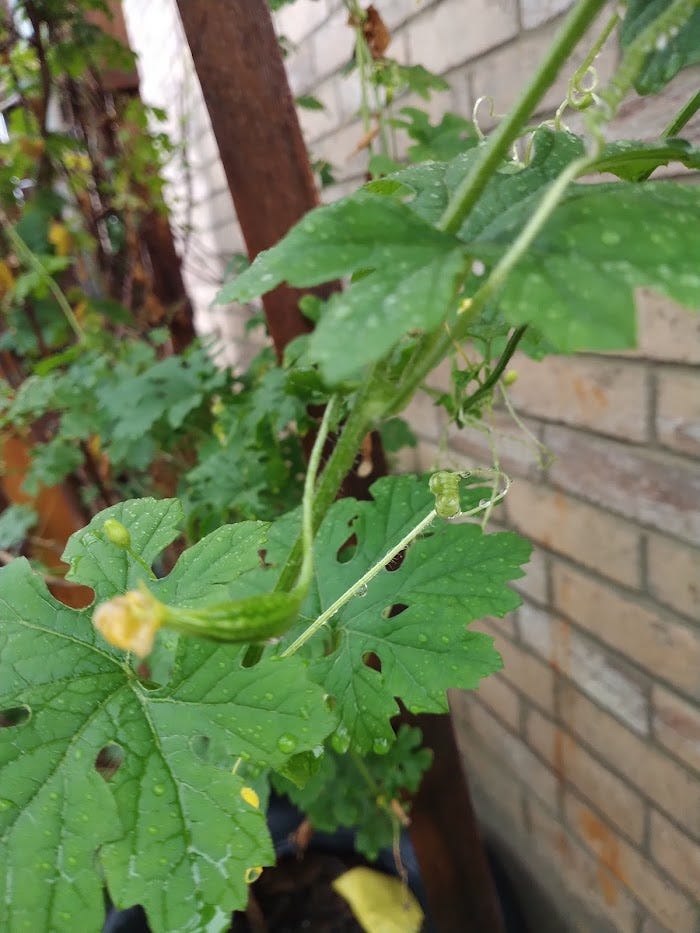
We grow several varieties each year, but the drought was brutal on the tiny fruits, all dried on the vine.
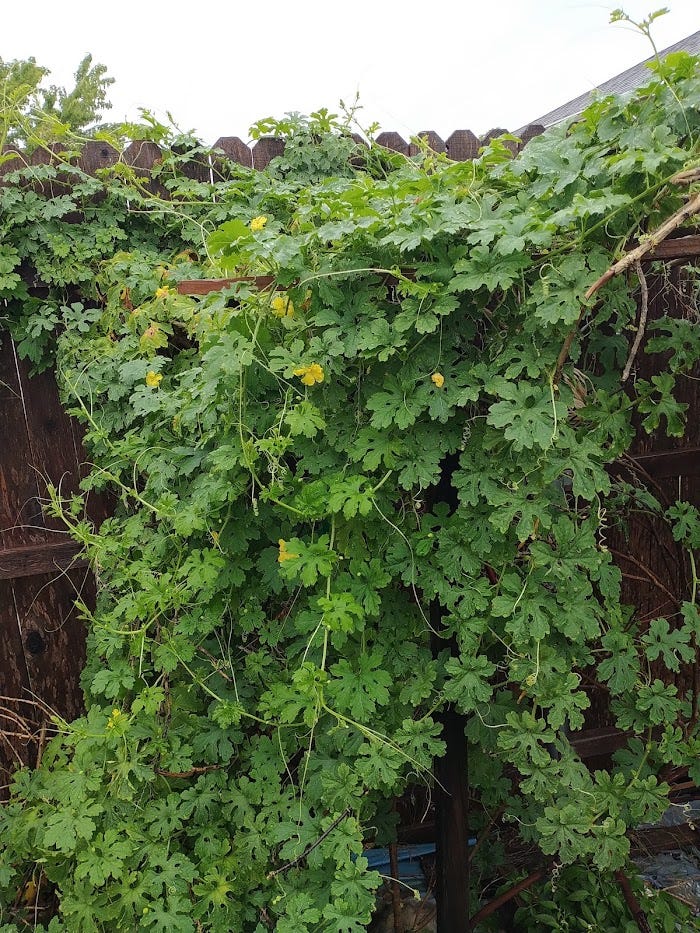
The vine kept reproducing
Back home no one ever actively planted the karela (bitter melon), it was as perennial as the grass around. It was just always there.
Here we have to actively cultivate and care for it.
The ripe vegetables would shed their seeds. These seeds would be scattered one way or another, so an effortless truce was in place. Whatever the case, karela was always in abundance.
My mother, God bless her, loves to drink the juice of bitter melon, and she does so almost every day. She would steam the vegetable before cooking, squeeze the bitter melon out, and save the juice for drinking. (My brother recently learned of the health benefits and he and I have begun drinking it, I had some this morning.)
The folks from my world were almost never ill, they died in a good old age with all their working parts.
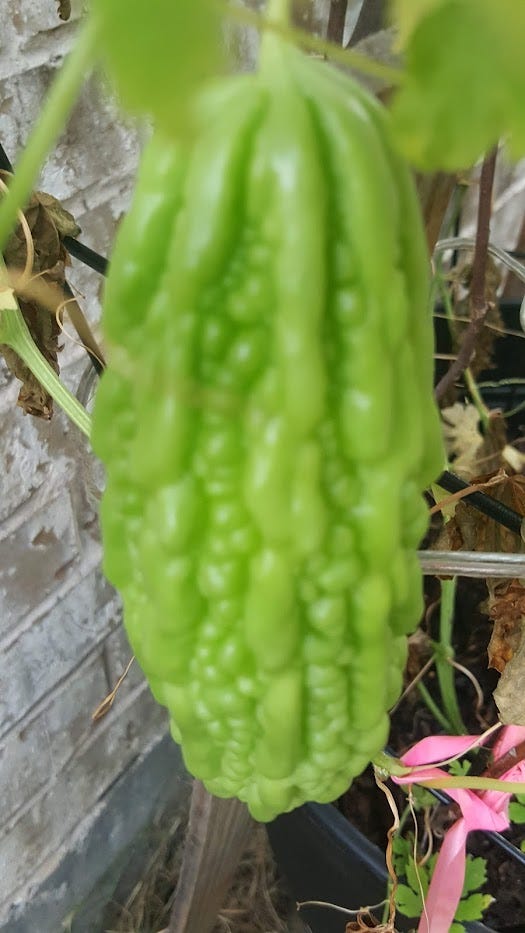
Bitter Melon
Bitter melon is an interesting fruit, it grows on a climbing shrub and is found in many parts of the world. The fruit is also found in tropical South America, Asia, East Africa, and the West Indies.
It is from a family known as Cucurbitaceae (bitter properties), scientifically called Momordica charantia. Karela has several known species.
Though bitter melon is a fruit, it is utilized as a vegetable in many parts of the world. It is also used as a traditional medicinal plant for the treatment of various diseases in Bangladesh as well as other developing countries like Brazil, China, Colombia, Cuba, Ghana, Haiti, India Mexico, Malaya, Nicaragua, Panama, and Peru.
Composition of bitter melon
Perhaps its most common traditional use is in the treatment of diabetes. Other diseases bitter melon is used to treat are; dysmenorrhea, eczema, emmenagogue (stimulate blood flow to the pelvis), galactagogue (promote lactation), gout, jaundice, kidney stone, leprosy, leucorrhea, piles, pneumonia, psoriasis, rheumatism, and scabies.
Momordica charantia is also documented to possess abortifacient, anthelmintic, contraceptive, antimalarial, and laxative properties.
Bitter melon extracts are effective against cancer and were found to be effective in the treatment of ulcers, pain and inflammation, psoriasis, dyslipidemia, and hypertension.
Momordica charantia contains biologically active chemical compounds such as glycosides, saponins, alkaloids, fixed oils, triterpenes, proteins, and steroids. Several other biologically active chemical constituents have so far been isolated from different parts of the plant, including the leaves, fruit pulp, and seeds.
The immature fruits are also a great source of vitamin C, vitamin A, phosphorus, and iron, and contain insulin-like properties.
Bitter melon:
- Aids in the reduction of body fats.
- Increases insulin secretion and prevents insulin-producing cells from damage
- Inhibits the increase of blood glucose levels.
- Decreases liver inflammation (prevents fatty liver).
- Shows promise as an antioxidant.
- Said to have anti-infective properties.
- It helps fight against cancer.
The bitter fruit contains many essential vitamins and minerals, namely:
- Carbs
- Fiber
- Vitamin C
- Vitamin A
- Folate
- Potassium
- Zinc
- Iron
How the bitter gourd may be prepared
I am familiar with bitter melon sliced thin then prepared and fried with or without various types of meat then eaten with rice or roti. Another way is to have it stuffed with meats or vegetables.
You may make tea with the actual fruit or the leaves.
When ripe the bitter melon takes on an orange color and becomes quite sweet. The ripened fruit may also be used in many different ways including to make a drink that is quite delicious.
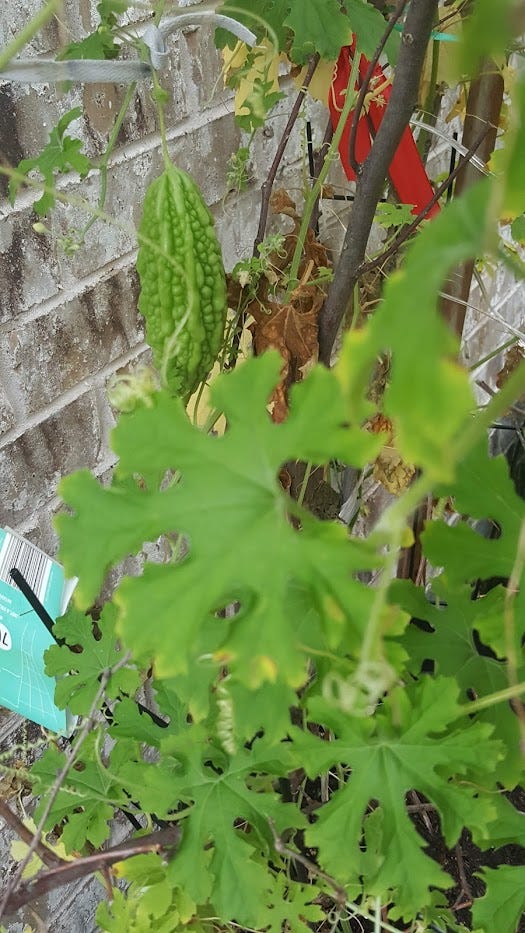
Older and wiser
As I matured and became a healthcare professional I would wonder about my childhood and the health of the older population versus the sickness I see in this world of excess. I am in a unique position to observe the ills that plague the population old and young.
I began looking into the foods and activities I grew up with to see where some benefits may lie.
Now I will be the first person to tell you that bitter taste is an acquired one. But once you learn to appreciate its many splendors, you hardly notice the taste.
So, think of the health benefits as you partake of the fruit and reach forward to your never-ending quest for optimum health.
Stay curious, stay safe, be kind.
References
Journey with me on social media, I seek to grow my presence on Pinterest | NewsBreak| Twitter | Instagram. I thank you, drop your handles and I will follow you back.
Pene Hodge is a mom, a nurse, a writer. She writes because she must. She loves people and is committed to sharing and gleaning knowledge for the betterment of all.


