
Incomplete City: Stratford Edition
Year 9s at a London school adopt and adapt the Incomplete City method to create their alternative utopia
The Internet has taken a severe kicking in over the last year, and quite rightly. I’ve more or less given up almost all social media, for what it’s worth, and am severely limiting how much time I waste on the thing in general. Yet a recent email from Tamar Shafrir reinforced the value in the medium’s basic, original and now almost old-fashioned ability to connect ideas and people, and why I continue to use it to document and share work and thoughts some 17 years on. I’d described what happened in a recent studio, and deliberately outlined the method in detail, partially so that others might borrow it. Which they did…
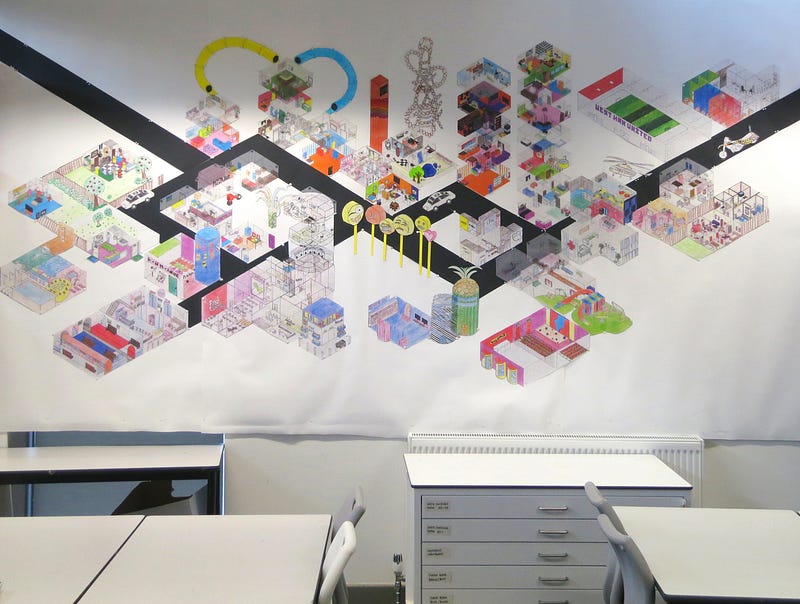
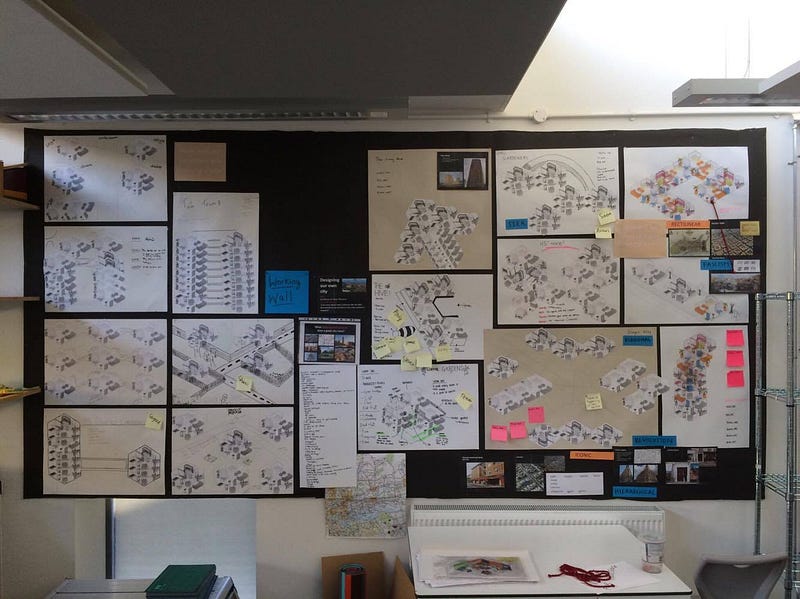
Tamar Shafrir’s friend Alicia Ongay-Perez teaches ‘Design and Making’ at School 21, a new, interesting-looking state-funded school in Stratford, London, and Tamar got in touch recently to share a recent assignment. Alicia had adapted the Incomplete City studio that Joseph Grima, Marco Ferrari and I devised last year at the Bartlett, but for her Year 9 students (13–14 year olds) at School 21 instead, as a way off discussing a redesign of Stratford itself. The resulting images, some of which are posted below, are wonderful, and it’s so inspiring to see how the students ran with the idea, and in some ways took it much further than we did.
Quick backstory
Incomplete City is an urban design studio that Joseph, Marco and I have devised, as part of Joseph and me being the Sir Banister Fletcher visiting professors at UCL Bartlett School of Architecture, working with Mark Smout and others.
We ran a studio in June 2016 where urban design students collaborated to create a city from scratch, over a week, using an iterative development model essentially focused on ‘everything but the architecture’, inspired by various approaches to networked urbanism and participative design.
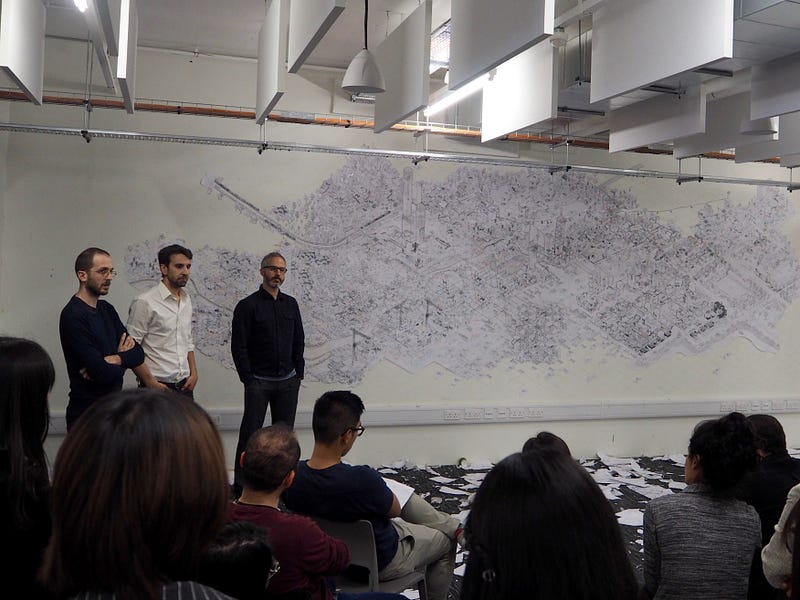
The discussion rippling around the studio at the time included a few academics and practitioners saying they would indeed adopt and adapt. Yet we’re amazed and delighted to discover what Alicia and her students did with it.
Year 9’s Incomplete Stratford
Alicia wrote to describe what they’re up to:
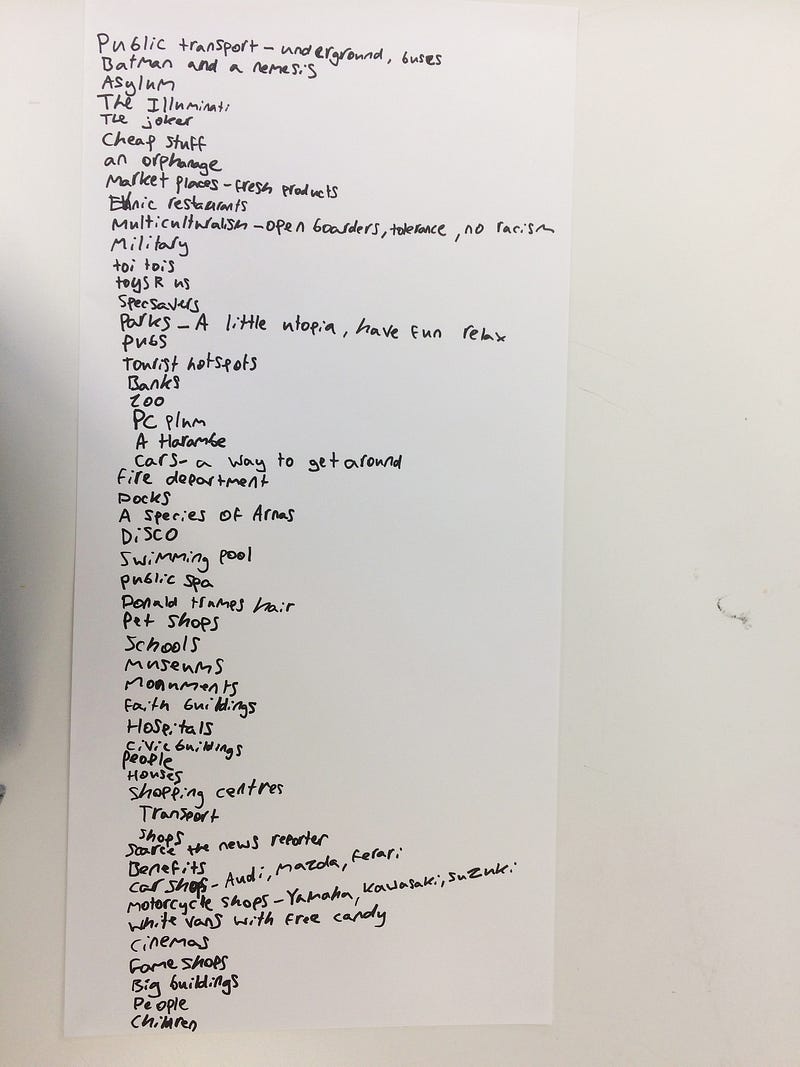
At School21, we are using the Incomplete method to explore how a city responds to a disaster like the Blitz. Through analysis of local public spaces and services in Stratford, we have designed an alternative utopia, to which we are currently applying various disaster scenarios. Having designed their ideal city, students are using problem solving techniques to respond to a range of crises as architects and urban planners.
It’s wonderful to see how the students took this brief on, and how the method was adapted to fit. Browse through some of the images from the class, kindly shared by Alicia (you might want to have a quick scan of the original post for them to make sense.)
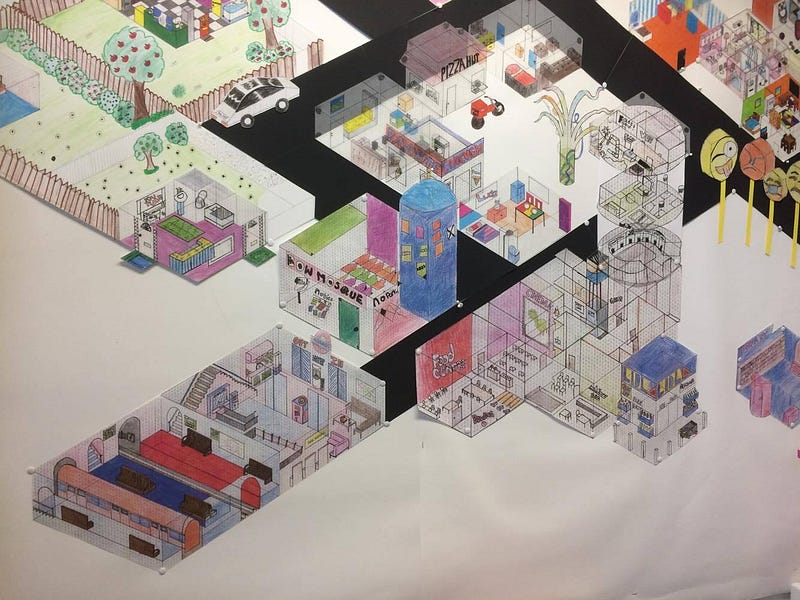
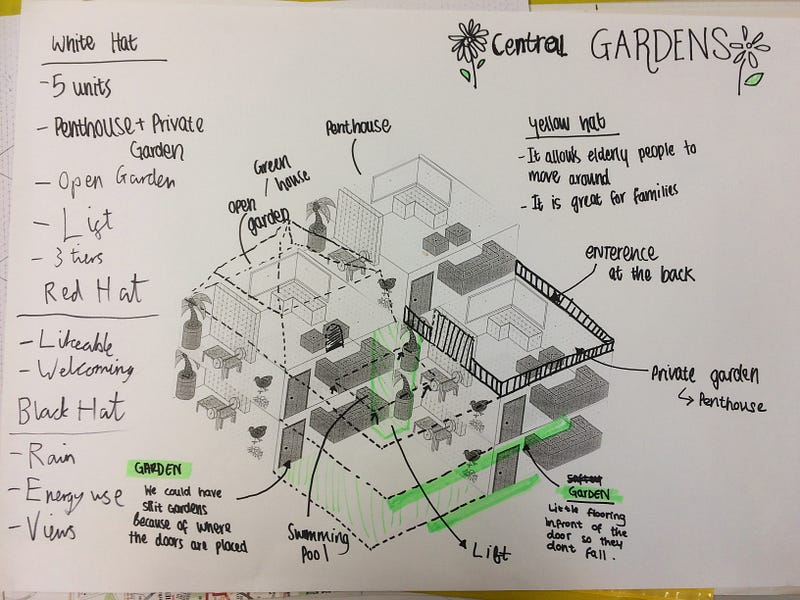
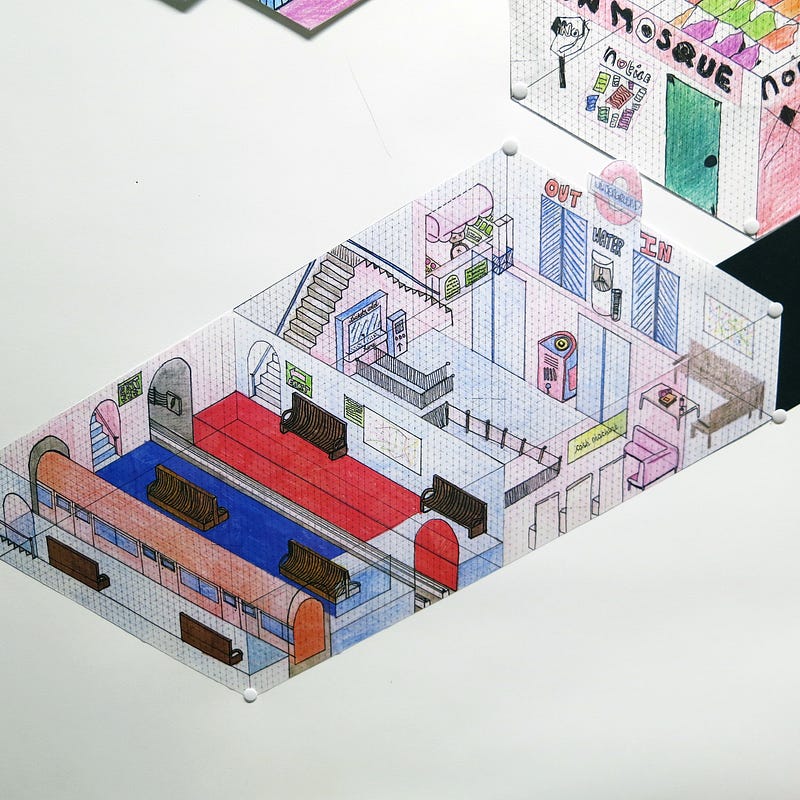
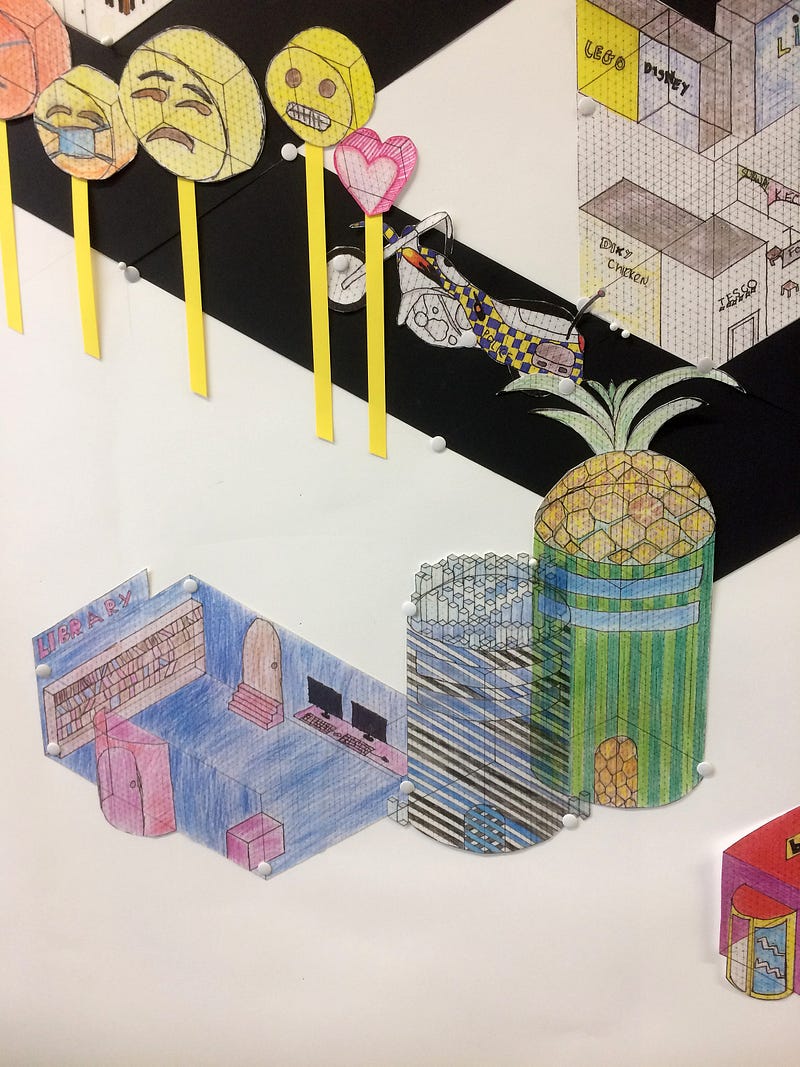
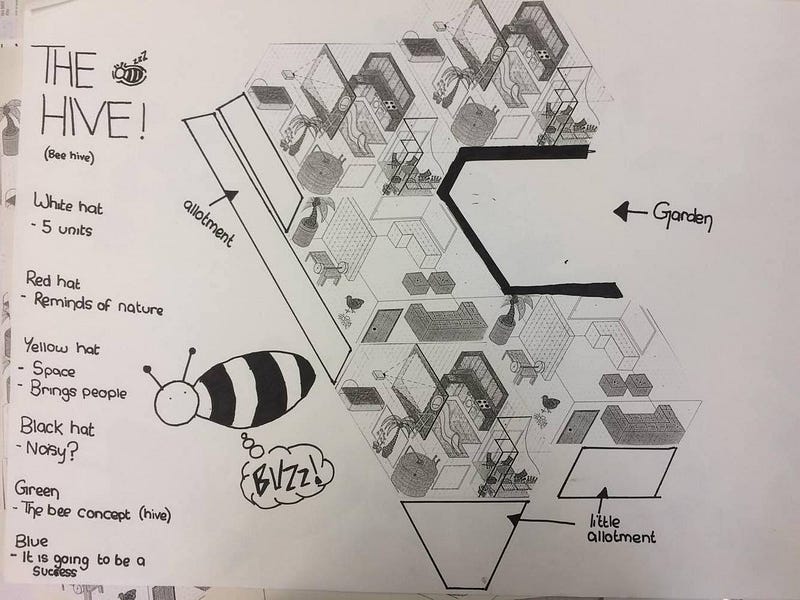
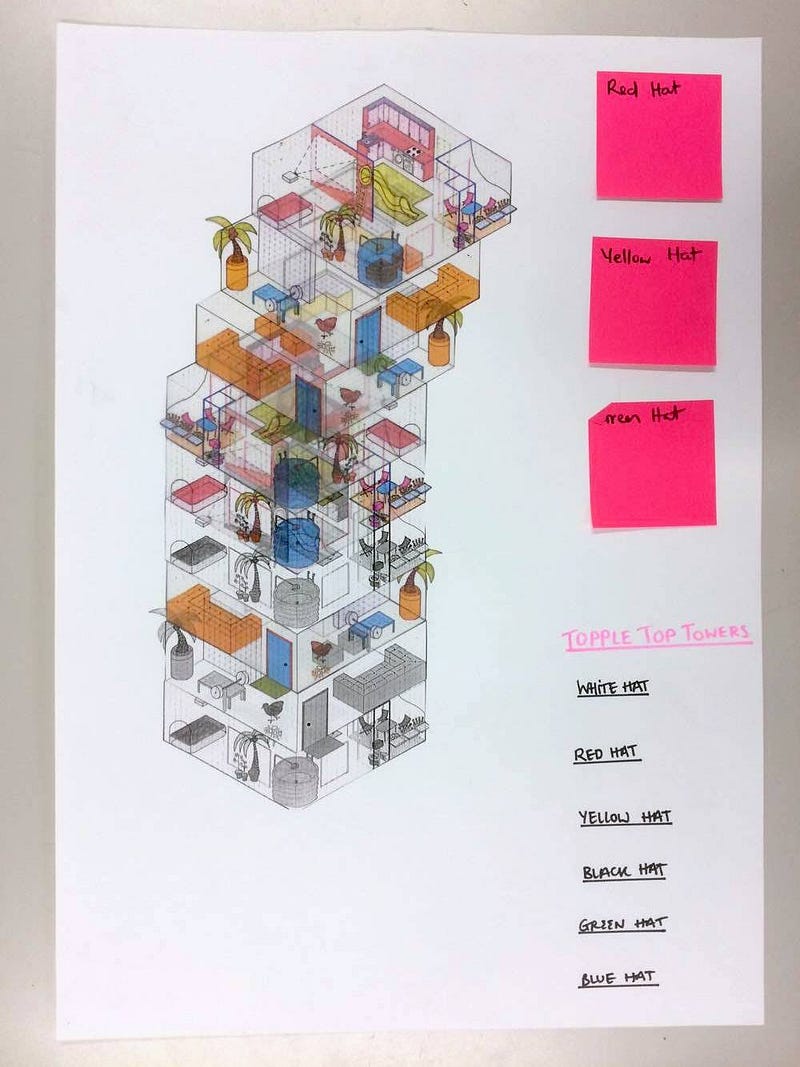
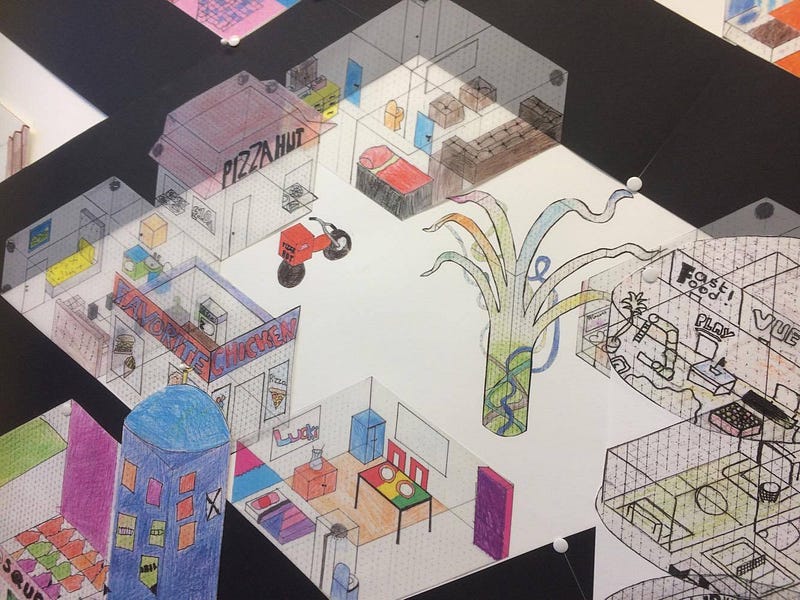
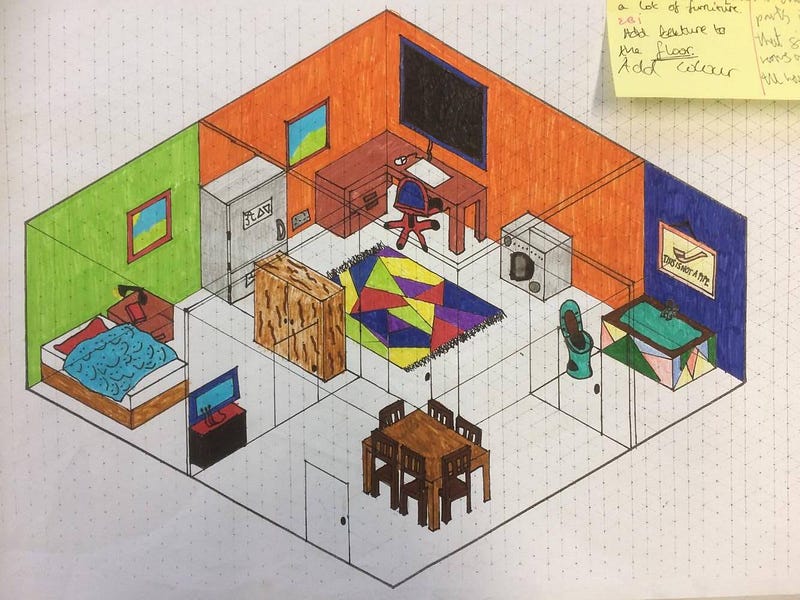
Some notes on the images: apparently, the emoji trees are inspired by the Stratford Shoal by Studio Egret West; and the thinking hats method from Edward De Bono. The detailing of interiors, and the students’ use of colour, is already inspiring us to raise our game for when we run the next Bartlett studio in a couple of weeks. To me, the images have a Madelon Vriesendorp/early OMA feel, which really works.
Every element here inspires questions, and each drawing is chock full of life—I’d love to know more about each one, which is a tribute to the quality of the representation. I also like the scales they’ve worked out, from detailed interior to urban plan and system. One of the benefits of our initial approach was that all the detail is retained in the final images, despite having started at a human scale, simply by reducing it down several times (via photocopier!)—yet nonetheless, working at a single scale at each point, we ultimately lost the ability to see a room. The School21 approach works at all levels.
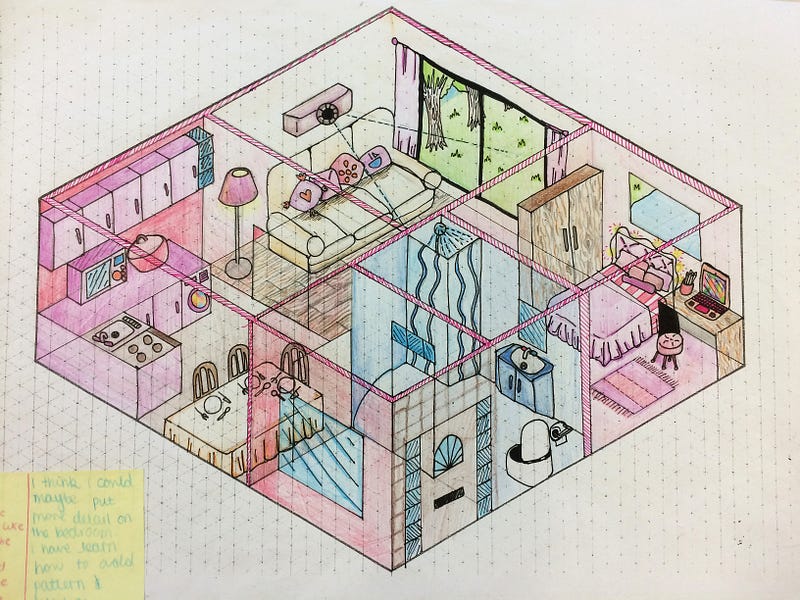
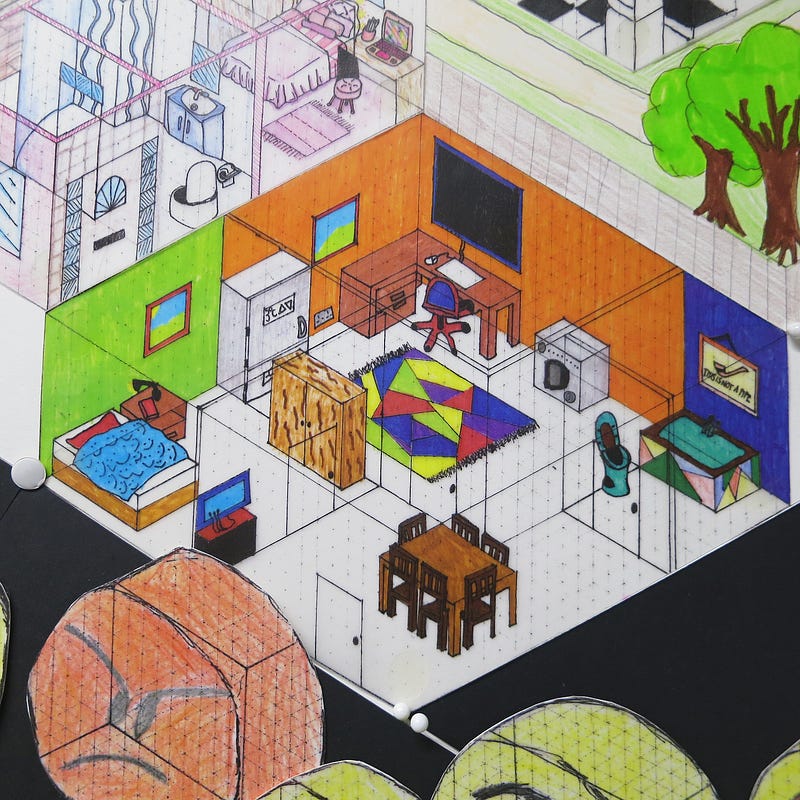
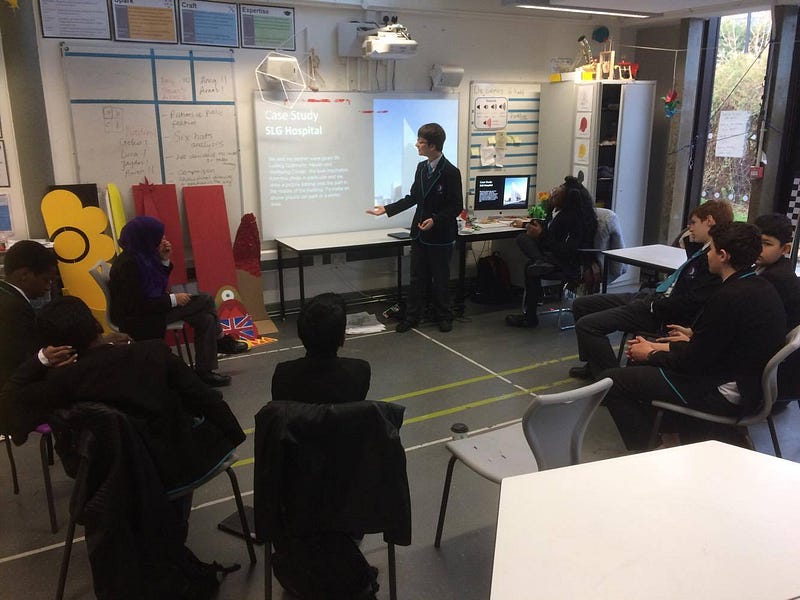
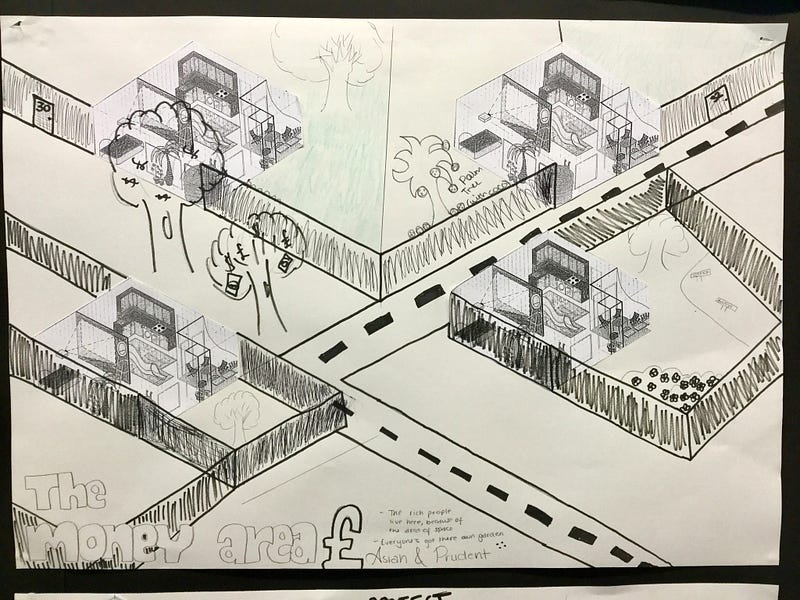
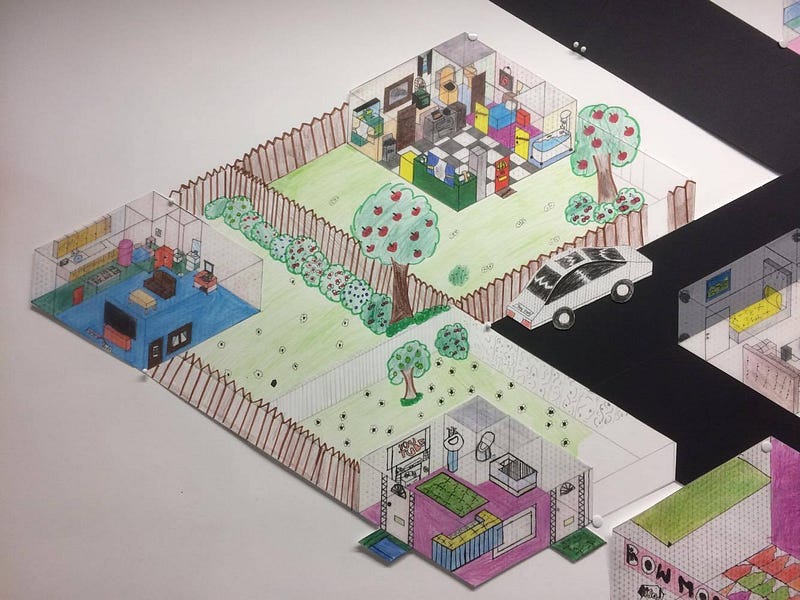
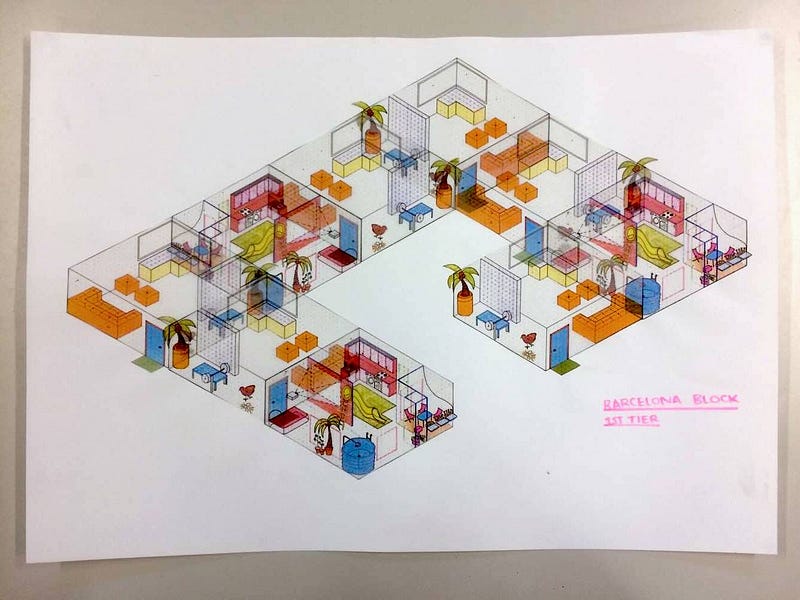
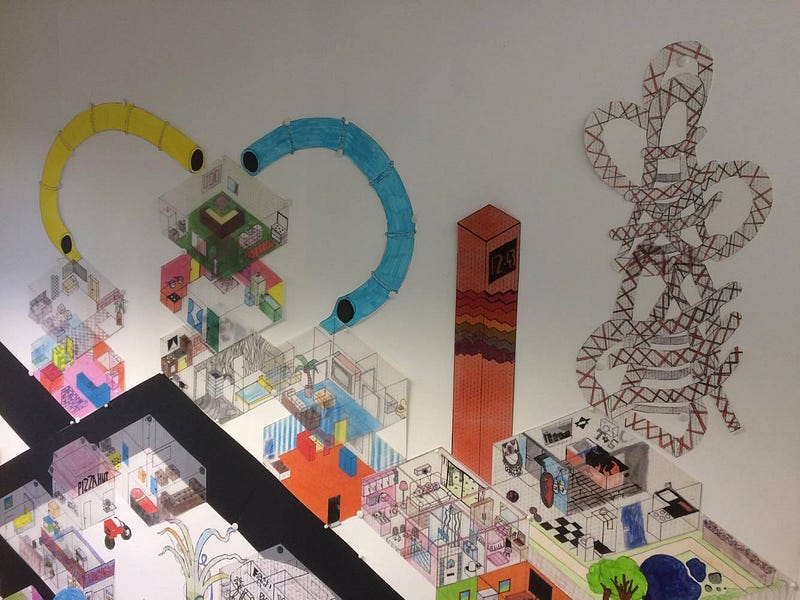
Congratulations to Alicia and the students at School21—we’d love to see where they take it next—and thanks to all of them (and Tamar!) for kindly sharing their work and thinking.


