
In Times Of Crisis, Good Leaders Are Still The Exception
Key Attitudes Of Good Leadership In Times Of Crisis

In times of crisis we need a leadership which is skilful, effective, capable of anticipating needs and, overall, empathetic and humane. Sadly, good leaders are still the exception.
Thus, how should a leader act during a crisis to help the group?
We can find several key strategies which can be used, regardless of whether the leader belongs to the political, health, organizational, communication, or large or small business field.
Key Attitudes Of Good Leadership In Times Of Crisis
In times of crisis, uncertainty, anxiety and fear can take hold of everyone. In this regard, good leadership skills should consider that a lack of empathy and humanity can do as much damage to the group as a hasty step, bad communication or any other similar mistake.
For all these reasons, it is a priority to know these keys about how a leader should act during a time of crisis.
Bringing calm and honesty
Set objectives no matter how serious the situation may get or how negative the short and long term forecasts are. In the midst of any scenario, a good leader must convey calm and be completely honest. Temperance gives security to listeners and, in a context of distress, that attitude can be very valuable.
Likewise, few things are as important as honesty at all times. Misrepresenting facts or resorting to lies is another time bomb that in the end also goes off.
Empowering the team
A leader needs a competent team to be empowered. If a leader distributes competencies among the team, it can show great solvency and confidence.
Needless to say, all the decision-making relying only in the hands of the leader may be perceived as an authoritarian behaviour. Clearly, this is the last thing you want.
Therefore, a good leader should be conceived as another figure in a team. Empowering and integrating competent key people to tackle a problem or to make relevant decisions is crucial.
Practicing a positive communication
The way in which a leader should act during the crisis involves a core tool: good and positive communication. And let me be clear about this;
It’s not always easy. If a leader is excessively charismatic, it might generate mistrust. On the other hand, if communication is too cold or distant, it can arouse fear and suspicion.
You need to identify the middle ground where you can command respect while staying humble. Finding the right path to communicate can begin with using only clear and accurate words (try to avoid using phrases or sentences which could bring doubt or ambiguity).
Communication is a core leadership function. You need to think with clarity, express ideas, and share information with a multitude of audiences.
According to the scenario and the audience, the way of communicating can be different as well as the chosen words, attitudes and channels. For example, knowing how to give bad news or warnings, while communicating with a breath of hope, undoubtedly requires adequate emotional intelligence and assertiveness.
Connecting with emotions and being compassionate
Narcissistic, hyperbolic and authoritarian leadership has no place in everyday life, much less in a crisis. Leaders who tend to blame others can easily generate more chaos and anxiety to the difficult context. Naturally, we do not need leaders of this kind.
In a time of crisis, compassionate leadership is more necessary than ever; capable of connecting with human pain and emotions and showing concern for people (and not just focuses on achieving a goal).
Taking into account some of the good leadership practices explained, it’s also essential to mention the worst attitudes you can’t ever adopt if you want to succeed.
Note: these worst attitudes should be avoided under all circumstances, not only in difficult times.
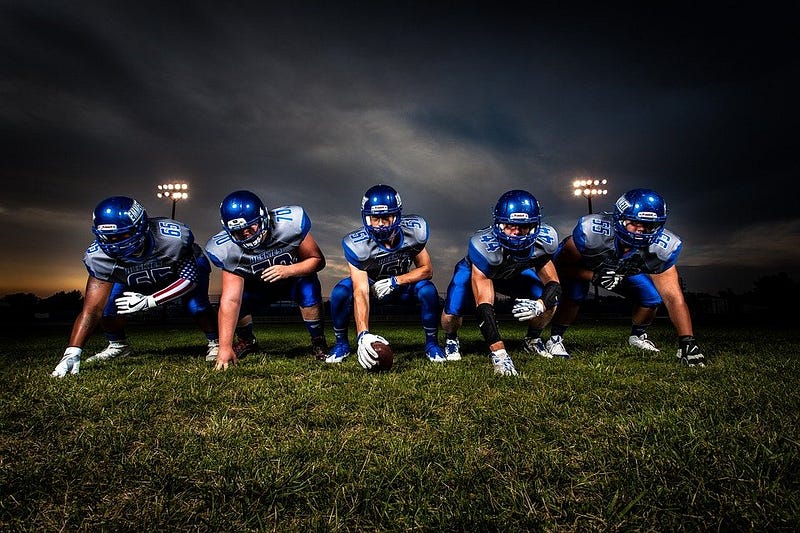
The Enemies Of The Good Leader: Improvisation And Narcissism
Above all, the main strategy is not to improvise and not to fall into narcissistic views and behaviour.
Let’s take a simple example to visualise this better:
A leader of an expedition should not improvise the path with already one foot on it. If a leader wants the expedition to be a success and the group to move forward safely, they must stick to what was agreed in a planning.
Sticking to a plan allows the leader to guide the group to the goal through the safest possible route. It also allows the leader to avoid improvisations which could end up contradicting the objective being pursued. Therefore, making changes at every step, without paying attention to planning or the needs of the group, only makes both the leader and the members go astray and make it increasingly difficult (if not impossible) to achieve their common objectives.
In short, a good effective leader is not the one who seeks to achieve an objective against all odds, but who listens, understands and shows solidarity with the members of the team, in order to move forward together towards an objective.
In the rear, a leader should be able to anticipate and be prepared for other crises. Those who do not prepare for the worst will not be able to react to even minor problems. Anticipating, preventing, devising, designing and engineering strategies to respond to similar situations in the future is another moral and strategic obligation of any leader.
Let me be clear, there are many ways of reacting to adversity, but the way a leader must act during a crisis must be decisive; leaving nothing to chance, without falling into mere improvisation.
Thank you for reading! Follow @TheGradeks if you want to receive our daily dose of humanity and lifestyle pieces. Also, let us know your thoughts by posting your comments. Namasté!


