Live Concert Series, Pt. 9
In the Shadows
Past Perspectives of The Four Tops
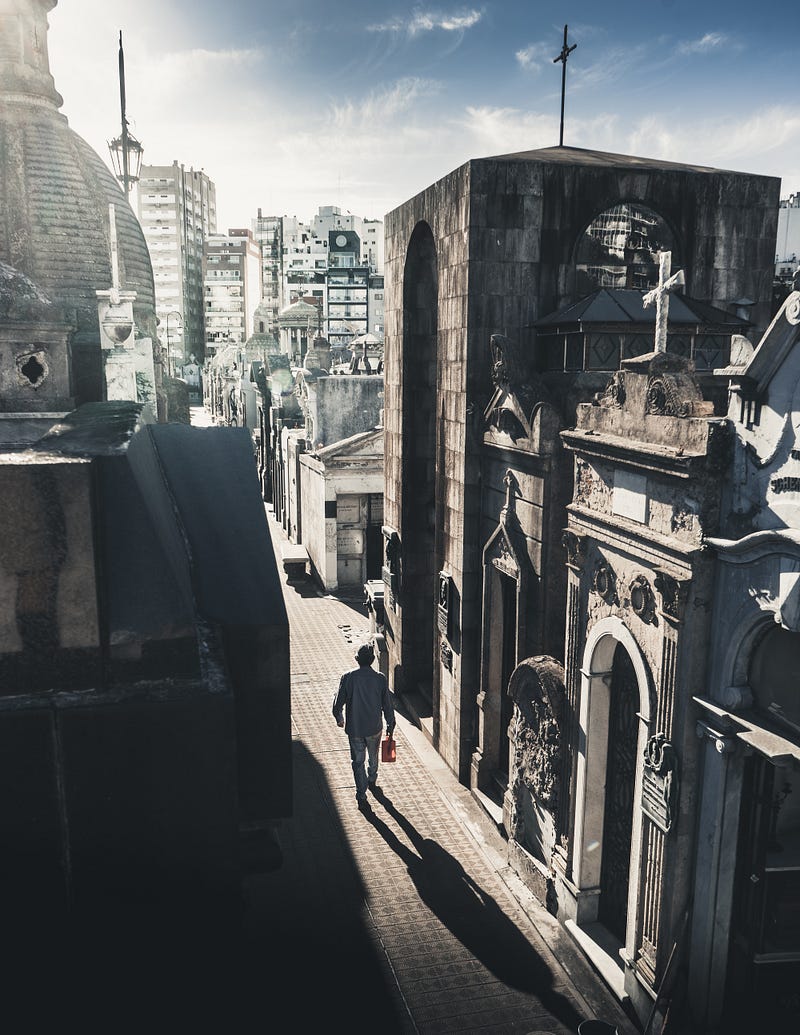
Sometimes even my memory gets lost in old reflections. Or rather, it forgets reflections of my life that when I remember, I can’t believe I ever let slip away. Slip away.
Like seeing The Four Tops in person back in 1982.
Knoxville, for reasons unknown to most of its citizens, became host for the International Exposition, a form of The World’s Fair, in that year. The city erected a gold-domed globe-ular orb in that cusp between the city proper and the University of Tennessee: a valley dip near the river but mainly just a crossing for those liking to dabble in either setting.
What are those damned globe-structures called, anyway?
I loved this breach of town, this arm-folded crease where nothing much seemed to happen, but if you looked closely enough, you might see old stone apartment buildings worth risking a high deposit for. I knew two people who lived in the building I still see from this perspective: a libertarian guy named George who scoffed once at my “Free El Salvador” t-shirt, and a woman named Phoebe, whom my wife won’t let me talk about in her presence, so not here either since on Saturday mornings, she reflects through my reflections.
One street over, amidst what I always see as autumn trees on rainy cobbled lanes, sat a club, The Lord Lindsey, owned by a fellow named Kristopher, who also ran the town’s only Michelin-rated restaurant — The Orangery — and a host of other enviable properties. The Lord Lindsey was a disco of sorts, catering to a mixed crowd of social climbers and college students who wanted to escape the more mainstream bars on the fabled strip. It employed a DJ, but it was this old Victorian house itself that I always see. Once, when my wife and I danced there, a former mayor watched us with something looking like delight. I regretted then that I hadn’t voted for him in his last, lost election (he brought the fair, after all), but he didn’t seem to mind anything right then, admiring, like I was, my dancing gorgeous partner.
If you ambled down this street a couple of more blocks, there was another club that billed itself “Knoxville’s Most Unique Disco”: The Europa Club. In the immortal lyrics from The Trammps, it was where “the happy people go.” Mainly, the male happy people.
So in this little sleeve of town, someone thought it a grand idea to build some exhibits and let the world arrive. And pretty much, the world did, including my old roommate Mark’s parents, whom he coerced me into escorting to a movie downtown.
Gaslight.
I digress, though, because on the night I most want to tell you about, my memory fails. I can’t believe I forgot this night, and I also can’t believe I remember it at all.
My friends Les and Martha Jane, along with me and either some cohorts or a date — I know that someone with us was named Mary, and she might have been a friend or she might have been a woman I should have avoided — arrived at some built-for-the-fair enclosed barge that floated on the riverbanks. Les had discovered that The “Tops” were playing that night and insisted that we take it in because, who knows what other chances we’d have, who knows how much time the group had — how long they and particularly lead singer Levi Stubbs might grace us.
In an obit I just found from The Los Angeles Times, Stubbs passed in 2008, and the group, founded in 1953, performed intact for the next forty-four years until “founding member Lawrence Payton died in 1997.” Clearly, I had more time than I thought, though, truthfully, I never had another chance.
The room seemed adorned in red velvet. The little stage, just big enough to hold four aging men, couldn’t have been more the fifty feet away from any patron that night, and the four or five of us added to the other ninety or so guests. It occurs to me now that I saw the Four Tops in the same year, same town as I did the early R.E.M., which I wrote about here: https://readmedium.com/gardening-at-hobos-a6c1aee3649e?sk=e17a9badf86906a9576e1372ff055c13.
The number of people in each crowd was close to the same, leaving me to wonder if they were the same people, same crowd.
As we nurtured our beers — likely Budweiser because we were basic and poor, tickets costing only ten dollars — the men performed every hit one could possibly remember:
“Bernadette”
“Reach Out (I’ll Be There)”
“I Can’t Help Myself (Sugar Pie Honey Bunch)”
“Standing in the Shadows (of Love)”
“Ask the Lonely”
“Ain’t No Woman (Like the One I Got)”
“Walk Away Renee”
And my favorite: 1970’s “It’s All in the Game” (originally sung in the 50’s by Tommy Edwards), the only Four Tops’ record I’ve ever owned. When it was a radio hit, I always tried matching Levi’s voice. It was impossible, though our pitch sometimes seemed the same, anyway.
Levi kept wiping his brow, and for the hour-and-a-half we watched them, I thought about the nearness of other years, when it would have been fashionable to love this group, though if, like me, you were white, you’d better have kept all of this close to you and your heart.
I beg you now to listen to these heart ballads. I wish I could go back and stand there, in or out of the shadowed audience, and cheer and beg Levi for his autograph, tell him how much I longed to reconcile all of the love-lorn characters in his songs, and reconcile audiences who thought segregated music — either by genre, age group, era — was of paramount import.
I’m listening to “Ask the Lonely” now, and I want to cry for all of us, because we might not ever understand what we had once. We might not remember nights like this one, how lonely we were in our individual spotlights, or in groups of four or five, searching amongst those shadows for something like understanding or love.
Did we go home after this show, or to another bar? Why didn’t the show kill me then? Why was I too young, so young that I thought this was only another Friday?
A few years later, Les introduced me to a British singer named Billy Bragg. Surely you know him, too. But have you ever thought about or listened to his storied lament:
“Levi Stubbs’ Tears?” (It’s from his brilliant album Talking to the Taxman About Poetry.
“When the world falls apart some things stay in place. Levi Stubbs’ tears run down his face.”
See? Transcendence.
One genre speaking to another, the tears, though, all the same, in the game.
Shadowplay.
Hey Noah Levy, are you aware that we’re approaching 400 followers on the Riff? When shall we all get together and dance to classic Motown, or punk, or Disco-ish new wave? I’m ready. And what about: Jessica Lee McMillan, Kathryn Dillon, Sarah Paris, Samantha Drobac, Steven Hale, Christopher Robin, Kevin Alexander, Vince Coliam, Harry Male, Rob Janicke, Mike Marolla, Nia Simone McLeod, S.W. Lauden, Reuben Salsa, Jeff Goodwin, Frank Mastropolo, Oliver Norris, MDSHall, If Ever You’re Listening, Kathy Gerstorff, and Matt Dwyer.