
Space Odyssey 2024: Global Powers and Emerging Players in the Race to the Stars
Unlocking the Mysteries of the Cosmos — From NASA’s Artemis Program to China’s Lunar Ambitions, India’s Cosmic Dreams, and Beyond
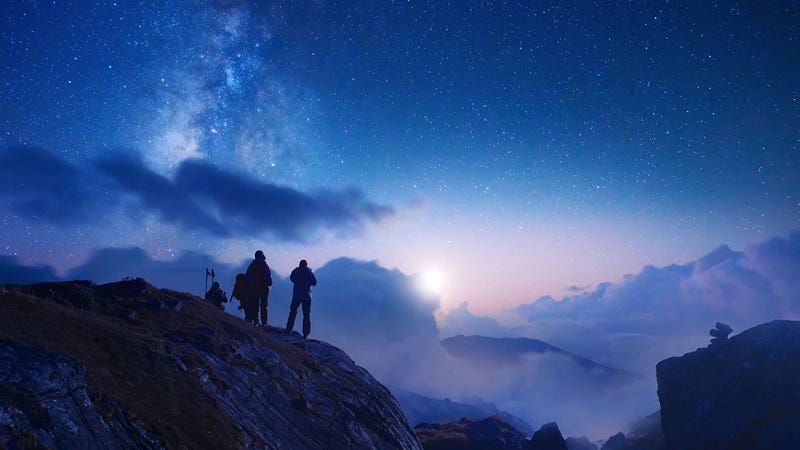
In the vastness of outer space, a fascinating turn of events has unfolded, transcending the boundaries of science fiction. The extraction of resources on the moon, once considered a utopian vision, is now a tangible reality. Over fifty years after groundbreaking landings on the lunar surface, various nations are planning to send astronauts to this celestial neighbor. In this captivating journey, one nation could once again take the lead, even as the largest rocket system ever built recently exploded in a spectacular fireball during its second test.
Despite these setbacks, SpaceX remains optimistic about the future of the Starship. The visionary leader of the U.S. space agency, NASA, shares this confidence, declaring that the country, in collaboration with SpaceX, will lead humanity back to the moon, to Mars, and beyond. These ambitious plans are not isolated, as another nation has emerged as a formidable spacefaring power, pursuing ambitious missions in outer space. A glimpse into these planned missions reveals the fascinating competitive landscape of space exploration, where humanity pushes its boundaries and opens the gates to new horizons.
The Dominant Power Play of the USA Unveiled
Throughout history, the allure of the unknown has propelled humanity forward, and today I stand before you, ready to share a captivating story that takes us into the depths of outer space. The US space agency NASA, stewards of the stars and pioneers of space exploration, eagerly anticipates the year 2024, marking the zenith of the “Artemis” program.
The pioneering journey commences in November when a crew departs Earth to orbit the Moon as part of the “Artemis 2” mission. It marks the beginning of a ten-day expedition that not only traverses the skies but also redefines the boundaries of human capability. A milestone that sets the stage for “Artemis 3” in 2025, where spacefarers will set foot on the lunar surface after more than half a century — a historic mission that includes individuals from diverse backgrounds.
Meanwhile, the conquest of space advances. SpaceX, the innovative space company under the leadership of Elon Musk, plans numerous Starship tests. The most powerful rocket system in space history will chart a course for the Moon and Mars. Simultaneously, the International Space Station (ISS) continues its costly operations. SpaceX’s Crew Dragon will ferry astronauts, while Boeing’s Starliner is slated to transport humans to this cutting-edge human outpost in space come spring.
This enthralling journey, infused with personal experiences and profound knowledge, not only promises a gaze upon the Moon but also opens windows to the stars. Immerse yourself in the unfolding of a new era of space exploration that surpasses our imagination, guiding humanity’s paths to new horizons.
The Enigmatic Middle Kingdom as an Emerging Spacefaring Nation
In the vast expanse of the cosmos, China has undeniably emerged as a formidable spacefaring nation, resolute in its pursuit to unravel the mysteries of the Moon and Mars. The words of the head of state resonate like a bold dream reaching for the skies: “Our eternal dream is to explore the vast cosmos, establish a space industry, and develop China into a space power.” By the year 2030, China envisions not only landing on the Moon but also constructing a research station, reflecting not just its own progress but also international collaborations. The invitation to various countries underscores the global ambition to venture into the depths of outer space together.
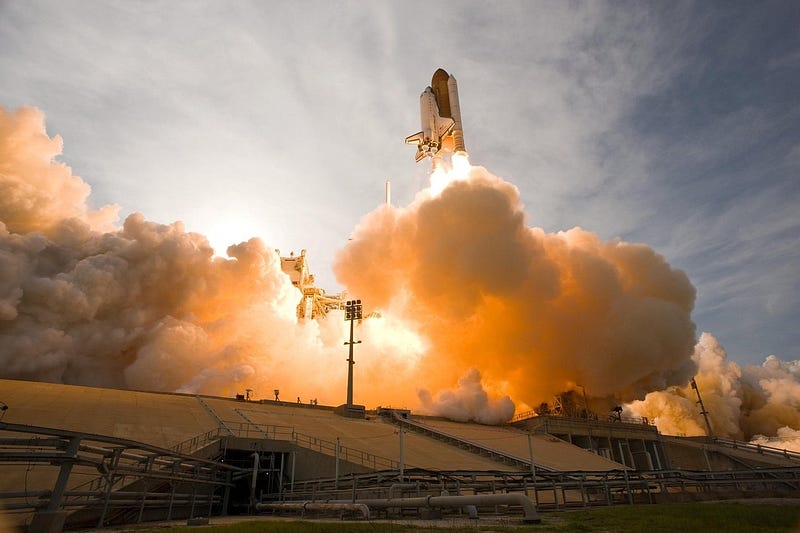
China’s vision extends beyond lunar exploration; the nation continues ambitious projects for Mars exploration. With the space station “Tiangong,” China has already established a platform that was visited by an astronaut team in October. In this pursuit of the stars, the upcoming unmanned lunar mission “Chang‘e 6” is poised to play a significant role in collecting samples from the hitherto unexplored far side of the Moon and bringing them back to Earth.
Future plans are clearly outlined: “Chang‘e 7” will execute a precise landing on the Moon’s South Pole, paving the way for the construction of the research station. “Chang‘e 8” will reach its pinnacle when astronauts set foot on the lunar surface. With each mission, China inches closer to realizing its dream, establishing itself as a driving force in the race to the stars.
Europe’s space strategy, collaborations instead of individual missions
In the captivating realm of space exploration, the notion of dispatching European astronauts to the moon is currently an elusive objective. Europe continues to place its trust in a proven partnership, delegating leadership in space endeavors to the United States. The European Space Agency (ESA) plays a pivotal role in the “Artemis” program by contributing the European Service Module (ESM) for the Orion spacecraft — a masterpiece meticulously crafted by a leading aerospace manufacturer.
However, the question of when a European astronaut will set foot on the moon remains unanswered. Neither for the “Artemis 2” mission nor “Artemis 3” is a European astronaut’s participation firmly scheduled. Only in the distant future, with “Artemis 4” and “Artemis 5,” does the possibility arise for a European representative to tread on the distant celestial body. The uncertainty surrounding which astronaut will seize this extraordinary opportunity mirrors the challenges and uncertain prospects inherent in space exploration. The director general of ESA emphasizes that this decision is still pending and will be determined by the partner space agency after the completion of the “Artemis 2” mission. In the interim, ESA is channeling its efforts into diverse projects, including the launch of Earth observation satellites such as Sentinel-2C, EarthCare, and Biomass. These satellites will provide essential data on forests, cloud formation, and aerosols, crucial for comprehending the intricacies of climate change.

A significant event on the horizon is the planned launch of a new launch vehicle in the coming year — a vehicle poised to take flight after several delays. Bidding farewell to the previous generation of launch vehicles and grounding another after a misstep mark pivotal turning points for ESA. Devoid of autonomous means to transport satellites into space, this heralds a new era of challenges.
Another highlight is anticipated with the launch of a probe in October. Named after a celestial entity, the probe is part of a joint mission by ESA and NASA, exploring defense mechanisms against a potential celestial body impact on Earth. The successful 2022 mission of a probe impacting an asteroid stands as a significant milestone.
Amidst these fascinating developments, the question of European astronauts landing on the moon remains an open and intriguing journey into the future of space exploration. As we eagerly await further developments, this uncertainty offers a captivating glimpse into the complexity and pioneering spirit of space research, continuing to hold us in its spell.
Unknown Ambitions in India and Secret Investments in the Heart of Russia
In the vast expanse of the cosmos unfolds a fascinating tale of India’s ambitious space exploration plans. Under the leadership of the Prime Minister, the country has articulated bold visions for the future. By 2035, India aims to establish its own space station, followed by the historic mission of seeing its first compatriot set foot on the Moon by 2040. The recent triumph with an unmanned probe marked a significant milestone, as India successfully landed on the lunar surface, joining the ranks of the former Soviet Union, the USA, and China.
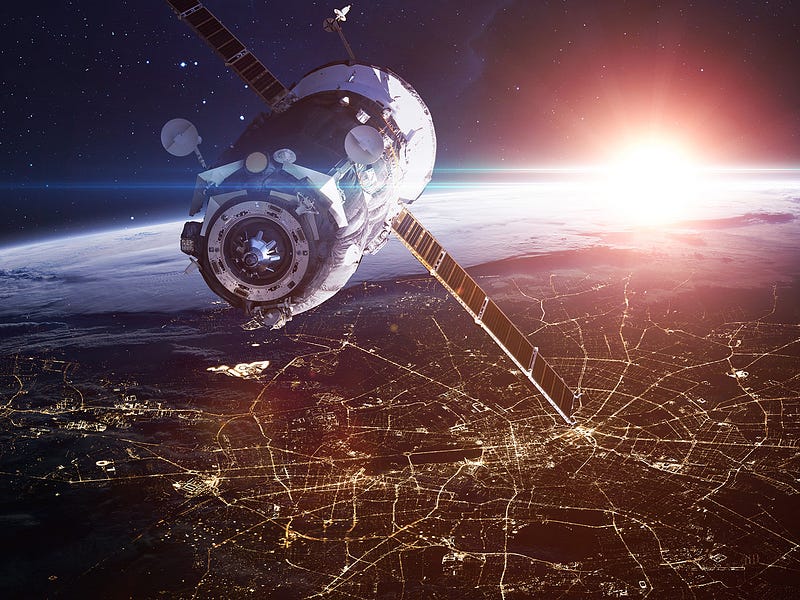
As the year draws to a close, the exciting launch of the mission to Venus is scheduled, a venture that could provide insights into the Earth’s future, as revealed by the head of the Indian Space Research Organisation. Another expedition targeting Mars, known as “Mangalyaan-2,” is also poised for launch. Amidst these thrilling plans, Russia is intensifying its space efforts despite challenges posed by the Ukraine conflict. Following setbacks, including the loss of a lunar probe, Russia is vigorously advancing its moon program to restore past achievements. President Putin is calling for a swifter and commercially successful approach within the space industry. The demand for a substantial increase in the number of Russian satellites and more cost-effective launches shapes Putin’s vision. A focal point is the planned construction of the Russian Orbital Station by 2032, involving close collaborations with China and India. The initiation of this ambitious project could occur as early as 2027, promising to replace the aging ISS and propel humanity deeper into the cosmos.
Japan and South Korea in a Fascinating Race
Embarking on a cosmic odyssey, Asia’s high-tech nations unfold a captivating chapter in space exploration. In the heart of this celestial saga, Japan takes a leading role, launching the lunar lander SLIM and the X-ray telescope XRISM in September on a groundbreaking mission. Anticipating a graceful lunar landing three to four months post-launch, Japan stands on the brink of becoming the fifth nation to achieve this milestone. This triumph not only signifies technological prowess but also signifies a stride towards sending its own astronauts to the Moon, envisioning participation in the “Artemis” program.
However, Japan’s celestial journey doesn’t conclude there. The compelling “Martian Moons Exploration” (MMX) project gains momentum, aiming to dispatch a probe to the Martian moons Phobos and Deimos. The mission involves not only exploration but also the collection of soil samples from Phobos, with the hope of unraveling mysteries about Mars’ origin and potential traces of life. These precious samples are slated to return safely to Earth in 2029, enriching our understanding of the cosmos.
Not to be outdone, South Korea actively participates in the space race. As the fourth-largest economy in Asia, the nation sets ambitious goals, including laying the groundwork for future lunar activities. Having achieved the lunar orbit last year, its lunar probe now captures images of the far side of the moon and scouts potential landing sites. With aspirations to conduct a lunar landing by 2031, whether manned or unmanned remains undecided. South Korea also aligns itself with the “Artemis” program.
While 2024 doesn’t mark a significant rocket launch for space exploration in South Korea, the imminent launch of its own space agency, modeled after NASA, adds anticipation to the unfolding narrative. Exciting times lie ahead as Asia explores the stars, unveiling new horizons in the universe.
A Mysterious Awakening in the Arab States
Embarking on the depths of outer space, exploring the unknown — a journey equally captivating and propelling for the United Arab Emirates and Saudi Arabia. In the vast expanse of the Arab world, unfolds space exploration plans marked by impressive dedication and ambition. The United Arab Emirates harbor renewed aspirations to land a rover on the Moon, following the setback in April when an attempt with a probe from the Japanese space company Ispace fell short of success. Despite the setback, high-ranking officials praised the efforts as a testament to a ten-year journey, during which the Emirates built a space industry from the ground up.

In the shadow of these endeavors, Saudi Arabia competes with its small yet powerful neighbor. With an announced investment of over two billion US dollars, Saudi Arabia aims not only to strengthen its space industry but also to advance space tourism and satellite-based communication.
Despite their substantial oil wealth, the resources of both countries remain modest compared to the budget of the US space agency NASA. This raises the question: Can these nations, whose dedication to space exploration is impressive, catch up in the race to the stars and script new chapters in human history? Dive in, listen, and let us collectively immerse ourselves in the fascinating world of their space dreams — a world full of insights, personal experiences, and compelling knowledge.
Just stay a moment longer… Let my stories captivate you and become part of my writing journey.
- Quantum Battery: The Energy Revolution That Will Forever Change Your Perception of Batteries!
- Mosting: Even nastier than ghosting
- The Metaverse: The future of the internet?
Yours Forevermore,
StorySculptress


