
In the Name of the Father or the Son — Who Built Machu Picchu?
GiaB Prompt #7: man-made wonders of the world
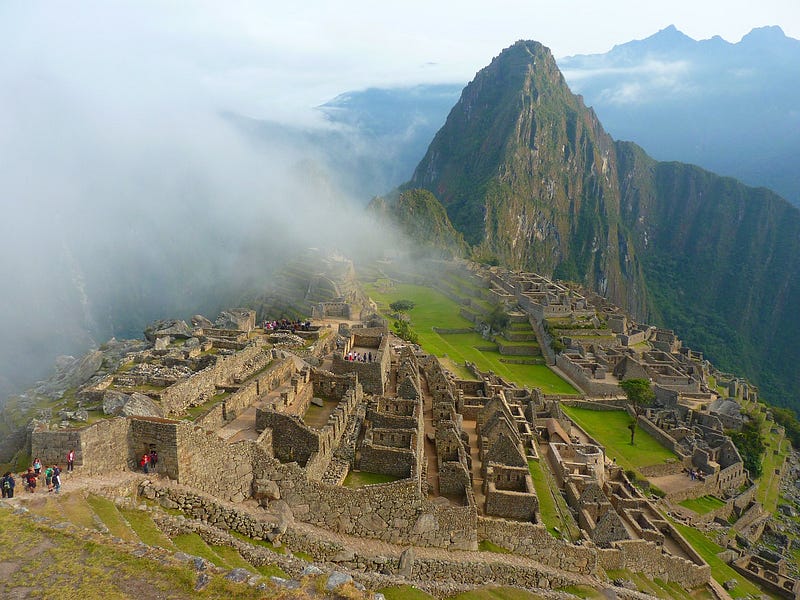
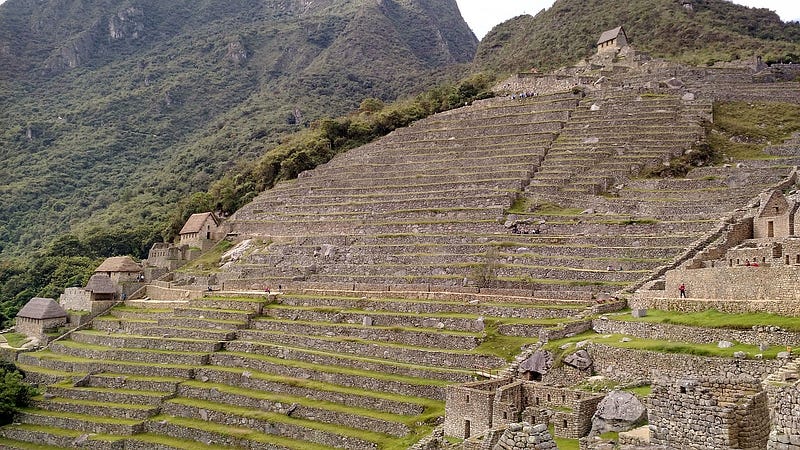
Andean citadel, crowning glory seated on tectonic faults No error — rocks broken along the planes, granite slabs No mortar — watershed moments cascade down the terraces
Stories and legends hidden in your ruins and forests Of kings, emperors, conquistadores and treachery
Gentle Wiracocha, eighth king of Cusco, orders construction Temples to the Sun God and Moon Goddess, baths and houses Secluded retreat for rest and recreation, Uchuy Qosqo — Little Cuzco
With invasion of the Inca capital by the Chanka imminent He flees to his mountain refuge
His minor son, Kusi Yupanqui, defies his father’s order to concede Rises to fight and win Plots the murder of his brother Urko, drunken sot and womaniser Consolidates power, beautifies Cuzco Invites his father to witness the transformation who Awestruck names him Pachakuteq — transformer of the world
Kusi tears the tassel from his father’s head, declares himself King Pachakuteq Banishes his predecessor to Machu Picchu, where he dies a decade later Whereupon the son orders its abandonment
Emperor Pachakuteq conquers lands, grows the empire His successors stretch the realm from Ecuador to Chile
Until the Spanish heading south from Central America Reach the Inca border 1528 in search of gold and territories to conquer
Civil war has raged since 1526 — diseases brought from foreign shores Smallpox, influenza, typhus, measles, weaken the Empire
In 1529, Francisco Pizarro gains permission from Charles V Holy Roman Emperor and King of Spain to subjugate the land they call Peru Captures Cuzco 1532
The Inca civilization now extinct — only the ruins remain If only stones could speak, we’d know the truth of Machu Picchu
(Source: Julio Valdivia Carrasco, Peruvian historian, author of Pachakuteq: Secret History of an Inka King, Essential grammar of the Quechua language, and The Inca kings of Peru.)
Backstory
The popular story is Pachakuteq, the first emperor of the Inca Empire (1438–1471) built Machu Picchu in 1450 as an elite resort for successive emperors, their families and the aristocracy. When the line of rulers ended in 1572, the site was abandoned and fell into ruin.
My alternative, less romanticized version from the cited source, relates his father, Wiracocha, lived there in exile until his death in 1448, at which time Pachakuteq ordered its closure.
How could it be closed before they built it?
A fascinating fact I couldn’t include in 30 lines of poetry: Machu Picchu was also an astronomical observatory. The sacred Intihuatana stone accurately pinpoints the two equinoxes — twice a year the sun sits directly over it, creating no shadow.
In addition to being one of the new seven man-made wonders of the world, Machu Picchu is aWorld Heritage Site.
In 2017, UNESCO threatened to put the citadel on its list of sites in danger, owing to the huge strain tourism puts on the fragile ruins and local ecology.
Irrespective of the truth of its origins, it now stands to lose its atmosphere of peace and tranquility if the planned development of a multi-billion dollar airport at Chinchero continues.
The purpose is to fly tourists directly to Machu Picchu.
Chinchero is a well-preserved Inca city about 3,800 metres (12,467 feet) above sea level — the gateway to the Sacred Valley, which provided maize and other crops to the rulers. Several emperors built their private estates there, and resident farmers still use the Inca terraces on hillsides.
Bulldozers started clearing the land in May 2019 amid an outcry from UNESCO, historians, archaeologists, and local people. Critics say the airport will bring noise, traffic, urbanization and air pollution to the area. The project threatens limited water sources and the rural population in the region.
Planes landing and taking off would have to pass low over the nearby Ollantaytambo archaeological park. This could cause structural damage to its Inca ruins.
Justin Francis, chief executive of sustainable company Responsible Travel, says,
“I thought I’d seen it all. When we look back at what went wrong with tourism, this will be the story that sums it all up. Here, our world view that tourism growth is infinite rams up against the fact that every destination has a finite capacity, and more so a 15th-century Inca hilltop citadel.”
The site is being eroded by the trample of tourists, as is the Inca Trail, where tea bags and water bottles litter the route. Although there’s a limit of 500 hikers per day that adds up to 182,500 pairs of feet in one year!
Human waste is pumped direct into the Urubamba river and heaps of garbage line the banks. Five tons of rubbish every 24 hours! The environmental harm caused by tourists is already too high.
I accept Peru relies on this magnificent site for much of its tourist dollars.
Experts claim there are better locations where an airport would inflict less damage and be safer for planes to take off and land.
Seventeen months ago, 6000 people had signed the petition to stop the development. This has grown to 104,342 as I write, but the project is going ahead.
I fear it may become another theme park.
After a seven-month closure because of the pandemic, Machu Picchu opened on 1 November 2020 at 30% capacity — 675 visitors per day.
I wish they’d keep it that way forever!
I’ve crossed it off my bucket list as I prefer to be an armchair tourist and not a party to tourerrism.
Thank you for being here.
And thanks to Victor Sarkin for this prompt: