
In The Age of Equality, Should The British Royal Family Be Dethroned?
Is “The Firm” finally past its expiration date?
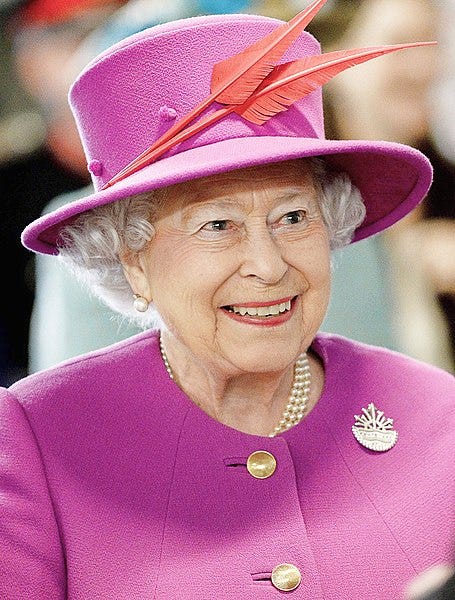
Last weekend, Queen Elizabeth II commemorated 70 years on the British throne with a Platinum Jubilee. Now 96, Elizabeth became Sovereign in 1952 at just 26 years old.
While 70 years is a blip in the context of human history, today’s world is completely unrecognizable from that of the early-1950s. The most dramatic changes may be from a social context. Less than 10 years after World War II, the world was a prosperous yet racist, patriarchal, homophobic place with an iron-clad class structure.
For context, Leave It To Beaver, a show that epitomized traditional patriarchal values hadn’t even made it onto the air yet.
Equality continues to elude us, however, today’s society abhors many of those values. Upper class has been replaced by self-made. The patriarchy still rules but is severely threatened (to the relief of some men and the despair of others).
The idea that one family can be decreed as better than any other by virtue of birthright has become laughable to many. Instead of having a Queen, we believe all women are “queens.”
At this point in history, when our focus has changed to creating a more equal world, where does a Royal Family fit in?
What does the British Royal Family do?
The Royal Family’s actual responsibilities are pretty hazy.
According to the official British Royal website:
The Monarch undertakes constitutional and representational duties which have developed over one thousand years of history. In addition to these State duties, The Monarch has a less formal role as ‘Head of Nation’.
If you think that description is amorphous, check out the non-governmental responsibilities of the Royals.
The Sovereign acts as a focus for national identity, unity and pride; gives a sense of stability and continuity; officially recognises success and excellence; and supports the ideal of voluntary service.
Equally if not more murky. From an outside perspective, it appears the Royal Family’s official role involves dressing well, smiling, and glad-handing.
Write Royal gives a more detailed description, which only supports the notion that the Royal Family serves primarily as figureheads.
[Royal] engagements come in all shapes and sizes: some are multi-day ventures, such as Kate spending two days at a maternity hospital; others involve hours of chitchat with complete strangers; while some are meetings and audiences; or grand banquets for foreign heads of state.
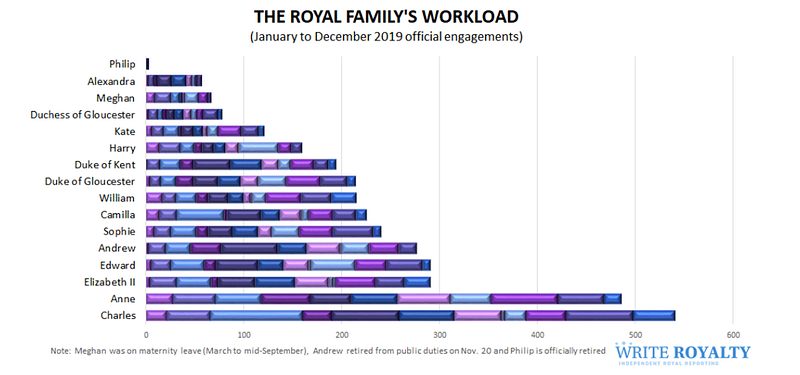
However unclear their role, certain Royals undertake a lot of these so-called engagements. Here’s a list from 2019. We see Prince Charles is the hardest-working royal, with nearly 550 engagements that year, averaging out to 1.5 per day.
How much does the Royal Family cost Britain?
So no doubt many Royals work hard at… going to things. And while that may seem trivial, over time, “The Firm” has morphed into the ultimate brand tool for England. Their brand awareness is exceptional. If you were asked to free associate about England, Her Majesty would be right up there with tea and the Union Jack.
Moreover, the words one might associate with Queen Elizabeth II — such as service, strength, resilience, tradition, duty, and stiff upper lip — are words that are closely tied to England itself.
Any marketer will tell you the importance of having a strong brand. There is no way a Chanel handbag would sell for $5,000 USD if people weren’t buying into the brand and its history. People wouldn’t form lines days before the release of a new iPhone if Apple hadn’t cemented its cachet with the public.
The challenge with being a living brand is that a brand’s value can’t actually be measured in US dollars or British pounds. However, the cost of the Royal Family to British taxpayers certainly can. And that cost is growing at an alarming rate.
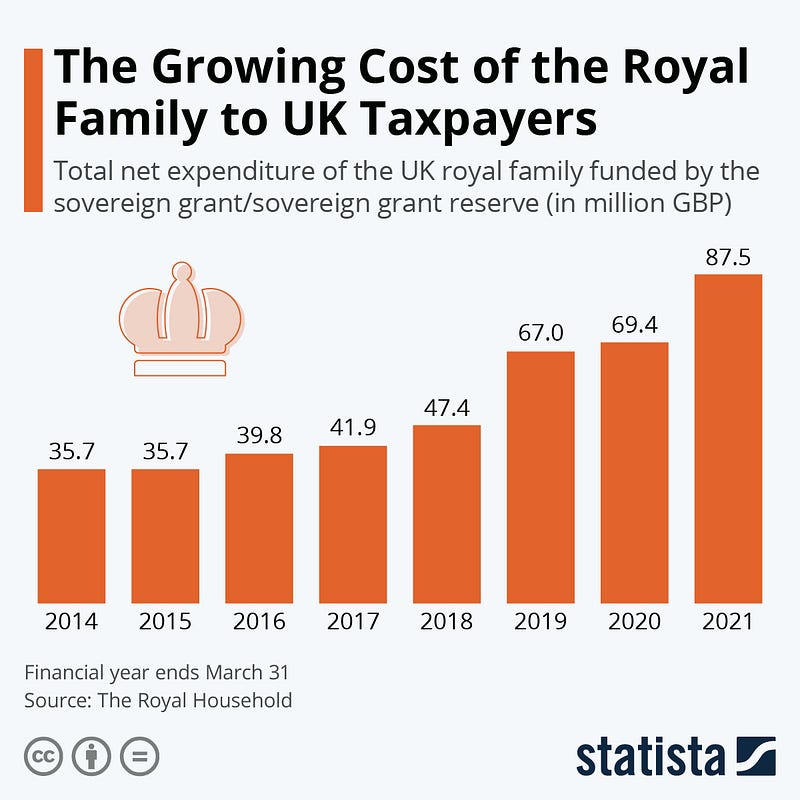
For British taxpayers, the cost to support the Royal Family has more than doubled in the past five years to a staggering 87.5 GBP or $110 million USD.
The rising costs are in part attributed to renovations and updates at Buckingham Palace. Despite the fact that there’s no direct benefit to them, the British public appears to be paying for these upgrades. This was also the case with Harry and Meghan’s short-lived home, Frogmore House (although that money has since been re-paid).
Given that the Palace is owned by the Queen in right of the Crown, why would the family not invest some of their own considerable fortune in its upkeep?
The cost to support the monarchy is increasing at a very inopportune time. Yes, the Platinum Jubilee reinforced the country’s love for the most popular Royals (The Queen, William, and Catherine). However, recent family scandals involving Harry and Meghan stepping down and Prince Andrew generally being a disaster have no doubt taken considerable shine off the Crown.
Younger people question the need for a monarchy
Rising costs, scandals, and a focus on progressive culture likely explain why younger generations of Britons are far less convinced than others that they need a monarchy.
In a survey of almost 5,000 British people, 61% were in favor of maintaining the monarchy while almost a quarter thought it should be replaced with an elected head of state.
So while the majority want to maintain tradition, a division is beginning to form. Not surprisingly, this division is largely predicated on age. Among those age 65+, 81% want to maintain the monarchy while only 31% of those aged 18–24 are in favor of a Royal Family.
Notably, support for the Royal Family has softened over the last few years, particularly among younger people. In 2019, 46% of Britons aged 18–24 supported the monarchy.
That’s a 15 percentage point drop in just three years.
Given their prominence in the news, many of us have developed a parasocial affection for the members of the Royal Family. Britain is also a country built on tradition.
But in an age when the world is focused on equality, the notion of one arbitrarily appointed family “ruling” over the people seems laughably antiquated.
What does the Platinum Jubilee tell us about the future of the monarchy?
Living in palaces. Playing polo. Wearing diamond tiaras. Royal life could hardly seem any less reflective of today’s society. And yet British people showed up en masse for the Platinum Jubilee ceremonies. One-in-four Britons took part in community celebrations and the Platinum Party at the Palace drew 13.4 million viewers at its peak.
There’s more than 1,000 years of tradition behind the monarchy, so it’s not surprising the British people are willing to stump for their Royals for at least a while longer. However, more progressive social values and diminishing support from the younger population could mean significant changes over the next few generations.
Research Sources
Young People Want to Ditch The Monarchy, Reuters, May 20, 2021
The Growing Cost of the Royal Family to UK Taxpayers, Statista, May 30, 2022
The Role of the Royal Family, Royal.UK
Platinum Jubilee: How Popular Are The Royals?, YouGov, May 31, 2022
UK Royal Family: Who Is In It and What Does the Queen Do?, BBC, June 2, 2022
Platinum Jubilee: One in Four Britons Join Community Events, Poll Shows, The Guardian, June 6, 2022
Medium is full of great lifestyle content like this. You can get access for only $5/month by clicking here. If you join using this link, I’ll earn a commission.


