He Was Half a Man, I Felt Like Half a Woman
The story of a girl raised by a wild one-eyed, one-breasted, one-legged, single father
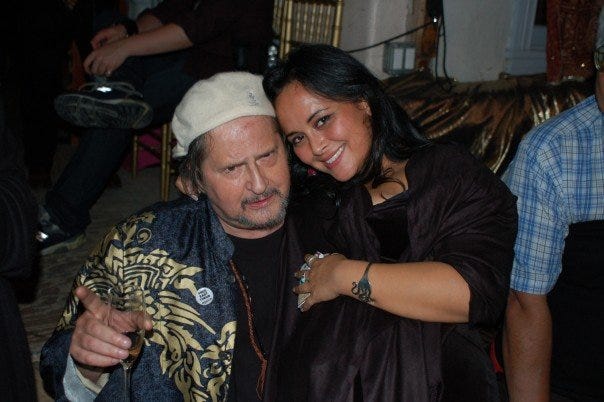
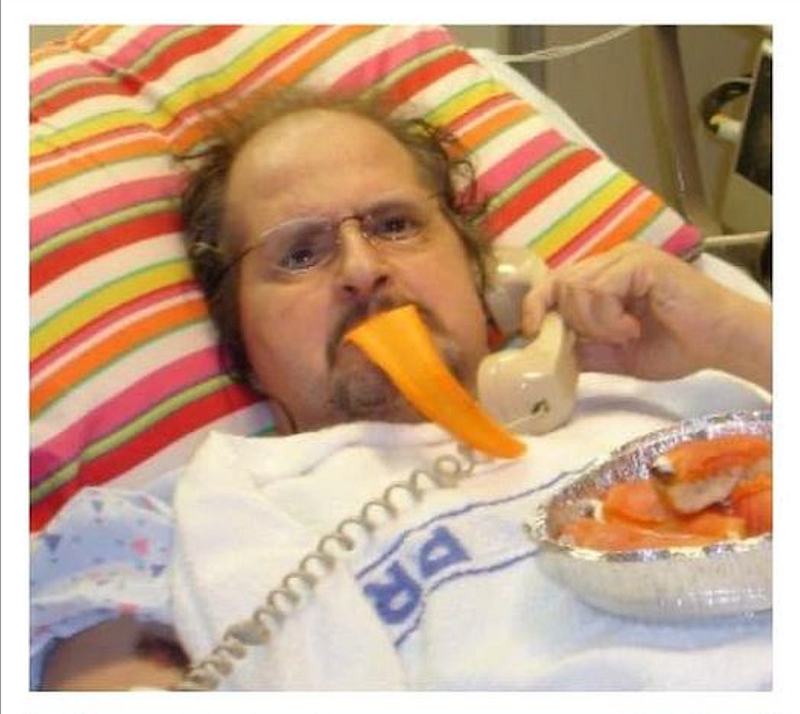
My father was the only one-legged dancer on the dance floor. On Friday nights, he and I went to concerts, where he’d let loose and dazzle the crowd with his unstoppable spirit, his unstoppable moves. With one hand clasped onto a wheelchair, he twisted his torso and jerked his body left to right. It was the closest approximation to dancing that he could muster. My father, Gordon, had one eye, one breast, and one leg. He was terminally-ill.
Whenever he motioned for me to join him on the dance floor, I dashed to the bathroom, or to the concession stand, or intentionally lost myself in the crowd. I hated dancing. Once, during a mandatory middle school dance class, classmates teased me and called me “TFTM.” Too Fat to Move. It was my nickname for half of eighth grade, but it stayed with me in the years that followed. Though I was now no longer overweight, I still felt uncomfortable in my skin. I felt that my body’s movements bordered on the offensive. The way my body moved seemed to me clunky, clumsy, and imprecise. I lacked feminine grace — a quality that I was afraid would disappear if not cultivated. But I didn’t have many opportunities to nourish this quality. I was the only daughter to my one-eyed, one-breasted, one-legged, single father. A man who looked as though an angry Zeus had split him in two.
Like him, I was also in search of my other half, even if I was only a teenager. I was in search of my mother, who I looked for in every woman I knew. And I was in search of love.
For my whole life, my father had painted a vivid picture of my parents’ epic romance story. Romance had made my father whole. I wanted the same for myself, but I feared that nobody would love me in the same way my father loved my mother. No one would search for me with binoculars, waiting in a watchtower for thirty-one days straight in hopes of finding me again after meeting me once at a parade.
I feared that the hypothetical future husbands I’d later fall in love with would reject me because I wasn’t enough of a woman. So I became a diligent student of femininity and used my father as a test-husband. Aside from trying to tame my voice and walk more deliberately, I began to learn recipes and cook for him. Too ashamed to enlist in a proper class (surely someone would ridicule my knife skills), I turned to YouTube and watched the Southern Belle weave the dough over the crust of a cherry pie. I made us catfish stew, chicken cordon bleu, and pumpkin pie (my father’s favorite). The smell of caramelized onions and freshly baked pastries wafted, constantly, from the tiny kitchen of our Midtown Manhattan apartment.
Gordon was thrilled. He loved my cooking not for its taste, but for the way it made me resemble my late mother. My father routinely searched for evidence of my mother in me — in the way I moved and mouthed my words. But, to his great disappointment, the parallels were limited to surface appearances. I looked like her — almond eyes, brown sugar skin, and high cheekbones — but that was it. He found more traces of himself in me than he found of her — the way I’d gesticulate wildly and how water always spilled from my cup when I walked — and this made him uneasy. My presence was a constant reminder of the erasure of the woman he had loved and lost. A woman who had not been duplicated in me. I was a klutz like him. I was a clone gone wrong.
But now there was the hope of oxtail soup. It had been my mother’s specialty, a Javanese dish with a comforting, gravy-like broth, lots of aromatic spices, and meat so tender, it nearly fell off the bones. It took several hours to make.
One night, I decided to prepare it myself. For four hours, I chopped celery and carrots and cilantro, setting multiple timers and making a mess on the floor with meat blood and rice. It looked so good, I didn’t bother tasting it. I carried it out on a tray, and rejoiced in my father’s smile.
“I’m sure it’s delicious,” Gordon said. But as I watched him slurp it, I also watched him try to hide the involuntary disgust that flickered in his eyes.
My broth was nothing like hers. It wasn’t buttery and dark, or well-balanced. None of the right notes hit and then lingered on the tongue. It did not slide down the throat and warm the belly. The meat was tough and the shallots scorched. As I felt the nutmeg, clove, and black peppercorn land jaggedly on my palate, I could almost see my mother: the electric purple orchid pinned to her black hair, red lips, and an energy so serene, it rattled me.
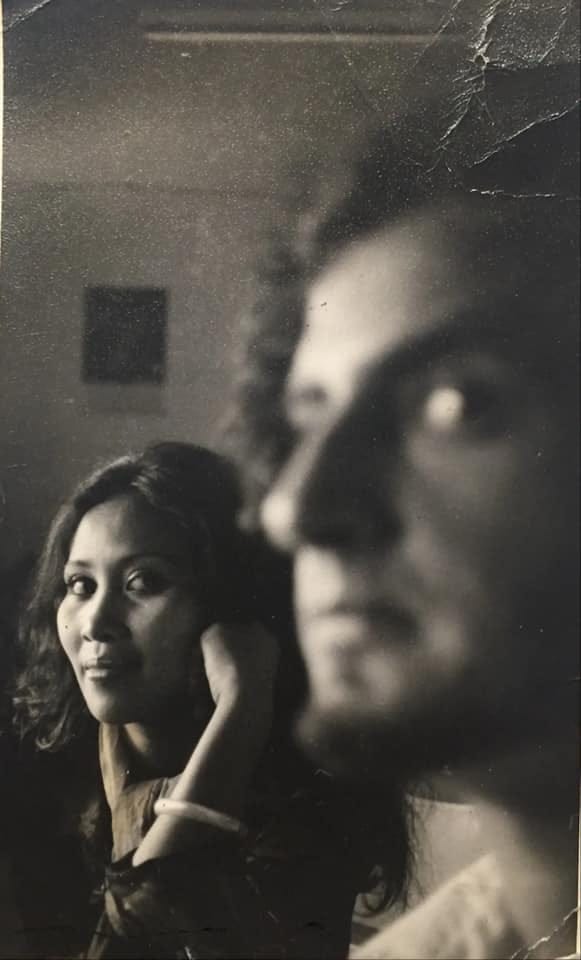
Growing up in Indonesia, I lived between four equally beautiful houses: in a palace in my mother’s ancient city of Yogyakarta, on the cliff-edged Balinese shoreline, on the Bogor mountaintops, and in South Jakarta — a life spent between a metropolis and a rainforest. My parents and I had a zoo of animals: monkeys and dogs and a peacock named Ben-Israel. My childhood was marked by tropical flowers and sodden ruins and so many smiling faces. Then, it was marked by the accident.
When I was seven-years-old, our car crashed. Broken glass, twisted metal, every surface splattered in red — my mother would never recover and my father would remain in a coma for weeks. I was the only one left unscathed. After he regained consciousness, my father was agonized by the loss of my mother, a snapped pelvis, seven broken ribs, and leg bones shattered like glass. Two years after he healed, a rare melanoma took his eye and, then a breast cancer diagnosis took his breasts. Deeper cuts and longer scars this time, and chemo.
While I complained about my rapidly growing chest, menstrual cramps and the trappings of adolescence, my father now suffered from hot flashes and night sweats. The only hormone therapy available to males with breast cancer was tailored for women. It was working; his cancer was now in remission. But he grew irritable, his moods swung wildly, and he inexplicably began writing romantic poetry, wearing blue eye-shadow, and draping his neck in floral scarves. This made it easier to imagine what it’d be like to grow up with a mom, but my father’s slow and eerie transformation to a menopausal man also rendered everything even more perplexing.
The next morning, I found an untouched bowl — save one regurgitated bite — under his bed. I brought it to the kitchen. My father was on his hands and knee, scrubbing away at the kitchen floor. The mess of meat blood and dried rice had stained the grooves between the tiles and I was afraid that when he looked up, he would speak words that would cut. Instead, he smiled weakly, with eyes that pitied me.
After the failed oxtail, my father bought books on mothering and read them with diligence. Chapter One: Parenting with Compassion. Chapter Two: Household Tasks. One afternoon, he burst into my room and said, “Let’s go downstairs!” He led me excitedly to the laundry room in the basement of our building, somewhere I’d never been. He wanted to teach me how to do laundry — a skill that he had only recently obtained, and with minimal success. I dragged the hamper full of clothes and laid out all the clothes on the table. He took out his book from under his armpit. We separated lights from darks. Nearly everything we owned was dark, except for his tighty whities and my bras, which went in together.
“It says here that we need to make sure the machine is just the right temperature,” he said, flipping to an earmarked page.
“Ok, how?” I asked, feigning interest. There were so many things I’d rather have been doing.
“For instance, are these pants cold wash or warm wash?” he said, squinting as he read the label. “It’s warm wash.” He shrugged.
It took us forty-five minutes to read all the labels.
When the machines came to a stop, we transferred our clothes to the dryer. Some fell onto the dusty ground.
“You forgot something,” my father said, picking up a pair of my lacy red underwear with his right crutch. He lassoed it around his pinky.
“Dad!” I said, laughing. “Give it back to me!”
“You call this underwear?” my father said, draping it around his leg and inching it up his hips, “What does it cover? One butt cheek?”
When a neighbor from our floor walked in, I touched my red-hot cheeks with my fingertips.
My father read that we needed to remove certain garments from the dryer after a few minutes to let them hang dry. He hand-ironed the clothes, smoothing his palm over the wrinkles. “See,” he said, “You try it.”
We stood at the folding table, rocking our bodies back and forth in a steady motion. He still wore my underwear on top of his pants, around his thin hips. The fabric billowed where his leg was missing.
But the sweaters shrunk. A bold blue bled from the new sheets, ruining everything. Because I learned by his instruction, my clothing morphed into miniature, discolored versions of their former selves.
So we threw our hands up in the air and started a tab at the downstairs dry cleaner.
I was tormented by the thought of him dying. I feared death would one day steal him from me the way it had stolen my mother. I hated when he slept and did everything possible to prevent it. In my father’s coma after the car accident, he slept for eighteen days straight. I was afraid he would go to sleep and sleep past those eighteen days, and never wake up. I never wanted to sleep in separate beds. For a while, we shared a bed. But when I turned eleven, my father told me it was no longer appropriate to share a bed. At the time, it felt like he was punishing me for getting older, for growing breasts.
He gave me the only bedroom and moved into the walk-in closet. He put in a futon, built shelves and filled them with books. He installed a fan and a TV. A gold framed batik painting of wayang characters from the Mahabharata riding a massive fish, a double-exposed picture of Mama, and the mask of a Balinese demon, hung on the wall.
In the morning, I’d tiptoe to his bedside. If I didn’t hear anything, I’d panic and open the red velvet curtain of his makeshift bedroom and hovered over him long enough to make sure he was still breathing. I took great comfort in watching the rise and fall of his chest. As long as he could still breathe, so could I. I vowed that the day he died would also be the day I’d die.
“Look,” my father said, pointing to the penis that hung flaccid in his tighty-whities.
I snapped my eyes shut.
“Dad, that’s so inappropriate!” I shouted. We had just gotten upstairs with our ruined clothes, and he was in his underwear, a typical sight. But the idea of him redirecting my attention bothered me. To him, the body wasn’t sexual. It was more of a biological curiosity — but I was seventeen and my hormones were raging as his were diminishing. I didn’t want to displace my passions. What was innocent for him was more confusing for me. I was afraid that if I didn’t avert my eyes, he would no longer be my dad, but just a man.
As I’d gotten older, it had become simultaneously easier and more difficult for my father to relate to me. I developed more intellectual curiosities for him to quench, which brought us closer, but also an increasing number of needs he couldn’t fulfill. Simply by default, because nobody else was around, I’d go to him for the kinds of things girls typically turned to their mothers for: birth control, pep talks about boys, body image. And, in turn, he’d confide in me about the troubles and private concerns that men typically reserved for their wives: his diminishing sex drive, his aging body, the many scars and pains he endured. In other words, things I couldn’t soothe.
“Don’t be such a square,” he said, “I’m just illustrating a point about what all this medication is doing to me. It’s not like I flashed you. I guess it’s not appropriate for you to walk around half-dressed, either. Especially when your breasts hang as low as they do. Much lower,” he continued, “than your mother’s.”
The veins along my forehead bulged. When I looked down at my breasts, the anger quickly revved into shame. Even the baggy shirt I wore couldn’t hide my banana breasts. I looked at my father, whose smile appeared amused. I hate you, I said, first to myself, then out loud, “Sometimes, I really hate you.” Fat drops of tears rolled down my cheeks, and, in this moment, I hated the fact that even my tears were fat. That no matter how much weight I lost, my breasts would never be perky and my tears would always be fat.
I nudged past my father hard, knocking him to the ground with my elbow in one fell swoop. Upon seeing him slumped with his one leg and chemo-thinned arm veins, my first thought was: He is weak as shit. My second thought was, Is he ok? “I’m sorry,” I said. I helped him up.
The shock on his lips curled into satisfaction. “You should be,” he said.
I waited for an apology that never came.
Heat rose sharply in my chest and I didn’t know how to quell it. I could not let him win. I stormed out the front door, slamming it so hard, the hallway shook. I wanted to run to the ends of the earth and plunge myself into death. Instead, I hid in the stairwell, one flight up, hoping that I’d hear his frantic crutch-steps scurrying past, and him yelling, “Naom? Naom?” with a voice full of regret and desperate for reconciliation.
When neither came, I decided to walk back to the apartment. I thought my father would’ve internalized his actions and apologized. Instead, I found him tapping at his keyboard with his index finger like a woodpecker, wearing nothing but Calvin Klein tighty-whities and argyle socks. Clove smoke billowed from his curved wooden pipe. He was oblivious.
“What does enantiodromia mean?” he asked in his raspy voice.
“The opposite of something,” I said, grumbling.
“More specifically: the conversion of something into its opposite,” he corrected. “Tarantism?”
“I don’t know,” I said, sighing. “I’m in no mood. I just want to lie down.”
But Gordon couldn’t resist. “A psychological illness characterized by an extreme impulse to dance, prevalent in southern Italy from the 15th to the 17th century, and widely believed at the time to have been caused by the bite of a tarantula,” he said, getting up. He lifted his arms and, pretending to be a tarantula, started to dance like a maniac. The fact that there was no music rendered his moves even more awkward and bizarre. I couldn’t help but laugh.
I was lifting my shirt when my father hobbled past the door and caught an accidental glimpse of my bare breasts.
“Why do your breasts hang so low?” he asked in earnest. “Your mother had the most perfect breasts.” He gestured with his hands, cupping them, then lifting them.
Hers were perfect. In the boudoir photographs she took when she was pregnant with me, they were the kind of breast that fueled male fantasies: dark and voluptuous, firm, with small nipples. They were also the breasts that had nourished me. They embodied the ultimate symbol of the divine feminine. Now, as mine were beginning to swell, transitioning me from girl to woman, they allowed me to morph into my mother, to cross over this bridge into territory that would someday lead me into the realm of motherhood. But my father’s words had cut me deep. To him, it was just guy talk. No harm done. To me, it was yet another way my mother was absent from me.
I sobbed, and called him a jerk. I sprinted toward the bathroom.
Baffled, he made a goofy face. He attempted to chase me with his one leg, laughing audibly until he saw the brass lock turning. It was never a good sign when I locked the door. He stood by it and said, “C’mon. Open up, will’ya? You’re overreacting.” After a few minutes, he softened. “You have many other positive qualities. Nice breasts don’t have to be one of them,” he said.
I sat on the cool tile floor, with my back against the wall, and did my best to steady my breath. I stared at the pop-up anatomical poster of the human body in front of me and studied the blue-veined breasts. There was nothing beautiful about them. My eyes darted around the room. On the bathroom mirror was a note that my father had written in toothpaste. Next to it was another note from another morning: a stick drawing of my father surrounded by maki sushi rolls, and the words, “Daddy smells like sushi. Phee-eeww!” The red apple and flashcards he’d left me that morning rested on the sink counter. Surrounded by these tokens, I got the sense that, despite everything, I was well-loved.
“You’re a terrible father,” I said finally. “I don’t know how you tricked my mother into marrying you. That must’ve been torture for her.” I trembled from my own meanness. But I couldn’t stop. “If she hadn’t chosen you, she’d probably still be alive.” My tongue vibrated from the intensity of words and breath and feeling that had so swiftly escaped my mouth. I lit a cigarette for extra punishment. He hated that I smoked.
“You’re miserable and ungrateful,” he said. “If I were your husband, I would’ve divorced you a long time ago.”
“I would’ve never married you in the first place,” I said.
“I wasn’t cut out to be a single dad,” he said with a sad voice.
“And I wasn’t cut out to be raised by a crazy jerk,” I said.
“You used to be so sweet and soft-spoken,” he said, his voice trailing.
He was right. The shadows of my mother had once lingered in me. But living with my father in New York City had hardened me. I had trumped his loud voice by assuming an even louder voice. I adopted his male characteristics — to replicate him was the only way I knew how to win. Women — my grandmother, my mother, my aunt — had that kind of power over him, but I didn’t, because I had chosen the wrong strategy. In trying to beat him, I had turned into him.
I pitched a series of insults. My voice roared. He remained silent. I could sense my father felt guilty. I heard him ring the corner deli to order me half a dozen roses and gummy bears, my favorite candies. As he waited for the delivery, he shuffled back and forth from the kitchen and tried to lure me with food like I was a mouse; first with raspberry rugelach, then Swiss cheese. And when neither worked, he grew desperate and asked, “Would smoking some grass make you feel better?”
When I unlocked the door and opened it just enough to take a hit, I saw that my father had put on red lipstick and slipped on one of my silk dresses, for comic effect. He wanted to make me laugh. At the time, I found absolutely no humor in the situation. He batted his lashes and tried to hand me the roses. I shoved them toward him. A thorn punctured his thumb. Blood oozed, a little. Then my father got frustrated.
I dug my nails into my forearm. I clawed until the U-shaped curves of my nails imprinted onto my skin — little hieroglyphics for the things I could not speak. I was careful to not draw blood. I had, by now, given up cutting. I had used it to thaw my numbness and snap me back into reality, to remind myself that I was alive. Most of all, I used it to regulate my father. The sight of my blood would always stop the fight. It was one of the only tools I had to make him remember — for an abbreviated moment — that he was the adult and I, the child. Those roles had to count for something.
I thought I heard the front door open. Is he leaving me? My whole body clenched. Abandonment was the one state I found insufferable. I wanted to run to him, hug his ankles, and beg for forgiveness.
“You’re a twerp!” my father yelled.
“You’re a sad shadow of who you once were,” I yelled back.
Then he slunk to the ground and there was silence.
I thought about the silk dress he was wearing on the other side of the door. Guilt rushed in. Maybe I was overreacting? Maybe this was how other fathers and daughters argued? We had no other examples to go by. I began to cry. “I’m trying to live,” my father said.
“What?” I gasped in between sobs.
“I’m trying to live,” he repeated.
“So am I,” I said.
“No. You’re trying to kill yourself. I’m fighting for my life.”
I swung the door open. I was naked under a tattered towel, a shivering cliché out of a low budget horror film.
“My cancer is back,” my father said in a whisper, “I was trying to find the right time to tell you — .”
I couldn’t hear the rest of his words. I gripped onto his body, onto my silk dress, which looked surprisingly and disturbingly good on him. I couldn’t afford to lose him. I couldn’t bear another tragedy. I couldn’t be an orphan. The fear was so pronounced, I vomited. My father held my hair back. I sobbed into his arms. He gathered my hair into an inexpert ponytail. This soothed me. We took turns calming one another.
“How is this even possible?” I looked up and asked him, tracing my finger over his breast. I felt a lump, smooth as a stone. Until this moment, I never realized that my father had breasts, too. That he had ridiculed mine as an attempt to grapple with his own and the pain they had caused him. His many scars looked to me more like beauty marks than battle wounds. I’d miss them the most. They seemed to map out every road we had traveled together. What other tangible proof did we have of all the terror and beauty we had encountered?
He hugged me with all his might.
“I considered not telling you at all. I was just going to fight this and hope for the best.”
I touched my father’s face, and studied it like it was Braille. I memorized his nose, his curly eyebrows, and the rope-like scar that hung faintly between them.
I got up to pour myself a glass of milk from the fridge, to gather myself. My father walked to the bookshelf and flipped open The Cabinet of Natural Curiosities.
“Dad! Gross!” I shrieked when I returned, pointing to the bulge that rose in his pants.
“Oh, thank goodness,” he said, sighing. “At least Viagra works.” He pumped his arms in victory. “I was really beginning to worry. Not a single hard on in months. It’s emasculating.” Sweat beaded his forehead and upper lip. “Whaddya know? An erection and a hot flash, all at once.” he said, rolling his good eye and smiling.
He watered the bamboo money plant on the window sill, and turned to me.
“I’m sure one of those fancy Park Avenue surgeons could fix that kind of thing,” he said, gesturing to my breasts. “If it really bothered you — .”
“You mean if it really bothered you,” I said, guarding my breasts with exaggerated shame.
“Not me, but maybe someone you’d date. Or marry someday,” My father laughed, childlike.
“They’re not that bad. You’re going to make me hate them forever.”
And suddenly it clicked for him. Just like that. “Well, if you put it that way,” he said, squeezing my hand twice, in quick succession, “I hadn’t considered — . I suppose a man who really loves you will love you despite your — . Well, anyway, what do you want for dinner? We’ll get anything you want. And tomorrow I’ll take you shopping for a new dress.” He rambled on, pointing to my silk dress, which by now had assumed his square, masculine form; the fabric was twisted and stained with blood and tears and chocolate.
That was Dad-talk for a clumsy, but heartfelt apology. We both knew it and laughed in harmony.
“Sushi,” I said.
“Truce,” he said.
That night, we slept side-by-side, breathing in unison. I watched him breathe until the morning light poured in from our windows. I felt his heart beating into my little palm and that’s how I knew, in that holy moment, that the world was still safe.
Twenty years later, a few blocks north of the apartment my father and I shared, my two-year-old daughter Sienna and I dance in the kitchen to Neil Young’s Harvest Moon. We sway our arms and bob our heads, off rhythm. With her, I feel the music in my soul. I dance without shame. With her, my breasts are a source of pride.
Oxtail soup simmers on the stovetop, ready to be served. Cinnamon, clove, and nutmeg linger, just like they did in all my childhood spaces. I blow on the ladle and let Sienna sip it first. Her eyes fill with delight.
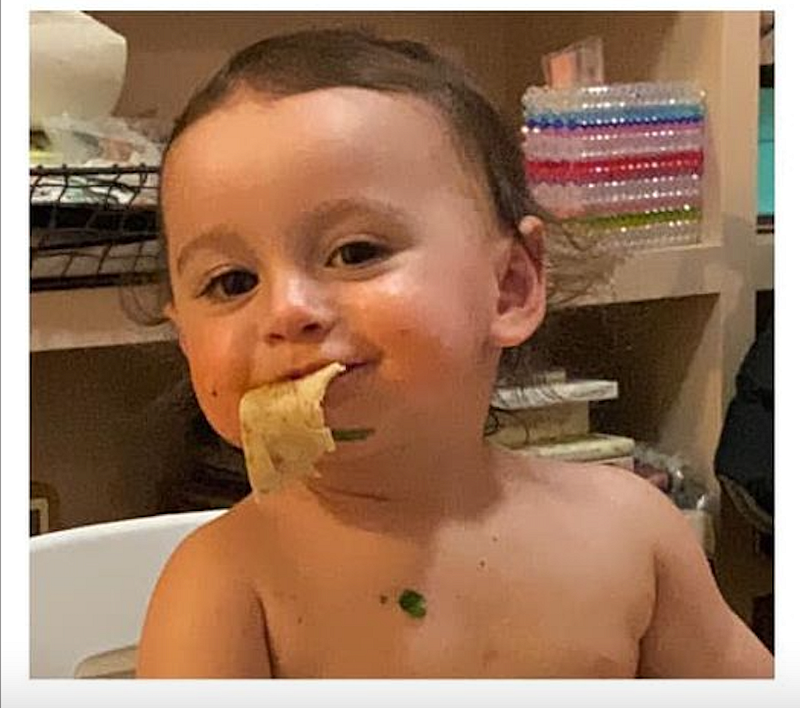
“Grandpa Gordon!” Sienna shouts with a burst of energy that startles me. For a brief moment, I do a double take at the front door. The reality sinks in all over again that he is long gone. I turn to where she points: at his photograph on the shelf. She reaches for the frame, as she always does when she eats. In it, my father is smiling and young, with a head full of curly hair. When I hand her the photo, she traces her finger over his nose and touches her own nose in recognition. They never got a chance to meet, but she is pulled toward him. She is fascinated by his objects: his pyrite crystals and miniature dioramas, the giant fish painting and his many picture books. He is the main character in all her favorite bedtime stories. They are connected with a bond I never had to forge.
I have stopped searching for him in the men I meet. He is in me, in the way I parent, in the rev behind my steps. He is in my daughter.
“Have some!” she says, pressing a pinch of oxtail onto her grandfather’s glassed lips. She watches for his reaction.
“Yum,” she says with eyes full of wonder. “He says it’s so good.”