
In quest to build, break, and disrupt, tech companies dismiss brand at their own peril
Apple, Amazon, and Google consistently rank as the most valuable brands in the world, even as their product-centric leaders position brand-building as a frivolous exercise. Is this mere rhetoric, or is the pursuit of brand value really just a fool’s errand?

According to VP of Worldwide Marketing Communication and Apple veteran Allison Johnson, Steve Jobs’ most “dreaded, hated” words were “branding” and “marketing.”[1]
For Amazon’s Jeff Bezos, advertising — historically a powerful lever for building brand fame — is simply the price one pays for “unremarkable thinking.”[2]
Meanwhile, Google and Facebook have created a digital media duopoly that relies upon pitting “brand” against “performance,” suggesting an investment in the former must come at the expense of the latter.
Remarkably, at the same time as each of these tech giants have in their own way diluted, derided, and dismissed ‘brand’ as a dirty word, they have managed to build the most innovative, nimble, and valuable brands in the world.
How can this be so?
The truth is, whether they realize it or not, these companies are bigger brand believers than their rhetoric lets on — and their approach to building brands is more sophisticated and enlightened than that of many who overtly worship at the altar of “brand management.”
What Apple, Amazon, Google, Facebook, and other technology companies reject is not brand per se, but a myopic view of brands that relegates them to a superficial silo of TV commercials, manifestos, and anthem films. Their leaders intuitively understand — perhaps due to their background as visionary-yet-detail-oriented engineers — that a brand is ultimately a manifestation of everything a company makes, says, and does. And, more importantly, how people perceive and interpret those inventions, communications, and behaviors.

For Jobs, brand was the perfection of a product, including, and especially, the parts one could not see — even as he used billboards, 30-second spots, and brick-and-mortar stores as vessels through which to broadly communicate that perfection.
For Bezos, brand is an ever-more frictionless, customer-obsessed experience of buying and selling — even as he seeks to exploit other brands’ “unremarkable thinking” and build his own paid advertising empire.
For Page, Brin, and Zuckerberg, brand is a series of increasingly ambitious moonshot innovations that redefine how we see, navigate, and connect with the world — even as they rely on mass media to explain those moonshots to the public, and to reassure them when they don’t quite work out as planned.
Indeed, it is precisely when things go wrong in Silicon Valley that we see the critical role brand plays in its sustenance. Like when a solution to a non-existent problem is offensively named and priced. Or when a hardware glitch puts lives at risk or an algorithmic loophole threatens our democracy. Or when private sector “disruption” is faced with the reality of public sector regulation. Or when executives and investors underpay and undermine the people on whose backs and brains their companies are built.
When it comes to brand, it seems we don’t know really know what we got till it’s gone.
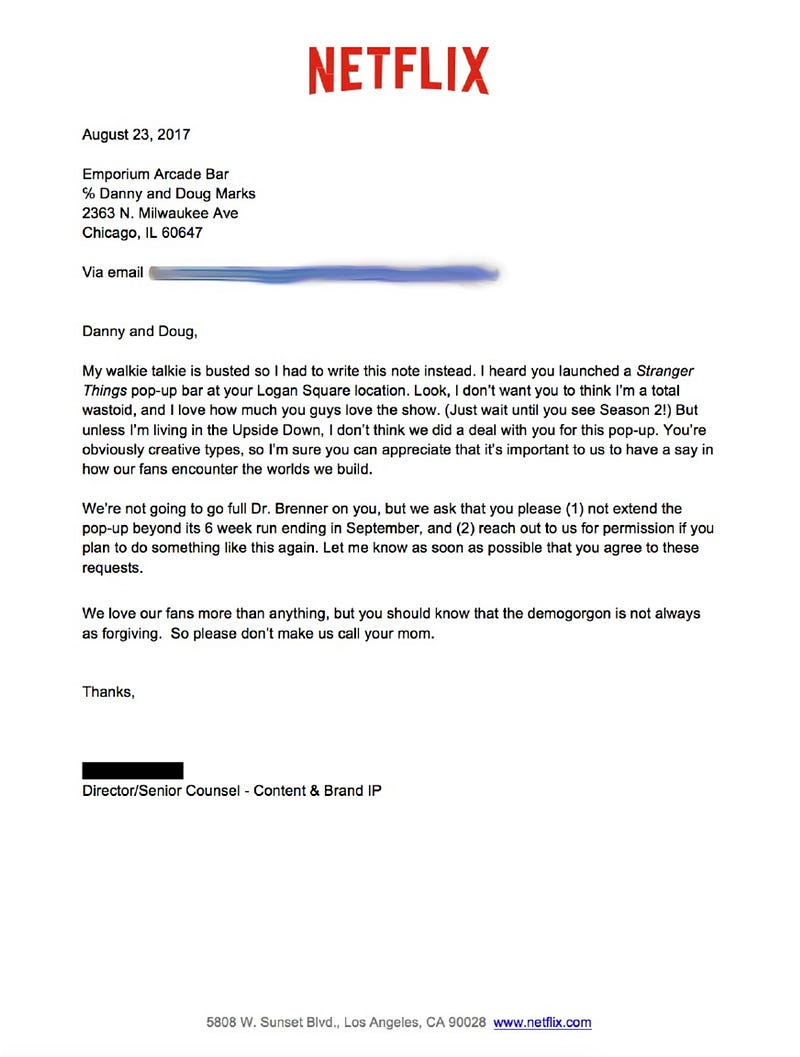
Taking a holistic view of brand from the start can help mitigate these risks, and also creates tremendous opportunity. It’s what has enabled the companies named above to sustain growth amidst complexity, volatility, and change over a period of many decades, and what underpins the success of many of today’s fastest-growing enterprises — from Lyft’s decision to turn a commoditized ride-sharing service into a force for good to Netflix’s ability to turn an interaction as mundane as a cease-and-desist letter into an expression of its ethos.
Unfortunately, “everything is brand,” while true, isn’t particularly helpful advice. But there are a few core principles that even the staunchest brand-denier should be able to get behind:
Define your ambition.
Call it what you want — purpose, promise, mission, vision — but one’s starting point must be an articulation of an objective and the trade-offs associated with achieving it. It can be something abstract, like simplicity, or something really tangible, like building the best car in the world (whatever that might mean at a given point in time). What matters is that it’s clear enough to serve as a filter for all decisions and big enough to unify a company’s disparate people, ideas, and activities into a coherent whole.
Organize for success.
Many companies preach an integrated view of brands at the same time as they reinforce organizational silos that sabotage true integration. This isn’t about diluting specialized areas of expertise — on the contrary, by literally and figuratively seating everyone at the same table, one allows true expertise to shine while combining and applying it in service of a broader aim. At Apple, Johnson recalls that “the marketing team was right next to the product development and engineering teams…so [they] understood deeply what was important about the product.”[1] In other words, it was imperative that the organization of Jobs’ teams mirrored the vertical integration of his products.
Measure what matters.
Another roadblock to an expansive view of brand is a narrow-minded approach to measuring its strength. As long as “brand image” remains the standard against which brands are measured, myopia will endure. Instead, companies must adopt a measurement system that accounts for financial performance, talent recruitment and retention, product innovation and functionality, customer satisfaction, reputation across all relevant stakeholder groups, and all other internal and external outcomes that contribute to and should be informed by brand.

Branding has humble origins — a way for farmers and ranchers to identify livestock as their own. Much has changed, but the technology-driven democratization of media and innovation has created a cluttered, chaotic world in which a brand’s original purpose is more important than ever.
Ironically, it is only when we acknowledge that brands are themselves messy, complex objects that they can live up to their full potential as the ultimate simplifiers of complexity. “Brands are the solution, not the problem,” notes Google’s own Eric Schmidt. “Brands are how you sort out the cesspool.”[3]