avatarVicki Larson

Free AI web copilot to create summaries, insights and extended knowledge, download it at here

2590

Abstract

a lifetime — and not the decades ahead of her.</p><blockquote id="0891"><p>“Motherhood is like being a crack tennis player or ballet dancer — it lasts just so long, then it’s over. We’ve made an abortive effort to turn women into people. We’ve sent them to school and put them in slacks. But we’ve focused on wifehood and reproductivity with no clue about what to do with mother after the children have left home. We’ve found no way of using the resources of women in the 25 years of post-menopausal zest.”</p></blockquote><p id="f015">Women themselves, however, saw things differently.</p><p id="82c5">The term “menopause” made its debut in English-language dictionaries in the late 1880s, but shortly after, it became a medical category, according to historian Susanne Schmidt’s fascinating book <a href="https://press.uchicago.edu/ucp/books/book/chicago/M/bo48408362.html"><i>Midlife Crisis: The Feminist Origins of a Chauvinist Cliché</i></a>. And because doctors were men, “rather than depicting menopause as a normal transition, they described it as an illness in need of treatment or an indication of a body in disorder.”</p><p id="f40b">Meanwhile, feminists at the time, like educator, minister and suffragist leader Anna Garlin Spencer, saw menopause for what it was — “a second youth,” when women were finally free of their domestic duties and could become “a citizen of the world.” In other words, women felt liberated no matter what the male doctors were saying.</p><p id="bc32">So why are we sold a different narrative, even today? As historian Susan Mattern suggests in her book, <a href="https://www.jstor.org/stable/j.ctvf3w3dr"><i>The Slow Moon Climbs: The Science, History, and Meaning of Menopause</i></a>, the medicalization and pathologizing of menopause into a “syndrome” is a way to weaken women when our power is rising, as it was in Spencer’s day and as it is now. “Dominant groups can be very creative in inventing new ways of oppressing people, she <a href="https://www.theatlantic.com/magazine/archive/2019/10/the-secret-power-of-menopause/596662/">writes</a>.</p><p id="b54e">When I read about the falsehoods that have been perpetuated (by men) about menopause, a natural process all women go through, and that differ so much from how women actually experience it, I’m angry — no doubt many men and women have internalized those falsehoods, which has inevitably denied women the opportunity to fully embrace and act on our post-menopausal zest.</p><p id="b316">No more.</p><p id="9424">I’m ready to reclaim my zest. Are you?</p><p id="6390"><i>Hey, I’m working o

Options

n a book on changing the narrative about middle-aged and older women, “Not Too Old for That: How Women are Changing the Story of Aging.” Interested? Follow me here, on <a href="https://medium.com/@OMGchronicles">Medium</a>, and on <a href="https://twitter.com/OMGchronicles">Twitter</a>, <a href="https://www.facebook.com/vlarson">Facebook</a> or <a href="https://www.instagram.com/omgchronicles/">Instagram</a>. If you want to support my work and have unlimited access to my writing and the writing of all Medium writers, please become a member <a href="https://omgchronicles.medium.com/membership">here</a>. And if you’re interested in changing marriage, please check out the book I co-authored, <a href="http://thenewidobook.com/">The New I Do: Reshaping Marriage for Skeptics, Realists and Rebels</a>. You can support your local indie bookstore (please do) or order it on <a href="http://www.amazon.com/The-New-Do-Reshaping-Marriage/dp/1580055451">Amazon</a></i>. <i>We’re also on <a href="https://www.audible.com/pd/The-New-I-Do-Audiobook/1549152815">Audible</a>.</i></p><p id="d783"><i>For more of the good stuff, follow <a href="https://medium.com/fourth-wave">Fourth Wave</a>, where we’re changing the world for the better, one story at a time.</i></p><p id="e2c9"><i>For more by this author, try:</i></p><div id="0181" class="link-block"> <a href="https://readmedium.com/the-tragedy-of-heterosexuality-5d4a0483e7f3"> <div> <div> <h2>The Tragedy of Heterosexuality</h2> <div><h3>Why do women put up with men who feel entitled to women’s emotional, sexual and domestic labor?</h3></div> <div><p>medium.com</p></div> </div> <div> <div style="background-image: url(https://miro.readmedium.com/v2/resize:fit:320/1*FbmC_pjiJoUgYX2bZrhmAA.jpeg)"></div> </div> </div> </a> </div><div id="7add" class="link-block"> <a href="https://readmedium.com/women-marriage-is-not-a-financial-plan-f2379d207b4b"> <div> <div> <h2>Women, Marriage Is Not A Financial Plan</h2> <div><h3>And please don’t leave the financial decisions to your spouse</h3></div> <div><p>medium.com</p></div> </div> <div> <div style="background-image: url(https://miro.readmedium.com/v2/resize:fit:320/1*L1iNtYU4-OsHJGJBvc1fCA.jpeg)"></div> </div> </div> </a> </div></article></body>

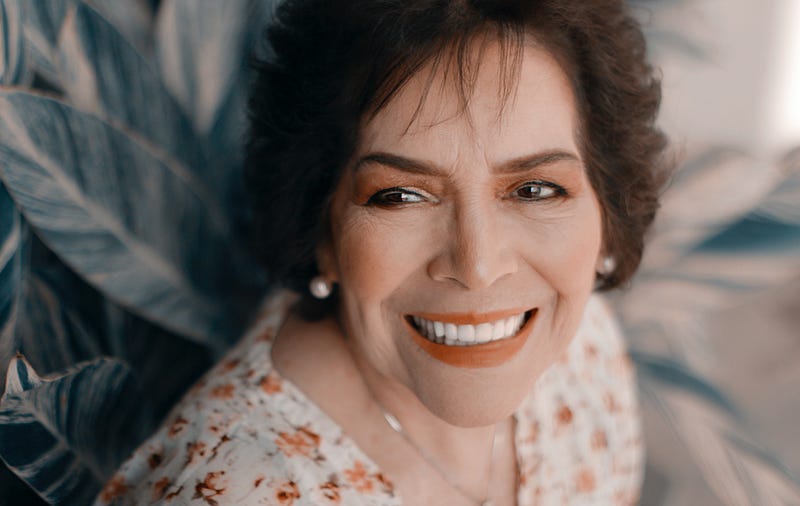
Luis Machado/Unsplash

In Praise of Post-Menopausal Zest

Many women see the end of their fertile years as liberating, like a ‘second youth’ — so why are we sold a different narrative?

Almost everything I learned about sex came from books on my parents’ bedroom bookshelf, among them the 1969 best-seller “Everything You Ever Wanted to Know About Sex (But Were Afraid to Ask).”

I’m pretty sure I flipped past the section on menopause — I was in the midst of puberty so I didn’t even have a concept of what menopause was. But while doing research for my book on changing the narratives about older women, I stumbled upon a passage in the book, later made into a Woody Allen movie, that floored me:

“To many women, the menopause marks the end of their useful life. They see it as the onset of old age, the beginning of the end. Having outlived their ovaries, they think they may have outlived their usefulness as human beings. They may fear that the remaining years will just be marking time until they follow their glands into oblivion.”

The end of our “useful life”? Outlived our “usefulness as human beings”? What use would that be? Popping out babies? Is that all women are good for?

No surprise it was written by a man — Dr. David Reuben. (For the record, Reuben, who had pissed off feminists and gays for his views in this book and ones that followed, had questionable professional credentials and relied on scant academic references and eventually escaped to Costa Rica, but not before causing a lot of grief for women because of his views.)

Imagine turning to that book for help, as millions did, only to be told that. How many women, and men, believed that to be true? How might that impact their views and actions?

Honestly, no woman I know thinks she’s useless just because she no longer menstruates. While some may feel some temporary sadness about that, many more women experience what American anthropologist Margaret Mead called “post-menopausal zest.”

In a 1959 Life magazine article, Mead bemoaned the fact that society had spent too much time focusing on the brief period when a woman is raising young children — and it is brief in the course of a lifetime — and not the decades ahead of her.

“Motherhood is like being a crack tennis player or ballet dancer — it lasts just so long, then it’s over. We’ve made an abortive effort to turn women into people. We’ve sent them to school and put them in slacks. But we’ve focused on wifehood and reproductivity with no clue about what to do with mother after the children have left home. We’ve found no way of using the resources of women in the 25 years of post-menopausal zest.”

Women themselves, however, saw things differently.

The term “menopause” made its debut in English-language dictionaries in the late 1880s, but shortly after, it became a medical category, according to historian Susanne Schmidt’s fascinating book Midlife Crisis: The Feminist Origins of a Chauvinist Cliché. And because doctors were men, “rather than depicting menopause as a normal transition, they described it as an illness in need of treatment or an indication of a body in disorder.”

Meanwhile, feminists at the time, like educator, minister and suffragist leader Anna Garlin Spencer, saw menopause for what it was — “a second youth,” when women were finally free of their domestic duties and could become “a citizen of the world.” In other words, women felt liberated no matter what the male doctors were saying.

So why are we sold a different narrative, even today? As historian Susan Mattern suggests in her book, The Slow Moon Climbs: The Science, History, and Meaning of Menopause, the medicalization and pathologizing of menopause into a “syndrome” is a way to weaken women when our power is rising, as it was in Spencer’s day and as it is now. “Dominant groups can be very creative in inventing new ways of oppressing people, she writes.

When I read about the falsehoods that have been perpetuated (by men) about menopause, a natural process all women go through, and that differ so much from how women actually experience it, I’m angry — no doubt many men and women have internalized those falsehoods, which has inevitably denied women the opportunity to fully embrace and act on our post-menopausal zest.

No more.

I’m ready to reclaim my zest. Are you?

Hey, I’m working on a book on changing the narrative about middle-aged and older women, “Not Too Old for That: How Women are Changing the Story of Aging.” Interested? Follow me here, on Medium, and on Twitter, Facebook or Instagram. If you want to support my work and have unlimited access to my writing and the writing of all Medium writers, please become a member here. And if you’re interested in changing marriage, please check out the book I co-authored, The New I Do: Reshaping Marriage for Skeptics, Realists and Rebels. You can support your local indie bookstore (please do) or order it on Amazon. We’re also on Audible.

For more of the good stuff, follow Fourth Wave, where we’re changing the world for the better, one story at a time.

For more by this author, try:

Menopause
Women
Midlife
Aging
Feminism
Recommended from ReadMedium