
Talking to Our Sons About Emotional Intelligence
I’ve Made Many Mistakes As a Parent, But This I Got Right
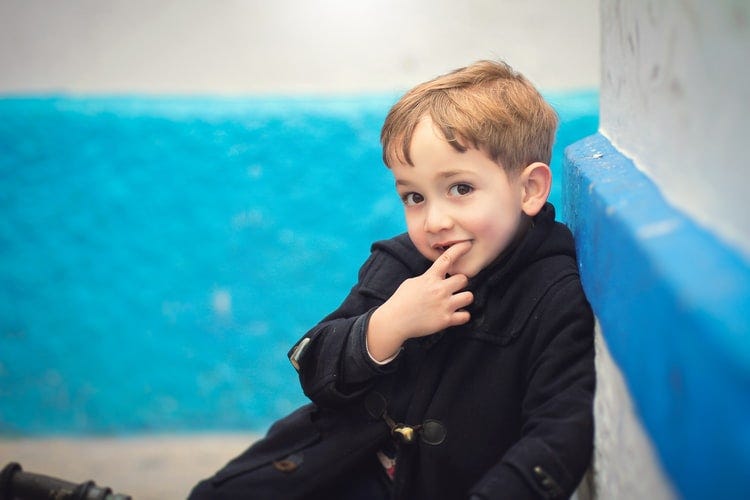
My son has always been a boys’ boy.
Of course, we had those heavenly early years where we were each other’s constant companion, where he would drop everything suddenly to insist on a long cuddle from his mum. Still, he’s always been about the boy stuff.
The sport, the cars, the insects. I love him for all of it.
But there’s one thing I saw in my young son, that was less stereotypical, and that I went out of my way to nurture, and that was his instincts about people’s behaviour, or put another way, his emotional intelligence.
I’m not sure what first alerted me to this being a good idea, but it’s not something I planned (though how I’d love to say it was!). It was rather an observation my son had made, about someone’s behaviour not matching up to their words, that struck me as insightful. He’d been perhaps six at the time.
Of course, all young kids are keen observers of adult hypocrisy. In their black and white young world if someone says they do something and then proceed to do otherwise, that’s an anomaly that will need explaining. Why would someone say they are one thing and then be another? Are they lying?
To this observation of my son’s, I gave a basic explanation that went along the lines of, “Sometimes people say something that’s not true, because they wish it was true and they feel better thinking about it that way. Sometimes they don’t even know they are making it up, they just do it to feel good, instead of feel bad”.
Afterwards, I commented on what a grown-up observation he’d made e.g. “Wow, that’s impressive Louie, you were really paying attention there. I’m beginning to think you have a lot of emotional intelligence for someone your age”.
In response, like any time you praise a child for a quality they have exhibited, I watched my little boy stand a bit taller and nod to himself, taking in this positive information about himself and what it might mean.
In general, my son has not been the most enthusiastic student. Like me, he learns visually, so understanding spoken instructions and information can be a struggle. Plus, school and homework were just more time taken up from playing sport and training with his team.
In his mind then, and in contrast to his academic sister, he does not think of himself as intelligent, as is the fate of so many kids who don’t respond to our cookie-cutter style of schooling and education.
Yet he knows one thing about himself, and that is he reads people well; that he gets people and life in ways that many of his friends can’t, a specific skill he’s obviously nurtured in himself over the years, with not a small amount of pride.
As he’s moved into the teenage years, my son has continued to engage with me on these types of subjects, especially when the topic relates to his own relationships with others, and thus my explanations have necessarily become more sophisticated.
For example, recently he made an observation on someone’s behaviour towards him that wasn’t fair and that has hurt, and he sensed the friend in question was trying to pass on his own hurt feelings. I explained how and why someone might project their issues onto you, and how you can depersonalise a situation like that by understanding it’s not about you at all, that the other person is struggling and looking for someone else to carry their upset feelings for them.
Also, that you don’t have to take their stuff on. In fact, when you don’t take it on, when you let it slide off your back, then the other person is more likely to have to look back to themselves for the problem, instead of see it reflected in your reactions.
That my son is still listening at this point in time, as a sixteen-year-old teenage boy, feels like a miracle. Except for the occasionally inspired moment, usually fuelled by a good day at school or a sports win, he hasn’t got a whole lot to say to his parents.
When I need to ask him something, or tell him something or just check in, he’ll hang back in my company with all the enthusiasm of a pending dental extraction, the last word out of my mouth, quickly met with a barely audible mumble, “Is that all? Can I go now?”.
But when it comes to topics where he might learn a bit more about what makes himself and others tick, he’s showing up.
The funny thing about all this is, I don’t really know whether my son has a special gift for emotional intelligence or not, at least any more than other kids, and at least such as I’ve encouraged him to believe of himself.
Maybe, it’s just been a self-fulfilling prophesy?
It’s my belief that these conversations we share about how emotions work and how they can be managed, would not have a hope of being listened to if I hadn’t suggested at an earlier point, that he has a gift for such matters of an emotional nature.
That’s not to say he’s making eye contact with me and taking notes on his device (let’s not get carried away here), but he’s not hedging to escape my company like he normally would, and inevitably there will be at least one or two insightful questions.
But here’s the important thing: by instilling in my son early on that he has a heightened emotional intelligence and that such a skill is a highly valuable one, I have enabled:
One: he gets to feel good about an aspect of himself; that he has a form of intelligence, that while not taught at school or that is measurable in terms of grades, is nonetheless desirable, useful and worth nurturing. This has given him confidence in himself.
Two: that in nurturing his emotional intellect he is indeed developing profound skills for life. In observing behaviours in himself and others, and how those behaviours relate to feelings, he is better positioned for entering the world as an adult and the potentially explosive world of grown-up relationships.
This last point is significant, I believe, when so many boys go into adulthood ill equipped to handle their feelings and adult relationships. When we have an epidemic of young men, projecting their pain and insecurities out onto the world with the only emotion we sanction in them — anger — it’s not a stretch to think that up-skilling their emotional intelligence might be in everyone’s best interests.
Little boys are such gorgeous, loving, caring individuals when they start out in this world. Helping them hang onto this side of themselves, as they navigate what it means to be a man, can be the most profound gift we give them, and the world at large too.
My son is boy’s boy, no doubt about it — that hasn’t changed as he’s grown and nor would I want it to change; masculinity is a beautiful thing and as he grows into a man, I feel pride.
But the most central thing about living our human lives are our feelings and our relationships with others, and I want for those to give him joy in his life, not heartache.
It may not have been intentional on my behalf and trust me when I say, I’ve made more than my share of parenting mistakes, but with facilitating my son’s emotional intelligence, I’m convinced I got something right.


