
In It For Themselves
One of the downsides of the dictatorship that is the Russian Federation is that there is no sense of social responsibility. Ironically, communism destroys the sense of community in the population. Russia has yet to outgrow that particular philosophy, and the oligarchy has only exacerbated it.
First, with Communism, the state takes care of everything, and there should never be a need for an individual citizen to paint the stairwell in their apartment building or mow the grass. The state should take care of all these things as part of its total employment initiatives. Extremist capitalism suffers from the opposite of this, where libertarians assume that everything is an individual’s responsibility and the state should do nothing at all. The more rational democracies in Northern Western Europe have found something of the golden middle. If someone sees a piece of trash on the street, they’ll pick it up, but they also have good social services that will empty the plentiful public trash receptacles. There is no such morality in Russia. The trash piles up and piles up until somebody rezones the area as a dump.
Now, this psychology that the Russians are stuck in is okay if you do actually live in a communist country because, in general, the state will take care of everything. There’s always a constant need to find more jobs for people to paint public stairways and pick up trash, jobs that don’t require very much equipment. Just tell somebody to do it, and it will get done. The problem comes when you take people who are accustomed to Communism and shove them into the most extreme capitalist society in the world — Russia. This is what happened in the feral nineties, and it destroyed Russian society. It led to the new Russian philosophy of “get what you can while you can or somebody else will.” There is no centralized government that is going to take care of you and no sense of community at the local level. Everyone is in it for themselves. Take every opportunity because there might not be another one, and exploit it to the maximum degree possible because this is your one ticket out of poverty.
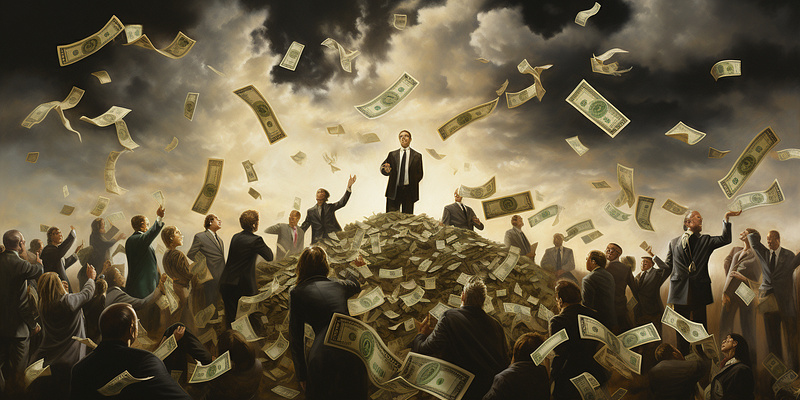
All of this boils down to anyone with the ability or opportunity to exploit any situation to benefit themselves. And we have a couple of real-life stories of people doing just that.
The corruption in the Russian military is legendary, and we are seeing it in action right now, but this isn’t really news to anyone who’s been following the conflict. I would guess that at least 50% of the money being invested in the war is never making it to the front, and 80% wouldn’t surprise me. Based on the amount of money that Russia is spending on this war, they should be winning. Handily. But they aren’t. There isn’t enough of anything on the front lines for Russian troops. Everything from boots to food to artillery shells is lacking because corruption is taking a cut. Everyone can see that this war isn’t going to last forever, and now might be the only chance to get rich quickly. By conducting strikes on supply depots far behind the lines, the Ukrainian military is actually helping these corrupt individuals cover their tracks. All the corrupt officer has to do is write down that he delivered 10,000 shells when, in reality, he only delivered 2,000, and when the Ukrainians blow up the depot, he says that there were 10,000 shells in it when there were only 2,000. Tracks covered. War is great for corruption when the army lacks logistics tracking, and this is precisely why Russia can never upgrade its logistics. Every pallet of ammunition or uniforms that goes into Ukraine gets tracked from delivery to recipients using barcode scanners, just like Amazon tracks a package from the warehouse to your door. But when the commanding General is taking his cut, such a system becomes impossible to implement in the Russian army.
No, the Ukrainian system isn’t perfect, and as the New Ork Times reported, $1 billion, or about 0.5%, of packages got lost. Amazon wishes their numbers were that low.
This philosophy is rooted in the oligarch class, who were the first to adapt to it successfully. Back in the 1990s, when the getting was good and everything was for sale, they scooped in and took over. The Russian people realize this and see that corruption is the path to success. Hard work will get you nowhere.
However, let’s look outside the military at some other cases.
Russia invests a lot of money in infrastructure, and during normal times when everything is stable, the system can absorb the amount of corruption that would normally prevent services from being rendered. In peacetime, the system can cope. Wartime changed all of that. The level of economic desperation in Russia is skyrocketing, and this allows people to take bigger chances for bigger payoffs because when the system is brittle, no one knows how long it will last. That was the rational choice if the mayor was skimming 5% annually off the budget before the war. He could be assured of remaining in his post for a long time and that 5% was a dependable income. Now everything is chaos, and nobody knows how long they will be allowed to stay where they are, so they’ll take bigger risks for bigger payoffs. A mayor who now sees his job as tenuous or at risk ramps up the corruption to 50% or higher. That’s what leads to massive blackouts and lack of heating in the dead of winter. This leads to trash not being collected, the electrical grid failing, and egg shortages.
But it gets Better (Worse).
A Russian on telegram who goes by Rogozin reports that Russians are buying up all of the drones from AliExpress (Chinese Amazon) and reselling them to the military at marked-up prices. Rogozin is the former head of the Russian space program and now “governor” of Zaporizhzhya. Why not? What choice does the military have? Mark it up 50%. Or more. What’s the downside? Make a quick $500 per drone! That’s more than most Russians make in a month! (The median wage in Russia is higher only in oil-rich regions and the capitals.)
Rogozin also reports that the Ukrainians have a tremendous advantage when it comes to drones. He gives one example of Ukrainians sending 14 drones at a single IFV. “It’s like a hornet’s nest, the buzzing.”
Anyone who can exploit the current desperation of the Russian state is doing so, and the burden is rising.
Hope makes all the difference. People without hope don’t invest in the future and don’t take the bigger picture into account. People without hope only think about themselves. There is no hope in Russia. It’s an endemic problem for Russia. The hope that does exist is to get a visa to the West. There’s no feeling that things are going to be better no matter what happens in the war. Nothing ever changes for the better. Putin will always be president, and the oligarchs will always control things. Even after Putin broke his contract with the Russian people, they have no hope that he will honor it again one day. The contract says, “We will stay out of politics and vote for you as long as you leave us alone.” When something gets worse, it quickly becomes the new normal. Being ignored by the state was the best they could hope for, but now exploitation has become the norm.
Putin knows this about hope and does his best to extinguish it among his perceived enemies. Disinformation makes people believe that Russia is undefeatable, that the West has abandoned Ukraine, and that they are only delaying the inevitable. But hope is a hard fire to put out, and his efforts fall short.