
NATURE. PHOTOGRAPHY
In Flow with Nature
October 2nd week prompt: Loving house plants
Natural Selection
I select most plants for my yard based on what grows best in my area. I’d rather work with nature than fight against it. I’ve learned the hard way that natural selection will weed them out for me if I choose poorly. They simply won’t survive.
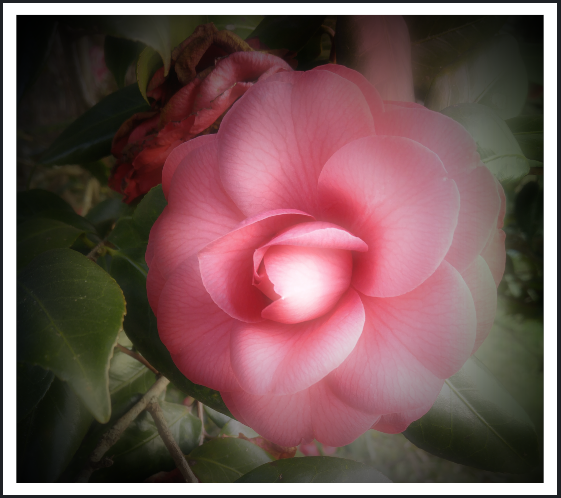
Camellias
With a little research, I discovered plants that flourish in South Louisiana. One such plant is the camellia in the cover photo. Take just one look at the Japanese Camellia, and it’s obvious why it’s also known as the Rose of Winter. These bushes brighten my winter months with rosy blooms. They have no distinct odor, so they’re more tolerable than perfumed roses, for people with sensitive noses.
When the blooms are almost spent, I clip them and put them into a basket or into a vase so I can enjoy them a bit longer.
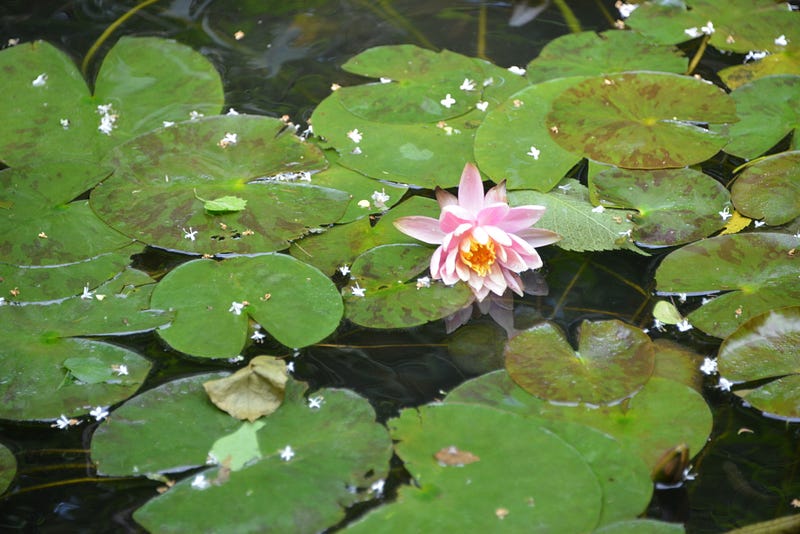
Water Lilies
I purchased one water lily years ago from a local nursery. Within a few years, it multiplied so fast I had several plants to give away and trade at local plant swaps. They literally require no care at all, other than dividing them when they overtake the pond. The koi enjoy nibbling on the petals and the lily pads. Aphids can become a pest and eat holes in the lily pads. The koi will eat the aphids if I wash them into the water.
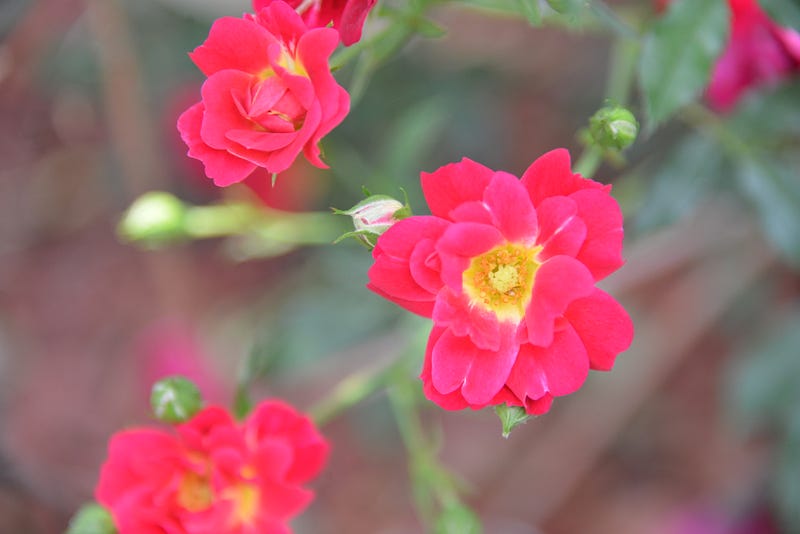
China Roses
China roses bloom nonstop from early Spring until Winter here. They require very little care and tolerate the humidity well. Their nectar is a source of food for birds in Winter, when food is hard to find.
My luve is like a red, red rose That’s newly sprung in June; O my luve is like the melody That’s sweetly played in tune
-Robert Burns
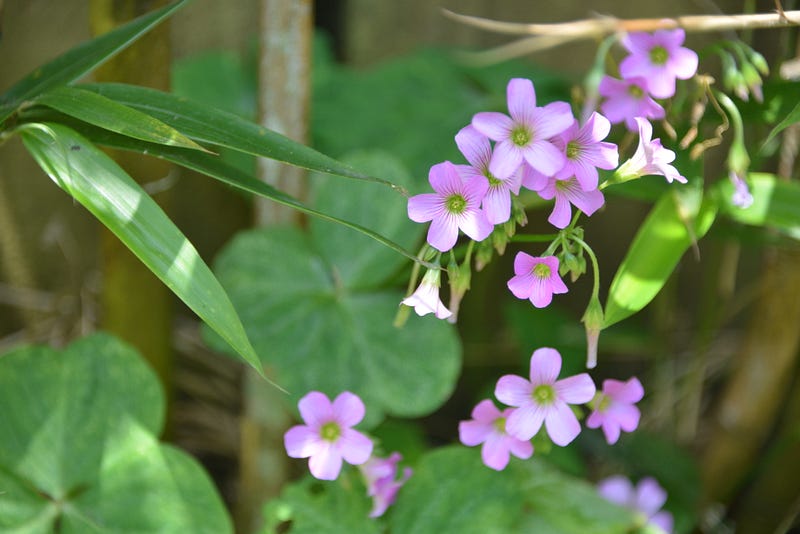
Pink Woodsorrels
Also known as Pink Shamrock, pink woodsorrel is a native wildflower here. It can become invasive. So far it has only popped up in crevices between plants or in grassy areas of my yard. It’s a flowering herb that can be found on every inhabited continent. Unfortunately it can be harmful to pets and horses, if ingested in large quantities. So I don’t let it grow in areas where my dogs play.
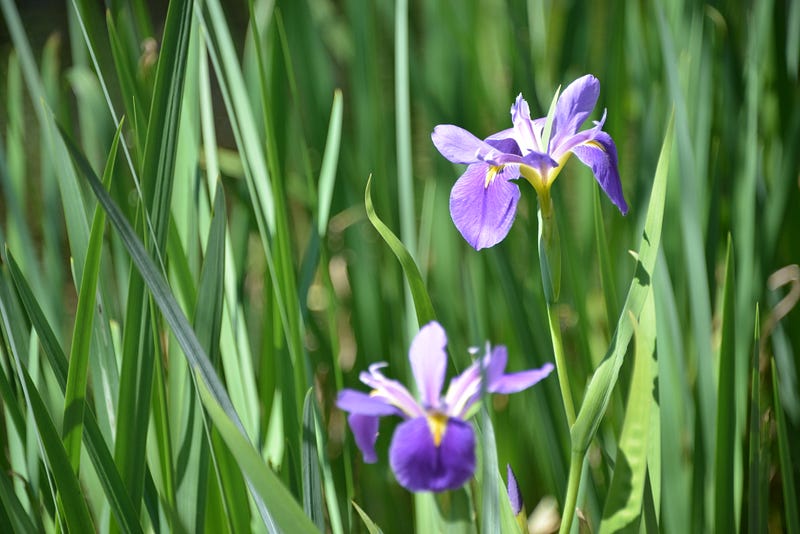
Southern Blue Flag Irises
Nearly all Irises grow well in Louisiana. They flourish in water gardens, ponds and spread rapidly upon river banks. This plant grows on the edge of the lake behind my house.
Irises come in all colors and sizes, from pastels to brights! They have rhizomes, which grow underground, and they can easily be propagated as an interior houseplant.
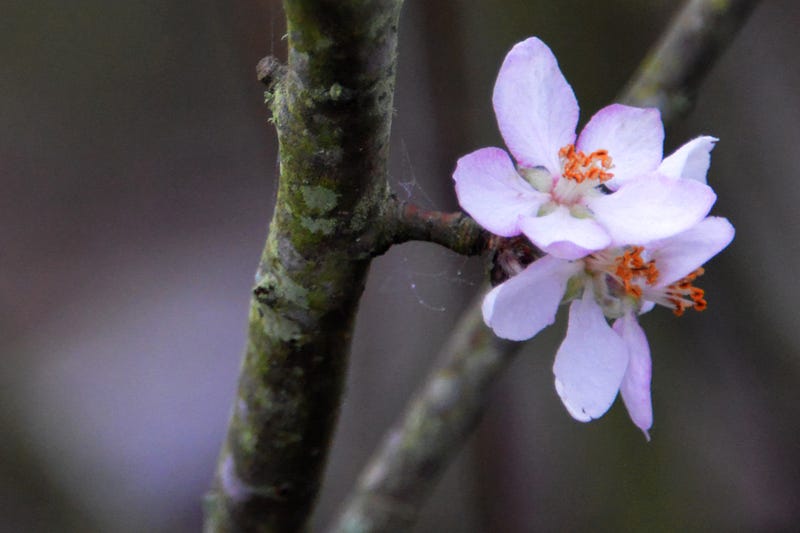
The Fruits of my Labor
I was told I couldn’t grow apples in my climate, because the winter isn’t long enough. However, I found a species of apple tree that produces well in my area. Each flower blossom in early spring will become an apple in summer.
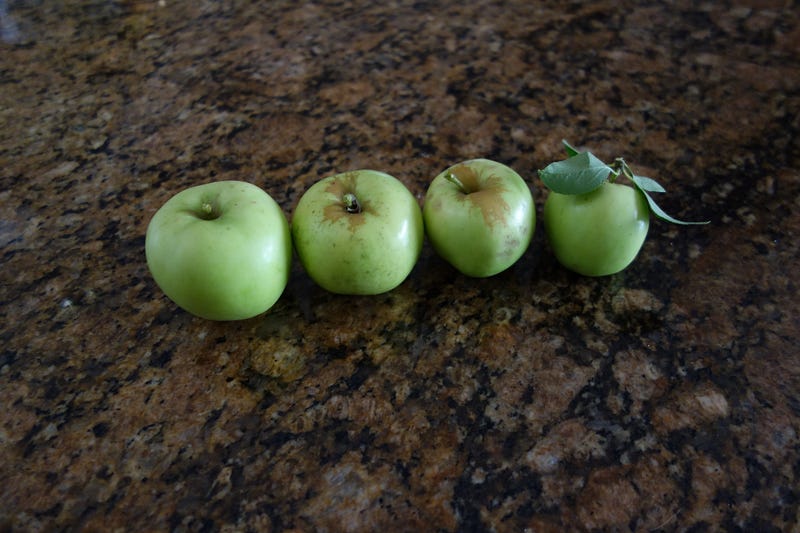
These are a few apples from my tree when the tree was young. It can be quite temperamental and doesn’t produce fruit every year. Finally the fruit of my labor paid off!
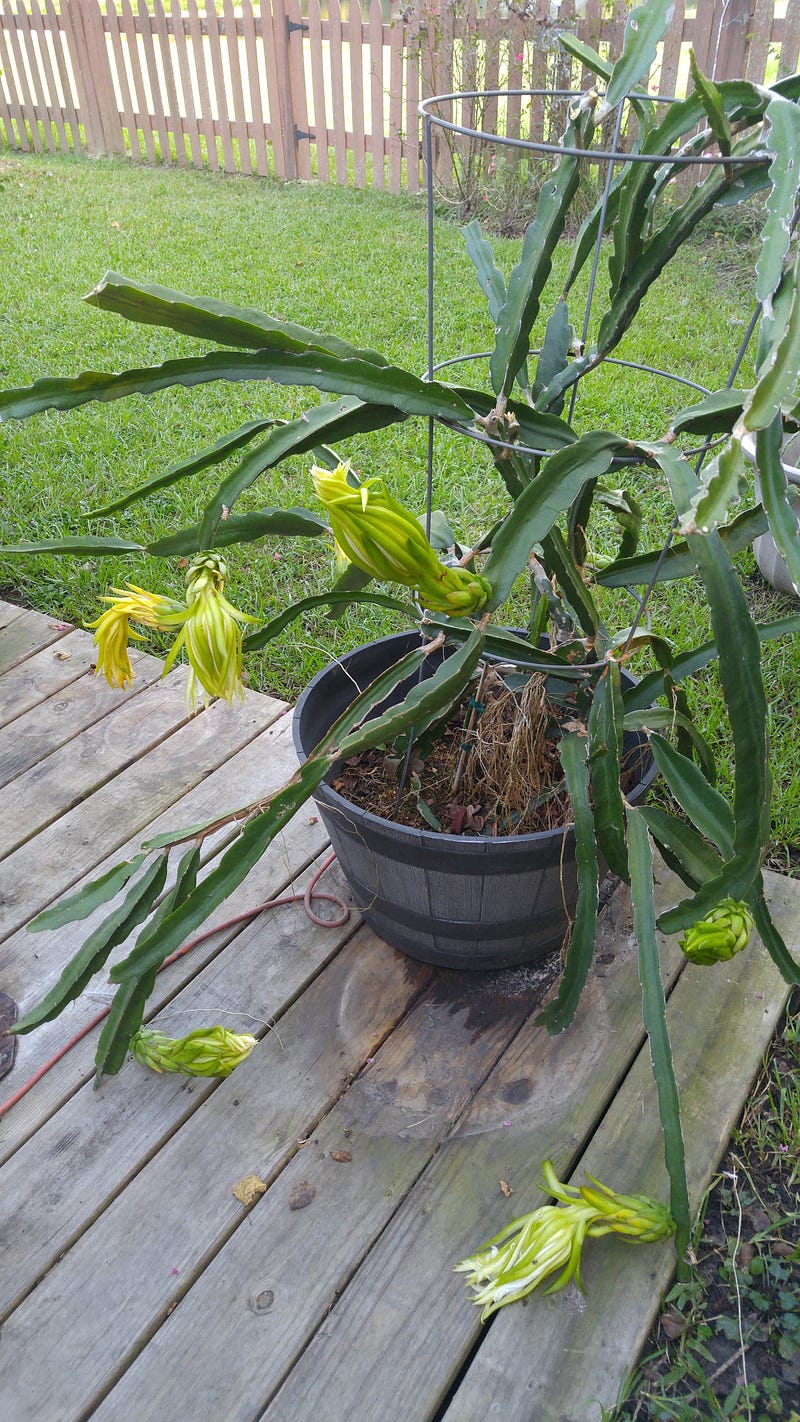
An Exception to the Rule
My Pataya plant is an exception to the rule of plants that naturally grow well here. I have to either cover them during winter freezes or bring the pots inside. However they’ll grow quite large and produce tasty fruit.
The flowers are special, because they bloom for a single night of the entire year and die the next morning. The flowers will then grow into dragon fruit.
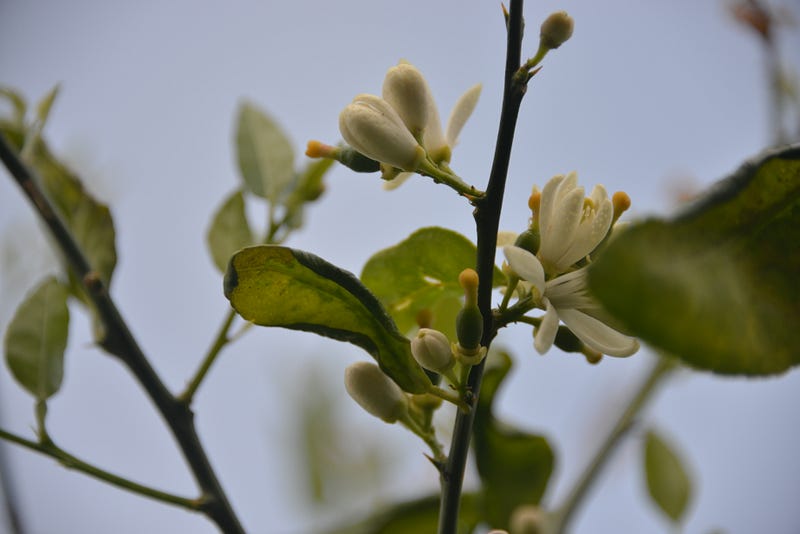
The Cycle of Life
Meyer lemons and just about any type of citrus tree, grows well in this climate. I love seeing the transition of the tree through the seasons. Spring brings flower blossoms. The lemon babies grow and ripen into full size lemons in late Summer and early Fall. Then the trees takes respite for the Winter to repeat the cycle of life.
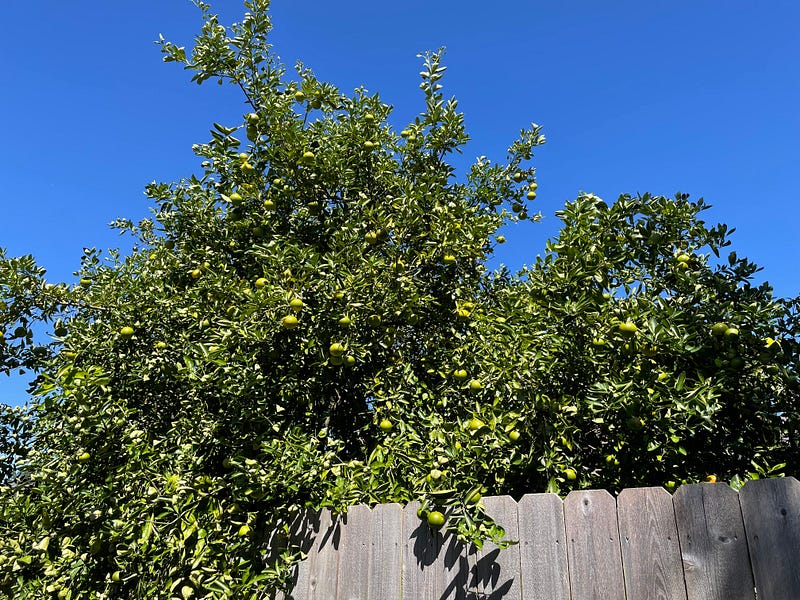
Orange You Glad You Like Fruit!
This is a Mandarin Orange tree growing in the woods next to my house. Citrus trees perform well in the semitropical climate here. I enjoy a lot of citrus fruits and freshly squeezed juice!
When I see the fruit spilling over from the trees onto the ground, I smile and say to myself, “Self, orange you glad you like fruit!”
Thank you for touring my landscape. I hope you’ve enjoyed it.
Mia Verita 2022
Thank you Dr. Preeti Singh, for this inspiring prompt.
Thank you to the hard-working editors of Reciprocal, Dr. Preeti Singh, Sahil Patel, and Yana Bostongirl, for giving these plant a place to flourish.
I’d like to share this uplifting article by Sahil Patel.
I’d also like to share this heartfelt story by Yana Bostongirl
Mia Verita is a retired Advanced Practice nurse of over 26 years, with specialties in mental health and geriatrics. She enjoys gardening, especially plants that are easy to grow. She enjoys photography, sketching, writing poetry, and sharing inspirational stories.
If you’d like to read all of my stories and those of other Medium members, you can join Medium using my affiliate link. I’ll receive a small portion of the membership fee at no additional cost to you.