
In England, the head of a Roman god of trade and thieves has been discovered.
A unique fragment of a statue of the Roman god Mercury was discovered in the county of Kent in England. Its decapitation may indicate that it was deposited for votive purposes.
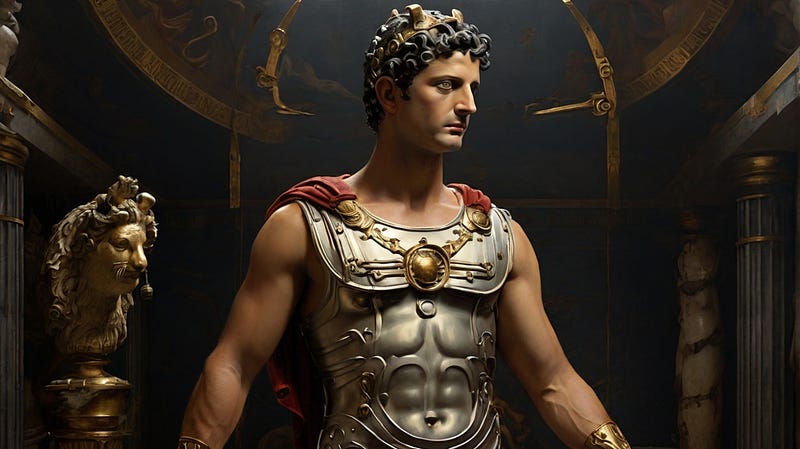
The history of Great Britain is not only the story of the Celts or Viking invasions during the medieval period. This island became one of the Roman provinces in the middle of the 1st century AD when it was conquered by the troops of Emperor Claudius. Until 410 AD, the ancient Romans controlled Britain. They founded several cities, including Londinium, which is present-day London. The territory was covered with a network of convenient roads.
Under the shipyard — Romans
Traces of the Romans are found in the least expected places. This time, archaeologists found remnants of a Roman settlement under the remains of a medieval port and shipyard from the 13th to 15th centuries on the River Rother. It functioned between the 1st and 3rd centuries AD.
In the Middle Ages, this was one of the most important royal shipbuilding centers in England. It was operated by about 200 people. In 1410, a 100-ton ship named The Marie was built in Smallhythe for King Henry IV. Four years later, Henry V visited the shipyard to see the construction of two ships he had commissioned. Over time, the area gradually silted up, and the shipyard declined.
The archaeological site is located in Kent County at Smallhythe Place. It is under the care of the National Trust, an organization dedicated to the preservation of historic sites and nature in England.
Statuette of the god Mercury
Archaeologists were excited by a very small discovery. It is a head with a diameter of 5 cm, about the width of a debit card. Experts have no doubt that it depicts the Roman god Mercury.
This god had various aspects. He patronized trade, commerce, but also thieves and customs officers. Over time, he became a divine messenger, much like the Greek Hermes.
Religion was a central part of daily life in most Roman provinces. The discovered figurine, due to its size, was portable. It could be used for rituals in their homes by representatives of the Roman elite as well as ordinary citizens. Romans had small shrines in their homes.
An extremely rare figurine. It’s Mercury
Experts agree that the fragment of the figurine is unique. Why? It was made of faience from very delicate earthenware clay. Many representations of female deities are known from this material, but not male ones. Usually, it is the goddess Venus. Mercury was most often made of metal. So far, only a few fragments of Roman male deities in Britain made of clay have been discovered.
Identifying the god was easy. He wears a hat called a petasos with small wings attached to it. So far, the remaining part of the figurine has not been found. It probably represented a standing Mercury dressed in a short cloak or naked and holding his attribute — a staff with two entwined snakes.
The fact that only the head of the figurine remains may be evidence of intentional action. “There is evidence to suggest that deliberate breaking of some figurine heads was an important ritual practice. On the other hand, whole figurines are usually found in graves. In Britain, there are few known individual clay heads, some of which may have been votive offerings,” comments Dr. Matthew Fittock, an expert in Roman figurines.
In his opinion, such findings, like those in Smallhythe, provide an incredibly valuable insight into the beliefs and religious practices of culturally diverse populations in Roman provinces.
Attention all readers!
As content creators on Medium.com, we face minimal compensation for our hard work. If you find value in my articles, please consider supporting me on my “Buy Me a Coffee” page. Your small contributions can make a big difference in fueling my passion for creating quality content. Thank you for your support!


