
In Defense of Analog Film
A Love Letter of Sorts
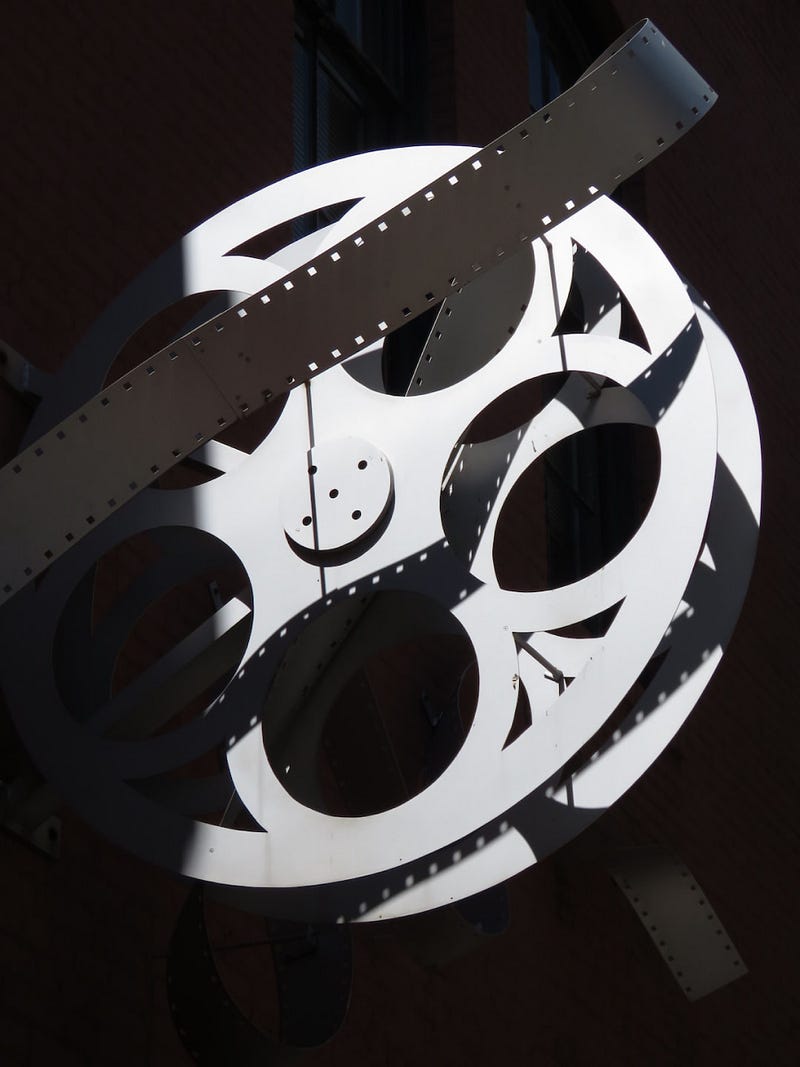
Whatever argument you have in defense of shooting on digital, believe me, I’ve already heard it, and I’m perfectly aware of it. We all know of the numerous advantages of digital filmmaking. It’s significantly cheaper. It’s more convenient. It allows for mistakes that can be quickly and easily solved. It makes the life of the entire Camera Department a lot easier. And while digital offers amazing opportunities for amateur and beginner filmmakers, modern generations of filmmakers — and in some cases older ones, too — have forgotten that film is not supposed to be about practicality.
If that was the case, cameras would still be static because nobody would have ever bothered to figure out a way to make the camera move: why? You can still show everything you want to show in a static frame; all you have to do is to carefully choreograph the blocking. Camera movement was invented as a way to enhance the language of film. Indeed, all subsequent inventions relating to film and film equipment were invented for the same reason, at least up to the point where some sneaky individuals glimpsed the opportunity to do the same for commercial reasons, not artistic ones. But that’s a story for another day.
Yes, digital is practical, but filmmaking, like any other art form, was never supposed to be practical. It was supposed to be meaningful and beautiful. It was supposed to make people experience things in a way they had never experienced before.
Digital is practical, but filmmaking, like any other art form, was never supposed to be practical. It was supposed to be meaningful and beautiful. It was supposed to make people experience things in a way they had never experienced before.
George Méliès and D. W. Griffith are routinely hailed as pioneers of early cinema who took the brand-new invention of the motion picture camera and decided to use it for narrative and dramatic purposes. A few years later, Sergei Eisenstein discovered the language of film editing. By the year 1927, German director Fritz Lang completed Metropolis, one of the greatest and most influential films ever made. Film as an art was born. More specifically, it was born on a piece of celluloid.
Film as an art was born on a piece of celluloid.
Analog film is extremely delicate and extremely complex to handle; just ask anybody who has ever had to load a roll of film into a camera. It requires knowledge, skill, and mastery. In other words, mastering the use of analog film is a form of art in itself. Not just that, it is also a science in itself. Back in the day, there was no telling how the final product would look like once it was developed. All depended on the type of film stock employed and on the skill set of the cinematographer. A cinematographer had to be familiar with the specific type of film that was being used and had to expose, adjust and stylize accordingly. Nowadays, the final product is readily available to be watched in real-time on a small screen and even re-winded. Up to the point when digital took over the film industry, the cinematographer was a master of both theory and skill, and the latter took years of study and practice to hone.
But the biggest loss in digital filmmaking is probably that of texture. Digital filmmaking produces, by its own nature, a virtual product, whereas film is a material. When shooting on film, the final image will have a sense of texture that is completely lost in digital.
Allow me to be a sentimentalist for a moment and declare the following: watching an analog-shot film on a big screen is one of the greatest pleasures of life. And if you don’t believe me, all you have to do is find a movie theater willing to show you John Ford’s The Searchers. Watch the movie, experience it in the dark, on the big screen, and tell me that you can’t sense the texture of the image and that the colors on the screen aren’t the most vibrant, most beautiful, most alive that you’ve ever seen. I challenge you. And if you want your senses to be overwhelmed by beauty, I suggest you also watch any movie that was ever shot on three-strip Technicolor.*
Film’s intrinsic sense of texture means that, unlike digital, analog filmmaking is actually palpable. It has a material consistency. It is worth noticing that, in some cases, modern filmmakers will try to “mimic” the unique feel and texture of true film by using digital effects. In most cases, this involves giving the digitally-shot film a slightly “grainy” look. Needless to say, this “cheap trick” will never achieve the same look or feel as an analog-shot film.
I might make a few enemies saying this, but love of cinema and love of film go hand in hand. For almost a century, cinema existed exclusively on analog film, meaning that analog-shot film is film in its truest, most authentic form.
Love of cinema and love of film go hand in hand.
I am not saying that we should not be shooting on digital. Far from that, in fact. As I said before, digital filmmaking is an extremely practical tool, especially for beginner filmmakers. But one cannot truly appreciate the beauty of cinema without appreciating the beauty of film. The two are indissoluble.
One cannot truly appreciate the beauty of cinema without appreciating the beauty of film.
To cast analog film aside because it is “impractical” or “outdated” is to discard a fine art that is an essential part of the very notion of cinema. Shooting on analog should be actively taught and encouraged. To fail to recognize the importance and beauty of film is to fail to recognize and love cinema in its truest form.
*If I were to explain to you what three-strip Technicolor is and why it is the most superior way to capture color on film, it would take me at least an hour, so that’s also a story for another time.
Sign up for Medium through the author’s affiliate link and get instant access to unlimited articles, or show the author your support and appreciation by buying her a coffee!